MEDICAL DISCLAIMER: This article is for informational purposes only and should not replace professional medical advice. Always consult with a healthcare provider or occupational health specialist for personalized recommendations regarding mask selection and usage for your specific situation.
Sarah's Mask Dilemma: A Story We All Know Too Well
Sarah, 45, a dedicated school teacher with 20 years of experience, stood in the pharmacy aisle staring at rows of face masks. Her elderly mother was recovering from surgery, and Sarah was about to spend the week helping her with post-operative care. The anxiety was real. Among the shelves of colorful boxes, she saw labels reading "N95," "Surgical Mask," "KN95," and "Medical Grade." Which one would truly protect her mother? Which would keep Sarah safe while she cared for her? The questions multiplied: Are N95 masks really better? What's the difference anyway? How much do I need to spend?
If you've found yourself in Sarah's position—standing in front of a wall of masks wondering which to choose—you're not alone. With so much conflicting information online, and marketing claims that often blur the lines between different mask types, understanding the real differences between N95 and surgical masks has never been more important.
This guide cuts through the confusion. We'll walk you through the science, the standards, the real-world protection levels, and most importantly, help you make the right choice for your specific situation. By the end, you'll understand not just what makes these masks different, but when and how to use each one effectively.
Understanding Face Mask Types: The Foundation
Before we dive into the N95 versus surgical mask debate, let's establish what these masks actually are. The respiratory protection landscape includes several categories, and understanding this framework helps explain why the differences matter.
The Three Main Categories of Respiratory Protection
Respiratory protective devices fall into three broad categories based on their level of protection and how they work:
1. Respirators (including N95 masks) are designed to filter the air that the wearer breathes in. These are personal protective equipment that seal around the nose and mouth, creating a tight fit that forces air through filtration layers.
2. Surgical masks and medical masks are designed to protect others from the wearer's respiratory emissions. They also provide some protection to the wearer, but their primary function is source control—preventing the mask-wearer from spreading germs to others.
3. Face coverings and cloth masks provide variable protection depending on material, construction, and fit. While useful as a barrier, they're generally the least protective option for the wearer.
Understanding this fundamental difference—respirators protect the wearer first, while surgical masks protect others first—is crucial to choosing correctly for your needs.
The N95 Respirator: Deep Dive into Advanced Protection
What Makes an N95 an N95?
The "N95" designation comes from the National Institute for Occupational Safety and Health (NIOSH), a division of the CDC. The name itself tells you exactly what the mask does:
"N" stands for "Not resistant to oil" - these masks are designed for non-oily particles. They're ideal for medical environments, construction, and most biological hazards, but not recommended for exposure to oil-based aerosol particles.
"95" means the mask filters at least 95% of airborne particles that are 0.3 microns or larger. This is the minimum efficiency threshold set by NIOSH standards.
N95 Filtration Technology: How It Works
An N95 respirator contains multiple layers of non-woven material constructed into a three-dimensional matrix. Here's how this filtration works:
Mechanical Filtration: The outer and inner layers catch larger particles through simple mechanical blocking—like a net catching fish. Particles larger than the holes in the material simply cannot pass through.
Electrostatic Attraction: The middle layers contain electrostatically charged fibers. Smaller particles, even those much smaller than the holes in the material, are attracted to these charged fibers and stick to them. This is why N95 masks are so effective against very small particles and aerosols.
Diffusion: The tiniest particles move randomly through the air in a process called Brownian motion. The multiple layers of an N95 increase the probability that these particles will collide with fibers and be captured.
This multi-mechanism approach is what enables N95 masks to achieve 95% filtration efficiency against particles as small as 0.3 microns—smaller than many viruses and bacteria.
NIOSH Approval: What It Means
When you see "NIOSH-approved" on an N95 box, that's not marketing language—it's a certification earned through rigorous testing. NIOSH approval means:
- The mask has been independently tested and confirmed to meet specific performance standards
- The manufacturer's quality control processes have been verified
- The mask has been tested for both filtration efficiency and airflow resistance
- The mask maintains its integrity and performance over reasonable use periods
Always look for NIOSH approval when purchasing N95 masks. Counterfeit N95s are unfortunately common in the marketplace, and NIOSH maintains a database of approved respirators you can search.
Fit Testing: The Critical Step Most People Skip
Here's something many people don't realize: an N95 mask only works if it fits your face properly. A poor fit is the most common reason N95 masks fail to provide expected protection.
Why Fit Matters: If air leaks around the edges of the mask, you're not breathing filtered air—you're breathing unfiltered air around the mask. It doesn't matter how good the filtration is if the seal is compromised.
Quantitative Fit Testing: In occupational settings like hospitals and clinics, quantitative fit testing is often required. A healthcare worker wears a mask connected to equipment that measures how much ambient aerosol is inside the mask during various head movements and breathing patterns. The fit factor must be at least 100 for an N95 (meaning the air inside is 100 times cleaner than the air outside).
Qualitative Fit Testing: This involves wearing the mask in a test chamber with a harmless test vapor. If you can taste or smell the vapor, the fit is inadequate. Many occupational health programs use this simpler test method.
For Individuals: While you may not have access to formal fit testing, you can perform a basic fit check: put on the mask, cover it with your hands, and try to breathe in. If air leaks around the edges, or if you can easily suck in unfiltered air, your mask doesn't fit properly. N95 masks come in multiple sizes and styles specifically because different face shapes and sizes require different masks for a good fit.
N95 Mask Styles and Variations
N95 respirators come in several styles, each with different advantages:
Cup or Cone-Shaped: The most common style. Forms a dome over the nose and mouth. Generally provides a good seal for most face shapes.
Folding: Folds flat for storage and pocket-sized portability. When unfolded, they form a mask similar to cup-shaped models. Popular for people who need to carry masks throughout the day.
With Exhalation Valve: Features a small valve that opens on exhale, making breathing easier and reducing heat and moisture buildup. However, these are primarily for wearer protection, not for source control. If preventing transmission to others is important, mask without valves are better.
Without Exhalation Valve: All air passes through the filter layers in both directions. Provides better source control if the wearer is infected.
Surgical Masks: The Workhorse of Medical Environments
Understanding Surgical Mask Design and Purpose
Surgical masks have been used in operating rooms for over a century, and they remain the standard masking protocol in hospitals and surgical centers worldwide. However, their purpose is different from respirators.
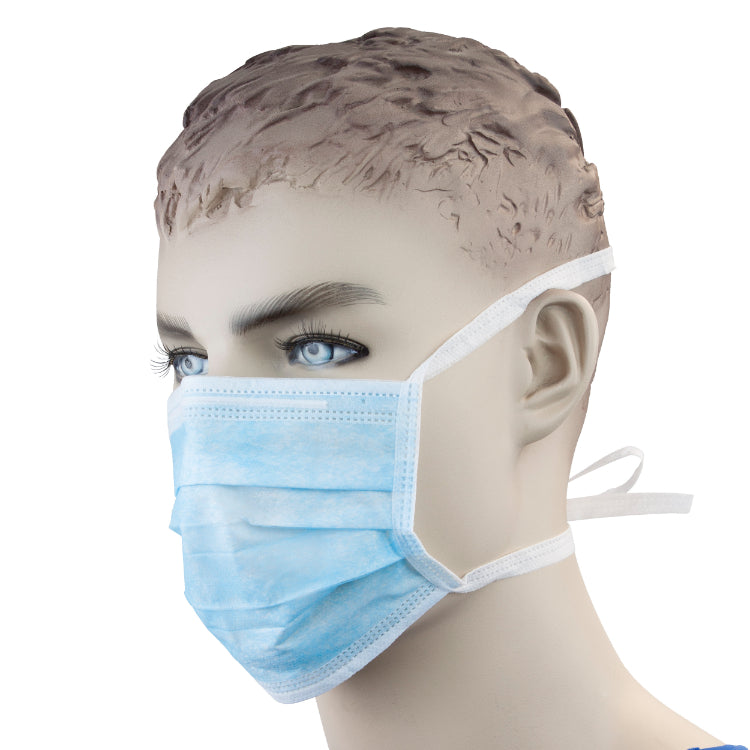
A surgical mask is a loose-fitting device that creates a physical barrier. It's designed primarily to contain respiratory droplets from the wearer—protecting the patient, the surgical team, and others nearby. It also provides some protection to the wearer, but that's a secondary benefit.
Surgical Mask Filtration: How It Differs from N95
While N95 masks use electrostatic filtration and multiple layers, surgical masks rely primarily on mechanical filtration. A typical surgical mask contains three layers:
Outer Layer: Often colored (typically blue or white), this layer blocks large respiratory droplets and provides a water-resistant barrier.
Middle Filter Layer: The primary filtration layer, containing fine fibers that catch smaller particles. Some modern surgical masks include electrostatic material in this layer.
Inner Layer: Soft and absorbent, designed for comfort and to absorb moisture from the wearer's breath.
Surgical masks typically filter 60-80% of particles, depending on the specific mask and the size of particles. They're most effective at blocking large respiratory droplets but are less effective against smaller aerosol particles, especially at distances beyond 6 feet.
Standards and Certifications for Surgical Masks
In the United States, surgical masks are regulated as Class II medical devices by the FDA. They must meet standards outlined in ASTM F2100, which tests:
- Bacterial filtration efficiency (BFE) - typically at least 95%
- Viral filtration efficiency (VFE) - typically at least 95%
- Fluid resistance - how well the mask resists blood and body fluids
- Breathability and airflow resistance
Despite these standards, there's significant variation in quality among different surgical mask brands. Professional-grade masks from reputable medical manufacturers typically exceed minimum standards.
The Comfort Advantage: Why Surgical Masks Are More Wearable
One major advantage of surgical masks is comfort during extended wear. Because they're loose-fitting, they allow easier breathing, produce less heat and moisture buildup, and can be worn for longer periods with less fatigue. For extended care situations—like Sarah's week caring for her mother—this matters. Compliance matters. If a mask is so uncomfortable that someone removes it frequently or doesn't wear it consistently, its protection is negated.
Head-to-Head Comparison: N95 vs. Surgical Mask
| Feature | N95 Respirator | Surgical Mask |
|---|---|---|
| Primary Purpose | Protects the wearer from inhaling particles | Protects others from wearer's respiratory emissions (source control) |
| Filtration Efficiency | Filters at least 95% of particles (0.3 microns and larger) | Filters 60-80% of particles; less effective against smallest aerosols |
| Fit | Tight-fitting, requires proper seal around nose and mouth | Loose-fitting, comfortable but allows some air leakage |
| Air Leakage | Minimal when properly fitted; much more effective with good seal | Significant leakage around edges, especially with movement |
| Effectiveness Against Aerosols | Highly effective against aerosol transmission at all distances | Effective at blocking droplets; less effective against aerosols, especially at distance |
| Comfort During Extended Wear | Can cause fatigue, heat buildup, and skin irritation with extended use | More comfortable for extended periods; easier breathing |
| Cost | Typically $0.50-$2.00 per mask | Typically $0.15-$0.50 per mask |
| Reusability | Should not be reused for each use (single-use recommended for maximum effectiveness) | Designed for single-use but can be stored and reused if handled properly |
| Fit Testing Required | Yes, especially in occupational settings; critical for effectiveness | No; loose fit doesn't require testing |
| Availability | Widely available; specialty sizes may require ordering | Extremely widely available at all retailers |
| Regulatory Status | NIOSH-regulated as respiratory protective equipment | FDA-regulated as Class II medical device |
When to Wear an N95: Your Complete Decision Guide
An N95 respirator is the right choice when you need maximum protection for yourself against airborne particles. Consider wearing an N95 when:
High-Risk Occupational Settings
Healthcare Workers: Emergency departments, intensive care units, and other areas with patients who may have airborne illnesses. If you're intubating patients or performing aerosol-generating procedures, an N95 (or higher) is essential.
Construction and Industrial Workers: Working with dust, particles, or aerosols. Painters, sanders, demolition workers, and others exposed to potentially hazardous particles need respiratory protection.
Laboratory Personnel: Anyone working with potentially infectious materials or hazardous aerosols.
High-Risk Personal Situations
Caring for Someone with a Respiratory Illness: If you're providing direct care to someone with confirmed or suspected airborne illness (influenza, COVID-19, tuberculosis, or similar), an N95 significantly reduces your risk of infection.
Immunocompromised Status: If you have a weakened immune system due to medical treatment, HIV/AIDS, or other conditions, an N95 provides critical protection when you must be in crowded or potentially contaminated environments.
Extended Exposure in High-Transmission Environments: If you must spend extended time (more than a few hours) in a setting with confirmed or suspected airborne disease transmission, an N95 is significantly more protective than a surgical mask.
Environmental Hazards
Wildfire Smoke: Air quality experts consistently recommend N95 or better masks during heavy wildfire smoke, especially for vulnerable populations.
Air Pollution: In areas with severe air quality issues, an N95 provides meaningful protection against particulate pollution.
When to Wear a Surgical Mask: Practical Guidance
A surgical mask is appropriate when your primary goal is protecting others, or when you need a balance of moderate protection, comfort, and convenience. Consider wearing a surgical mask when:
Source Control Situations
You're Sick: If you have symptoms of a respiratory illness, a surgical mask significantly reduces the amount of particles you're sending into the air, protecting those around you. This is the single most important use of surgical masks.
Healthcare Settings (Non-Aerosol): In clinical settings where patients don't have confirmed airborne illness, surgical masks are the standard. They're required in operating rooms, dental offices, and most medical environments.
You're Around Vulnerable People: When visiting or caring for elderly relatives, newborns, or immunocompromised individuals, wearing a surgical mask signals responsibility and provides meaningful protection to them.
Moderate Protection Situations
Public Transit or Crowded Indoor Spaces: When you need protection but don't want the discomfort of an N95 for extended periods. A surgical mask provides meaningful protection against respiratory droplets and some aerosol protection.
Short-Term Community Exposure: Brief trips to stores, offices, or other indoor spaces during times of elevated respiratory illness circulation.
Caregiver Situations with General Precautions: If you're caring for someone but they don't have confirmed airborne illness, a surgical mask paired with good hand hygiene provides reasonable protection and comfort for extended wear.
Proper Wearing Technique: The Difference Between Protection and False Security
A mask only works if worn correctly. Let's walk through proper technique for both types:
How to Wear an N95 Correctly
Step 1: Check the Mask. Before putting it on, inspect for damage, tears, or deformation. A damaged mask won't seal properly.
Step 2: Position Your Hands. Hold the mask with the nosepiece (the metal or plastic strip) at your fingertips on both hands.
Step 3: Cover Your Face. Place the mask over your nose and mouth, with the upper strap positioning the nosepiece.
Step 4: Secure the Straps. Pull the top strap over your head and position it in the upper back of your head. Pull the bottom strap over your head and position it at the base of your neck.
Step 5: Seal the Nosepiece. Using both thumbs, press the metal strip firmly around your nose bridge, creating a tight seal. This is critical—air cannot pass around the nosepiece.
Step 6: Perform a Fit Check. Cover the front of the mask with both hands (don't displace the mask). Exhale forcefully. You should feel pressure and not feel air leaking around the edges. If you feel air leaking, adjust the nosepiece and straps until you achieve a seal.
Step 7: Secure Your Beard or Hair. If you have facial hair, secure it or shave it. Even short stubble can compromise the seal. Long hair should be pulled back so it doesn't interfere with the seal.
How to Wear a Surgical Mask Correctly
Step 1: Choose Your Orientation. Most surgical masks have a colored side (usually blue) that faces outward and a white side that faces your face. Some masks have a waterproof side (outer) and an absorbent side (inner). Check the packaging if unsure.
Step 2: Hold the Mask. Hold the mask by the ear loops, one in each hand.
Step 3: Position Over Face. Bring the mask up to your face and hook the ear loops around each ear.
Step 4: Adjust Coverage. Make sure the mask covers both your nose and mouth completely. Adjust it so there are no gaps.
Step 5: Secure the Fit. Some surgical masks have ties instead of loops. If your mask has a metal nosepiece, gently press it down around your nose bridge for a better fit (though surgical masks won't seal as tightly as N95s).
Step 6: Check Your Speech. If your mask is positioned correctly, you should sound slightly muffled when speaking. If you sound completely normal, the mask may not be covering your mouth adequately.
Common Mask-Wearing Mistakes That Compromise Protection
Even with a high-quality mask, mistakes in usage can dramatically reduce effectiveness. Here are the most common errors:
Touching Your Mask
Every time you touch your mask, you potentially transfer pathogens from your hands to your face. If you must adjust your mask, wash or sanitize your hands first. Better yet, don't touch it at all once it's properly positioned.
Wearing a Mask Below Your Nose
This completely negates the mask's protection. Your nose is a primary entry point for respiratory particles. If the mask doesn't cover your nose, it doesn't protect you or others. This mistake is shockingly common in real-world settings.
Removing Your Mask Frequently
If you remove your mask to eat, drink, talk, or any other reason, you lose protection during that time. If you need to remove it frequently, question whether masking is feasible in that situation. With surgical masks, remove them carefully by holding only the straps, never the front.
Storing a Mask Improperly
Placing a mask in your pocket, bag, or around your chin contaminates it. If you need to store a mask temporarily, place it in a clean, breathable container like a paper bag. Never reuse a mask that's been improperly stored.
Assuming a Mask Works Alone
Masks are one layer of protection. They're most effective when combined with vaccination, good hand hygiene, respiratory etiquette (covering coughs and sneezes), and staying home when sick. Don't rely on a mask alone; combine it with other precautions.
Using an Expired Mask
Masks degrade over time. Check the manufacturing date on the packaging. NIOSH-approved N95s are generally considered effective for 5 years from manufacture if stored properly (cool, dry place). Surgical masks may degrade faster. When in doubt, use a fresh mask.
Poor Fit (N95s Specifically)
Wearing an N95 one size too large or too small won't seal properly, regardless of how carefully you follow the wearing steps. If you have a small face, look for child-sized or small-sized N95s, not adult masks pinched tighter. Conversely, forcing a small mask onto a large face compromises effectiveness.
Frequently Asked Questions About Face Masks
Q: Can I reuse my N95 mask?
A: The CDC states that NIOSH-approved respirators are designed as single-use, disposable devices. However, research has shown that N95 masks can be safely stored and reused multiple times if handled properly—provided they're not visibly soiled or damaged. Store used masks in a clean, breathable paper bag between uses. Don't touch the inner surface. Most experts recommend not reusing the same N95 more than 5 times. For occupational use where the risk is high, following manufacturer and regulatory guidelines about single-use is advisable.
Q: Can I wear an N95 if I have a beard?
A: No, not effectively. Facial hair, even light stubble, breaks the seal required for an N95 to work. For occupational settings where N95s are required, employers often have policies requiring workers to either shave or use alternative respiratory protection. If you have a beard, clean-shaven cheeks and upper lip are necessary for N95 effectiveness.
Q: Are KN95 masks as good as N95s?
A: KN95 is the Chinese standard equivalent to N95. They both filter at least 95% of particles. However, quality varies significantly. Many counterfeit KN95s exist in the market. For the highest assurance of quality, NIOSH-approved N95 masks are preferable. If you choose KN95, purchase from reputable medical suppliers, not discount retailers or marketplaces with unknown sellers.
Q: How long can I safely wear an N95?
A: Duration depends on comfort and the conditions. Some people can wear an N95 for 8 hours comfortably, while others experience fatigue or skin irritation after 2-3 hours. Factors include the specific mask model, your face shape, and the ambient temperature. If you feel faint, experience excessive heat buildup, or develop pressure sores, remove the mask, let your face recover, and consider a different mask size or style.
Q: Are cloth masks or gaiters useful?
A: Cloth masks and gaiters provide variable protection depending on construction and material. Generally, they're less effective than surgical masks for the wearer's protection. However, they can provide meaningful source control—protection for others when worn by someone who is sick. If you need respiratory protection for yourself, a surgical mask or N95 is more effective than cloth.
Q: Should I wear a mask if I'm vaccinated?
A: Vaccination significantly reduces your risk of severe infection, but you can still contract respiratory illnesses and transmit them to others. Masks provide additional protection, especially in high-transmission environments or if you're around vulnerable people. Individual risk assessment determines whether masking is necessary for you personally in any given situation.
Q: Can I wear glasses with an N95 mask?
A: Yes, but proper positioning matters. The top strap of the N95 should sit on your head above your glasses temples. Glasses should sit on top of the mask straps. Some people find this uncomfortable. Alternatives include: using smaller glasses, using contacts, or using a mask with a head harness instead of ear loops. You can also use a mask fitter (a clear plastic device that goes over your mask to improve seal and reduce fogging).
Q: Why do my glasses fog up when wearing a mask?
A: Warm, moist air from your breath escapes around the top of the mask and hits your cold glasses lenses, causing condensation. Solutions include: applying anti-fog coating to lenses, taping the top of your mask to your skin to redirect moisture downward, using a mask with better upper fit, or positioning glasses further from your face. Some newer mask designs address this with better upper sealing.
Q: How do I know if my N95 fits properly?
A: Perform the user seal check described in the proper wearing technique section above—seal your hands around the mask and try to breathe in. If you feel suction and air flows in through the filter rather than around the edges, you likely have a good fit. Additional signs: the mask doesn't shift when you move your head, and you don't feel air leaking when you exhale.
Q: Are there N95 masks specifically designed for smaller faces?
A: Yes. Manufacturers produce child-size N95s and adult small-size N95s. Women's sizing is also available. Many people make the mistake of using a mask that's too large, assuming they can compensate with tighter straps. A properly sized mask for your face is critical for effectiveness. If standard adult N95s don't fit, look for smaller sizes.
The Bottom Line: Making Your Choice
Back to Sarah's dilemma: which mask should she choose for that week caring for her mother?
Sarah's situation calls for a practical balance. She'll be in close contact with her mother for extended periods. Her mother is vulnerable (post-surgical recovery). Sarah's primary goal is protecting her mother, while also protecting herself.
An N95 mask would provide maximum protection for Sarah. However, after 8 hours of caregiving, she'd be exhausted from the tight seal and heat buildup. Compliance would suffer. A high-quality surgical mask, worn consistently and correctly throughout the day, combined with good hand hygiene, careful respiratory etiquette, and staying attentive to any symptoms, is probably the most practical and sustainable choice for Sarah's situation.
However, if Sarah were an intensive care nurse managing patients with confirmed severe respiratory illness, the choice would be different. An N95 would be not just recommended but essential.
The key insight: the "best" mask is the one that provides adequate protection for your specific situation and that you'll actually wear correctly and consistently. A surgical mask worn correctly is more protective than an N95 worn improperly or inconsistently.
Where to Find Quality Masks: Trust Matters
Not all masks are created equal. Quality varies significantly based on manufacturer and retailer. For professional-grade PPE including masks, gloves, and other protective equipment, AllCare Store offers a carefully curated selection of medical-grade products for healthcare professionals and individuals who need reliable protection.
AllCare Store carries a complete selection of professional medical PPE through our Gloves & PPE collection and Medicine & Monitors collection. Whether you're building an emergency kit for home, stocking supplies for a workplace, or managing care for a family member, quality masks and protective equipment are essential.
For immune system support during times of increased health risk, explore AllCare Store's Vitamins & Supplements collection, which includes immune-supporting formulations. A comprehensive approach to health includes both protective equipment and nutritional support.
Browse our complete selection of professional medical supplies and medical-grade products at AllCare Store. For comprehensive personal health and hygiene products, visit our Personal Care collection. Our team is committed to providing healthcare professionals and health-conscious individuals with the highest quality protective equipment and wellness products.
Final Thoughts: Protection Is Personal
Understanding the difference between N95 and surgical masks empowers you to make informed decisions about your health and the health of those around you. There's no one-size-fits-all answer to which mask is "best"—it depends on your specific situation, your risk profile, your comfort needs, and your commitment to wearing it consistently.
The most important step isn't choosing between N95 and surgical masks. It's deciding to take respiratory protection seriously. Explore our respiratory care products for additional support. Whether you choose an N95 or a surgical mask, wearing it correctly and consistently is what transforms it from a symbolic gesture into genuine protection.
We hope this guide helps you navigate the marketplace with confidence, understand the science behind these protective devices, and make choices that keep you and your loved ones safe.
Questions? We're Here to Help
Still have questions about which mask is right for your situation? Our team at AllCare Store is happy to help. Call us at 1-888-889-6260 to discuss your specific needs with a knowledgeable representative. We're committed to helping you find the right protective equipment from our Gloves & PPE collection for your unique circumstances.
Your health matters. Choose protection you can trust.
Medical Disclaimer: This article is for informational purposes only and does not constitute medical advice. Individuals at high risk for pressure injuries should consult a physician, occupational therapist, or certified rehabilitation engineer before selecting a wheelchair cushion.