The 2 a.m. Pharmacy Run Nobody Should Have to Make
It is almost always the middle of the night. A child wakes up burning hot, or an elderly parent starts a cough that rattles in a way it didn't the day before, and someone goes to the medicine cabinet — and finds a thermometer with a dead battery, a bottle of cough syrup that expired two winters ago, and no fever reducer in a dose anyone in the house can actually take.
So somebody pulls on a coat and drives to the 24-hour pharmacy, leaving the sick person alone, and comes back forty-five minutes later with the wrong thing anyway, because it is hard to read labels clearly at 2 a.m. when you are worried.
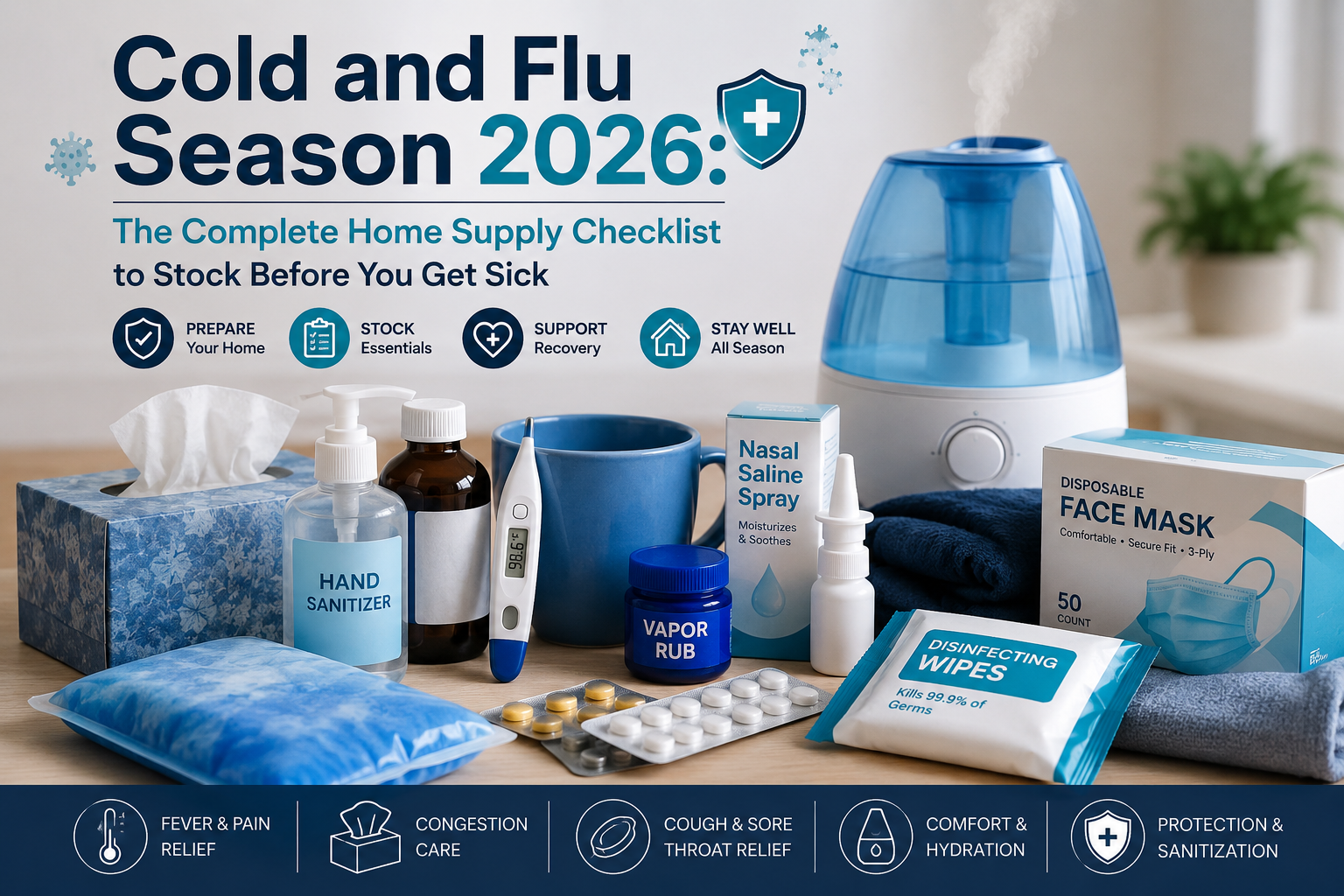
Nobody plans for the first illness of the season. That is exactly the problem. Cold and flu season is the one health event on the calendar that is genuinely predictable — it arrives every autumn, it peaks between December and February, and it will pass through most households at least once. The single most useful thing you can do about it costs a quiet afternoon in September or October: stock the house before anyone is sick, so that when the fever comes, everything you need is already in the cupboard.
This guide is that afternoon's checklist. It is written for two people in particular: the caregiver looking after an older parent, and the parent looking after a full house. We'll cover what to keep on hand for monitoring, for symptom relief, for hydration and comfort, and for preventing the illness from spreading to everyone else under the roof — plus the warning signs that mean it is time to stop treating at home and call a doctor.
Why Prepare Now, in Late Summer and Early Fall
Respiratory viruses follow a season. In the United States, influenza activity usually begins to climb in October, and the Centers for Disease Control and Prevention recommends that most people get their flu vaccine by the end of October so that immunity is in place before the peak. RSV and the common cold-causing viruses ramp up on a similar schedule, and the three often circulate at once.
That timing is the whole argument for preparing in late summer or early fall. The supplies are cheaper and in stock before the rush. You have time to read labels calmly, check doses against everyone's other medications, and throw out anything expired. And you are making these decisions while you are well and thinking clearly — not standing in a fluorescent-lit aisle at midnight guessing which purple box is the right one.
Getting the flu shot is a separate and important step, and we cover it in detail in our flu shot guide for seniors 2026. The checklist below is what belongs in the house alongside vaccination, because even a vaccinated household still catches colds — and a milder illness at home is still an illness you have to manage.
The Core Checklist at a Glance
Here is the whole kit in one table. The sections that follow explain what to look for in each category and who needs what. Print this, or work down it as you shop.
| Category | What to Stock | Why It Matters |
|---|---|---|
| Monitoring | Digital or no-contact thermometer (with spare batteries), pulse oximeter, notepad or phone log | Fever and oxygen levels tell you whether things are improving or getting worse |
| Fever & pain relief | Acetaminophen and/or ibuprofen in the right formats for each person | Brings down fever and eases aches and sore throat |
| Cough & congestion | Cough medicine (suppressant and/or expectorant), saline and medicated nasal sprays, throat lozenges | Manages the symptoms that keep people awake |
| Hydration & comfort | Electrolyte drinks or powder, soft tissues, lip balm, honey, a humidifier | Fluids and moist air do more real work than most medicines |
| Prevention & hygiene | Face masks (surgical and/or N95), hand sanitizer and sanitizing wipes, disinfectant, extra hand soap | Keeps one sick person from becoming a whole sick household |
| Higher-risk extras | Nebulizer and supplies, blood pressure monitor, medication list, doctor and pharmacy numbers | Seniors and people with lung or heart conditions need closer monitoring |
You can find most of these under one roof in the Cold & Flu collection and the broader Medicine, Medication Management & Monitors collection at AllCare Store.
1. Monitoring: Know Whether It's Getting Better or Worse
Treating symptoms is only half the job. The other half is watching the numbers, because a fever trend and an oxygen reading are what separate "rest and fluids at home" from "call the doctor now." You cannot judge either one by touch.
A Reliable Thermometer
Every home needs at least one working thermometer, and the emphasis is on working — the most common failure on a sick night is a dead battery. Keep a spare battery taped to the box.
A no-contact infrared forehead thermometer is the easiest choice for a household, because you can check a sleeping child or a frail parent without waking or disturbing them, and there is nothing to share between sick and well family members. The No-Contact Forehead Thermometer (FDA-cleared), around $32.99, gives a fast reading from a short distance. A simple digital stick thermometer is an inexpensive, accurate backup. For a full comparison of oral, forehead, temporal, and ear types — and how to read each correctly — see our complete thermometer buyer's guide.
Whatever type you choose, write down each reading with the time. "He felt hot around dinner" is far less useful to a nurse than "101.8 at 6 p.m., 102.4 at 10 p.m., 103.1 at 2 a.m." A fever climbing despite medicine is information a clinician can act on.
A Pulse Oximeter
A fingertip pulse oximeter clips onto a finger and reads blood-oxygen saturation (SpO2) and pulse in a few seconds. It became a household staple during the pandemic for a good reason: with respiratory illness, oxygen level is one of the clearest signals of how the lungs are actually doing, and it can drop before a person feels dramatically worse.
For most healthy adults at sea level, a normal resting reading is about 95 to 100 percent. Readings that sit at or below 92 percent, or that keep drifting down, are worth a prompt call to your doctor — and lower than that, especially with breathlessness, can be an emergency. (People with chronic lung disease may have a different personal baseline; ask their clinician what number should trigger a call.) The clip-style fingertip pulse oximeter is a solid adult option at about $77.74, and there is a dedicated pediatric pulse oximeter sized for children's smaller fingers at around $40.99. Our guide on how and when to use a pulse oximeter explains how to get an accurate reading — warm hands, no nail polish, hold still — and what the numbers mean. Browse more options in the oximeters collection.
2. Fever and Pain Relief
Two workhorse medicines cover most fevers and aches: acetaminophen (Tylenol) and ibuprofen (Advil, Motrin). Both reduce fever and relieve the headache, body aches, and sore throat that make the flu so miserable. Our head-to-head guide, Tylenol vs. Advil vs. Aleve, walks through the differences, but a few points matter enough to repeat here.
Stock the right format for each person in your home, not just one bottle for everyone. Children need weight-appropriate liquid dosing, not adult tablets. Older adults often need to avoid ibuprofen and other NSAIDs because of kidney issues, blood pressure, blood thinners, or stomach bleeding risk — for many seniors, acetaminophen is the safer default, but confirm with their doctor or pharmacist. Watch for hidden acetaminophen: many multi-symptom cold and flu products already contain it, and stacking them with a separate Tylenol dose is a leading cause of accidental overdose. Read every label, and never give aspirin to a child or teenager with a viral illness because of the risk of Reye's syndrome.
3. Cough, Congestion, and Sore Throat
These are the symptoms that steal sleep, and sleep is when the body does its repair work. A few targeted supplies help.
Cough medicine. There are two basic kinds, and picking the wrong one wastes money and can backfire. A suppressant (dextromethorphan) quiets a dry, hacking cough so you can sleep; an expectorant (guaifenesin) thins mucus so a productive cough clears it. Our explainer on cough suppressants vs. expectorants helps you match the medicine to the cough. For adults, a small amount of honey in warm water is a genuinely evidence-supported cough soother — but never give honey to a child under one year old.
Nasal sprays. Keep two types. A plain saline spray is safe for everyone, including babies and pregnant women, and it loosens congestion without any drug at all. A medicated decongestant spray works fast for a blocked nose but must not be used more than three days in a row, or it causes rebound congestion that is worse than the original. Our complete nasal spray guide covers saline, steroid, and decongestant sprays and when each is appropriate. If allergies overlap with your cold symptoms, the best allergy medicine guide for 2026 and the Allergy & Itch Relief collection are worth a look.
Throat relief. Lozenges, throat sprays, and warm salt-water gargles all soothe a raw throat. A humidifier (below) helps here too.
For adults, combined multi-symptom "cold and flu" products can be convenient, but read the ingredient list so you know exactly what you are taking and avoid doubling up on any single ingredient. You'll find single-symptom and combination options in the Cold & Flu collection.
4. Hydration and Comfort: The Underrated Half of the Kit
Here is the part most people skip, and it is the part that does the most real work. Fever, sweating, and poor appetite dry a person out quickly, and dehydration makes every other symptom feel worse and slows recovery. Comfort supplies are not luxuries; they are treatment.
- Fluids and electrolytes. Keep oral rehydration solutions or electrolyte powders on hand — they replace what fever and sweating strip away far better than water alone, and much better than sugary soda. This matters most for young children and older adults, who dehydrate fastest and show it latest.
- A humidifier or vaporizer. Cool-mist humidified air eases coughing, loosens congestion, and soothes a dry throat, especially overnight in dry winter heat. Clean it regularly per the instructions so it doesn't grow mold.
- Soft tissues and lip balm. A box of lotion tissues and a lip balm prevent the raw, chapped misery of a three-day runny nose. Small thing, big comfort.
- Honey and warm drinks. Tea with honey and lemon soothes a throat and a cough for anyone over one year old.
- Easy foods. Broth, soup, crackers, applesauce, and gelatin are gentle on a sick stomach and help maintain fluids.
5. Prevention and Hygiene: Stop One Illness Becoming Five
When one person in a household gets sick, the goal shifts to containment — keeping the virus from touring the whole family. A small hygiene kit makes that dramatically easier.
- Face masks. A well-fitting mask on the sick person (and on the caregiver) reduces the spread of respiratory droplets in shared spaces. Surgical masks are fine for everyday containment; an N95 or KN95 respirator filters more and is worth having for a high-risk household member. Our guide to N95 vs. surgical masks explains the difference, and you can stock the N95 respirator mask (5-pack) or browse masks and PPE in the protective clothing and accessories collection.
- Hand sanitizer and wipes. Alcohol-based sanitizer (at least 60 percent alcohol) and individually wrapped hand sanitizing wipes let everyone clean up between hand-washings, especially before meals and after contact with the sick person.
- Surface disinfectant. Wipe down the high-touch surfaces the virus rides on: doorknobs, light switches, remotes, phones, faucet handles, and the shared bathroom. A daily pass is enough.
- Dedicated supplies. Give the sick person their own cup, towel, and (ideally) bathroom, and don't share utensils. Wash their laundry and dishes normally — hot water and detergent do the job.
6. Extra Preparation for Seniors and High-Risk Households
For most healthy adults and older children, a cold or the flu is a rough week and then it's over. For others, it is genuinely dangerous, and those households should prepare more thoroughly. Higher risk includes adults 65 and older, young children, people who are pregnant, and anyone with a chronic condition such as asthma, COPD, heart failure, diabetes, kidney disease, or a weakened immune system.
If that describes someone in your home, add the following:
- Closer monitoring. Check temperature and oxygen more often, and know the person's normal baseline oximeter reading before they are sick so you can recognize a real change. Keep a blood pressure monitor handy if their doctor tracks it.
- Respiratory support supplies. For someone with asthma or COPD, make sure rescue inhalers are current and, if they use one, the nebulizer is clean and stocked with tubing and cups. See our guides on nebulizer use and maintenance and recognizing an asthma or COPD flare-up, and browse the respiratory care and oxygen management collections.
- A current medication list. Write down every prescription, dose, and allergy on one card and keep it where a caregiver or paramedic can find it. It prevents dangerous drug interactions and speeds up any medical visit. A medical alert system is worth considering for a senior who lives alone.
- Phone numbers, written down. The doctor's office, the nearest urgent care, the pharmacy, and the nurse advice line — posted on the fridge, not buried in a phone that might be across the house.
- Ask about antivirals early. Prescription antiviral medicines for influenza work best when started within about 48 hours of symptoms. For a high-risk person, know in advance how you'd reach the doctor quickly, because that window is short.
Setting Up the Sick Room
Once someone is actually sick, a few minutes of setup makes the next several days easier and keeps the sick person from wandering the house. Put together a bedside station within arm's reach:
- The thermometer and pulse oximeter, plus the notepad to log readings
- Current doses of their medicines (and a written schedule of what was taken when, to avoid double-dosing)
- A water bottle or cup with electrolyte drink, refilled often
- Tissues, a lined wastebasket, and hand sanitizer
- Lip balm, lozenges, and a small trash bag for used tissues
- A phone or bell to call for help without getting up
- The humidifier running nearby
Keeping the log at the bedside is the quiet hero here. When you finally call the doctor, being able to say exactly what the temperature and oxygen have done over the last two days turns a vague worried phone call into a useful clinical conversation.
When to Stop Treating at Home and Call for Help
Most colds and flu cases resolve at home with rest, fluids, and symptom relief. But knowing the warning signs is the most important item on this entire list. Contact a doctor promptly, or seek emergency care, if you see any of the following:
- Trouble breathing or shortness of breath, fast or labored breathing, or a pulse-oximeter reading that is low for that person or keeps falling
- Chest or abdominal pain or pressure that is persistent
- A blue or gray tint to the lips, face, or fingertips — call emergency services
- Confusion, sudden dizziness, difficulty waking, or unresponsiveness
- A high fever that won't come down with medicine, or any fever in an infant under three months
- Signs of dehydration — very little urine, no tears, dizziness, a dry mouth, or lethargy
- Symptoms that improve and then suddenly worsen, or a fever and cough that return after seeming to resolve (a possible sign of a secondary infection like pneumonia)
- Symptoms lasting longer than about 10 days without improvement
- For anyone in a high-risk group, a lower threshold to call — don't wait for the list above
When in doubt, call. A nurse advice line or your pharmacist can help you decide whether home care is still appropriate, and trusting your instinct that something is wrong is not an overreaction.
Two-Minute Restock Check Before the Season
If you already have a medicine cabinet, you may not need to buy much — you need to audit it. Once a year, before the season, run through this:
- Check every expiration date and throw out what's expired. Old medicine can be less effective, and liquids in particular degrade.
- Test the thermometer and replace its battery. Do the same for the pulse oximeter.
- Confirm you have the right doses for everyone currently in the house — children grow into new dosing bands every year.
- Replace anything used up last winter that never got restocked.
- Dispose of old medicine safely — use a pharmacy take-back program rather than the trash or toilet.
Frequently Asked Questions
When should I stock up for cold and flu season?
Aim for late summer or early fall — September or October. Flu activity typically climbs in October and peaks between December and February, so preparing early means supplies are in stock, you can compare doses calmly, and everything is ready before the first illness hits. It also lines up with the recommended timing for the flu vaccine.
What is the single most important item to have?
A working thermometer with a spare battery. Fever is the core signal you'll track, and its trend over time is what tells you whether to keep treating at home or call a doctor. A pulse oximeter is a close second for any household with a senior or someone with a lung condition.
Do I really need a pulse oximeter at home?
It is not essential for every healthy household, but it is genuinely valuable — and strongly recommended if anyone in your home is older, has asthma or COPD or heart disease, or is otherwise high-risk. Blood-oxygen level can fall before a person feels much worse, and an early reading can prompt a timely call. They are inexpensive and easy to use.
Should I choose acetaminophen or ibuprofen?
Both reduce fever and relieve aches. Acetaminophen is often the safer default for older adults and for people with kidney issues, stomach ulcers, or who take blood thinners. Ibuprofen can be more effective for some aches but is harder on the stomach and kidneys. Children need weight-based liquid dosing. Always check with your pharmacist, watch for acetaminophen hidden in combination products, and never give aspirin to a child or teen with a viral illness.
What's the difference between a cough suppressant and an expectorant?
A suppressant (dextromethorphan) calms a dry, tickly cough — useful at night. An expectorant (guaifenesin) thins mucus so a wet, productive cough can clear it. Match the medicine to the cough; our cough medicine guide explains how.
Are masks worth it inside my own home?
Yes, when someone is sick. A mask on the sick person and the caregiver in shared spaces meaningfully reduces spread to the rest of the household, and an N95 or KN95 is worth using to protect a high-risk family member. Pair it with hand hygiene and disinfecting high-touch surfaces.
How do I keep the rest of my family from catching it?
Isolate the sick person to one room and, if possible, one bathroom; have them wear a mask in shared areas; wash hands often and keep sanitizer handy; disinfect doorknobs, switches, remotes, and phones daily; and give the sick person their own cup, towel, and utensils. Good ventilation helps too.
Is it a cold, the flu, COVID-19, or RSV?
Symptoms overlap and you often cannot tell them apart at home. Flu and COVID-19 tend to come on faster and with more fever and body aches; colds are usually milder. Home test kits can help identify COVID-19 or flu. This guide does not diagnose any specific illness — when it matters, test and check with your clinician.
Do vitamin C, zinc, or elderberry actually help?
The evidence is modest. Regular zinc or vitamin C may slightly shorten a cold for some people but won't prevent one, and they are not a substitute for the flu vaccine or for medical care. If you'd like to use them, our vitamin C and immune support guide and the vitamins collection cover sensible dosing. Talk to your pharmacist about interactions before adding supplements.
How long do cold and flu symptoms usually last?
A typical cold runs its course in about 7 to 10 days; the flu often means several days of fever and aches followed by a lingering cough and fatigue that can last a week or two. Symptoms that persist beyond about 10 days, or that improve and then suddenly worsen, deserve a call to your doctor.
Should everyone in the family get a flu shot?
The CDC recommends annual flu vaccination for nearly everyone six months and older, ideally by the end of October. It is the single most effective way to reduce the risk of serious flu. See our flu shot guide for seniors 2026 for timing, high-dose options, and what to expect.
Why Prepare With AllCare Store
AllCare Store carries the full cold-and-flu-season kit in one place — thermometers and pulse oximeters, cough, cold, and congestion relief, allergy products, masks and hand hygiene, immune-support vitamins, humidifiers, and the respiratory supplies a higher-risk household needs. Everything ships free within the U.S. in discreet packaging, with 30-day returns.
Preparing for the season is one of those tasks that feels optional right up until the night it isn't. An hour now, working down this checklist, is the difference between a calm week of soup and rest and a frantic midnight drive to the pharmacy. Stock the house while everyone is well.
Get Your Home Ready Before the First Sniffle
Start with the Cold & Flu collection, the Monitors, Meters & Tests collection, and the Medicine, Medication Management & Monitors collection to build your kit in a single order.
Call 1-888-889-6260 to speak with a specialist about stocking a home for cold and flu season — especially if you're caring for a senior or someone with a lung or heart condition — or visit AllCareStore.com to browse the full product line. Free U.S. shipping, discreet packaging, and 30-day returns on every order.
This guide was written and reviewed by the AllCare Store editorial team for general education. It is not medical advice and does not diagnose or treat any illness. Product availability and pricing were current at the time of writing and may change. For guidance specific to you or someone you care for, consult your physician or pharmacist. In an emergency, call your local emergency number.