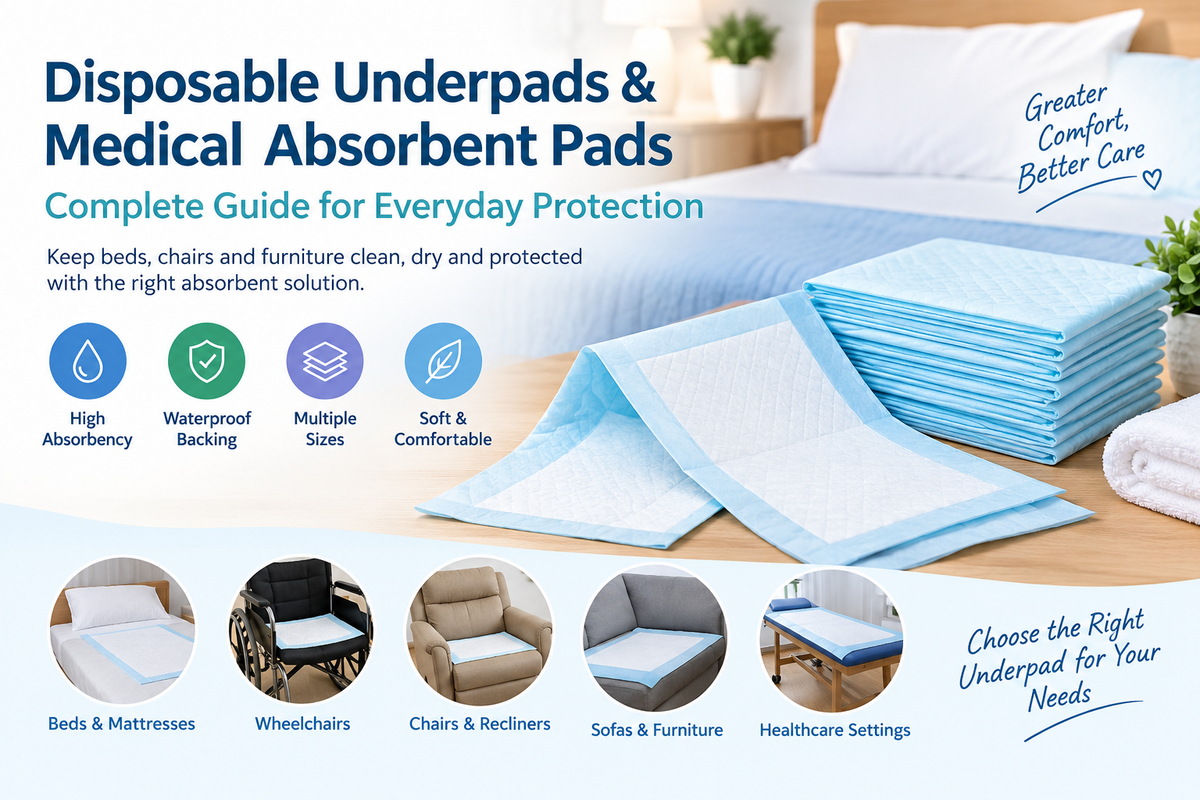
Disposable underpads and medical absorbent pads are practical solutions for protecting beds, chairs, couches, wheelchairs, and other surfaces from moisture. They are commonly used at home, in hospitals, nursing facilities, rehabilitation centers, and other care environments where maintaining cleanliness and comfort is important.
Whether you are caring for an older adult, managing everyday incontinence, assisting someone recovering at home, or looking for additional protection for a mattress or furniture, choosing the right medical absorbent pad can make daily care easier.
In this guide, we explain what disposable underpads are, how they work, their benefits, different sizes and absorbency levels, and how to choose the right pad for your needs.
What Are Disposable Underpads?
Disposable underpads are absorbent protective pads designed to be placed underneath a person or over a surface to help contain moisture. They typically have multiple layers that work together to absorb and retain liquid while helping protect the surface underneath.
A typical disposable underpad may include:
- A soft top sheet for comfortable contact
- An absorbent core to capture and retain moisture
- A waterproof backing to help protect mattresses and furniture
- Sealed edges to reduce leakage
- Different sizes and absorbency levels for different applications
These pads are sometimes called medical underpads, disposable bed pads, absorbent underpads, incontinence underpads, or medical absorbent pads.
How Do Medical Absorbent Pads Work?
Medical absorbent pads are designed with layered construction.
When moisture reaches the surface, the top layer allows liquid to pass through to the absorbent core. The core captures and holds the liquid, while the waterproof backing helps prevent moisture from reaching the protected surface.
This design makes disposable absorbent pads useful for protecting:
- Mattresses
- Bed sheets
- Recliners
- Sofas
- Wheelchairs
- Examination tables
- Treatment surfaces
- Changing areas
- Other furniture and care surfaces
The effectiveness of a pad depends on its size, absorbency, construction, and how it is positioned.
Benefits of Disposable Underpads
1. Protect Bedding and Furniture
One of the primary purposes of disposable underpads is surface protection. A waterproof backing can help reduce the risk of moisture reaching mattresses, sheets, chairs, and other surfaces.
2. Convenient for Everyday Care
Disposable pads can be removed and discarded after use, reducing the need to wash heavily soiled bedding or protective covers.
3. Available in Different Absorbency Levels
Not every situation requires the same amount of absorbency. Disposable medical pads are available in different absorbency levels, allowing caregivers to select an option based on individual needs.
4. Useful at Home and in Healthcare Settings
Medical absorbent pads can be used in homes, hospitals, assisted-living environments, nursing facilities, rehabilitation centers, and other healthcare settings.
5. Helps Simplify Caregiver Tasks
A properly selected underpad can provide an additional protective layer between the individual and the surface underneath, making routine cleanup easier.
6. Multiple Size Options
Underpads are available in various dimensions. Smaller pads may work well for chairs and other compact surfaces, while larger options can provide greater coverage for beds and mattresses.
Disposable Underpads vs. Reusable Underpads
Both disposable and reusable underpads can provide surface protection, but they serve different purposes.
| Feature | Disposable Underpads | Reusable Underpads |
|---|---|---|
| Cleaning | Discard after use | Requires washing |
| Convenience | Very convenient | Requires maintenance |
| Initial cost | Usually lower per pad | Higher initial cost |
| Long-term use | Designed for single use | Designed for repeated use |
| Travel | Easy to carry | May require more space |
| Laundry | No washing required | Requires regular washing |
| Best for | Convenient everyday protection | Repeated use and laundry-based care |
The right choice depends on personal preferences, frequency of use, absorbency requirements, and whether washing is practical.
How to Choose the Right Disposable Underpad
Choosing the right disposable underpad involves more than selecting the largest size. Consider several factors before purchasing.
1. Consider the Intended Surface
Think about where the pad will be used.
For example:
- Bed: Choose a size that provides adequate coverage around the area requiring protection.
- Chair or recliner: A smaller pad may be sufficient.
- Wheelchair: Consider the seat dimensions and how much coverage is needed.
- Examination or treatment surface: Select an appropriate medical-grade absorbent pad based on the application.
2. Check Absorbency
Absorbency is one of the most important factors.
If the pad is being used for occasional light moisture, a lower-absorbency option may be adequate. For heavier moisture, a higher-absorbency medical underpad may provide better protection.
Always check the manufacturer's stated absorbency information rather than assuming that a thicker pad automatically provides greater absorption.
3. Select the Appropriate Size
A pad should provide sufficient coverage without making the surface difficult to use.
Common considerations include:
- Surface dimensions
- Position of the user
- Expected moisture level
- Whether additional protection is being used
Larger doesn't always mean better. The right size should balance coverage, comfort, and practicality.
4. Look for a Waterproof Backing
A waterproof or moisture-resistant backing can help prevent liquid from reaching the mattress, furniture, or other protected surface.
This is particularly important when the pad is being used on surfaces that are difficult or expensive to clean.
5. Consider the Top Material
The top layer should feel reasonably comfortable and allow moisture to move into the absorbent core.
For situations involving prolonged contact, a soft and skin-friendly surface may be preferable.
6. Consider Packaging and Quantity
If underpads are used regularly, buying an appropriate quantity can make routine care more convenient.
However, storage space and usage frequency should also be considered.
Common Uses for Medical Absorbent Pads
Medical absorbent pads have applications beyond beds.
Bed Protection
Disposable bed pads can be placed over sheets or protective bedding to provide an additional layer of moisture protection.
Wheelchair Protection
An appropriately sized underpad can help protect wheelchair seating surfaces from moisture.
Recliner and Sofa Protection
Underpads can also be useful on chairs, recliners, and sofas where moisture protection is needed.
Healthcare Facilities
Hospitals, clinics, nursing homes, rehabilitation centers, and other care facilities may use absorbent pads as part of routine surface protection and patient-care procedures.
Home Care
For caregivers providing assistance at home, disposable underpads can be a convenient part of a broader home-care setup.
Are Disposable Underpads the Same as Incontinence Pads?
No. Disposable underpads and incontinence pads serve different purposes.
Incontinence pads are generally designed to be worn by a person, while underpads are designed to protect surfaces such as beds, chairs, and furniture.
They can sometimes be used together.
For example, a person may use an appropriate personal absorbent product while a disposable underpad provides additional protection for the bed or chair.
Using the correct product for its intended purpose can provide more effective protection and simplify cleanup.
How to Use Disposable Underpads Correctly
Using an underpad correctly can help maximize its effectiveness.
Step 1: Select the Correct Size
Choose a pad that provides enough coverage for the intended surface.
Step 2: Identify the Waterproof Side
Follow the manufacturer's instructions to determine which side should face the protected surface.
Step 3: Position the Pad
Place the pad flat on the bed, chair, wheelchair, or other surface. Avoid excessive folding or bunching.
Step 4: Secure the Pad
If the product includes features designed to help keep it in place, use them according to the manufacturer's instructions.
Step 5: Replace When Needed
Replace the disposable underpad when it reaches its intended capacity, becomes heavily soiled, or no longer provides adequate protection.
Step 6: Dispose Properly
Dispose of used pads according to local waste-disposal requirements and the manufacturer's recommendations.
How Often Should You Change a Disposable Underpad?
There is no universal replacement schedule because usage varies.
A disposable underpad should generally be replaced when it is wet, soiled, saturated, damaged, or no longer providing adequate protection.
Factors that can affect replacement frequency include:
- Absorbency level
- Amount of moisture
- Pad size
- Duration of use
- Individual care requirements
- Manufacturer instructions
Regularly checking the pad can help prevent leakage and unnecessary exposure to moisture.
Can Disposable Underpads Be Used on a Mattress?
Yes. Disposable underpads can be used to provide an additional layer of protection for mattresses and bedding.
For best results, select a pad that provides adequate coverage for the area being protected and position it according to the manufacturer's instructions.
An underpad should be viewed as an additional protective layer rather than a replacement for appropriate bedding or mattress-protection products.
Are Disposable Underpads Suitable for Wheelchairs?
Yes, appropriately sized medical absorbent pads can be used on wheelchair seats to help protect the seating surface.
Before using one, check the dimensions of the wheelchair seat and the pad. The pad should fit without creating excessive folds or interfering with safe seating and positioning.
For mobility equipment, always follow the equipment manufacturer's instructions and use products appropriately.
Disposable Underpads for Home Care
Home caregivers often need practical products that make everyday care easier. Disposable bed pads and absorbent underpads can be part of a home-care routine because they provide convenient surface protection without requiring immediate laundering after every use.
They can be particularly useful for:
- Guest rooms
- Bedrooms
- Recliners
- Wheelchairs
- Travel
- Temporary care situations
- Home healthcare environments
Keeping a suitable supply available can also help caregivers respond quickly when an additional protective layer is needed.
Tips for Better Underpad Use
Follow these simple tips to get better results from disposable absorbent pads:
- Choose the right size for the surface.
- Select appropriate absorbency based on expected moisture.
- Keep the pad flat to maximize coverage.
- Check the pad regularly during use.
- Replace saturated pads promptly.
- Store unused pads in a clean, dry location.
- Follow manufacturer instructions for use and disposal.
- Consider combining an underpad with other appropriate protective products when additional protection is needed.
What Should You Look for in a High-Quality Medical Absorbent Pad?
When comparing products, look for:
- Appropriate absorbency
- Adequate dimensions
- A reliable waterproof backing
- A comfortable top layer
- Secure construction
- Suitable packaging
- Clear manufacturer specifications
- Intended-use information
Rather than choosing solely based on price, consider how well the product matches your actual needs.
Frequently Asked Questions About Disposable Underpads
What are disposable underpads used for?
Disposable underpads are used to help protect beds, mattresses, chairs, wheelchairs, furniture, and other surfaces from moisture and spills.
Are disposable underpads waterproof?
Many disposable underpads include a waterproof or moisture-resistant backing designed to help prevent liquid from reaching the protected surface. Always check the product specifications.
Can disposable underpads be used on chairs and wheelchairs?
Yes. Appropriately sized disposable underpads can be used on chairs, recliners, and wheelchair seats when suitable for the equipment and intended application.
How do I choose the right absorbency level?
Choose the absorbency level based on the expected amount of moisture and the manufacturer's specifications. Higher absorbency may be appropriate when greater moisture protection is required.
Can disposable underpads replace mattress protectors?
Disposable underpads provide an additional protective layer but are not necessarily a replacement for a dedicated mattress protector. The two products can be used together when appropriate.
Final Thoughts
Disposable underpads and medical absorbent pads are simple but useful products for maintaining surface protection in home-care and healthcare environments. With different sizes, absorbency levels, and designs available, selecting the right product starts with understanding where the pad will be used and how much protection is needed.
For everyday care, focus on absorbency, size, waterproof backing, comfort, and intended use. Choosing the right disposable underpad can help protect bedding and furniture while making routine care and cleanup more manageable.
Explore disposable underpads and medical absorbent pads at AllCareStore to find options designed for different home-care and healthcare needs.