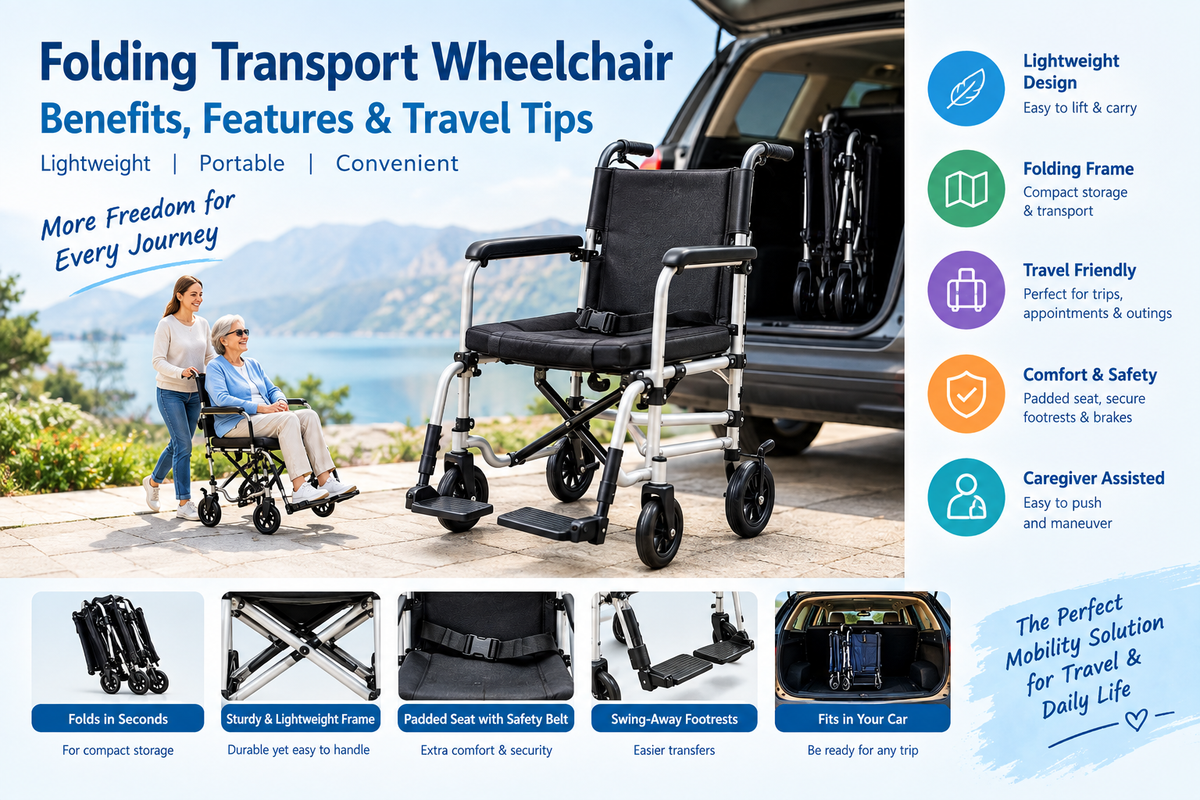
A folding transport wheelchair is a practical mobility solution for people who need caregiver-assisted transportation, easy storage, and convenient travel. Unlike many standard wheelchairs designed for self-propulsion, a transport wheelchair typically has smaller wheels and is pushed by a caregiver using rear handles.
The folding transport wheelchair adds another advantage: its frame can fold or collapse for easier storage and transportation. This makes it a popular option for trips, appointments, shopping, family outings, and everyday mobility.
Whether you're looking for a lightweight transport wheelchair, portable wheelchair, or travel wheelchair, understanding the key features can help you choose a model that fits the user's needs and transportation requirements.
What Is a Folding Transport Wheelchair?
A folding transport wheelchair is a mobility chair designed primarily to be pushed by a caregiver. It generally features a lightweight or compact frame, four wheels or casters, a seat and backrest, footrests, and push handles.
The folding design allows the wheelchair to become more compact when it is not being used.
Common features may include:
- Folding frame
- Lightweight construction
- Compact storage
- Caregiver push handles
- Locking hand brakes or wheel locks
- Swing-away or removable footrests
- Padded seat and backrest
- Safety belt
- Various seat widths
- Different weight capacities
Because transport wheelchairs are generally designed for caregiver propulsion, they can be especially useful when the person using the chair cannot or does not want to self-propel a standard manual wheelchair.
Folding Transport Wheelchair vs Standard Wheelchair
The biggest difference between a transport wheelchair and a standard manual wheelchair is how the chair is propelled.
A standard manual wheelchair commonly has large rear wheels that allow the user to self-propel. A transport wheelchair generally has smaller wheels and is intended to be pushed by a caregiver.
| Feature | Folding Transport Wheelchair | Standard Manual Wheelchair |
|---|---|---|
| Primary propulsion | Caregiver | User or caregiver |
| Rear wheels | Usually smaller | Usually larger |
| Folding design | Common | Model dependent |
| Portability | Generally high | Varies |
| Storage | Compact when folded | Varies |
| Self-propulsion | Usually not designed for it | Common |
| Travel use | Often convenient | Depends on model |
| Caregiver assistance | Usually required | Optional depending on user |
The right option depends on whether the user needs independent self-propulsion or primarily caregiver-assisted mobility.
Benefits of a Folding Transport Wheelchair
1. Easy to Store
One of the biggest benefits of a folding transport wheelchair is convenient storage.
When folded, many models occupy substantially less space than when fully opened. This can make them easier to store in:
- Car trunks
- SUVs
- Closets
- Garages
- Storage rooms
- Offices
- Homes with limited space
Always check the folded dimensions of the specific model before purchasing to make sure it fits your available storage area.
2. Convenient for Travel
A portable transport wheelchair can be useful for vacations, appointments, shopping trips, and other outings where walking long distances may be difficult.
A folding frame can make the chair easier to transport between locations, especially when the wheelchair needs to be loaded into a vehicle.
For frequent travelers, consider:
- Folded dimensions
- Overall weight
- Carrying handles
- Frame design
- Wheel removal, if available
- Storage space required
3. Lightweight Design
Many lightweight transport wheelchairs are designed with portability in mind.
A lighter chair can be easier for a caregiver to lift into and out of a vehicle. However, the lightest model is not automatically the right choice.
Balance weight against:
- Weight capacity
- Seat width
- Frame durability
- Comfort
- Wheel design
- Accessories
- Intended frequency of use
4. Caregiver-Friendly Mobility
Transport wheelchairs are generally designed around caregiver-assisted mobility.
Push handles provide a convenient point for a caregiver to control the chair. Depending on the model, features such as hand brakes or locking mechanisms may provide additional control during stops and transfers.
5. Compact for Vehicles
A folding transport wheelchair can be particularly useful for people who frequently travel by car.
Before purchasing, measure your vehicle's available cargo space and compare it with the chair's folded dimensions.
This is especially important when transporting other items such as luggage, walkers, medical equipment, or shopping bags.
6. Useful for Short Trips and Outings
A transport wheelchair can help reduce the amount of walking required during activities such as:
- Shopping
- Medical appointments
- Airport trips
- Museums
- Parks
- Family events
- Restaurants
- Vacations
The chair provides seated mobility while allowing a caregiver to manage movement.
Important Features to Look for in a Folding Transport Wheelchair
Not every folding transport wheelchair has the same specifications. Consider the following features before buying.
1. Overall Weight
If the chair will frequently be lifted into a vehicle, its overall weight is an important consideration.
Compare the listed product weight with your ability to safely lift and handle it.
Also check whether removable components affect the lifting weight.
2. Folded Dimensions
Do not look only at the chair's open dimensions.
Check:
- Folded height
- Folded width
- Folded depth
- Storage configuration
A compact folded size can make transportation significantly easier.
3. Seat Width
Seat width is one of the most important sizing considerations.
Common transport wheelchair seat widths vary by model. Measure the user and compare their dimensions with the manufacturer's recommended sizing.
A seat that is too narrow can be uncomfortable, while excessive width can make positioning and maneuvering less convenient.
4. Weight Capacity
Always check the manufacturer's stated weight capacity.
If the user requires a higher-capacity chair, look for a heavy-duty transport wheelchair or bariatric transport wheelchair specifically designed for higher weight requirements.
Never exceed the manufacturer's specified weight capacity.
5. Wheel and Caster Design
Transport wheelchairs commonly use smaller wheels because they are designed for caregiver propulsion.
Consider the environments where the chair will be used:
- Indoor flooring
- Sidewalks
- Smooth outdoor surfaces
- Ramps
- Building entrances
- Shopping areas
A transport wheelchair is generally most convenient on suitable, relatively smooth surfaces. Check the manufacturer's intended-use information before using a specific model on uneven terrain.
6. Footrests
Footrests support the user's legs and feet during transportation.
Useful configurations may include:
- Swing-away footrests
- Removable footrests
- Padded footrests
- Adjustable footrests
Swing-away or removable footrests can also make transfers easier in some situations.
7. Armrests
Armrests contribute to positioning and comfort.
Depending on the model, you may find:
- Fixed armrests
- Desk-length armrests
- Full-length armrests
- Removable armrests
- Padded armrests
Consider how the wheelchair will be used around tables, desks, and other surfaces.
8. Push Handles
Because a transport wheelchair is generally caregiver-propelled, push handles are an important feature.
Look for handles that provide a comfortable grip and suitable height for the caregiver.
Some models may also include additional braking controls near the push handles.
9. Brakes and Wheel Locks
A folding transport wheelchair may include wheel locks or caregiver hand brakes.
These features can help keep the wheelchair stationary when parked, depending on the design.
Always use the braking system according to the manufacturer's instructions, especially during transfers.
10. Safety Belt
Some transport wheelchairs include a safety belt to help support positioning during transportation.
If included, ensure it is adjusted and used according to the manufacturer's instructions.
11. Seat and Backrest
Comfort becomes particularly important when the wheelchair will be used for extended periods.
Look for:
- Padded upholstery
- Supportive backrest
- Appropriate seat dimensions
- Breathable materials
- Easy-clean surfaces
The ideal configuration depends on the user's size and intended duration of use.
How to Choose the Right Folding Transport Wheelchair
Follow these steps when comparing models.
Step 1: Determine Who Will Push the Chair
If the wheelchair will primarily be pushed by a caregiver, a transport wheelchair may be appropriate.
If the user needs to independently propel the chair, compare transport wheelchairs with self-propelled manual wheelchair options.
Step 2: Measure the User
Record the user's:
- Hip width
- Approximate seated width
- Leg length
- Height
- Weight
Use these measurements when comparing seat dimensions and weight capacity.
Step 3: Measure Your Vehicle
Before ordering a portable wheelchair, measure the available vehicle space.
Compare the measurements with the wheelchair's:
- Folded width
- Folded height
- Folded depth
- Overall weight
Step 4: Consider Where It Will Be Used
Think about whether the chair will primarily be used:
- Indoors
- Outdoors
- During travel
- For appointments
- For shopping
- At airports
- Around the neighborhood
Choose features that match the actual environment.
Step 5: Compare Comfort Features
If the chair will be used frequently, pay attention to the:
- Seat padding
- Back support
- Armrests
- Footrests
- Seat width
- Seat depth
Step 6: Check Weight Capacity
Select a chair with a suitable weight capacity and follow the manufacturer's specifications.
Step 7: Compare Foldability
Some chairs fold differently from others. Check whether the folding mechanism is practical for the caregiver who will be using it.
Folding Transport Wheelchair Travel Tips
A travel wheelchair can make trips more manageable when transportation and storage are planned in advance.
1. Measure Before You Travel
Check the wheelchair's folded dimensions and compare them with your vehicle's storage area.
For air travel or other transportation, check the carrier's current mobility-equipment requirements before departure.
2. Practice Folding the Chair
Before your trip, practice:
- Opening the chair.
- Folding the frame.
- Securing removable components.
- Loading it into your vehicle.
- Unloading and setting it up.
This can make travel more efficient.
3. Protect Removable Components
If your transport wheelchair has removable footrests or other detachable parts, keep them secured during transportation.
4. Consider the User's Comfort
Long travel days may involve extended periods of sitting. Consider the chair's seat padding, back support, footrests, and overall fit.
5. Check Transportation Policies
Airlines, hotels, transportation providers, and venues may have their own procedures for mobility equipment.
Check current policies directly with the relevant provider before traveling.
6. Keep Product Information Available
It can be useful to keep the wheelchair's manufacturer and model information available during travel, especially if you need to reference specifications or operating instructions.
Can You Take a Folding Transport Wheelchair on an Airplane?
A folding transport wheelchair can be useful for air travel, but airline procedures vary.
Before flying, confirm:
- How the airline handles mobility equipment
- Whether advance notification is recommended or required
- Where the wheelchair can be checked
- How the chair should be prepared
- Whether detachable components should be removed
- Where the wheelchair can be returned after arrival
Airline policies can change, so check directly with your airline before the trip.
Folding Transport Wheelchair Safety Tips
Safety should be considered every time the wheelchair is used.
Lock the wheels when stationary
Use the wheelchair's brakes or wheel locks when the chair is parked, especially when transferring.
Stay within the weight capacity
Never exceed the manufacturer's specified capacity.
Use appropriate surfaces
Follow the manufacturer's guidance regarding terrain, slopes, thresholds, and outdoor use.
Check the chair regularly
Inspect:
- Wheels
- Casters
- Brakes
- Footrests
- Armrests
- Seat
- Frame
- Folding mechanism
Secure the user properly
If the model includes a safety belt or positioning system, use it according to the manufacturer's instructions.
Do not use a folded chair for seating
Always make sure the wheelchair is fully opened and securely locked into its operating position before the user sits down.
Folding Transport Wheelchair vs Travel Wheelchair
The terms folding transport wheelchair and travel wheelchair are sometimes used interchangeably, but they can describe different product designs.
A folding transport wheelchair generally emphasizes caregiver-assisted mobility and portability.
A travel wheelchair may refer more broadly to a lightweight, compact wheelchair designed for transportation and travel.
When shopping, focus on the actual specifications rather than the product name alone.
Who Should Consider a Folding Transport Wheelchair?
A folding transport wheelchair may be suitable for people who:
- Need caregiver-assisted mobility
- Have difficulty walking long distances
- Want a compact mobility option for outings
- Need a wheelchair for appointments
- Frequently travel by car
- Need convenient storage
- Want a portable mobility solution
It may not be the ideal option for someone who needs independent self-propulsion. In that situation, a standard manual wheelchair may offer different functionality.
Common Mistakes When Buying a Folding Transport Wheelchair
Choosing only by weight
A lightweight wheelchair can be convenient, but weight should be considered alongside capacity, comfort, durability, and intended use.
Ignoring folded dimensions
A wheelchair may be lightweight but still too large for a particular vehicle.
Forgetting seat width
The correct seat dimensions are essential for comfortable positioning.
Not checking weight capacity
Always verify the manufacturer's specifications before purchasing.
Assuming every transport wheelchair is suitable for outdoor terrain
Transport wheelchairs vary in design. Check the manufacturer's intended-use recommendations.
Buying without considering the caregiver
The person pushing the chair will interact with the handles, brakes, folding mechanism, and overall weight. Their needs matter too.