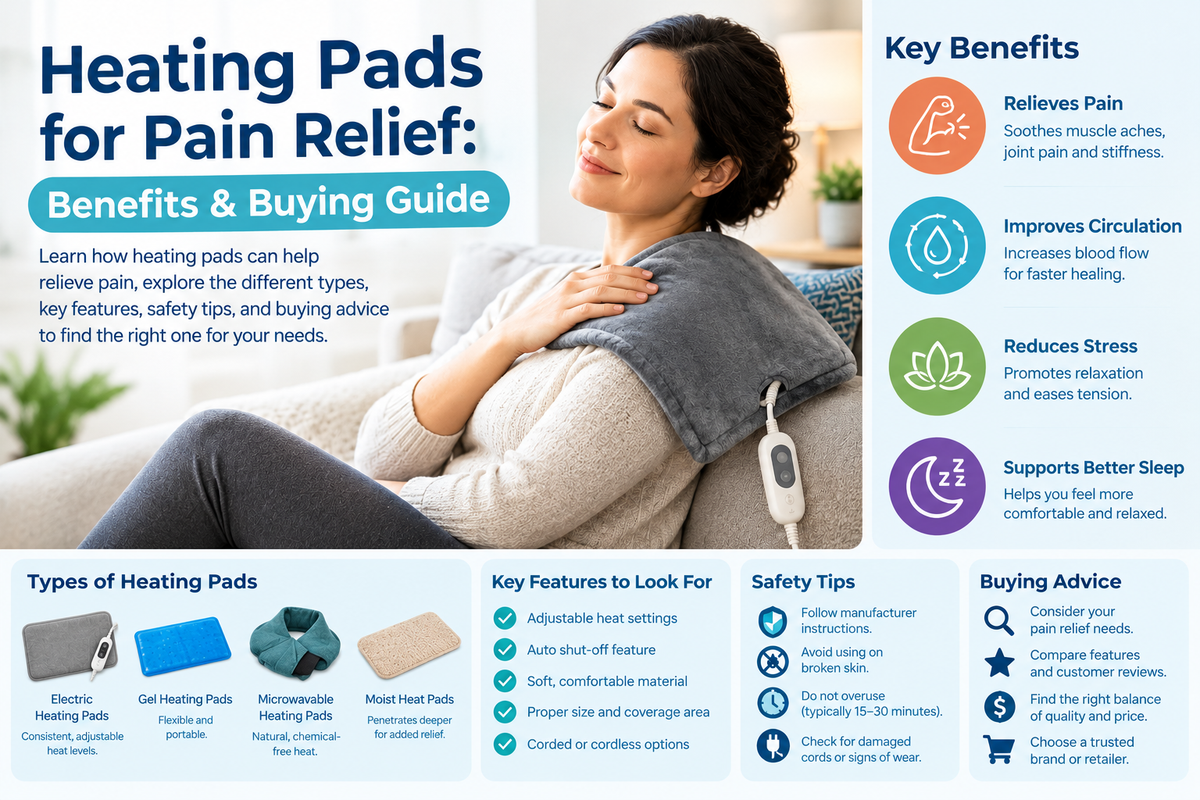
Heating pads are a popular home comfort solution for people looking to ease muscle pain, back pain, joint stiffness, and everyday muscle tension. Heat therapy provides soothing warmth that may help relax tight muscles, improve local blood circulation, and support temporary relief from minor aches.
Whether you need a heating pad for back pain, a neck and shoulder heating pad, or an electric heating pad for muscle relaxation, choosing the right option can help make your daily comfort routine easier.
In this guide, we’ll explore the benefits of heating pads, the different types available, important safety tips, and how to choose the best heating pad for your needs.
What Is a Heating Pad?
A heating pad is a reusable product designed to deliver controlled warmth to a specific area of the body. It is commonly used as part of a home heat therapy routine for temporary relief from muscle tension, mild aches, and stiffness.
Heating pads are available in several styles, including electric, microwaveable, gel, and infrared models. Depending on the design, they may offer adjustable temperature settings, automatic shutoff, flexible materials, or targeted coverage for different body areas.
Key Benefits of Heating Pads
Using a heating pad for muscle pain can provide several comfort benefits when used correctly.
-
Temporary muscle pain relief: Warmth can help relax tense muscles and ease minor soreness.
-
Relief from stiffness: Heat may improve flexibility and make movement more comfortable when muscles feel tight.
-
Back and neck comfort: A back heating pad or neck heating pad can provide targeted warmth to common areas of muscle tension.
-
Relaxation and comfort: Gentle warmth can create a calming addition to a rest or recovery routine.
-
Convenient home heat therapy: Many reusable heating pads are easy to use while sitting or resting at home.
Heat therapy is not suitable for every injury or condition. It should not be considered a cure for the underlying cause of persistent pain.
Types of Heating Pads
Choosing the right heating pad for pain relief depends on the area you want to treat, your preferred heat source, and the features you need.
| Type of heating pad | Key features | Common uses |
|---|---|---|
| Electric heating pad | Powered heat with adjustable settings on many models | Back, shoulders, and general muscle comfort |
| Microwaveable heating pad | Heated in a microwave according to product instructions | Targeted warmth at home |
| Reusable gel heating pad | Flexible design; heating method varies by product | Localized warmth and comfort |
| Infrared heating pad | Uses an infrared heating technology | Targeted heat therapy, depending on the model |
| Wearable heating pad | Designed to fit specific body areas | Waist, neck, shoulders, or other targeted areas |
Always check the manufacturer's instructions because heating methods, temperature ranges, and recommended use times vary by product.
How to Choose the Best Heating Pad
The best heating pad for back pain or muscle stiffness is one that fits your needs and can be used safely.
1. Choose the Right Size
A small heating pad may work well for a localized area, while a larger model can cover more of the back or shoulders. Select a size that provides suitable coverage without wrapping tightly around the body.
2. Check Temperature Settings
An electric heating pad with adjustable heat settings allows you to select a comfortable level of warmth. Multiple settings can be useful when different situations call for different levels of heat.
3. Look for Automatic Shutoff
An automatic shutoff heating pad can reduce the risk of prolonged heating if you forget to switch it off. However, this feature does not eliminate burn risk or make it safe to sleep with a heating pad.
4. Consider the Material
Soft, flexible materials can make a heating pad more comfortable to position. Check whether the cover is removable or washable and follow the manufacturer's cleaning instructions.
5. Match the Product to Your Needs
-
For back muscle tension, consider a back heating pad with suitable coverage.
-
For shoulder and neck discomfort, look for a design shaped for those areas.
-
For portability, consider a microwaveable or cordless model, if available.
-
For convenient home use, an electric model with clear controls may be suitable.
Compare product dimensions, heat settings, power requirements, and safety features before purchasing.
How to Use a Heating Pad Safely
Safe use is essential when using heating pads for muscle pain relief.
-
Read the instructions: Follow the manufacturer's guidance for heating, positioning, and duration.
-
Start with gentle warmth: Choose a comfortable setting rather than the highest temperature.
-
Protect your skin: Use a cover or barrier if instructed by the manufacturer, and avoid direct contact with excessively hot surfaces.
-
Check your skin regularly: Stop using the pad if you notice redness, burning, discomfort, or unusual skin changes.
-
Avoid sleeping with a heating pad: Prolonged heat exposure can cause burns, even when the pad feels comfortable.
-
Keep the pad dry when required: Never use an electric heating pad in wet conditions or contrary to its instructions.
-
Use extra caution with reduced sensation: People with diabetes-related nerve damage, poor circulation, or reduced ability to sense heat should consult a healthcare professional before using heat therapy.
Do not apply heat to fresh injuries or areas with significant swelling unless a healthcare professional advises it. Seek medical advice for severe, unexplained, or persistent pain.
Who Can Benefit From Heating Pads?
A heating pad for home use may be helpful for adults experiencing occasional muscle tension or stiffness. Some people also use heat as part of a clinician-recommended comfort routine.
However, heating pads may not be appropriate for everyone. Older adults, people with sensitive skin, and individuals with conditions that affect sensation or circulation should take additional precautions.
If pain is severe, recurring, or accompanied by symptoms such as weakness, numbness, fever, or significant swelling, consult a healthcare professional rather than relying on heat therapy alone.
Frequently Asked Questions About Heating Pads
1. What is the best heating pad for back pain?
The best option depends on the area requiring warmth, the desired coverage, and your preferred features. A larger electric heating pad for back pain with adjustable temperature settings and automatic shutoff may be convenient for home use.
2. Do heating pads help relieve muscle pain?
Yes, heat therapy may provide temporary relief from minor muscle aches and tension by relaxing muscles and increasing local blood flow. It does not treat every cause of pain.
3. How long should you use a heating pad?
Follow the manufacturer's recommended duration. Many products are intended for short sessions, often around 15–20 minutes, but instructions vary. Avoid prolonged exposure and never sleep with a heating pad switched on.
4. Are electric heating pads safe for seniors?
They can be appropriate for some older adults when used according to instructions. Seniors with reduced skin sensation, poor circulation, or difficulty operating the controls should seek professional advice and may need assistance.
5. Is a heating pad or an ice pack better for pain?
Heat is often used for muscle tightness and stiffness, while cold therapy may be preferred for some recent injuries with swelling. The right choice depends on the injury and symptoms; seek medical advice when uncertain.
6. Can you use a heating pad every day?
Some people can use a heating pad regularly for short periods, provided the product instructions allow it and their skin remains healthy. Daily use is not appropriate for everyone, particularly people with reduced sensation or circulation problems.
7. What features should I look for in a heating pad?
Look for suitable coverage, adjustable heat settings, comfortable materials, easy-to-use controls, and automatic shutoff where available. Choose a product designed for the body area you intend to treat.
Find the Right Heating Pad at AllCareStore
Choosing a suitable heating pad for comfort and pain relief starts with understanding your needs, comparing product features, and following safe-use instructions. Whether you prefer an electric heating pad, a flexible microwaveable design, or a targeted neck and back model, prioritize comfort, appropriate coverage, and safety features.
Explore the health and wellness products available at AllCareStore to find options that fit your home comfort routine.