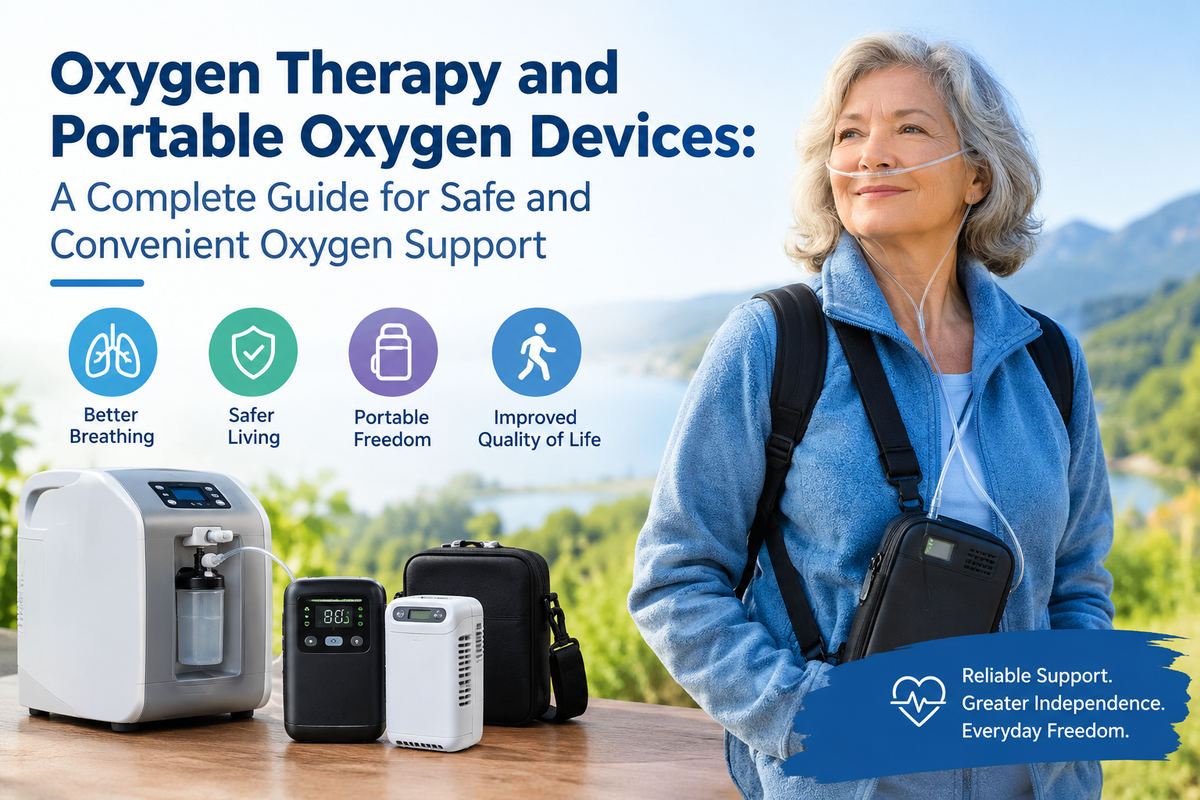
Oxygen therapy is a common form of supplemental oxygen support used when a person needs more oxygen than they can obtain through normal breathing. Depending on individual needs and a healthcare provider’s recommendation, oxygen may be delivered through stationary oxygen equipment or portable oxygen devices designed for mobility and everyday activities.
Portable oxygen technology has made it easier for many oxygen users to maintain greater independence while traveling, shopping, attending appointments, or participating in daily activities. However, choosing the right device requires understanding oxygen flow requirements, device types, battery life, portability, and prescribed settings.
This guide explains oxygen therapy, portable oxygen concentrators, oxygen tanks, oxygen cylinders, oxygen accessories, and important safety considerations to help you understand the available options.
What Is Oxygen Therapy?
Oxygen therapy is the use of supplemental oxygen to help maintain adequate oxygen levels in the body when a healthcare professional determines that additional oxygen is needed.
Oxygen can be delivered using several types of equipment, including:
- Oxygen concentrators
- Portable oxygen concentrators
- Compressed oxygen cylinders
- Oxygen tanks
- Oxygen conserving devices
- Nasal cannulas and oxygen tubing
- Oxygen masks and related accessories
The appropriate equipment depends on a person's prescribed oxygen requirements, lifestyle, mobility needs, and healthcare provider's recommendations.
How Does Oxygen Therapy Work?
An oxygen delivery system provides supplemental oxygen through a device connected to a nasal cannula or oxygen mask. The oxygen enters the respiratory system, allowing the body to receive additional oxygen when supplemental support has been prescribed.
Oxygen therapy equipment does not replace professional medical care. The oxygen flow rate and delivery method should be determined according to the individual's prescription.
What Is a Portable Oxygen Device?
A portable oxygen device is oxygen equipment designed to allow users to receive prescribed supplemental oxygen while away from a stationary oxygen source.
Portable systems can be particularly useful for people who need oxygen support while:
- Walking
- Shopping
- Traveling
- Visiting healthcare providers
- Attending social activities
- Spending time outdoors
- Moving around the home
The term portable oxygen device can refer to different technologies, including portable oxygen concentrators and portable oxygen cylinders.
Portable Oxygen Concentrator vs. Oxygen Tank
One of the most common questions is whether a portable oxygen concentrator or oxygen tank is better.
| Feature | Portable Oxygen Concentrator | Oxygen Tank/Cylinder |
|---|---|---|
| Oxygen source | Concentrates oxygen from surrounding air | Stores compressed oxygen |
| Refilling | Usually does not require oxygen refilling | Requires replacement/refilling |
| Portability | Designed for mobile use | Portable but can be heavier |
| Power | Battery/electricity required | Does not require electrical power to produce oxygen |
| Battery considerations | Important | Generally not applicable |
| Long-term convenience | Often convenient for regular mobility | Depends on cylinder size and usage |
| Flow options | Vary by model | Vary by regulator/system |
| Travel considerations | Battery planning may be required | Transport rules may apply |
Neither option is automatically right for everyone. The correct oxygen system depends on the prescribed oxygen requirements and recommendations from a healthcare professional.
What Is a Portable Oxygen Concentrator?
A portable oxygen concentrator (POC) is a device that takes in surrounding air, separates nitrogen from oxygen, and delivers concentrated oxygen to the user.
Unlike traditional oxygen cylinders, a portable oxygen concentrator generally does not store a large supply of oxygen inside the device. Instead, it continuously processes surrounding air while operating.
This makes POCs an attractive option for people who need portable oxygen support and want to reduce dependence on oxygen cylinder refills.
Key Features of Portable Oxygen Concentrators
Depending on the model, a portable oxygen concentrator may include:
- Rechargeable battery
- AC power adapter
- DC vehicle power option
- Lightweight design
- Carrying case
- Adjustable oxygen settings
- Pulse-dose oxygen delivery
- Battery status indicator
- Digital display
- Travel-friendly design
Always check the specifications of a specific device because features vary considerably between models.
Pulse Dose vs. Continuous Flow Oxygen
Understanding oxygen delivery modes is important when selecting an oxygen device.
What Is Pulse-Dose Oxygen?
Pulse-dose oxygen delivery provides oxygen when the device detects inhalation. Rather than delivering oxygen continuously, the system releases a measured oxygen pulse during breathing.
This technology can help reduce oxygen consumption and may allow a portable device to operate longer on a battery charge.
However, pulse-dose settings are not necessarily equivalent to continuous-flow settings.
What Is Continuous-Flow Oxygen?
Continuous-flow oxygen delivers oxygen at a continuous rate while the system is operating.
Some people may require continuous flow rather than pulse-dose delivery. The appropriate delivery mode should be determined by a healthcare professional.
Important AEO Question: Is Pulse Dose the Same as Continuous Flow?
No. Pulse-dose and continuous-flow oxygen delivery are different. A pulse-dose setting should not automatically be considered equivalent to a particular continuous-flow setting. Users should follow the oxygen prescription and healthcare provider's instructions.
How to Choose a Portable Oxygen Device
Choosing an oxygen device should begin with the person's prescribed oxygen requirements rather than portability alone.
Consider these factors before purchasing or using a device.
1. Oxygen Flow Requirement
The most important consideration is the prescribed oxygen flow or delivery setting.
A device should be capable of providing the oxygen delivery mode and settings prescribed by the healthcare provider.
Do not change oxygen settings without professional guidance.
2. Pulse Dose or Continuous Flow
Determine whether the prescribed oxygen therapy requires:
- Pulse-dose delivery
- Continuous-flow delivery
- Or another specified oxygen delivery method
Not every portable oxygen concentrator provides the same delivery options.
3. Battery Life
For portable oxygen equipment, battery life is an important consideration.
Check:
- Battery capacity
- Expected operating time
- Recharge time
- Spare battery availability
- AC charging capability
- DC vehicle charging
- Whether the battery is removable
Actual battery duration can vary depending on oxygen settings, device configuration, battery age, and usage conditions.
4. Weight and Portability
If the device will be used outside the home, weight can make a significant difference.
Look for a design that is practical for the intended lifestyle, whether that means:
- Carrying the device
- Using a shoulder bag
- Pulling a wheeled carrier
- Placing the equipment in a vehicle
- Moving between rooms
A lighter device may be easier to transport, but lightweight models may have different performance specifications.
5. Noise Level
If the oxygen device will be used at home, during sleep, or in quiet environments, consider its operating noise.
Manufacturers typically provide noise specifications for their devices.
6. Power Options
A portable oxygen concentrator may offer several power options, such as:
- Rechargeable battery
- AC wall power
- DC vehicle power
Having multiple power options can make the device more practical for everyday mobility and travel.
7. Accessories
Useful oxygen therapy accessories may include:
- Nasal cannulas
- Oxygen tubing
- Carrying bags
- Batteries
- Battery chargers
- Power adapters
- Tubing connectors
- Oxygen cylinder carts
- Storage accessories
Accessories should be compatible with the specific oxygen equipment.
Portable Oxygen Devices for Travel
Travel is one of the most common reasons people look for portable oxygen devices.
A portable system can make it easier to manage prescribed oxygen therapy while away from home, but planning is essential.
Before traveling, consider:
Check Your Oxygen Supply
Make sure you have enough oxygen equipment, batteries, chargers, and necessary accessories for the entire trip.
Carry Backup Power
If using a portable oxygen concentrator, consider carrying an appropriate backup battery when permitted and practical.
Plan for Transportation
Transportation providers may have specific requirements regarding oxygen equipment and batteries. Check the current rules of your airline, transportation provider, or destination before traveling.
Keep Important Information Available
Keep your oxygen prescription and relevant equipment information accessible when traveling.
Oxygen Therapy Safety Tips
Oxygen supports combustion, so oxygen safety is extremely important.
Follow these basic precautions:
Keep Oxygen Away From Flames
Do not smoke or allow open flames near oxygen equipment.
Keep oxygen away from:
- Cigarettes
- Candles
- Gas stoves
- Fireplaces
- Matches
- Lighters
Avoid Oil-Based Products Near Oxygen Equipment
Certain petroleum-based products can present additional fire risks around oxygen. Ask a healthcare professional or equipment provider which skin-care products are appropriate.
Keep Equipment Well Ventilated
Do not block the air intake or exhaust vents of an oxygen concentrator.
Follow Manufacturer Instructions
Read the equipment manual and follow the manufacturer's operating, cleaning, and maintenance instructions.
Do Not Modify Oxygen Equipment
Do not alter tubing, regulators, oxygen settings, electrical components, or other equipment unless instructed by an appropriate professional.
How to Maintain an Oxygen Concentrator
Proper maintenance can help keep an oxygen concentrator operating effectively.
Depending on the manufacturer's instructions:
- Keep the device clean and free of dust.
- Keep air vents unobstructed.
- Clean or replace filters according to the manufacturer's schedule.
- Inspect oxygen tubing and nasal cannulas regularly.
- Check power cords and adapters for damage.
- Keep batteries properly charged.
- Follow the recommended maintenance schedule.
- Contact the equipment provider if the device produces an unusual alarm or stops working properly.
Always follow the specific maintenance instructions provided with your equipment.
Oxygen Therapy Accessories You May Need
The oxygen device itself is only one part of an oxygen therapy setup.
Common oxygen management products include:
Nasal Cannulas
A nasal cannula delivers supplemental oxygen through small prongs positioned inside the nostrils.
Oxygen Tubing
Oxygen tubing connects the oxygen source to the nasal cannula or other delivery equipment.
Carrying Bags
Portable oxygen concentrator carrying cases make it easier to transport equipment while walking or traveling.
Batteries and Chargers
Extra batteries and appropriate charging equipment can be useful for people who regularly use portable oxygen concentrators.
Oxygen Cylinder Carts
For users who rely on oxygen cylinders, a suitable cart can make transportation easier.
Who May Benefit From Portable Oxygen Equipment?
Portable oxygen equipment may be useful for people who have been prescribed supplemental oxygen and need to remain mobile.
Potential situations include people who need prescribed oxygen while:
- Moving around the house
- Going to medical appointments
- Shopping
- Traveling
- Participating in daily activities
- Spending time away from a stationary oxygen source
However, the need for oxygen therapy should be determined by a qualified healthcare professional.
Final Thoughts
Oxygen therapy and portable oxygen devices can provide an important way for people with prescribed supplemental oxygen needs to maintain mobility and participate in everyday activities.
When choosing portable oxygen equipment, focus on the prescribed oxygen delivery method, flow requirements, battery life, weight, power options, portability, accessories, and safety features rather than choosing a device based solely on size or convenience.
For anyone using supplemental oxygen, the safest approach is to follow the prescribed oxygen settings and the equipment manufacturer's instructions. If your oxygen needs, activity level, or travel plans change, discuss the appropriate equipment and oxygen settings with your healthcare provider.