Medical Disclaimer: This article is for informational purposes only and is not a substitute for medical advice. Talk with your healthcare provider before starting any supplement, especially if you have kidney disease, a heart rhythm condition, or take prescription medications. Sudden, severe, or repeated muscle cramping can occasionally signal a medical problem that deserves evaluation.
Magnesium for Athletes and Active Adults: Cramps, Sweat Losses, and Smarter Recovery
Why Training Raises the Stakes for Magnesium
Every rep, stride, and pedal stroke you take runs on ATP — and ATP must bind magnesium to become biologically active. Magnesium sits at the center of energy production, muscle contraction and relaxation, nerve signaling, and protein synthesis, which is why sports nutrition researchers pay so much attention to it. Exercise also changes how your body handles the mineral: hard sessions temporarily shift magnesium between blood, red cells, and working muscle, and strenuous training increases losses through both sweat and urine. For these reasons, many sports nutrition experts suggest that hard-training athletes may need modestly more magnesium than sedentary adults — often estimated at roughly 10–20% above the standard recommendation.
That would matter less if most people started from a comfortable surplus. They don't. Typical modern diets are light on the foods that carry the most magnesium — leafy greens, nuts, seeds, beans, and whole grains — so an active adult with an average diet can easily sit at the low end of intake while placing above-average demands on the mineral.
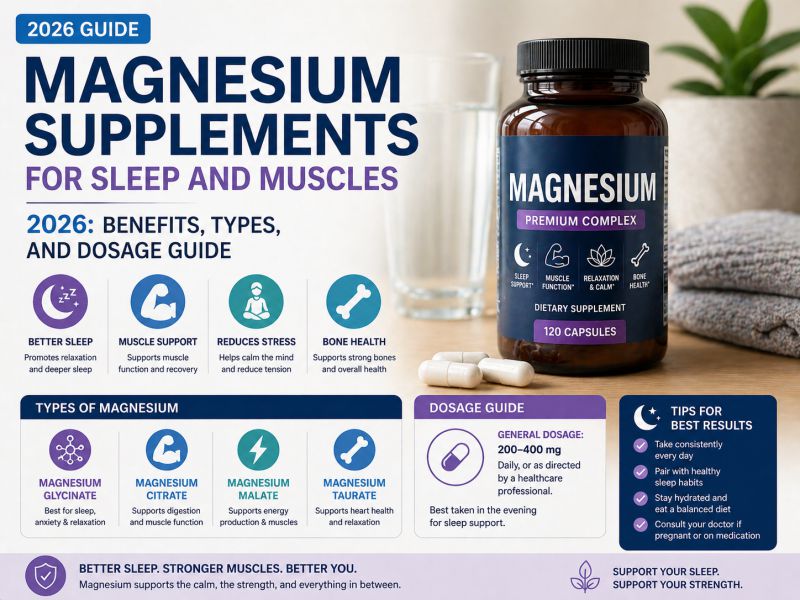
This article focuses on the training side of the story: cramps, sweat, Epsom baths, timing, and recovery. For the fundamentals — the differences between glycinate, citrate, oxide, and other forms, plus general dosing guidance — see our companion guide, Magnesium Supplements for Sleep and Muscles: The Complete Guide.
What You Actually Lose When You Sweat
Sweat is mostly water and sodium. That's worth stating plainly, because supplement marketing often implies that every electrolyte pours out of you equally. It doesn't. Sodium losses dwarf everything else — that's why sweat tastes salty and why heavy sweaters develop white streaks on dark clothing. Potassium comes second at a much lower concentration, and magnesium losses per liter of sweat are small by comparison.
So does sweat matter for magnesium at all? Over a single workout, not much. Over a heavy training block, it can. Long sessions in the heat, twice-a-day training, and high chronic sweat volumes add up — and intense exercise also increases the amount of magnesium your kidneys excrete afterward. A single spin class won't deplete you; months of hard training layered on a marginal diet can gradually erode your status. That slow-leak pattern is exactly why magnesium deserves attention as a season-long habit rather than a race-day fix.
Exercise-Associated Muscle Cramps: What Actually Causes Them
Here is where honest science gets more interesting than the supplement aisle. Researchers currently recognize two main explanations for exercise-associated muscle cramps:
- Neuromuscular fatigue (the leading theory): When a muscle is pushed hard — especially in an unfamiliar way, at an unusual intensity, or late in a long event — the reflex control between the muscle and spinal cord becomes overexcitable, and the muscle locks into spasm. This explains why cramps strike the specific muscles doing the work, why they hit hardest near the end of races, and why stretching the cramping muscle relieves them.
- Fluid and electrolyte deficits: Classic "heat cramps" in people doing prolonged heavy labor or endurance exercise in hot conditions, particularly salty sweaters, appear linked to large whole-body sodium and fluid losses. These cramps tend to be more widespread rather than confined to one working muscle.
Where does magnesium fit? Candidly: reviews of the research conclude that magnesium supplements do not reliably prevent exercise-associated cramps in people whose magnesium status is already normal. That's worth knowing before you expect a capsule to cure your calf cramps. The flip side is equally important: magnesium regulates muscle relaxation by opposing calcium at the cellular level, and a genuinely low magnesium status is associated with cramping, twitching, and poor muscle function. In other words, magnesium is a foundation, not a fire extinguisher — correcting a shortfall supports normal muscle function, but supplementing beyond adequacy hasn't been shown to bulletproof you against cramp.
Magnesium vs. Sodium vs. Potassium for Cramping
| Electrolyte | Sweat Loss | Role in Muscle Function | Cramping Connection |
|---|---|---|---|
| Sodium | Largest by far | Fluid balance, nerve impulses | Strongest evidence for heat cramps in heavy/salty sweaters; replace during long hot sessions |
| Potassium | Modest | Intracellular fluid, membrane potential | Rarely the culprit in healthy athletes eating fruits and vegetables; deficiency usually involves illness or medications |
| Magnesium | Small per liter | Muscle relaxation, energy (ATP) production | Matters most when chronic intake is low; supplementation beyond adequacy hasn't been shown to prevent exercise cramps |
The practical cramping playbook: hydrate with sodium-containing fluids during long or hot sessions; build fatigue resistance in the muscles that cramp (cramps chase unaccustomed effort); stretch the affected muscle when cramp strikes; audit your diet for chronic magnesium shortfall; and treat supplemental magnesium as insurance for low intake rather than a guaranteed cramp cure.
Epsom Salt Baths: What the Evidence Really Supports
Epsom salt is magnesium sulfate, and the popular claim is that soaking lets you "absorb magnesium through your skin." The honest assessment: skin is an extremely effective barrier, and there is little rigorous evidence that humans absorb a meaningful amount of magnesium transdermally from a bath. If your goal is raising magnesium status, oral intake — food first, supplements as needed — is the route the evidence supports.
Does that make the Epsom bath worthless? Not at all — it just means the benefits come from the bath, not the salt. Warm-water immersion after training genuinely increases blood flow to muscles, reduces perceived soreness and stiffness, promotes relaxation, and helps many athletes wind down toward better sleep — and sleep is where the real recovery happens. Enjoy the soak; just don't count it toward your magnesium intake.
Timing Magnesium Around Workouts
Unlike protein or carbohydrate, magnesium has no proven "window" around exercise — consistency beats timing. A few practical rules make it work better:
- Take it with food. Magnesium is better tolerated and steadily absorbed with meals. For most active adults, dinner is the natural slot — it pairs the dose with the evening wind-down, where magnesium's relaxation and sleep-support effects are welcome.
- Avoid large doses right before training. Magnesium draws water into the gut; a big dose of citrate or oxide before a run is a recipe for GI distress.
- Split larger doses. Two smaller doses (for example, with lunch and dinner) are absorbed more efficiently and are gentler on the bowel than one large dose.
- During ultra-endurance events, electrolyte products that include small amounts of magnesium are reasonable, but sodium and fluids remain the priority.
A Simple Recovery Routine for Heavy Training Days
- Rehydrate with fluids that contain sodium, not just plain water, after long or sweaty sessions.
- Eat a meal combining protein and carbohydrate within a couple of hours of finishing.
- Include a magnesium-rich food at dinner, or take your magnesium supplement with the evening meal.
- Consider a warm bath — Epsom optional — for soreness and relaxation.
- Do ten minutes of easy stretching or foam rolling for the muscles you loaded.
- Protect 7–9 hours of sleep. No supplement compensates for chronic short sleep.
Food First: Magnesium-Rich Choices for Training Days
Athletes have an advantage here: you eat more than the average person, so hitting magnesium targets through food is very achievable. Standouts include pumpkin seeds, almonds, cashews, peanut butter, spinach and other dark leafy greens, black beans, edamame, whole grains like oatmeal and brown rice, avocado, yogurt, and even dark chocolate. Easy wins: oatmeal with pumpkin seeds and a banana before a long ride; a spinach-and-bean burrito bowl after lifting; trail mix in the gym bag instead of candy.
Choosing a Supplement: Forms and Doses
If your food diary keeps coming up short, a supplement closes the gap. The general adult recommendations are 400–420 mg daily for men and 310–320 mg for women, with active adults reasonably aiming toward the upper end of intake from all sources combined. Form matters — glycinate for gentleness, citrate for general use, and several others each have a niche — and we break down every form, absorption rates, and dosing strategy in our complete magnesium guide. Start low, increase gradually, and back off if stools loosen — that's your bowel-tolerance signal.
Shop Magnesium and Recovery Support
Browse the Vitamins & Supplements collection at AllCare Store for magnesium and other training-support nutrients. Free shipping on every order, 30-day returns.
Visit AllCare Store — your health and wellness partner. 1-888-889-6260.
Frequently Asked Questions: Magnesium for Active Adults
Will taking magnesium stop my muscle cramps during exercise?
Not reliably, if your magnesium status is already normal — research reviews have not shown magnesium supplements to prevent exercise-associated cramps in well-nourished athletes. Cramps during exercise are most often driven by neuromuscular fatigue, and heat cramps by large sodium and fluid losses. That said, if your dietary magnesium intake is chronically low, correcting the shortfall supports normal muscle function and may reduce cramping and twitching. Persistent or severe cramping deserves a conversation with your healthcare provider.
Do Epsom salt baths actually raise magnesium levels?
There is little solid evidence that meaningful amounts of magnesium cross the skin during an Epsom salt bath. The genuine recovery benefits of the bath — reduced soreness, relaxation, better wind-down before sleep — come from warm-water immersion itself. If you need more magnesium, get it from food or an oral supplement, and enjoy the bath for what it truly offers.
When is the best time to take magnesium — before or after a workout?
Timing around the workout itself doesn't appear to matter — daily consistency is what improves magnesium status. Most active adults do best taking magnesium with the evening meal, which aids tolerance and pairs the dose with wind-down and sleep. Avoid taking large doses immediately before training, since magnesium can cause GI upset during exercise.