
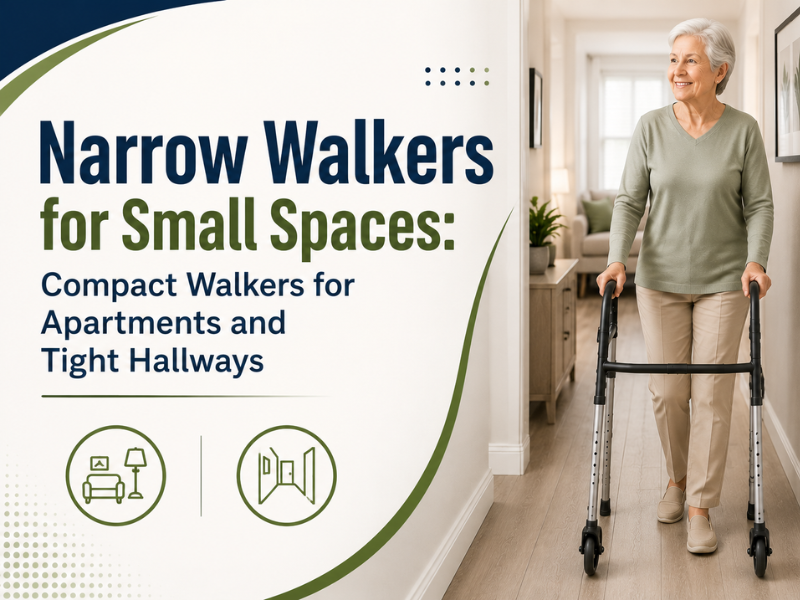
Living in a small apartment or a home with tight hallways comes with a challenge most people never think about until they need a mobility aid: width. A walker is meant to give you freedom and steady support, but if it is too wide for your doorways, it can turn into a daily struggle. You clip the doorframe on the way to the kitchen, get stuck sideways in the hallway, and treat the bathroom door like an obstacle course.
The good news is that narrow, compact walkers exist for exactly this situation. They keep a slim overall width while still giving you stable support, so you can move smoothly from room to room without scraping the walls. This guide explains how walker width actually works, how to measure your space before you buy, and which types of compact walkers fit best in small homes. It is written in plain language, with no jargon, so you can make a confident choice.
Why Walker Width Matters in a Small Home
Most standard interior doorways in the United States are roughly 28 to 32 inches wide. Once you subtract the door itself, the hinges, and the trim, the actual clear opening is often narrower than the number suggests. Older homes and apartments can be tighter still. Meanwhile, many standard folding walkers measure about 22 to 26 inches across, and wider or heavy-duty models go beyond that.
When you put those numbers side by side, the problem becomes clear. A walker that is 25 inches wide passing through a 27-inch clear opening leaves you almost no margin, and no room for your hands on the grips. That is how people end up bruising their knuckles on the frame or catching the wheels on the trim every time they change rooms.
A narrow walker fixes this by trimming the overall width while keeping a stable base of support. In a small apartment or a home with tight hallways, that slim footprint is not a bonus feature. It is the entire reason the walker works for you.
Who Benefits Most From a Narrow Walker
Compact walkers suit more people than you might expect. Apartment and condo residents deal with tight doorways, shared corridors, and limited storage, so a slim frame that folds away is a natural fit. People in older homes often face doorways that were built narrower than today's standard, which rules out many wider models. Smaller-framed adults, including petite users who find a full-size walker awkward to control, usually feel steadier with a narrower base that sits closer to the body.
Frequent travelers and RV owners need something that folds compact and slips through tight spaces such as camper doorways and hotel bathrooms. Caregivers managing a loved one's home appreciate a walker that does not block walkways or become a hazard on its own. If any of these describe you, keep width and folded size near the top of your priority list.
Measure Your Space First
Before you shop, grab a tape measure and write down three numbers. This one small step prevents a lot of returns and frustration.
First, measure your narrowest doorway. With the door open, measure the actual clear opening from the edge of the door to the frame on the other side, not the full frame width. This is the space your walker has to pass through comfortably, ideally with an inch or two to spare on each side.
Second, measure your tightest hallway, paying special attention to any spot where you turn a corner. Turning is where wide walkers struggle most, so note any L-shaped halls or doorways that sit at the end of a corridor.
Third, look at your bathroom and any raised thresholds. Bathrooms are usually the smallest and most awkward room in a home, and the doorway often has a lip that can catch small wheels. Once you have these three measurements written down, you can shop with confidence instead of guessing.
Types of Compact Walkers That Fit Small Spaces
Narrow walker is a category, not a single product. Several designs work well in tight quarters, and the right one depends on how much support you need and whether you want wheels.
Slim Folding Walkers
The classic folding walker, with a lightweight aluminum frame and no seat, is still one of the most space-friendly choices available. Many fold nearly flat, so they tuck behind a door or beside a couch, and the narrower versions pass through standard doorways easily. This style gives you the most stability of any walker because it does not roll away from you. If you want to understand how it works and who it suits, this standard walker guide explains the basics clearly. A slim folding walker is a smart pick if you mostly move indoors, have smooth floors, and value support over speed.
Three Wheel Rollators
If you want wheels but hate feeling boxed in, a three-wheel rollator is often the answer. With a single wheel up front instead of two, it is narrower than a four-wheel model and turns in a much tighter circle, which is exactly what a small apartment or a hallway with corners calls for. The trade-off is that most three-wheel rollators do not include a seat, so you cannot sit and rest on them. For pure indoor maneuverability in a tight home, though, they are hard to beat.
Slim Four Wheel Rollators
Not every four-wheel rollator is bulky. Several newer models are designed with a narrow frame and a compact turning radius, so you get the comfort of a seat and the stability of four wheels without the width of a traditional rollator. Look for words like slim, narrow, or indoor in the product name. If you are unsure how many wheels suit you, this 2-wheel vs 4-wheel rolling walker guide compares the options and helps you decide.
Hemi Walkers
A hemi walker is a one-handed walker, essentially half a walker frame with a single handle, designed for people who can only use one arm, often after a stroke. Because you operate it with one hand, it is dramatically narrower than any standard walker and takes up almost no space. It offers less support than a full frame walker, so it is not right for everyone, but in an extremely tight home it can be the only design that fits comfortably.
Narrow Walker vs Narrow Rollator: Which One for Your Apartment?
This is the question most people get stuck on, so here is a simple way to decide.
Choose a narrow folding walker if you need maximum stability, move slowly, tend to lean on your walker for support, or have very smooth indoor floors. It is the more secure option and folds down to almost nothing.
Choose a narrow rollator if you can walk at a steadier pace, want to keep moving without lifting anything, and would like a seat to rest on or a basket to carry things. A slim rollator glides instead of being picked up, which many people find less tiring over the course of a day.
If you are still unsure, focus on your energy and balance rather than your square footage. Both types now come in compact widths, so the real decision is how much support you need, not just what fits.
A Quick Buying Checklist for Compact Walkers
Once you know the type you want, these details separate a walker you will love from one you will regret. Run through them before you buy.
- Overall width. This is the headline number for small spaces. Compare it against your narrowest doorway measurement and leave an inch or two of clearance on each side.
- Folded size. A walker that folds flat or compact is far easier to store in a small home and to lift into a car. Check how thin it gets when collapsed.
- Turning radius. If your home has corners and tight turns, a narrower front, whether three wheels or 360-degree casters, saves a lot of shuffling.
- Weight. A lightweight aluminum frame is easier to steer indoors and to lift over thresholds. Most compact models weigh between 6 and 15 pounds.
- Wheels. Smaller wheels turn tighter and suit smooth indoor floors. If you will also go outside, you will want something sturdier for rougher ground.
- Brakes. On any wheeled model, loop-style push-down brakes are the easiest for most hands and should lock firmly, especially if the walker has a seat.
- Height adjustment. Adjustable handles let you set the correct fit and let more than one person share the walker safely.
- Weight capacity. Confirm the model is rated comfortably above your body weight. Narrow does not have to mean flimsy, but always check the number.
Setting Your Walker to the Right Height
A walker set to the wrong height quietly causes sore wrists, an aching back, poor posture, and less stability. Fitting it takes about two minutes. Stand up straight with your arms relaxed at your sides. The handgrips should reach the level of your wrists, and your elbows should bend only slightly when you hold them. If you hunch forward to reach the handles, they sit too low. If your shoulders creep up toward your ears, they sit too high. Almost every walker and rollator has adjustable handles, so you can set this at home in a minute.
Making a Small Home Walker Friendly
Even the narrowest walker works better in a home that is set up for it, and a few small changes go a long way. Clear your main pathways so you have a straight, open route between the rooms you use most, such as the bedroom, bathroom, and kitchen. Move side tables, magazine racks, and anything else that narrows a walkway.
Remove throw rugs. They are the single biggest tripping and wheel-catching hazard in most homes, and a walker can snag them easily. Bare floors are safer and let the wheels roll cleanly. Watch your thresholds too, since the raised strips at doorways can catch small wheels. A low threshold ramp helps for any bump you cross often. Good lighting matters as well, especially in narrow hallways where there is less room to correct a stumble. Finally, give your walker a dedicated parking spot near the door or beside your chair, so a folding model is always within reach instead of blocking a walkway.
Indoors, Outdoors, or Both?
Narrow walkers are built first for indoor life, with smaller wheels and slim frames that shine on smooth floors and in tight rooms. That is their strength. The trade-off is that those same small wheels do not handle rough ground well. If you also plan to walk on sidewalks, grass, gravel, or uneven pavement, a purely indoor walker will struggle outside. In that case, a second, sturdier option for outdoor trips makes sense, and this all-terrain walker guide covers what to look for when the ground gets bumpy. Many people keep a slim walker for the apartment and a tougher one for going out, and that pairing covers almost every situation.
Comfort Features That Still Fit in a Slim Frame
A common worry is that going narrow means giving up comfort. That used to be true, but it is not anymore. Padded, ergonomic handgrips reduce hand and wrist fatigue and come standard on most quality walkers, narrow ones included. Many slim four-wheel rollators still include a fold-down seat and a storage pouch or basket tucked underneath, so you can rest and carry your phone, keys, or medication without adding width. Adjustable height handles come on nearly every model, and reliable loop brakes give you secure stops and a safe seat lock without any bulk. In short, a narrow walker for your apartment does not mean settling for a bare-bones aid. You can have the slim profile your space needs and the everyday comfort that makes the walker pleasant to use.
Common Mistakes People Make When Buying a Walker for a Small Home
A few avoidable errors trip people up again and again, and knowing them in advance saves money and disappointment.
The first mistake is buying on looks or price alone and never checking the width. A walker can be well reviewed and affordable and still be too wide for your doorways, which makes it useless in your particular home. Always match the listed width to your own measurements before anything else.
The second mistake is assuming every rollator folds the same way. Folding styles vary a lot. Some collapse flat from side to side, others fold front to back, and the folded thickness can differ by several inches. If storage is tight, read the folded dimensions, not just the open ones.
The third mistake is ignoring the seat question. People often buy a slim four-wheel rollator for the seat, then realize they rarely sit and would have preferred the lighter, narrower three-wheel version. Be honest about whether you actually need to rest along the way. The fourth mistake is skipping the height adjustment. A perfectly sized walker still feels wrong if the handles are set too high or too low, so always adjust it on day one.
Getting Comfortable With a New Walker in a Tight Space
A new walker takes a little practice, and a small home is actually a good place to build confidence because everything is close by. Start slow. Walk a few laps between the rooms you use most so the turns and doorways start to feel familiar. Pay attention to which direction you naturally turn at each corner, and set up your furniture so those turns stay open.
Practice the tricky spots on purpose. The doorway into the bathroom, the turn at the end of the hallway, and the path from the bed to the door are the places you will use most and where a wide walker causes the most trouble. Running them a few times while you are fresh and steady builds muscle memory for when you are tired.
If you use a wheeled model, get comfortable with the brakes before you rely on them. Squeeze them, feel how firmly they lock, and practice engaging them before you sit or pause. A little time spent early makes the walker feel like a natural part of your day rather than something you have to think about.
The Bottom Line
In a small apartment or a home with tight hallways, the best walker is the one that actually fits your space while keeping you steady. Measure your narrowest doorway first, decide whether you want the extra stability of a folding walker or the easy glide of a slim rollator, and choose a model built with a narrow frame in mind. Get that right, and your walker goes back to doing its real job, helping you move freely and safely through every room of your own home.
When you are ready to compare compact options, All Care Store is a trusted online shop for mobility and home health products across the United States, with free shipping on every order and a helpful team you can reach at 1-888-889-6260. You can browse slim walkers and rollators in the Walkers & Rollators collection, or focus on wheeled models in the Rollators collection. If a walker is not quite enough support, All Care Store also carries Manual Wheelchairs for everyday use, Electric Wheelchairs for effortless, longer range independence, and space-saving Bathroom Wheelchairs that make the tightest, most fall-prone room in the house far safer. Whatever your space and your needs, there is a comfortable, well-fitted option waiting for you.



