Medical Disclaimer: This article provides general information about back bracing for older adults and is not medical advice. Suspected spinal fractures require prompt medical evaluation, and rigid braces such as TLSOs should only be used under the direction of a physician or orthotist. Medicare rules summarized here are general and change over time — verify specifics at medicare.gov or 1-800-MEDICARE.
When Back Pain in Later Life Means Something Different
A sore back at 35 usually means a strained muscle. A suddenly sore back at 75 — especially in someone with osteoporosis — can mean something structurally different: a vertebral compression fracture, where a weakened bone in the spine partially collapses. The distinction matters because the tools change. For younger adults, bracing is a short-term comfort aid alongside exercise. For seniors, the questions multiply: Is this fracture pain? Does it need a rigid clinician-fitted brace? Will Medicare pay? How does a caregiver help put the brace on, and how do you protect fragile skin underneath it?
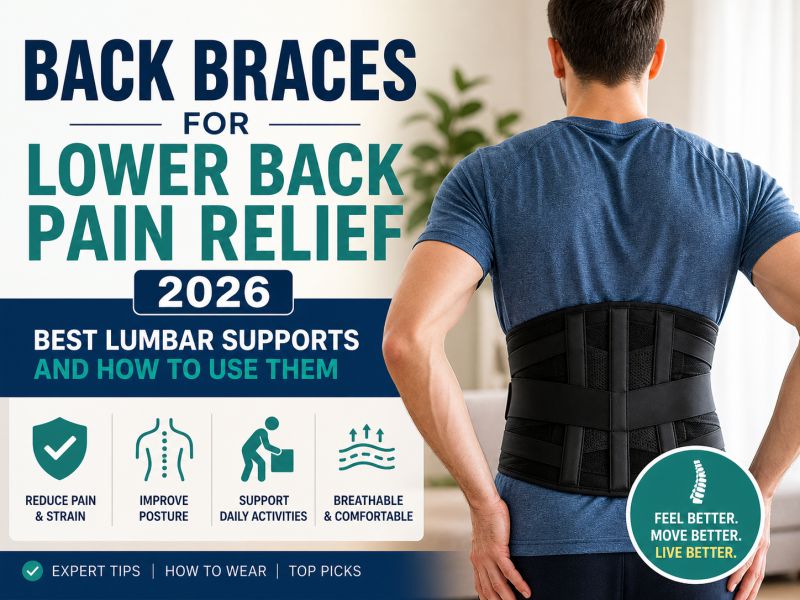
This guide answers those senior-specific questions. For the general fundamentals — how lumbar supports work, elastic versus rigid designs, and everyday use for common low back pain — see our complete back braces for lower back pain guide.
Osteoporosis and Vertebral Compression Fractures: The Basics
Osteoporosis thins and weakens bone silently, and the vertebrae of the mid and lower spine are among its favorite targets. When a weakened vertebra can no longer bear normal loads, the front of the bone can compress and collapse — sometimes from a fall, but often from something as ordinary as lifting a grocery bag, a vigorous cough, or bending to make the bed. Warning signs include:
- Sudden mid-back or low-back pain after a minor movement, often sharp and worse with standing or walking, eased by lying down
- Gradual loss of height over the years
- A developing stooped, rounded posture
- Sometimes no dramatic event at all — many compression fractures are discovered on X-rays taken for other reasons
Any new, significant back pain in a person with known or suspected osteoporosis deserves a medical evaluation and usually imaging. That diagnosis — not guesswork — determines whether a brace belongs in the plan.
The TLSO Concept: Why Fracture Braces Are Different
The braces used after vertebral compression fractures are not the elastic belts sold for lifting at work. Clinicians may prescribe a thoracolumbosacral orthosis (TLSO) — a rigid or semi-rigid brace spanning from the upper back down over the lower spine — or a similar spinal orthosis matched to the fracture's location. Its jobs are specific: limit forward bending over the healing bone, support upright posture, and reduce pain enough that the person can stay mobile while the fracture heals over a period of weeks.
Three things to understand about this category of brace:
- It is fitted, not just bought. A TLSO works only if it matches the person's torso and the fracture level. Fitting and adjustment by an orthotist or trained clinician is part of the treatment.
- It is temporary. Fracture bracing is typically measured in weeks — commonly somewhere in the 6-to-12-week range at the clinician's discretion — followed by deliberate weaning. It is not a permanent garment.
- It is one part of a plan that also addresses the underlying osteoporosis: bone-density evaluation, medication review, calcium and vitamin D guidance, and fall prevention.
Not every compression fracture is braced — practice varies, and some heal well with pain management and activity modification alone. That call belongs to the treating physician.
What Medicare Covers for Back Braces
Back braces — from lumbar-sacral supports to rigid TLSOs — fall under Medicare Part B's benefit for orthotics and durable medical equipment. The general rules work like this:
- A physician's order is required. Coverage depends on documented medical necessity — a diagnosis and a doctor's prescription for the specific type of brace.
- The supplier matters as much as the brace. Medicare pays only when the brace comes from a supplier enrolled in Medicare. If the supplier accepts assignment, Medicare typically pays 80 percent of the approved amount after the Part B deductible, and the beneficiary owes the remaining 20 percent coinsurance (supplemental insurance may cover it).
- The 'same or similar' rule. Medicare generally will not pay for another brace of the same type for the same body part within the item's reasonable useful lifetime — typically five years — unless it is lost, damaged beyond repair, or the medical condition changes.
- Medicare Advantage plans set their own processes. Coverage is required to be at least equivalent to Original Medicare, but prior authorization and network suppliers are common — call the plan before ordering.
- Beware the brace phone call. Unsolicited calls offering a 'free back brace covered by Medicare' are a well-documented fraud pattern. A legitimate brace starts with your own doctor, not a telemarketer. Never share a Medicare number with a cold caller, and report suspicious calls to Medicare.
A practical note: simple elastic lumbar supports purchased retail for everyday comfort are usually an affordable out-of-pocket item, and many families reasonably skip the paperwork for them. Reserve the Medicare route for the prescribed, clinician-fitted orthoses where coverage genuinely matters.
A Caregiver's Guide to Helping With a Brace
Many seniors — especially after a painful fracture — cannot reach, position, and tension a back brace alone. If you are the helper, a consistent routine makes it easier for both of you:
- Start with a thin, snug cotton shirt under the brace. It wicks moisture and protects skin from direct contact and seams.
- Follow the clinician's donning instructions exactly. Some fracture braces are applied while lying down before rising; others while standing. If you were not shown, ask — this detail matters.
- Position before tightening. Center the brace so its panels sit where the orthotist marked or described — typically with the lower edge over the top of the buttocks and the spine panel centered on the back.
- Tighten symmetrically, snug but breathable. Work the straps evenly from the bottom up (or per instructions). You should be able to slide a flat hand under the brace, and your parent should be able to take a full breath comfortably.
- Check the fit in motion. Have them stand and take a few steps. A brace that rides up, gaps, or pinches needs repositioning — or a call to the orthotist for adjustment.
- Keep a schedule visible. A simple checklist on the refrigerator — brace on for which activities, off for which — prevents both underuse and overuse.
Skin Checks: The Daily Habit That Prevents Trouble
Older skin is thinner, drier, and slower to heal — and a rigid brace concentrates pressure on it for hours at a time. Each evening when the brace comes off:
- Inspect everywhere the brace touches, paying special attention to bony spots: the spine, hip bones, and lower ribs. Use a hand mirror or a caregiver's eyes for the back.
- Redness that fades within about 30 minutes is ordinary pressure. Redness that persists longer, or any blister, broken skin, or numb patch, is a warning — stop using the brace over that spot and call the clinician or orthotist for an adjustment.
- Keep skin clean and dry; moisture trapped under a brace invites irritation. Wash and fully dry the area daily, and launder or wipe the brace liner as directed.
- Avoid lotions or powders right before donning unless the clinician recommends them — damp skin under pressure chafes.
A Wearing Schedule That Avoids Deconditioning
The central tension of back bracing in later life: the brace reduces pain by doing some of the muscles' work — and muscles that are relieved of work for too long weaken. In an older adult, deconditioning arrives faster and leaves more slowly, so schedule discipline matters more, not less:
- Wear it for upright, loaded time — walking, standing tasks, riding in the car, household activity — as prescribed.
- Take it off for rest — most protocols remove the brace when lying down, unless the clinician says otherwise.
- Pair bracing with prescribed exercise. Gentle strengthening for the back extensors and core, taught by a physical therapist and built up gradually, is what makes it safe to eventually retire the brace.
- Wean on purpose. As healing progresses, the clinician will typically reduce wearing hours step by step rather than stopping abruptly. Follow that taper — in both directions: don't quit early because pain improved, and don't continue for months out of habit because it 'feels safer.'
Beyond the Brace: Protecting the Spine That's Left
A compression fracture is a signal about bone health, and the brace treats only the symptom. The follow-through list looks like this: a bone density discussion with the doctor, review of bone-protecting medications, adequate calcium and vitamin D per medical guidance, balance and strength exercise, and a serious fall-proofing pass through the home — lighting, rugs, grab points, and footwear.
Call the doctor promptly for new numbness, tingling, or leg weakness; worsening pain despite the brace; or any new loss of bladder or bowel control — the last is an emergency.
Supports and Comfort Aids at AllCare Store
For everyday support garments, spine braces, and compression wraps, browse our Braces & Wraps collection. You'll find heat, cold, and topical relief in Pain Management, rehabilitation gear in Physical Therapy, and fall-prevention and walking aids in Mobility Aids. Free shipping on every order — call 1-888-889-6260 with questions.
Frequently Asked Questions
Will Medicare pay for a back brace I buy online?
Only if the seller is a Medicare-enrolled supplier and the brace was prescribed by a doctor as medically necessary. A brace purchased retail without a prescription, or from a non-enrolled seller, is generally an out-of-pocket expense — reasonable for an inexpensive elastic support, but worth avoiding for a costly rigid orthosis. When coverage matters, start with the doctor's order and ask the prescriber's office which local suppliers they work with.
How long does my parent need to wear a brace after a compression fracture?
It is individualized, but fracture bracing is typically measured in weeks — often somewhere in the range of 6 to 12 — followed by a gradual weaning plan, all directed by the treating physician or orthotist. The schedule balances two goals: protecting the healing bone during upright activity, and getting the brace off soon enough that back muscles don't decondition. If the current plan is unclear, ask for the wearing schedule in writing at the next visit.