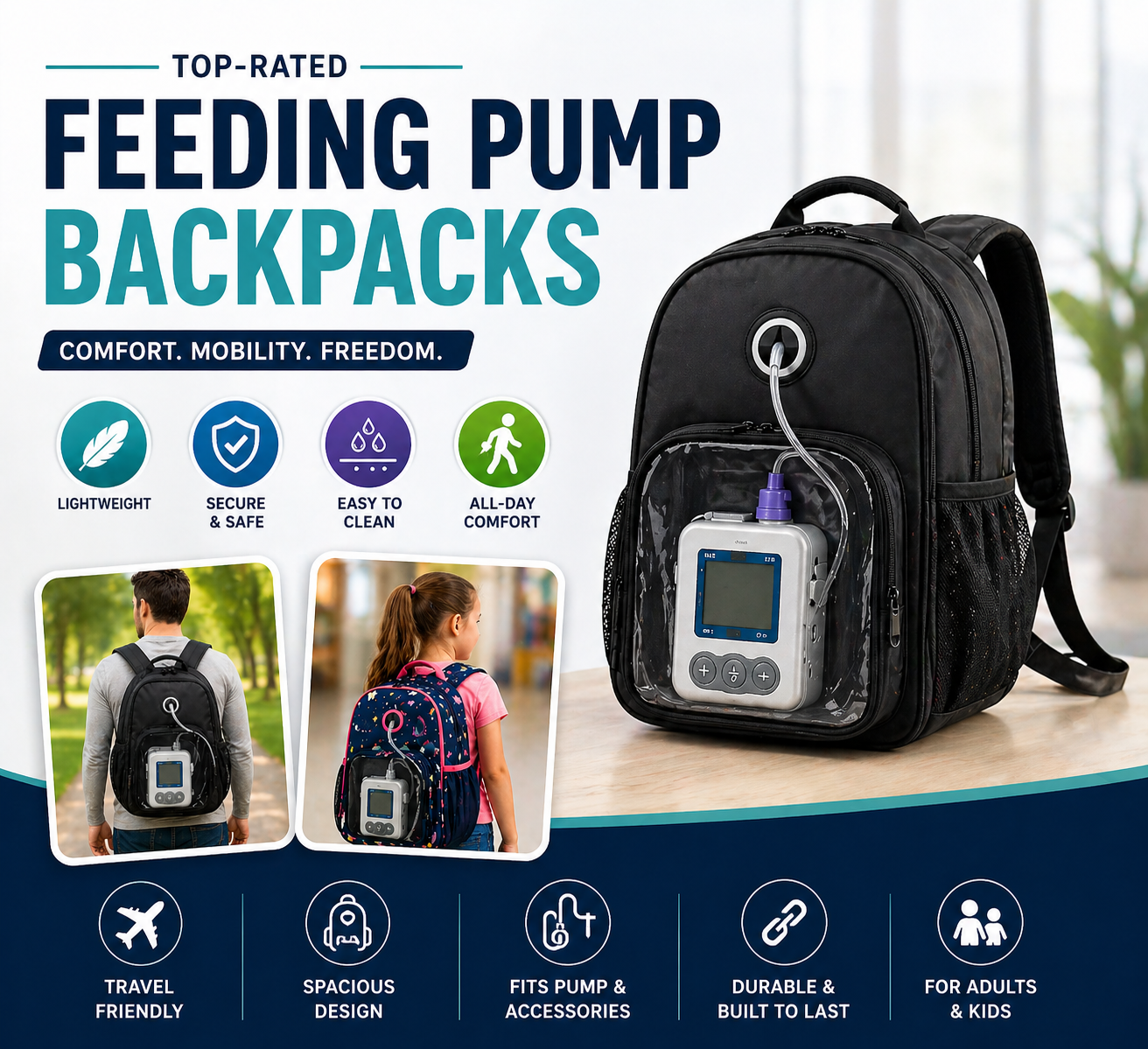
The best feeding pump backpack in 2026 depends on your pump model, daily routine, feed duration, and whether it is for an adult or child. For most adult patients, a mid-range enteral feeding backpack ($35–$60) with dual tube ports and a washable liner is the ideal daily choice.
If you are on home enteral nutrition (HEN) or caring for someone who is, a quality feeding pump carry bag is not a convenience — it is a medical essential. The right bag protects your pump, keeps formula safe, and gives you the freedom to move through your day without interruption.
In 2026, Google's AI-powered search and AEO standards mean buyers research smarter and expect direct, trustworthy guidance. This article delivers exactly that — expert comparisons, real-life use cases, and a clear buying framework to help you choose confidently.
What Are Feeding Pump Backpacks?
A feeding pump backpack is a purpose-built carry bag designed to hold an enteral feeding pump, formula bag, tubing, and accessories. Unlike regular bags, these feature tube ports, insulated liners, and ergonomic designs that allow patients to receive continuous nutrition while staying mobile — at home, school, work, or travel.
These bags are engineered for enteral feeding systems including Kangaroo Joey, Infinity, Compat, and Zevex EnteraLite — ensuring secure pump fit and hygienic operation during ambulatory feeds.
They are also known by several interchangeable names:
-
Tube feeding backpack — used interchangeably across medical communities
-
Enteral feeding backpack — preferred term in clinical settings
-
Feeding bag for adults/kids — consumer-facing terminology
-
Feeding pump carry bag — emphasizes portability for short or long feeds
Benefits & Real-Life Use Cases
Why Patients and Caregivers Rely on Feeding Pump Backpacks
The biggest shift in enteral care in recent years has been the move from stationary to ambulatory feeding. A dedicated tube feeding backpack makes continuous nutrition possible without tethering a patient to a pole or bed.
Real-Life Use Cases in 2026
-
Working adults on HEN: Continue daytime feeds discreetly while commuting or at the office.
-
School-age children: Small, padded tube feeding backpacks allow kids to attend class without interruption or embarrassment.
-
Post-surgical patients: Short-term enteral feeding backpacks support GI recovery at home.
-
Cancer patients: Long-term nutritional support during chemotherapy, when appetite is severely reduced.
-
Travel & mobility: Lightweight feeding pump carry bags with insulated liners make domestic and international travel manageable.
-
Elderly at-home care: Caregivers use overnight feeding backpacks to deliver nocturnal nutrition without disturbing sleep.
Key Benefits at a Glance
-
Hands-free, continuous enteral nutrition during daily activities
-
Reduces formula contamination risk with insulated, sealed compartments
-
Protects expensive feeding pumps from drops and spills
-
Promotes patient dignity — looks like a normal backpack in public
-
Reduces caregiver workload through organized, accessible design
How to Choose the Best Feeding Pump Backpack — Step-by-Step
Step 1 — Match the Bag to Your Pump Model
Not all bags fit all pumps. Verify internal dimensions before purchasing. Common pumps like the Kangaroo Joey, Infinity, and EnteraLite each have slightly different footprints. Always confirm the compartment dimensions match your pump's specs before ordering.
Step 2 — Determine Your Feed Duration
Short feeds (4–6 hours) can use smaller, lighter bags. Continuous or nocturnal feeds (12–24 hours) require larger insulated bags that hold 1L+ formula with room for ice packs or gel liners to maintain safe temperatures.
Step 3 — Assess Patient Lifestyle
A pediatric patient in school needs a compact, lightweight tube feeding backpack under 0.5 kg. An active adult needs padded straps, a sternum clip, and dual tube ports. A bedbound elderly patient may only need a simple hook-and-hang carrier.
Step 4 — Check Hygiene & Cleaning Features
Medical-use bags must be cleaned daily. Look for:
-
Removable, machine-washable liner
-
Antimicrobial interior fabric
-
Wipeable exterior material (nylon or polyester)
-
Sealed zipper compartments to prevent cross-contamination
Step 5 — Evaluate Comfort & Ergonomics
Padded shoulder straps, a lumbar support panel, and an adjustable fit matter enormously for all-day wear. For children, look for adjustable straps and chest clips. For adults managing autonomic issues, a waist belt significantly reduces spinal strain.
Step 6 — Set a Realistic Budget
Quality enteral feeding backpacks range from $20 for basic models to $120 for premium clinical-grade bags. Insurance may cover part of the cost when prescribed — check your plan's DME (Durable Medical Equipment) benefits before purchasing out of pocket.
Top Feeding Pump Backpacks for 2026 — Adults & Kids
Note: The following picks are based on clinical features, patient feedback, and expert evaluation. Always consult your care team before purchasing.
Best Overall — Standard Feeding Pump Backpack (Black/Gray, 6×8×14")
Price: ~$44.99 Dimensions: 6 × 8 × 14 inches — fits most standard adult enteral pumps Weight: Approximately 0.45 kg empty
Dual zippered compartment, padded shoulder straps, single tube port, water-resistant nylon exterior. Straightforward design, easy to clean, and discreet enough for public use. Best value for daily HEN users who want reliability without complexity.
Best for Active Adults — Ergonomic Ambulatory Feeding Backpack
Price Range: $55–$75
Ergonomic back panel with lumbar support, dual tube ports, insulated inner sleeve, waist strap, and reflective strips for outdoor use. Accommodates up to 3L formula bags. Preferred by occupational therapists for patients returning to active lifestyles post-illness.
Best for Kids — Pediatric Tube Feeding Backpack
Price Range: $28–$45
Mini profile designed for children ages 3–12. Adjustable padded straps, fun color options, lightweight at ~0.3 kg, single tube port, and wipeable interior. Choosing a color that matches your child's school bag helps reduce social stigma and supports confidence.
Best for Travel — Insulated Travel Feeding Backpack
Price Range: $50–$80
TSA-friendly design with detachable formula sleeve, dual insulation, and compatibility with portable battery pump units. A pass-through cord pocket handles power cables cleanly. 2026 Update: New TSA guidelines (2025) classify enteral feeding equipment as medical devices — always carry a physician's letter when flying.
Best Budget Pick — Basic Enteral Feeding Backpack
Price Range: $20–$30
Minimal design with single compartment, tube port, lightweight nylon shell, and basic padding. Suitable for short-term tube feeding patients or as a backup bag. Limited insulation makes it unsuitable for feeds longer than 6 hours in warm climates.
Features Comparison Table — 2026
|
Feature |
Basic |
Mid-Range |
Premium |
Kids |
Travel |
|
Price Range |
$20–$35 |
$35–$60 |
$60–$120 |
$25–$50 |
$40–$80 |
|
Insulation |
Basic |
Dual-layer |
Medical-grade |
Soft-lined |
Thermal+ |
|
Tube Ports |
Single |
Dual |
Multi-port |
Single |
Dual |
|
Formula Capacity |
1–2L |
2–3L |
3–4L |
1–1.5L |
2–3L |
|
Shoulder Strap |
Standard |
Padded |
Ergonomic |
Adjustable |
Wide padded |
|
Washable Liner |
No |
Yes |
Yes |
Yes |
Yes |
|
Weight (Empty) |
~0.4 kg |
~0.5 kg |
~0.7 kg |
~0.3 kg |
~0.6 kg |
|
Best For |
Short feeds |
Daily use |
Long-term HEN |
Pediatric |
Active/travel |
Buying Guide: Price, Key Factors & Common Mistakes
Price Breakdown in 2026
-
Under $35: Basic backpacks — suitable for short-term or backup use only
-
$35–$60: Mid-range — best value for most daily users with enteral pumps
-
$60–$120: Premium — clinical-grade insulation, ergonomic frames, multi-port systems
Insurance Note: Many US insurers in 2026 classify feeding pump backpacks under DME Category E. Submit with a prescription and medical necessity documentation for potential reimbursement.
5 Factors That Matter Most
-
Pump compatibility: Measure your pump before buying — internal dimensions must match your device exactly
-
Insulation quality: Critical for formula stability during feeds over 4 hours, especially in warm environments
-
Tube port placement: Must allow comfortable tube exit without kinking or tension on the line
-
Total loaded weight: A fully loaded feeding bag for adults with pump and 1L formula weighs 1.5–2.5 kg — padded straps are non-negotiable
-
Cleaning ease: Medical use demands daily cleaning — removable liners are essential for long-term users
5 Common Mistakes to Avoid
-
Buying on price alone — a $20 bag with poor insulation can compromise formula safety within hours
-
Ignoring pump dimensions — many returns happen because the bag is too small or too large for the specific pump
-
Skipping the tube port check — ensure port placement matches your pump's output side to avoid line stress
-
Not verifying insurance eligibility first — you may qualify for a fully or partially covered bag through DME benefits
-
Choosing style over function for kids — child comfort, discretion, and strap adjustability must drive the decision
Conclusion
In 2026, the right feeding pump backpack is one that fits your pump, suits your lifestyle, and holds up to daily medical demands. Whether you are a working adult on long-term HEN, a parent choosing a discreet tube feeding backpack for your child, or a caregiver managing overnight feeds, the decision comes down to matching product to patient.
The best enteral feeding backpack is not the most expensive one. It is the one that fits securely, keeps formula safe, supports mobility, and lasts through daily demands. Use the comparison table and step-by-step buying guide above to make a confident, informed decision.
Your health, comfort, and independence matter. The right bag supports all three.