Best Knee Braces for Arthritis and Pain Relief 2026: Types, Fit, and How to Choose

DISCLAIMER: This article is for informational and educational purposes only and does not constitute medical advice. If you are experiencing significant knee pain, instability, swelling, or have recently sustained a knee injury, consult a physician, orthopedic surgeon, or physical therapist before selecting a brace. A healthcare provider can diagnose the underlying cause of your knee pain and recommend the most appropriate support for your specific condition.

Why Knee Support Matters — and When a Brace Actually Helps

The knee is the largest and most complex joint in the human body, bearing loads up to 4–6 times body weight during normal walking and significantly more during stairs, squatting, or running. It is also among the most commonly injured — knee pain affects an estimated 25% of adults, with osteoarthritis, patellofemoral syndrome, ligament injuries, and tendinopathy being the leading causes.

Knee braces work through several mechanisms depending on type: they can provide compression to reduce swelling and proprioceptive feedback (helping the nervous system coordinate muscle activation around the joint); mechanically unload a specific compartment of the joint; stabilize ligamentous instability; control range of motion during recovery; and provide psychological confidence that reduces fear-avoidance behavior. The right brace for your situation depends entirely on why your knee hurts — the same brace that helps one condition may be ineffective or counterproductive for another.

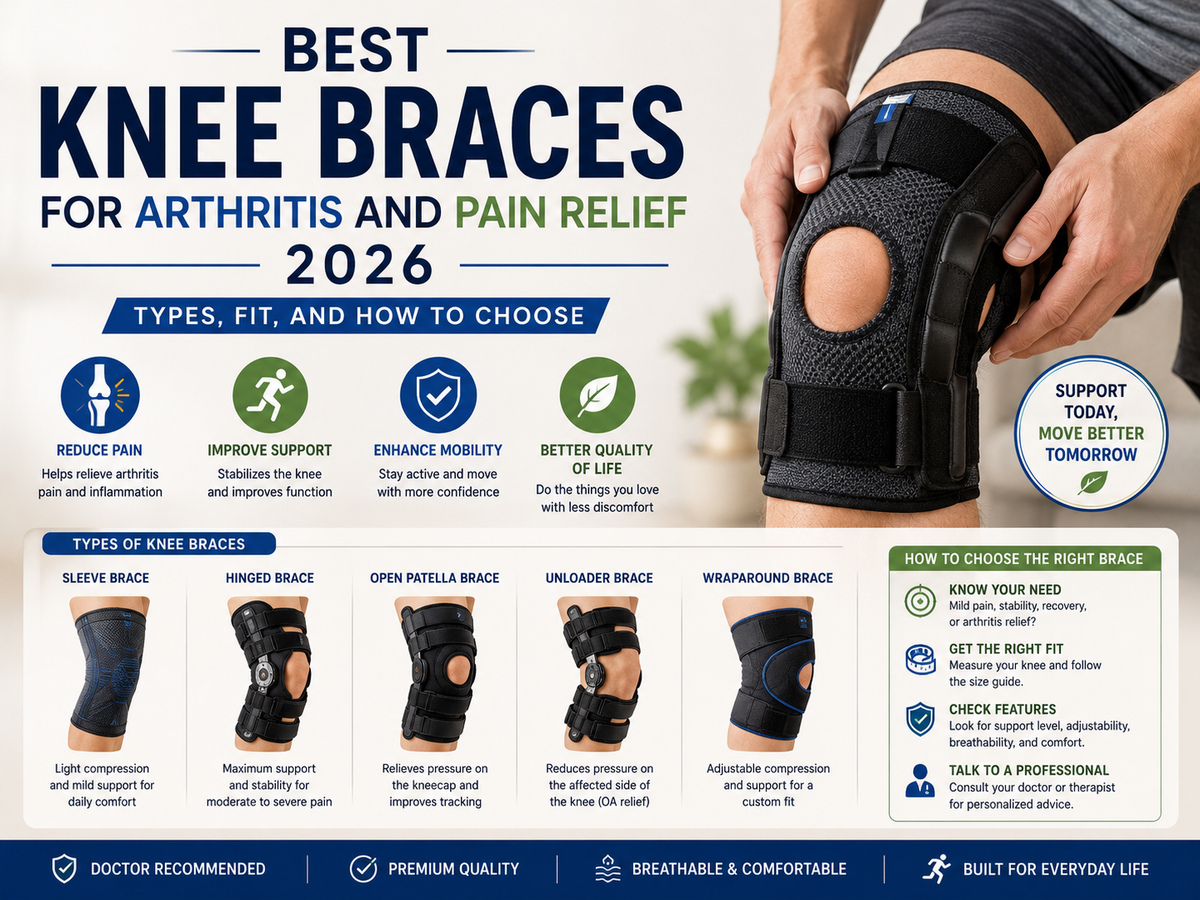
Types of Knee Braces: A Complete Breakdown

1. Compression Sleeves

Compression sleeves are the simplest and most widely used knee support — a tubular elastic sleeve that slides over the knee, providing uniform mild compression. They work primarily by: improving proprioception (sensory feedback from the joint to the nervous system, helping muscles activate more efficiently and earlier); reducing mild swelling through graduated pressure; providing warmth that can reduce stiffness; and offering psychological confidence during activity.

Compression sleeves are typically made from neoprene, knitted elastic, or performance fabric blends. Neoprene provides the most warmth and is excellent for cold-weather outdoor use, but can be hot and sweaty for indoor activities. Knitted and performance fabric sleeves are lighter and more breathable for gym use and extended wear.

Best for: Mild osteoarthritis with minimal instability; general knee soreness and stiffness; runner's knee (patellofemoral syndrome) in mild cases; swelling management; extended walking or standing; returning to light activity after a minor knee strain. Not appropriate for significant instability, severe arthritis, or acute ligament injuries requiring structural support.

Not suitable for: Acute severe injuries; significant ligamentous instability; post-surgical stabilization; anyone who needs bracing beyond compression.

2. Patellar Stabilizer Braces

Patellar stabilizer braces are compression sleeves with added elements specifically designed to control the position and tracking of the patella (kneecap). These typically include a horseshoe-shaped buttress or ring of firmer material around the outside (lateral aspect) of the patella, and sometimes a patellar tendon strap below the kneecap.

The patella needs to track smoothly through a groove in the femur. In patellofemoral syndrome — one of the most common causes of knee pain in active people of all ages — the patella tracks laterally (toward the outside) due to muscle imbalances, structural anatomy, or both. This causes anterior (front) knee pain during stairs, squatting, prolonged sitting, and inclines. A patellar stabilizer redirects patellar tracking, significantly reducing pain during these activities.

Best for: Patellofemoral pain syndrome (runner's knee, moviegoer's knee); patellar tendinopathy; chondromalacia patellae; patellar subluxation in milder cases; pain at the front of the knee during stairs or prolonged sitting.

3. Hinged Knee Braces

Hinged braces incorporate rigid or semi-rigid metal or plastic hinges on the medial (inner) and/or lateral (outer) sides of the knee, connected to straps or a rigid shell. The hinges allow the knee to flex and extend normally while preventing sideways movement and controlling rotation — the motions that stress the cruciate (ACL/PCL) and collateral (MCL/LCL) ligaments.

Hinged braces come in two broad categories. Prophylactic (preventive) hinged braces are worn by people with mild-to-moderate ligament laxity or a history of ligament injury who want to prevent re-injury during high-risk activity. Functional hinged braces provide more substantial support for people with diagnosed ligament instability — particularly ACL deficiency — who are not yet surgical candidates or are in rehabilitation. Post-operative hinged braces with range-of-motion limiters are a third category used after knee surgery to protect the repair while allowing controlled movement.

Best for: ACL sprains and deficiency (non-surgical management); MCL injuries; post-surgical stabilization (post-op braces); moderate-to-severe instability; preventing knee injuries in high-risk sports; recovery from ligament injuries with return to activity.

4. Unloader Braces (OA Braces)

Unloader braces — also called OA (osteoarthritis) braces or valgus/varus braces — are designed specifically for unicompartmental knee osteoarthritis: arthritis affecting primarily one side of the knee (medial or lateral compartment) rather than the entire joint.

In medial compartment OA (the most common type, affecting the inner side of the knee), the joint space on the inside narrows and bone-on-bone contact causes severe pain. An unloader brace applies a three-point pressure system that creates a bending force (valgus for medial OA, varus for lateral OA) that mechanically shifts the load away from the affected compartment toward the healthier side. Clinical studies have shown that well-fitted unloader braces can reduce pain by 30–60% in appropriate candidates, significantly improve walking ability, and delay the need for surgical intervention.

Unloader braces are more complex and expensive than other brace types — typically $300–$900 for quality custom or off-the-shelf models — and fitting them correctly is critical to their effectiveness. They require measuring the thigh, calf, and leg length to select the correct frame size. Many physicians and orthotists recommend custom-fitted unloader braces for best results, though high-quality off-the-shelf models perform comparably in well-fitted cases.

Best for: Medial or lateral compartment knee osteoarthritis causing moderate-to-severe pain; people who have radiographic evidence of unicompartmental OA; those seeking to delay knee replacement; patients who want to remain active despite significant knee OA.

Not for: Diffuse tricompartmental OA (whole-joint arthritis); inflammatory arthritis (rheumatoid, psoriatic); significant ligament instability combined with OA (may need a combination device).

5. Wraparound / Adjustable Braces

Wraparound braces use adjustable straps and rigid or semi-rigid stays to provide more precise and adjustable support than a simple compression sleeve, without the complexity of a full hinged frame. They are easier to put on than pull-on sleeves for people with limited dexterity or significant swelling (they don't require threading the foot through a tight sleeve), and their tension can be adjusted throughout the day as swelling changes.

Best for: Older adults with dexterity limitations; moderate arthritis; variable swelling that changes throughout the day; people who need to put on and remove the brace frequently.

6. Patellar Tendon Straps

Patellar tendon straps are narrow bands worn just below the kneecap. They apply focused pressure on the patellar tendon, distributing tensile forces and changing the angle at which the tendon pulls on the patella. This mechanism provides significant pain relief for patellar tendinopathy (jumper's knee) — a common overuse injury in athletes — and can also help with Osgood-Schlatter disease in adolescents and adults.

Best for: Patellar tendinopathy (jumper's knee); Osgood-Schlatter disease; patellar tendon pain during jumping and squatting activities; athletes returning from patellar tendon problems.

How to Choose the Right Knee Brace: By Condition

Condition Best Brace Type Key Feature
Mild osteoarthritis (whole joint) Compression sleeve or wraparound Warmth, proprioception, comfort
Medial/lateral compartment OA Unloader brace (OA brace) Mechanical joint offloading
Patellofemoral pain / runner's knee Patellar stabilizer sleeve Patellar buttress to correct tracking
Patellar tendinopathy (jumper's knee) Patellar tendon strap Tendon pressure distribution
ACL sprain / instability Hinged brace (functional) Lateral stability control
MCL sprain Hinged brace (medial support) Medial valgus stress control
Post knee surgery Post-op hinged brace with ROM dial Controlled range of motion
General swelling / mild sprain Compression sleeve or wraparound Edema management, warmth
Dexterity limitations (arthritis in hands) Wraparound adjustable brace Velcro straps, no threading required

How to Measure and Fit a Knee Brace

An ill-fitting brace provides little support and may cause discomfort, skin irritation, or impaired circulation. Proper sizing varies slightly by brace type, but the key measurements are consistent:

Mid-patella circumference: Measure around the knee at the midpoint of the kneecap. This is the primary measurement for compression sleeves and patellar stabilizers.

Thigh circumference: Measure approximately 6 inches above the center of the kneecap. Used for hinged braces and unloader braces.

Calf circumference: Measure approximately 6 inches below the center of the kneecap. Used for hinged and unloader braces.

Leg length: For hinged and unloader braces, some manufacturers also require the distance from the crease behind the knee to the floor or to specific anatomical landmarks.

Take measurements in the morning before activity, when swelling is lowest and the measurement reflects your baseline anatomy. For hinged and unloader braces especially, consulting the manufacturer's size chart is essential — sizing varies significantly between brands, and ordering the wrong size can make the brace ineffective or uncomfortable.

How to Wear and Care for Your Knee Brace

Duration: Most braces should not be worn 24 hours a day. The muscles surrounding the knee need to be active and load-bearing to remain strong and prevent atrophy. Wearing a brace too long and too often can lead to the muscles becoming dependent on external support. Use the brace during activity, exercise, or situations where you need support, and rest without it when sedentary, unless your physician or physical therapist has advised otherwise.

Skin care: Prolonged brace use — especially neoprene braces — can cause skin irritation, rashes, or pressure sores. Inspect the skin under the brace regularly. If your skin shows redness, blistering, or irritation that doesn't resolve within a day of removing the brace, consult your provider and consider a different material or design.

Cleaning: Most fabric and neoprene braces can be hand-washed in mild detergent and warm water, then air-dried. Never put a brace in the dryer — heat degrades elastic fibers and neoprene, reducing the brace's compression and longevity. Rigid hinged and unloader braces typically have removable fabric liner components for washing; the rigid frame can be wiped clean with a damp cloth.

Replacement: Elastic and neoprene compression sleeves lose their elasticity over time — typically after 3–6 months of regular daily use. If your sleeve is no longer providing the same level of compression, it needs replacing. Hinged brace hinges and straps should be inspected for wear, cracking, or loosening regularly.

Exercise and Physical Therapy: The Essential Complement

A knee brace manages symptoms but does not address the underlying causes of knee pain — muscle weakness, poor biomechanics, movement pattern problems, or structural joint changes. The most durable knee pain relief comes from targeted exercise therapy, and research consistently shows that exercise and bracing together produce better outcomes than either alone.

The primary muscles to strengthen for knee health are the quadriceps (especially VMO — the inner, teardrop-shaped quad), the hip abductors (gluteus medius), and the hip external rotators. Weakness in any of these muscles alters knee mechanics during walking, stairs, and squatting in ways that increase joint loading. A physical therapist can design an individualized exercise program targeting your specific weaknesses and movement problems.

Shop Knee Braces and Joint Support at AllCare Store

AllCare Store carries a comprehensive selection of knee braces and joint support products — from compression sleeves and patellar stabilizers to hinged braces for instability and OA unloader braces for arthritis. Browse our braces and supports collection for knee, ankle, wrist, and back support products, or explore the full physical therapy and recovery collection for rehabilitation equipment and pain management products.

Shop at AllCare Store with free shipping on qualifying orders. Call our team at 1-888-889-6260, Monday–Friday, 7:00 AM–4:00 PM CST for personalized guidance on knee brace selection.

Frequently Asked Questions: Knee Braces

What type of knee brace is best for arthritis?

The best knee brace for arthritis depends on which type of arthritis and which part of the knee is affected. For mild whole-joint osteoarthritis with minimal instability, a compression sleeve or wraparound brace providing warmth, proprioception, and light support is usually appropriate. For medial or lateral compartment osteoarthritis — where one side of the knee is more severely affected — an unloader (OA) brace that mechanically shifts load away from the damaged compartment can provide 30–60% pain reduction according to clinical studies and is the most effective brace option. For inflammatory arthritis (rheumatoid, psoriatic), a compression sleeve can help during flares, but treatment is primarily medical (medications). Consulting an orthopedic surgeon or physical therapist can help identify the right brace type for your specific arthritis pattern.

Should I wear a knee brace all day?

In most cases, no — knee braces should not be worn all day. Using a brace continuously can cause the surrounding muscles to become less active and potentially weaker, since they rely on the brace for support rather than providing it themselves. Most guidelines recommend wearing a knee brace during activities that provoke your symptoms — walking, exercise, stairs, standing for extended periods — and removing it when resting. The exception is post-surgical braces after knee reconstruction or replacement, where your surgeon may specify continuous wear during the early recovery phase. Follow your physician's or physical therapist's specific instructions regarding wear duration for your situation.

Do knee braces actually help with knee pain?

Yes — for the right conditions, knee braces are evidence-supported interventions with meaningful clinical benefits. Compression sleeves consistently reduce pain and improve function in mild-to-moderate osteoarthritis by improving proprioception and providing warmth. Unloader braces have the strongest evidence base for unicompartmental knee OA, with multiple clinical trials showing significant pain reduction and functional improvement. Patellar stabilizers are well-supported for patellofemoral pain syndrome. Hinged braces reduce instability symptoms and improve confidence in ACL-deficient knees. The key is matching the right brace to the right diagnosis — a compression sleeve will not help significant compartmental OA the way an unloader brace will, and a patellar stabilizer will not help ligament instability. Getting an accurate diagnosis is the first step to finding a brace that works.

What is the difference between a knee sleeve and a knee brace?

A knee sleeve (compression sleeve) is a simple tubular elastic garment that slides over the knee, providing uniform compression, warmth, and proprioceptive feedback without any structural components. A knee brace is a broader term that includes sleeves but also encompasses devices with rigid structural elements — hinges, rigid frames, stays, or straps — that provide mechanical support, stabilize the joint against specific movement directions, or redistribute load. Sleeves are appropriate for mild conditions where compression and warmth help; braces with structural elements are needed when there is ligament instability, significant joint malalignment, or post-surgical stabilization requirements. In everyday language, "brace" and "sleeve" are often used interchangeably, but they represent different levels of support.

How do I know what size knee brace to get?

Sizing depends on the type of brace. For compression sleeves, the primary measurement is the circumference of the knee at the midpoint of the kneecap. For hinged and unloader braces, you'll also need thigh circumference (approximately 6 inches above the kneecap center) and calf circumference (approximately 6 inches below). Take all measurements in the morning before swelling develops, and compare them to the specific manufacturer's size chart — sizing varies significantly between brands. For simple compression sleeves, S/M/L/XL sizing based on knee circumference is standard. For hinged and OA unloader braces, precise measurement is more critical — getting professional fitting from an orthotist or medical supply specialist is recommended, as an ill-fitted unloader brace provides little benefit.


For knee braces, compression sleeves, unloader braces, and joint support products, visit AllCare Store. Browse our braces and supports collection. Free shipping on qualifying orders. Call 1-888-889-6260 for personalized assistance, Monday–Friday 7 AM–4 PM CST.

Newsletter

A short sentence describing what someone will receive by subscribing