Medical Disclaimer: This article is for educational purposes only and is not a substitute for professional medical advice. Every mother and baby is different. Speak with your pediatrician, OB-GYN, or a certified lactation consultant to determine the feeding approach that is right for your specific situation. There is no single correct choice — the best feeding method is the one that is safe, sustainable, and nourishing for your baby.
The Decision Nobody Warned You About
Sarah had spent months preparing for her daughter's arrival. She had read every book, attended every class, and had her hospital bag packed weeks early. But when her daughter was born and placed in her arms, she found herself completely uncertain about something she had assumed would come naturally: feeding. Latching was painful, her milk hadn't fully come in yet, and her daughter was losing weight. The lactation consultant was helpful but only available during hospital hours. Her mother-in-law was suggesting formula. Her pediatrician was encouraging her to keep trying. Sarah felt like she was failing — and she hadn't even been home yet.
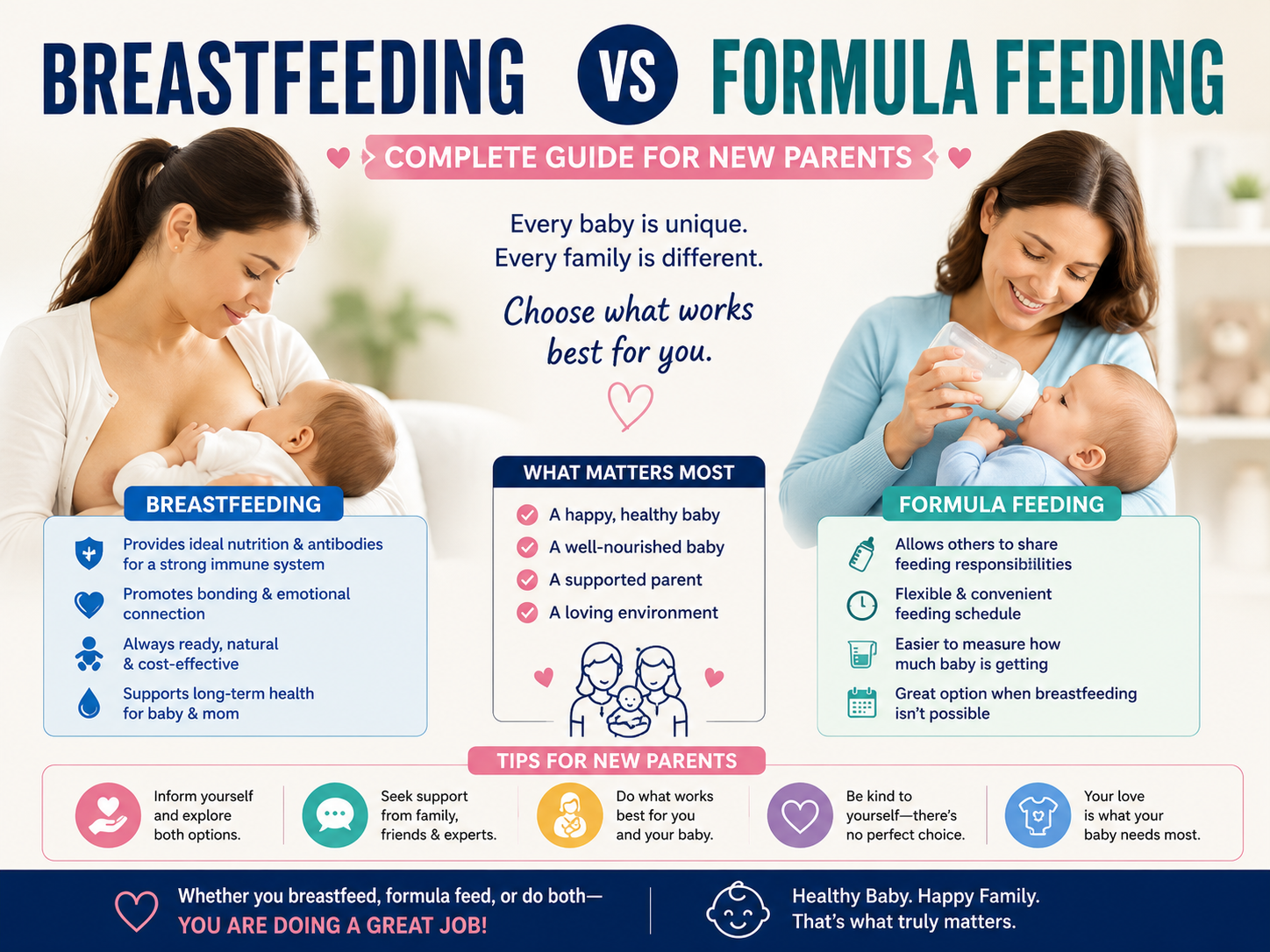
No decision in the early weeks of parenting is more loaded with expectation, opinion, and emotion than how you feed your baby. And no decision is more personal. This guide is written without judgment. Whether you breastfeed, formula feed, or do both, the goal is the same: a well-nourished baby and a healthy, sustainable family dynamic.
What the Major Health Organizations Recommend
The World Health Organization (WHO) recommends exclusive breastfeeding for the first 6 months of life, followed by continued breastfeeding alongside complementary foods up to 2 years of age or beyond. The American Academy of Pediatrics (AAP) recommends breastfeeding for at least 12 months, and as long as mutually desired by mother and child. These recommendations reflect the documented health benefits of breast milk — they are not mandates, and they do not mean that formula-fed babies are at a disadvantage when parents make an informed, thoughtful choice about their baby's nutrition.
The Benefits of Breastfeeding
For Your Baby
Breast milk is often described as a living substance — and that description is accurate. Unlike any manufactured formula, breast milk contains live immune cells, immunoglobulin A (IgA), lactoferrin, lysozyme, and white blood cells that actively protect a newborn's immature immune system. The antibody protection is particularly significant in the first months of life before vaccines have built adequate immunity.
Research consistently shows that breastfed babies have lower rates of ear infections (otitis media), respiratory tract infections, gastrointestinal infections, and necrotizing enterocolitis (a serious intestinal condition primarily affecting premature infants). Breast milk is highly digestible and promotes the growth of beneficial gut bacteria. It also changes composition over time — colostrum (the thick, yellowish "first milk" produced in the first days postpartum) is especially rich in antibodies and growth factors, and mature milk adjusts in fat and calorie content as the baby grows.
For Mothers
Breastfeeding has documented health benefits for mothers. The physical act of nursing stimulates oxytocin release, which causes uterine contractions that help the uterus return to its pre-pregnancy size and reduce postpartum bleeding. Breastfeeding is associated with a reduced risk of breast cancer, ovarian cancer, type 2 diabetes, and cardiovascular disease — with benefits increasing with the total duration of breastfeeding across a mother's lifetime.
Producing breast milk burns approximately 300–500 calories per day. Breastfeeding is also free, always available, and requires no preparation — the cost savings compared to formula feeding can reach $1,200–$2,400 per year.
The Challenges of Breastfeeding
The challenges of breastfeeding are real, common, and not discussed nearly enough. The messaging that breastfeeding should feel natural and easy leads many new parents to believe they are failing when difficulties arise — but difficulties are the norm, not the exception.
Latch problems are extremely common in the first days and weeks. A shallow or incorrect latch causes nipple pain, cracking, and bleeding, and reduces milk transfer efficiency. Mastitis (breast tissue infection) affects up to 10% of breastfeeding women. Engorgement — painful overfilling of the breasts — is common as milk supply establishes. Low milk supply affects a meaningful minority of mothers due to hormonal conditions, prior breast surgery, or other factors, and for these mothers exclusive breastfeeding may not be achievable regardless of effort.
Breastfeeding also places demands on the mother's time and body that can conflict with returning to work, managing other children, or recovering from childbirth. Certain medications and health conditions (including HIV, active tuberculosis, and chemotherapy) are incompatible with breastfeeding — always consult your prescribing physician.
The Benefits of Formula Feeding
Complete Nutrition from Day One
Modern infant formula is not a nutritional compromise. It is carefully designed to meet all known nutritional requirements for infant growth and development. Regulatory agencies including the FDA establish strict standards covering protein, fat, carbohydrates, vitamins, minerals, and micronutrients including DHA, ARA, and iron. Formula-fed babies can thrive, grow normally, and develop healthily.
Flexibility and Shared Feeding
One of the most significant practical advantages of formula feeding is that anyone can feed the baby: partners, grandparents, siblings, and caregivers can all participate equally. This allows the mother longer sleep stretches, the ability to return to work, and time for her own recovery — which matters enormously for postpartum mental health. Formula feeding also allows precise tracking of intake and often means longer intervals between feedings as formula is digested more slowly than breast milk.
No Dietary or Medication Restrictions
Formula-feeding mothers do not need to monitor their diet for substances that could affect breast milk. They can take medications that would otherwise be contraindicated during breastfeeding — which is particularly relevant for mothers managing ongoing health conditions or those who need specific medications postpartum.
The Challenges of Formula Feeding
Formula does not replicate the immune-protective properties of breast milk. Formula-fed infants have statistically higher rates of certain infections compared to exclusively breastfed infants at the population level. The practical demands of formula feeding — preparing bottles, sterilizing equipment, measuring accurately, warming safely, and packing supplies for outings — take time and attention. Formula costs add up significantly over the first year. Finding the right formula for a baby with sensitivities can involve a stressful trial-and-error period; always consult your pediatrician before switching formulas.
Combination Feeding: Both Is a Valid Choice
Combination feeding — supplementing breastfeeding with formula, or vice versa — is far more common than most new parents realize and is a legitimate, sustainable middle path. Common patterns include breastfeeding during the day and formula feeding at night to allow a longer sleep stretch, breastfeeding at home and formula while at work, or using formula to supplement when milk supply is insufficient. A lactation consultant can help navigate any nipple preference challenges that arise when introducing a bottle alongside nursing.
Pumping Breast Milk: A Third Path
Exclusively pumping — expressing breast milk and feeding via bottle — allows mothers who find direct nursing impossible or unsustainable to still provide breast milk. It requires a quality double-electric breast pump and significant time commitment (typically 7–10 sessions per day in early weeks), but provides flexibility and allows feeding to be shared. In the US, most insurance plans cover an electric breast pump under the Affordable Care Act — check with your insurer for details.
AllCare Store: Supporting Every Stage of Mom and Baby Care
At AllCare Store, we carry a full range of baby feeding and mom care products to support whichever approach works best for your family.
Browse our Mom & Baby Care collection for feeding essentials, breast pump accessories, bottle feeding supplies, and postpartum recovery products.
- Free Shipping on every order — no minimums
- Discreet Packaging — plain, unmarked boxes on every shipment
- 30-Day Returns — full confidence guarantee
- Expert Support — call us at 1-888-889-6260
Frequently Asked Questions: Breastfeeding vs Formula Feeding
Is formula feeding just as healthy as breastfeeding?
Modern infant formula provides complete nutrition that supports normal growth and development. Breast milk has immune-protective properties formula cannot fully replicate, and studies show associations between exclusive breastfeeding and lower infection rates. However, formula-fed babies can and do thrive. For families where breastfeeding is not possible or not the right choice, formula is a safe, healthy alternative — not a compromise.
Can I switch from breastfeeding to formula?
Yes. Transitioning from breast milk to formula can be done at any time. Gradual weaning (replacing one feeding at a time) is typically more comfortable for the mother as it allows milk supply to decrease slowly and reduces the risk of engorgement and mastitis. Talk with your pediatrician about the best formula for your baby's age and any specific needs.
What if breastfeeding is too painful?
Some initial discomfort in the first days of breastfeeding is common. However, significant ongoing pain is usually a sign that something needs to be corrected — most often latch technique. A certified lactation consultant (IBCLC) can assess latch, positioning, and anatomical factors such as tongue tie. If pain is severe or persistent, supplement with formula to keep your baby nourished while you address the underlying issue — choosing your baby's nourishment and your own wellbeing is never a failure.
Is combination feeding (breast milk and formula) a good option?
Yes. Combination feeding is valid, common, and sustainable. It allows the baby to receive some immune benefits of breast milk while giving the mother greater flexibility. Some babies may show a preference for bottle feeding after combination feeding is introduced; a lactation consultant can advise on pacing techniques to reduce this risk if maintaining nursing is a priority.
How long should I breastfeed?
The WHO recommends exclusive breastfeeding for 6 months and continued breastfeeding up to 2 years alongside complementary foods. The AAP recommends at least 12 months. That said, any amount of breastfeeding provides benefits — even a few weeks of colostrum transfers meaningful immune protection. The right duration is whatever is sustainable and healthy for both mother and baby. Weaning when it is right for your family — whether at 6 weeks or 2 years — is a healthy, valid choice.