Tube feeding is an important method of providing nutrition to people who cannot eat or swallow food normally. It is commonly used for patients recovering from surgery, those with medical conditions affecting digestion, or individuals who need long-term nutritional support.
While tube feeding can be life-saving and highly effective, it also requires proper care, understanding, and attention to detail. Many caregivers and patients make small mistakes that can lead to discomfort, infections, or feeding complications.
In this guide, we will cover the most common mistakes people make when using tube feeding supplies, along with practical tips to ensure safety, hygiene, and better outcomes.
What Are Tube Feeding Supplies?
Before we discuss mistakes, it is important to understand the basic items used in tube feeding.
Tube feeding involves a few essential components:
-
A feeding pump that controls how fast nutrition is delivered
-
A feeding bag that holds the liquid nutrition
-
A feeding tube that carries the nutrition into the body
-
Liquid nutrition (formula) that provides essential nutrients
-
Accessories such as syringes, connectors, and cleaning tools
Each of these plays an important role, and using them correctly ensures that the patient receives proper nutrition safely.
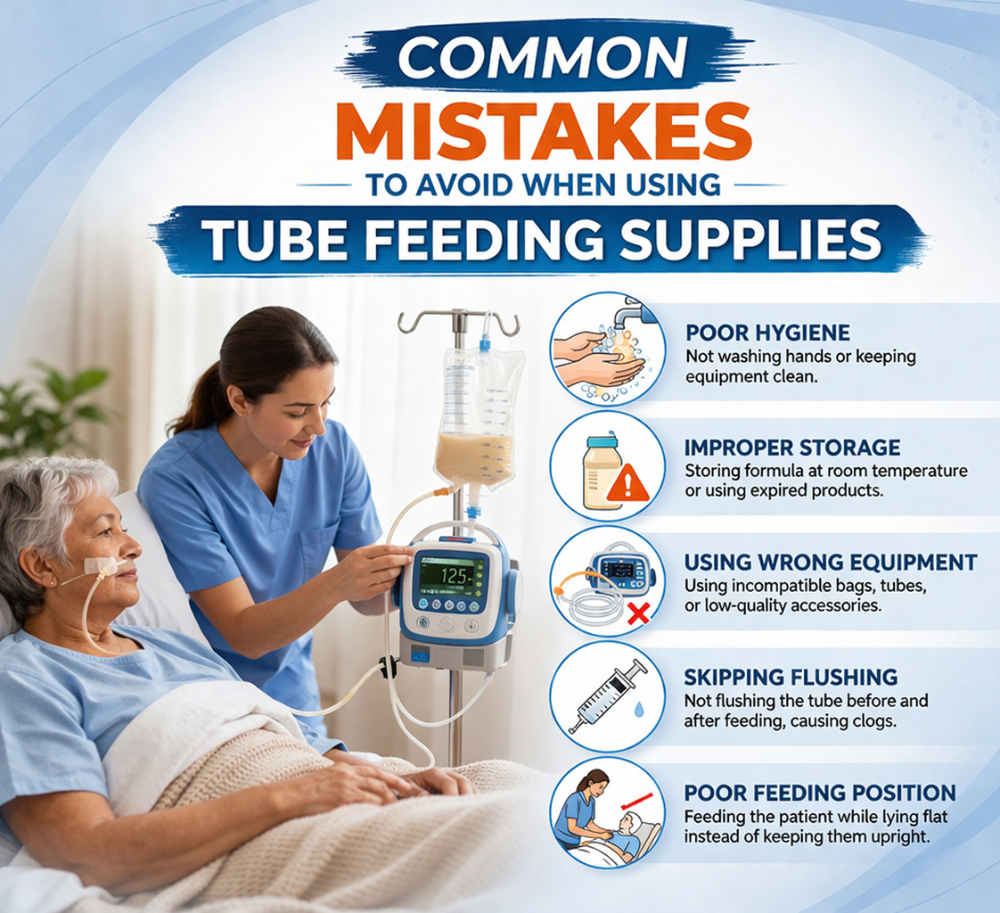
1. Not Maintaining Proper Hygiene
One of the most common and serious mistakes is poor hygiene.
Since the feeding tube goes directly into the body, even a small amount of contamination can cause infection.
What usually goes wrong:
-
Hands are not washed before handling equipment
-
Supplies are placed on unclean surfaces
-
Tubes or connectors are touched unnecessarily
-
Reusing disposable enteral feeding accessories
Why this matters:
Bacteria can easily enter through the tube and lead to infections that may require medical treatment.
What you should do:
-
Always wash your hands thoroughly before and after handling equipment
-
Keep the feeding area clean
-
Avoid touching parts that come in contact with the formula
Maintaining hygiene is the simplest yet most powerful way to ensure safety.
2. Improper Storage of Feeding Formula
The liquid nutrition used in tube feeding must be stored correctly to maintain its quality.
Common mistakes:
-
Leaving the formula at room temperature for too long
-
Not refrigerating opened enteral feeding formulas containers
-
Using a formula past its expiry date
What can happen:
-
The formula may spoil
-
Bacteria may grow
-
Nutritional value may decrease
Best practice:
Always follow storage instructions on the product label. Once opened, most formulas need to be refrigerated and used within a specific time.
3. Using the Wrong Equipment
Not all feeding equipment is the same, and using the wrong setup can create problems.
Examples of mistakes:
-
Using an incompatible feeding bag with the pump
-
Using the wrong tube size
-
Choosing low-quality or unsuitable accessories
What problems can this cause:
-
Leakage
-
Incorrect flow of nutrition
-
Discomfort for the patient
What you should do:
Always use equipment that is recommended for your specific setup. If unsure, consult a healthcare provider.
4. Ignoring Safety Guidelines During Feeding
Tube feeding requires attention during the process. Ignoring basic safety steps can lead to complications.
Common issues:
-
Feeding while the patient is lying flat
-
Not monitoring the flow
-
Leaving feeding unattended
Possible risks:
-
Aspiration (food entering the lungs)
-
Nausea or vomiting
-
Improper digestion
Best practice:
Keep the patient in an upright or slightly elevated position during feeding and observe for any discomfort.
5. Poor Feeding Tube Care
The feeding tube itself needs regular care to function properly.
Mistakes people make:
-
Not cleaning the tube regularly
-
Allowing residue to build up
-
Not checking for signs of irritation
What can happen:
-
Blockages
-
Infection
-
Skin irritation
What you should do:
Clean the tube as recommended and check the surrounding skin daily for any changes.
6. Skipping the Flushing Step
Flushing the tube with water is a simple but essential step.
What happens if you skip it:
-
The tube may get blocked
-
The formula may build up inside
Best practice:
Flush the tube with the recommended amount of water before and after feeding.
This keeps the tube clear and ensures smooth feeding.
7. Not Paying Attention to Early Warning Signs
The body often shows early signs when something is wrong, but these are sometimes ignored.
Warning signs include:
-
Redness or swelling around the tube area
-
Leakage
-
Pain or discomfort
Why this is important:
Ignoring these signs can lead to serious complications.
What you should do:
Act quickly and consult a healthcare professional if you notice anything unusual.
8. Using Expired or Damaged Supplies
Using old or damaged supplies is risky and should always be avoided.
Common mistakes:
-
Not checking expiry dates
-
Using cracked or worn-out feeding bags
Risks:
-
Infection
-
Equipment failure
Best practice:
Inspect all items before use and replace them when needed.
9. Lack of Proper Training
Tube feeding may look simple, but it requires proper understanding.
Problems caused by a lack of knowledge:
-
Incorrect setup
-
Improper feeding speed
-
Safety mistakes
Solution:
Always learn from a healthcare professional and follow instructions carefully.
Do not rely on guesswork.
10. Choosing the Wrong Nutrition Formula
Each patient has different nutritional needs, and choosing the wrong formula can affect health.
Common mistakes:
-
Using a formula without medical advice
-
Not considering specific health conditions
What can happen:
-
Poor nutrition
-
Digestive problems
Best practice:
Always select the formula based on medical recommendations.
11. Overfilling the Feeding Bag
Filling the feeding bag beyond its capacity can create problems.
Issues:
-
Leakage
-
Incorrect feeding flow
What to do:
Follow recommended capacity guidelines for feeding tube bags.
12. Not Replacing Supplies Regularly
Some items are designed for limited use and should be replaced regularly.
Mistakes:
-
Reusing disposable items
-
Using old accessories
Risks:
-
Reduced hygiene
-
Poor performance
Best practice:
Follow replacement guidelines for each item.
13. Not Monitoring the Patient During Feeding
Leaving the patient unattended during feeding can be risky.
What can happen:
-
Discomfort goes unnoticed
-
Feeding issues are missed
Best practice:
Always stay nearby and observe the patient during feeding.
14. Irregular Feeding Schedule
Consistency is important in tube feeding.
Problems:
-
Nutritional imbalance
-
Digestive issues
Solution:
Follow a regular feeding schedule as advised.
15. Lack of Preparation for Travel or Emergencies
If the patient is mobile, planning is important.
Common mistakes:
-
Not carrying extra supplies
-
No backup plan
Best practice:
Always carry extra items and be prepared for unexpected situations.
Conclusion
Tube feeding is a sensitive and important process that requires attention, care, and proper understanding. Most problems occur not because the system is complicated, but because small steps are ignored.
By maintaining hygiene, using the right equipment, following proper care routines, and staying alert during feeding, you can ensure a safe and comfortable experience. Even simple habits like cleaning properly, checking supplies, and monitoring the patient can make a big difference in preventing complications.
The key is simple:
Be careful, stay informed, and follow the right practices.
When done correctly, tube feeding can greatly improve the quality of life for patients and make caregiving easier and more effective. For those looking for reliable products and support, you can explore a wide range of feeding pumps, feeding bags, nutrition formulas, and accessories at All Care Store, helping you manage tube feeding with confidence and convenience.
Frequently Asked Questions
What are tube feeding supplies?
Tube feeding supplies include essential items like feeding pumps, feeding bags, tubes, and accessories that help deliver liquid nutrition safely into the body for patients who cannot eat normally.
What are enteral feeding supplies used for?
Enteral feeding supplies are used to deliver nutrition directly into the stomach or intestines through a feeding tube, ensuring patients receive proper nutrients when oral intake is not possible.
How do you maintain feeding tube care?
Proper feeding tube care includes cleaning the tube regularly, flushing it before and after feeding, and checking for any signs of irritation, leakage, or blockage to ensure safe and smooth use.
What are common feeding errors?
Common feeding errors include poor hygiene, incorrect formula storage, skipping tube flushing, using the wrong equipment, and not monitoring the patient during feeding, which can lead to complications.
What are enteral feeding formulas?
Enteral feeding formulas are specially designed liquid nutrition products that provide essential nutrients, calories, and proteins required for patients who depend on tube feeding for daily nutrition.
How can I improve tube feeding safety?
To improve tube feeding safety, maintain hygiene, use the correct supplies, follow proper feeding techniques, monitor the patient during feeding, and follow healthcare guidelines carefully.
What are enteral feeding accessories?
Enteral feeding accessories include items like syringes, connectors, extension sets, and cleaning tools that support the feeding process and help manage tube feeding more effectively.
Where can I buy tube feeding supplies?
You can purchase high-quality tube feeding supplies, enteral feeding products, and accessories from trusted providers like All Care Store for safe and reliable patient care.