This article is for informational purposes only. If you experience night sweats related to a medical condition such as menopause, hyperthyroidism, or sleep apnea, please consult your healthcare provider for appropriate evaluation and treatment.
Margaret's Story: Too Hot to Sleep
Margaret, 54, had always been what her husband called a "furnace in bed." Even in winter, she'd kick off the blankets by midnight and lie there wide awake, her body radiating heat that neither of them could ignore. Then menopause arrived, and the situation went from uncomfortable to unbearable. Hot flashes would jolt her awake three, four, five times a night, leaving her drenched in sweat and completely unable to fall back asleep. She tried lighter pajamas, a room fan, a lower thermostat — her husband started sleeping under an extra blanket while Margaret lay on top of the sheets in a tank top, still overheating.
Her doctor confirmed what she already knew: menopausal night sweats are one of the most common and disruptive sleep challenges women face in their fifties and sixties. They don't go away on their own for months or years. What Margaret needed wasn't a medical intervention for this particular symptom — it was better sleep infrastructure. A friend mentioned that she'd solved a similar problem with a cooling mattress pad, and Margaret was skeptical. How much could a pad on top of a mattress really help?
The answer, it turned out, was: quite a lot. Within two weeks of trying a phase-change cooling mattress pad, Margaret was sleeping through the night for the first time in over a year. Her husband stopped reaching for the extra blanket. She woke up feeling like herself again — rested, cooler, and no longer dreading bedtime.
If Margaret's experience sounds familiar — whether you run hot naturally, experience night sweats, share a bed with a partner who generates body heat, or simply live somewhere that stays warm at night — this guide will walk you through everything you need to know about cooling mattress pads, how they work, and how to find the right one for you.
What Is a Cooling Mattress Pad?
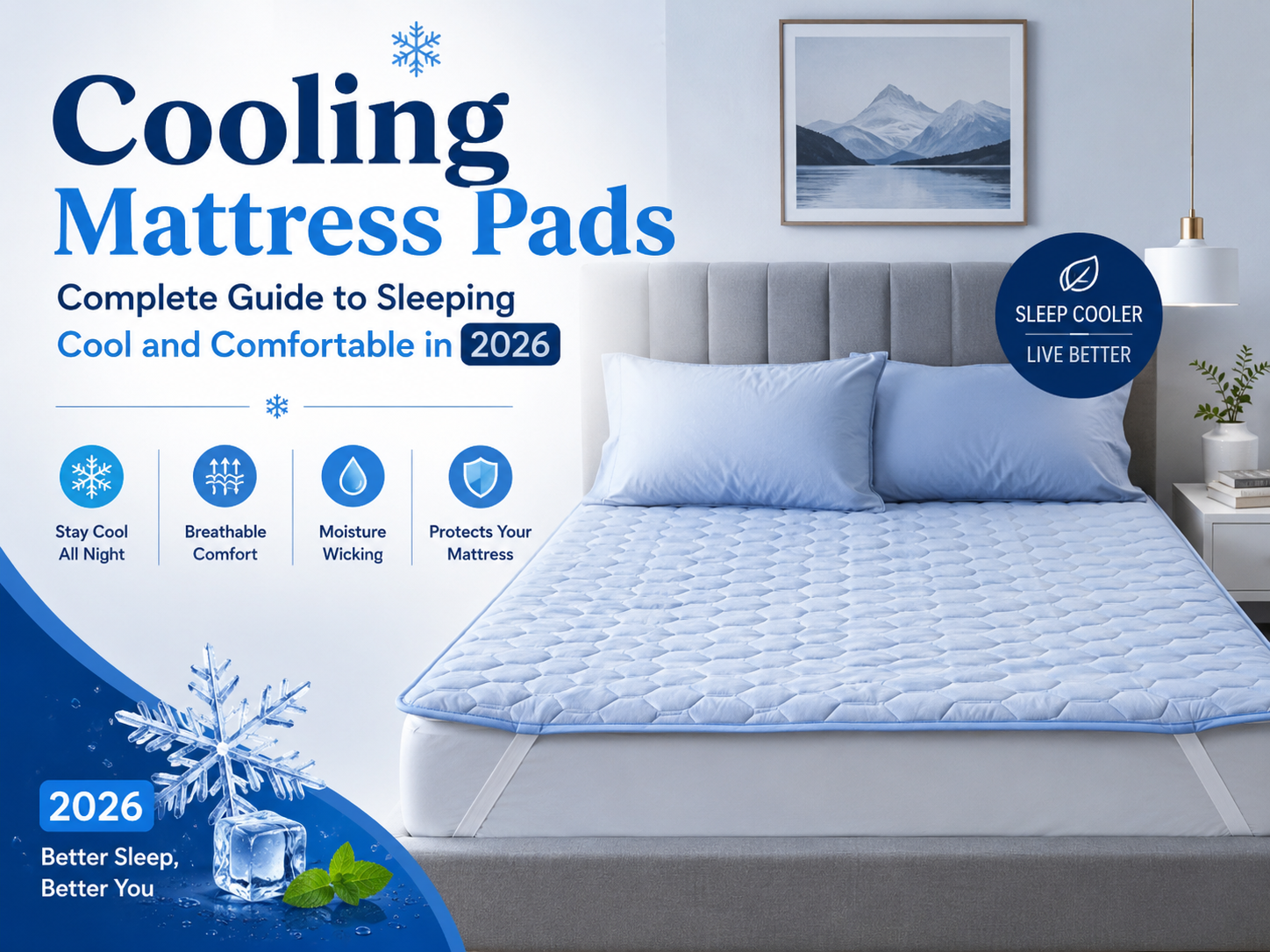
A cooling mattress pad is a layer of bedding placed on top of your mattress — either fitted like a sheet or attached with corner straps — designed specifically to reduce the heat that builds up between your body and the mattress surface during sleep. Unlike a standard mattress pad, which is primarily protective (guarding the mattress from spills and wear), a cooling mattress pad is engineered to actively or passively manage temperature.
Your body naturally drops its core temperature during sleep, and anything that interferes with that process — a warm mattress surface, heavy bedding, a warm room — can fragment your sleep cycles and reduce the quality of rest you get. A cooling mattress pad removes one of the primary variables: the sleeping surface itself.
They're sometimes called cooling mattress toppers, though technically a topper is thicker (usually 2-4 inches) and also adds cushioning, while a pad is thinner (typically 1/4 to 1 inch) and is primarily functional. The terms are often used interchangeably in retail settings, so when shopping, look at both the thickness and the stated purpose.
Why Hot Sleepers Need More Than Just a Fan
Many people assume that a room fan or lower thermostat is sufficient to stay cool at night. For mild cases, this is true. But for significant heat buildup — especially related to menopause, certain medications, chronic illness, or simply a very warm sleeping partner — cooling the air isn't enough. Here's why:
Your mattress acts as a heat trap. Traditional foam mattresses in particular are notorious for retaining body heat — they conform closely to your body, reducing airflow, and the foam material itself absorbs and holds warmth. Even innerspring mattresses can become warm sleeping surfaces when combined with a thick pillow top or memory foam comfort layer. The result: no matter how cool your room is, your sleeping surface is warm, and your body can't dissipate heat effectively.
A cooling mattress pad addresses this at the point of contact — the surface where your body heat actually accumulates. Depending on the technology used, it either absorbs excess heat, conducts it away from your body, or actively circulates cooled air or water beneath you.
Types of Cooling Mattress Pads: How the Technology Works
Not all cooling mattress pads use the same technology, and understanding the differences will help you choose the right one. Here are the main categories:
Phase-Change Material (PCM) Pads
Phase-change materials are substances that absorb heat as they transition from solid to liquid state — much the same way ice absorbs heat as it melts. Embedded in mattress pad fabrics, PCM microparticles absorb your body heat when your skin temperature rises above a certain threshold (typically around 88°F), creating a cooling sensation on the surface. As the pad absorbs heat, the PCM melts; as the sleeping environment cools, it re-solidifies, ready to absorb again.
Best for: Moderate hot sleepers, people with occasional night sweats, those who prefer a passive (no setup required) solution. PCM pads are among the most widely available and affordable cooling options.
Limitations: The cooling effect is temporary — once the PCM has absorbed its maximum heat load, it stops cooling until it re-solidifies. For people with intense or prolonged night sweats, PCM may not provide sufficient cooling throughout the entire night.
Gel-Infused Foam or Gel Fiber Pads
Gel-infused pads incorporate cooling gel beads or gel channels into the pad's fill material. The gel has a higher thermal conductivity than standard foam or fiber, helping to conduct heat away from the body more efficiently. Some gel fiber pads also have open-cell structures that improve airflow through the pad.
Best for: People who want a softer, cushioned feel along with cooling. Gel-infused pads often add a bit of comfort padding as well as cooling.
Limitations: Gel can still retain heat over time, especially in high-humidity environments. The cooling effect is more subtle than PCM or active cooling systems.
Bamboo, Tencel, and Natural Fiber Pads
Pads made from bamboo-derived viscose, Tencel (lyocell), or other natural fibers capitalize on the inherent moisture-wicking and breathability properties of these materials. Bamboo fabric, in particular, has excellent moisture-wicking ability — it draws sweat away from the skin, allowing evaporative cooling to take place more efficiently. Tencel is similarly breathable and has natural temperature-regulating properties.
Best for: People who sweat moderately, prefer natural materials, or have sensitive skin. These pads are also ideal for those looking for eco-friendly bedding options.
Limitations: These are passive cooling solutions — they help sweat evaporate more efficiently but don't actively cool the sleeping surface. For significant night sweats or very warm environments, they may not be sufficient alone.
Cotton Percale and High-Thread-Count Cooling Pads
High-quality cotton, particularly percale weave (which has a crisper, more breathable texture than sateen), is a classic temperature-neutral bedding material. Cotton pads breathe well, absorb moisture, and don't retain heat the way synthetic materials can. They're not as dramatically cooling as PCM or active systems, but they create a more neutral sleeping surface than many foam alternatives.
Best for: Mild hot sleepers who want a simple, washable, durable option. Cotton pads are often the most affordable category and the easiest to care for.
Limitations: Cotton holds moisture rather than wicking it away, so heavy sweaters may find that a soaked cotton pad becomes warm and clammy. Not ideal for significant night sweats.
Active Water-Cooled Systems
At the premium end of the spectrum, active water-cooled mattress pads circulate temperature-controlled water through a network of micro-tubes in the pad. A bedside control unit allows you to set your preferred temperature precisely, cooling the sleeping surface to your exact specifications throughout the night.
Best for: Severe hot sleepers, people with significant medical-related night sweats, couples with dramatically different temperature preferences (dual-zone models allow each side to be set independently).
Limitations: These systems cost several hundred to over a thousand dollars. They require water refilling and occasional maintenance. The bedside unit produces a low hum that some people find disruptive. Not practical for people who travel frequently or change beds often.
Cooling Mattress Pad Comparison at a Glance
| Type | Cooling Intensity | Price Range | Active/Passive | Best For |
|---|---|---|---|---|
| Phase-Change Material (PCM) | Moderate | $50–$200 | Passive | Most hot sleepers, night sweats |
| Gel-Infused Foam/Fiber | Mild–Moderate | $40–$150 | Passive | Comfort + mild cooling |
| Bamboo / Tencel | Mild | $30–$120 | Passive | Moisture-wicking, natural fiber preference |
| Cotton Percale | Mild | $25–$80 | Passive | Budget-friendly, easy care |
| Active Water-Cooled | High | $300–$1,000+ | Active | Severe heat, dual-zone couples |
Key Features to Look For in a Cooling Mattress Pad
Mattress Compatibility and Fit
Before anything else, confirm the pad is sized correctly for your mattress and will stay in place. Most cooling mattress pads come in standard sizes (Twin, Full, Queen, King, California King) with either fitted sheet-style skirts or anchor straps at the corners. For thicker mattresses (12 inches or more), look for deep-pocket fitted options. A pad that bunches up or shifts overnight can disrupt your sleep as much as the heat did.
Washability
This is non-negotiable for anyone using a cooling pad for night sweats. You need a pad you can launder regularly. Look for machine-washable pads that can withstand warm or hot water washing to maintain hygiene. Check the drying instructions too — some pads must be air-dried, which can be inconvenient if you need it ready quickly after a particularly sweaty night.
Breathability and Airflow
Beyond the cooling material itself, look at how the pad is constructed. Does it have a quilted design that traps fill in pockets (which can also trap heat)? Or does it have a flatter, more breathable construction? Some pads advertise ventilated panels or an open-cell fill specifically designed to allow air circulation.
Moisture-Wicking vs. Moisture-Absorbing
There's an important distinction between fabrics that wick moisture (pull it away from skin and spread it for faster evaporation) and fabrics that absorb moisture (soak it up like a sponge). For hot sleepers and night sweat sufferers, moisture-wicking is generally preferable — it keeps the sleeping surface feeling drier. Bamboo, Tencel, and some synthetic performance fabrics wick well. Cotton absorbs more than it wicks.
Thickness and Added Cushioning
If your mattress is already comfortable and you just want to sleep cooler, a thinner pad (under 1 inch) will preserve the feel of your mattress while adding cooling. If your mattress has lost some of its cushioning or you want additional pressure relief, a thicker cooling topper (2-3 inches of gel foam or latex) might address both needs simultaneously. Just note that thicker fill materials can sometimes trap more heat, partially defeating the cooling purpose — look for models specifically engineered to balance cushioning and cooling.
Certifications and Safety Standards
For any bedding product, look for relevant certifications. OEKO-TEX Standard 100 certification indicates the product has been tested for harmful substances. CertiPUR-US certification for foam products ensures no harmful chemicals were used in manufacturing. These matter particularly for people with chemical sensitivities or allergies.
Cooling Mattress Pads for Specific Needs
For Menopause and Hot Flashes
Menopausal night sweats are among the most intense and unpredictable forms of nighttime heat disruption. They come on suddenly, produce significant moisture, and can recur multiple times throughout the night. For this group, the most effective options are PCM-based pads that continuously cycle through absorption and release, bamboo or Tencel covers for maximum moisture wicking, or — for severe cases — active water-cooled systems that maintain a consistent cool temperature regardless of how hot the flash is.
Layering strategies also help: a moisture-wicking cooling pad combined with breathable, loose-fitting pajamas and a lightweight blanket you can easily shed gives you the flexibility to adjust throughout the night without fully waking up.
For Seniors
Older adults often experience disrupted thermoregulation — the body's ability to maintain a stable temperature becomes less efficient with age, making seniors more vulnerable to temperature extremes in both directions. Some seniors run hot at night; others get cold easily. For seniors who run hot, a bamboo or PCM pad provides cooling without the risk of getting too cold (unlike active cooling systems, which can overcool). For seniors who fluctuate, a lightweight breathable pad paired with easy-to-add or remove blanket layers gives the most flexibility.
Additionally, seniors with limited mobility benefit from pads with deep-pocket fitted sheets that stay securely in place — no bunching or shifting that could create an uneven surface and increase fall risk when getting out of bed. Explore our Rest & Comfort collection for bedding and sleep products designed with senior needs in mind.
For Couples with Different Temperature Preferences
This is one of the most common bedroom conflicts: one partner sleeps warm, the other gets cold. A room thermostat is a compromise that satisfies neither fully. Dual-zone active cooling systems solve this elegantly — each side of the bed can be set to a different temperature. At a lower price point, a single-side cooling pad can be placed only on the warm sleeper's side of the bed while leaving the cooler partner's side with conventional bedding.
For Children and Teens
Young people often sleep very warm — growing bodies generate significant heat. A simple bamboo or cotton cooling pad can help children sleep more comfortably without the complexity or cost of advanced cooling technology. Look for pads with easy-to-remove covers for frequent washing.
How a Cooling Mattress Pad Fits Into Your Complete Sleep System
A cooling mattress pad works best as part of a broader sleep comfort strategy. Here's how to build a complete cool-sleep system:
Your Mattress Foundation
If your mattress is significantly worn or uncomfortable, a cooling pad addresses temperature but not support. For older mattresses with lost support, consider a supportive mattress topper that also has cooling properties. For mattresses in good condition, a thinner cooling pad is sufficient.
Pillows and Pillow Covers
Your pillow is as much a heat trap as your mattress. Switching to a latex or shredded foam pillow with a breathable cover, or adding a cooling pillow case, extends the benefits of your cooling pad to your head and neck — where significant body heat escapes during sleep. Browse our Cushions & Pillows collection for supportive, breathable options.
Bedding and Blankets
Even the best cooling mattress pad will be compromised by a heavy, heat-trapping comforter. Pair your cooling pad with lightweight, breathable blankets — cotton percale, linen, or bamboo blankets allow body heat to escape rather than trapping it. A layering system (lightweight blanket you can add or remove) is more flexible than a single heavy comforter.
Room Temperature and Airflow
Sleep experts generally recommend a bedroom temperature between 65–68°F (18–20°C) for optimal sleep. A cooling mattress pad helps most when the room itself is reasonably cool — it manages the heat that builds up at the mattress surface, but it can't compensate for a sweltering room. A bedside fan improves airflow across the sleeping surface, enhancing the evaporative cooling effect of moisture-wicking pad materials.
Caring for Your Cooling Mattress Pad
Proper care extends the life of your pad and maintains its cooling performance:
Washing frequency: For hot sleepers and those with night sweats, washing every 1–2 weeks is appropriate. Standard use: once a month is sufficient. Always use a gentle detergent.
Temperature settings: Warm water (not hot) is safe for most pads and helps sanitize without damaging the cooling material. Check your specific pad's care label — some PCM or gel materials require cooler wash settings.
Drying: Many cooling pads can be tumble-dried on low heat. High heat can damage foam, gel, or PCM materials. When in doubt, air dry flat to preserve the pad's shape and materials.
Mattress protector: Consider layering a waterproof mattress protector beneath your cooling pad to protect your mattress from sweat and moisture, while your cooling pad provides the comfortable, cool sleeping surface on top.
Complementary Rest & Comfort Products at AllCare Store
A cooling mattress pad is one piece of a complete rest and comfort system. At AllCare Store, we carry a full range of products to help you sleep better, recover faster, and live more comfortably:
- Beds & Bedding — Explore our complete bedding selection, including mattress protectors, pillow covers, and supportive overlays designed for comfort and durability.
- Cushions & Pillows — Pressure-relieving cushions and supportive pillows for better positioning during sleep and rest.
- Rest & Comfort Collection — Browse our full range of comfort products designed for people who need restorative, comfortable sleep.
- Pain Relief Products — Heating pads, TENS units, and topical relief products for aches and discomfort that affect sleep quality.
Call us at 1-888-889-6260 for personalized recommendations on cooling sleep products that fit your specific needs and budget.
Frequently Asked Questions About Cooling Mattress Pads
Do cooling mattress pads actually work?
Yes — cooling mattress pads genuinely reduce sleeping surface temperature, though the degree of effectiveness depends on the technology and your specific needs. Passive pads using phase-change materials or moisture-wicking fabrics show consistent improvement in perceived sleep comfort for hot sleepers. Active water-cooled systems provide the most dramatic and measurable temperature reduction. For mild to moderate heat issues, most people notice a meaningful difference. For severe night sweats related to medical conditions, a cooling pad helps but may need to be paired with medical treatment.
What is the difference between a cooling mattress pad and a cooling mattress topper?
The terms are often used interchangeably, but technically a mattress pad is thinner (typically under 1 inch) and primarily functional — it protects the mattress and regulates temperature. A mattress topper is thicker (usually 2–4 inches) and also adds significant cushioning and support. If you want cooling only and your mattress is already comfortable, a pad is sufficient. If you want both cooling and added comfort, a cooling topper addresses both needs, though thicker materials can sometimes retain more heat.
Are cooling mattress pads good for people with night sweats?
Yes, especially pads made from moisture-wicking materials like bamboo or Tencel combined with phase-change cooling technology. For mild to moderate night sweats, a quality cooling pad can significantly improve comfort by wicking moisture away from the skin and reducing the heat buildup that triggers sweating. For severe night sweats — particularly those related to menopause, medications, or medical conditions — a cooling pad is helpful but ideally part of a broader approach that includes medical consultation and other lifestyle adjustments.
Can I use a cooling mattress pad with a memory foam mattress?
Absolutely — memory foam mattresses are actually one of the primary reasons people seek cooling mattress pads. Traditional memory foam is notoriously heat-retentive because it conforms closely to the body, reducing airflow and trapping warmth. A cooling mattress pad placed on top of a memory foam mattress creates a cooler sleeping surface without replacing the pressure-relieving benefits of the foam underneath. This is one of the most common and effective use cases for cooling mattress pads.
How do I choose between a bamboo cooling pad and a phase-change material pad?
Choose a bamboo pad if you sweat moderately and want moisture to evaporate quickly — bamboo fabric is excellent at drawing moisture away from skin and has natural breathability. It's also a great choice if you prefer natural materials or have sensitive skin. Choose a phase-change material (PCM) pad if you feel hot at the sleeping surface even before you start sweating — PCM actively absorbs body heat at the contact surface, providing a noticeably cool feel. For the best of both, look for pads that combine a bamboo or Tencel cover with a PCM fill layer.
How often should I wash my cooling mattress pad?
For hot sleepers or anyone who sweats significantly at night, washing your cooling mattress pad every 1–2 weeks is recommended for hygiene and performance. Under normal use, once a month is generally sufficient. Always check your specific pad's care label — most can be machine washed on a warm/gentle cycle and tumble dried on low heat. Avoid hot water and high heat drying, which can damage gel, foam, or phase-change materials. Using a waterproof mattress protector beneath the cooling pad helps extend time between washes.
Sleep Better, Wake Up Refreshed
Sleeping hot isn't just uncomfortable — it's a genuine health issue. Poor sleep quality is linked to increased risk of cardiovascular problems, weakened immune function, mood disorders, and reduced cognitive performance. Something as practical as a cooling mattress pad can meaningfully improve your sleep quality, your health, and how you feel every single day.
Whether you're dealing with menopausal night sweats like Margaret, sharing a bed with someone who generates more heat than you'd like, or simply sleeping on a memory foam mattress that's been slowly roasting you for years — the right cooling solution is out there, and it doesn't have to cost a fortune.
Explore our Rest & Comfort collection and Beds & Bedding selection at AllCare Store to find bedding and sleep products that help you rest better. And if you need help choosing the right product for your situation, our team is ready to assist.
Call us at 1-888-889-6260 — we offer free shipping on most orders and a 30-day return policy so you can shop with confidence.
Visit AllCareStore.com for our complete range of health, wellness, and comfort products.
Medical Disclaimer: This article is for informational purposes only and does not constitute medical advice. Individuals at high risk for pressure injuries should consult a physician, occupational therapist, or certified rehabilitation engineer before selecting a wheelchair cushion.