This article is for informational purposes only and does not constitute medical advice. Every breastfeeding journey is unique. If you have questions or concerns about breastfeeding, leaking, or postpartum health, consult your OB/GYN, midwife, or a certified lactation consultant.
Sophie's Story: The Leak No One Warned Her About
Sophie had prepared for breastfeeding with the thoroughness of someone who prepares for everything. She'd taken a class, read two books, bought the pump, stocked up on nipple cream, and packed a proper hospital bag. What she hadn't prepared for — what no one had really warned her about — was the leaking.
It started at the hospital, two days after her daughter Lily was born. Sophie's milk came in like a tide, and her body, still calibrating supply against demand, produced more than Lily could consume in those early days. She soaked through two nursing bras before her mother suggested breast pads. The nurses handed her a few disposable samples. Problem solved — temporarily.
By week three at home, Sophie had learned that leaking was not a brief phase. It happened predictably when Lily nursed on one side while the other let down sympathetically. It happened unpredictably in the grocery store when she heard another baby cry. It happened at 2 AM, soaking through whatever she'd been wearing. She went through nearly a box of disposables a week, which added up faster than she'd expected. A friend mentioned reusable pads, and Sophie was skeptical — wouldn't they be less absorbent? Less convenient? She tried a set anyway, and gradually found herself using a mix of both: reusables for predictable home nursing sessions, disposables when she needed the confidence of leaving the house.
Six months in, Sophie has breast pad management down to a system. Her nursing bras always have fresh pads. She keeps a small zip pouch of disposables in every bag she carries. She knows which brand and style works best for her heavy-flow mornings and her lighter afternoons. What once felt like a constant, stressful leak problem has become simply part of the rhythm of feeding Lily.
If you're navigating the world of breast pads for the first time — or trying to find better options than what you've been using — this guide covers everything you need to know.
Why Do Nursing Moms Leak?
Breast leaking, also called milk leakage, is extremely common in breastfeeding mothers — especially in the early weeks when the body is still regulating milk supply to match the baby's demand. Understanding why it happens helps explain what you're working with and why breast pad selection matters.
The Let-Down Reflex
When your baby nurses, a hormone called oxytocin signals the milk glands to contract and release milk — this is called the "let-down" reflex. Crucially, the reflex doesn't know the difference between your left and right breast. When your baby nurses on one side, the other side often lets down simultaneously. That simultaneous let-down is one of the most consistent causes of leaking.
Oversupply
In the early weeks of breastfeeding, many mothers produce significantly more milk than their newborn can consume in a single feeding. The excess has to go somewhere. Over time, supply and demand usually self-regulate, and leaking often decreases after the first month or two. But oversupply can persist, and some women leak throughout their entire breastfeeding journey.
Conditioned Let-Down
The body can associate let-down with stimuli other than direct nursing — the sound of a baby crying (any baby, not just your own), seeing a nursing-related image, thinking about your baby, or simply the time of day when feeds are usually scheduled. These conditioned responses can trigger unexpected leaking in situations well away from the nursing chair.
Night Leaking
Prolactin levels — the hormone that drives milk production — are highest at night. Many nursing mothers experience their heaviest leaking during sleep, especially when the baby sleeps a longer stretch and the breasts haven't been emptied. Overnight breast pad use is often essential in the first months.
Types of Breast Pads: Disposable vs. Reusable
The fundamental choice in breast pads is between disposable and reusable. Both have genuine advantages, and many nursing moms use a combination of both depending on the situation.
Disposable Breast Pads
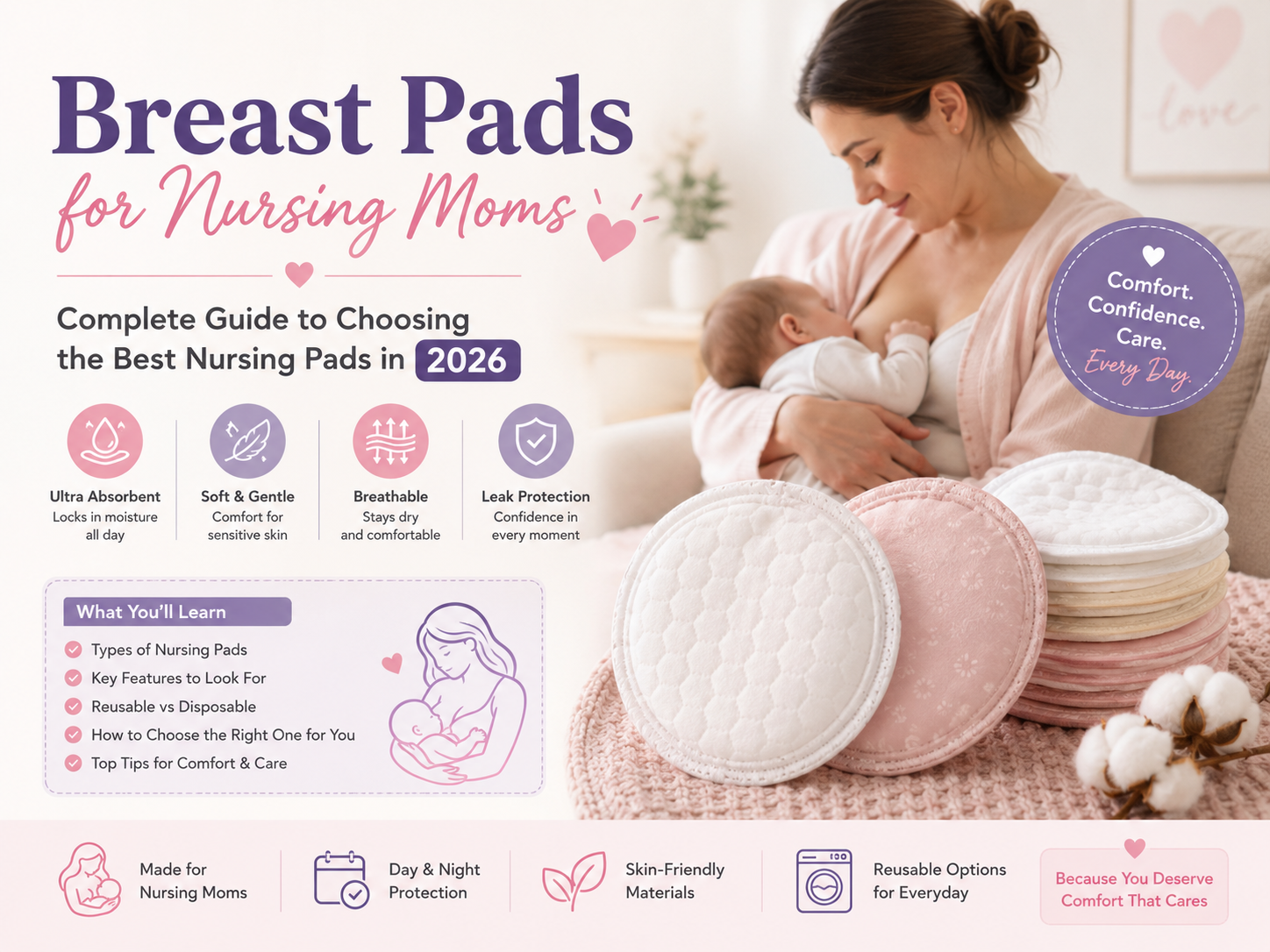
Disposable breast pads are single-use pads, typically made from multiple layers of absorbent material (often a combination of fluff pulp and superabsorbent polymer — similar to the technology in diapers) with a soft inner lining against the skin and a waterproof outer backing. They come in individually wrapped pairs or in bulk boxes and are disposed of after use.
Advantages:
- Highly absorbent — modern disposables can absorb significant volumes of milk without feeling wet against the skin
- Ultra-thin and discreet — most disposable pads are thin enough to be invisible under clothing
- Convenient — no washing required; simply dispose and replace
- Ideal for outings, travel, and situations where laundry isn't practical
- Individually wrapped options are hygienic and portable
- Available in shaped/contoured designs that sit flush against the breast
Disadvantages:
- Ongoing cost — heavy leakers can go through hundreds of pads per month
- Environmental impact — single-use products create significant waste over a months-long breastfeeding journey
- Some synthetic liners can feel less breathable than natural fabrics, particularly in warm weather
- Must be changed promptly when saturated to avoid skin irritation or mastitis risk
Best for: Heavy leakers needing maximum absorbency, outings and travel, the early postpartum weeks when leaking is heaviest, overnight use (high-absorbency disposables specifically designed for nighttime use are available).
Reusable Breast Pads
Reusable breast pads are washable, multi-use pads made from soft fabric — commonly organic cotton, bamboo, fleece, or a combination. They're placed in the bra like disposables, washed after use, and used again. Quality reusable pads can last through an entire breastfeeding journey and beyond.
Advantages:
- Cost-effective — a set of 8–12 reusable pads may cost the same as 2–3 boxes of disposables but lasts the entire breastfeeding period
- Eco-friendly — dramatically reduced waste compared to disposable use
- Natural fabrics (especially bamboo and organic cotton) are breathable and gentle on sensitive nipples
- Softness — many nursing moms find the fabric feel more comfortable against tender or sore nipples than synthetic disposable liners
- Can be used beyond breastfeeding (as general breast pads, period underwear inserts, etc.)
Disadvantages:
- Less absorbent than premium disposables — most reusable pads absorb less volume, requiring more frequent changing for heavy leakers
- Require washing — need multiple sets to have clean ones available while others are in the laundry
- Bulkier than ultra-thin disposables — may create visible lines under fitted tops
- Wet fabric stays against the skin when saturated — can feel damp more noticeably than the dry-feel lining of disposables
Best for: Home use during predictable nursing sessions, mothers with moderate leaking, eco-conscious families, mothers with sensitive skin who find disposable liners irritating.
Breast Pad Comparison: Quick Reference Guide
| Feature | Disposable Pads | Reusable Pads |
|---|---|---|
| Absorbency | High to very high | Moderate |
| Cost (short-term) | Lower upfront | Higher upfront |
| Cost (long-term) | Higher (ongoing) | Lower (reused) |
| Convenience | Very high | Moderate (requires washing) |
| Environmental impact | Higher | Lower |
| Skin feel | Varies by liner material | Often softer (natural fabrics) |
| Profile/Discretion | Ultra-thin options available | Slightly bulkier |
| Overnight use | Excellent (overnight formulas) | Moderate (multiple layers) |
| Travel | Excellent | Requires clean/used bag |
Key Features to Look For in Breast Pads
Absorbency Level
Not all nursing moms leak equally. Light leakers may need only modest absorbency, while heavy leakers — particularly in the early postpartum weeks or mothers with oversupply — need maximum absorbency to avoid soaking through clothing. Look for the absorbency rating on the packaging and choose based on your actual flow, not the minimum. It's far better to use a more absorbent pad than you need than to under-pad and experience leakage through clothing.
Waterproof Backing
This is non-negotiable for any breast pad intended to prevent clothing stains. A waterproof or moisture-barrier backing prevents milk that has soaked through the inner layers from continuing through to your bra and shirt. Most quality disposable pads include this; for reusable pads, look for those with a polyurethane laminate (PUL) or similar moisture-barrier layer.
Adhesive Tabs
Most disposable breast pads include a peel-and-stick adhesive strip on the back that adheres to the cup of your nursing bra. This prevents the pad from shifting, bunching, or falling out — a significant cause of unexpected leakage through clothing. Some reusables use friction and bra cup shape to stay in place; others include small stay-put tabs. Pad movement is a common complaint, so check reviews for mention of staying power.
Contoured vs. Flat Shape
Contoured or shaped breast pads are designed with a three-dimensional profile that matches the curve of the breast, sitting flush against the skin without gaps at the edges. Flat pads may wrinkle or fold at the edges when placed inside a bra cup, creating points where milk can bypass the pad. For the most discreet and effective fit, contoured pads are generally preferable — especially for wearing under fitted tops.
Inner Liner Material
The inner liner — the material that sits directly against your nipple — matters significantly for comfort, especially in the early postpartum weeks when nipple tenderness is common. Options include:
Soft synthetic liners: Common in disposables; designed to wick moisture away from the skin. Effective at keeping the nipple feeling dry, but some mothers find synthetic materials irritating on tender skin.
Organic cotton: Soft, breathable, and gentle on sensitive nipples. Found in premium disposables and most reusables. The gold standard for comfort, particularly for mothers dealing with nipple soreness or cracking.
Bamboo: Bamboo-derived fabric is naturally antibacterial, exceptionally soft, and moisture-wicking. It's become increasingly popular in reusable breast pads for its combination of comfort and hygienic properties.
Fleece: Polar fleece stay-dry liners are popular in cloth nursing pads — fleece wicks moisture away from the skin efficiently while feeling soft. Not as breathable as cotton or bamboo in warm weather, but excellent at keeping the skin surface dry.
Size and Fit
Breast pads come in different sizes, and fit matters for both comfort and function. A pad that is too small won't cover the entire areola area where leaking occurs; a pad that is too large may be difficult to position comfortably inside the bra cup. Most standard pads fit well for average breast sizes, but nursing mothers with larger breasts may need to specifically seek out extended or plus-sized pad options.
Special Situations: Choosing the Right Pad
For Nighttime Use
Overnight nursing pad use requires maximum absorbency — you're not changing pads every hour through the night. Many brands offer "nighttime" or "ultra-heavy" disposable formulations specifically designed for extended wear. For reusable users, multiple-layer bamboo or cotton pads offer the best overnight absorbency, and having double the pads you think you need allows for easy middle-of-the-night changes without doing laundry at 3 AM.
For Exercise and Physical Activity
Movement during exercise can dislodge pads that rely solely on bra cup pressure to stay in place. For active nursing moms, adhesive-backed disposable pads offer the most secure fit during workouts. Look for lightweight, thin options that don't add bulk under a sports bra. Change immediately after exercise — wet pads left against the skin create ideal conditions for yeast growth.
For Mothers with Sore or Cracked Nipples
Nipple soreness and cracking are common challenges in the early weeks of breastfeeding. Standard breast pads can stick to cracked or bleeding nipples, especially when milk dries and the pad adheres to the skin. For mothers dealing with this, seek out non-adherent or "dry" liner pads, or use reusable pads with ultra-soft natural fiber liners (organic cotton or bamboo). Pair pad use with a quality lanolin nipple cream applied after each feed to protect and heal the nipple before the next pad goes in.
For Mothers Returning to Work
Returning to work while breastfeeding requires careful breast pad strategy. Leak-through on work clothing is a significant source of anxiety for many nursing mothers. For work days, maximum-absorbency disposable pads offer the most confidence. Carry extra pairs in your work bag or pump bag. Pumping at work helps regulate supply and reduces the unpredictable leaking that comes from prolonged gaps between nursing or pumping sessions.
For Sensitive Skin and Allergies
Some nursing mothers develop skin sensitivity or rashes from conventional disposable breast pads — often reactions to the synthetic liner material, fragrances (yes, some pads are scented), or the adhesive. If you experience redness, irritation, or a rash in the breast area, switch to unscented, fragrance-free pads with organic cotton or bamboo liners. Reusable pads made from certified organic materials are often the most appropriate for sensitive skin.
How to Use Breast Pads Effectively
Change Frequently
This is the single most important rule of breast pad use. A saturated breast pad left against the skin is warm, moist, and a prime environment for bacterial and yeast growth — both of which can lead to mastitis or nipple thrush, two painful breastfeeding complications you want to avoid. Change your breast pads every time you notice they're wet, or at every nursing session at minimum. Disposables: once wet, replace immediately. Reusables: change and rinse at each nursing session.
Allow Air Drying Time
When circumstances allow — particularly at home — going without breast pads for short periods and allowing the nipple area to air dry is beneficial for skin health. This is particularly helpful for mothers dealing with nipple soreness or skin irritation. Air exposure promotes healing and reduces maceration (skin softening from prolonged moisture contact). Obviously not practical in all situations, but worth building into your routine when at home.
Washing Reusable Pads
Rinse reusable pads immediately after removal in cold water to prevent milk from setting and staining. Wash in warm water with a gentle, fragrance-free detergent — avoid fabric softeners, which can reduce absorbency. Line dry or dry on low heat. Hot water and high heat can damage waterproof backing layers. Keep a small wet bag or zip-lock pouch for used reusable pads when out of the house.
Using Both Types Together
As Sophie discovered, a hybrid approach often works best. Reusable pads for at-home use when you're near laundry facilities, with disposables reserved for outings, travel, and nighttime use when maximum absorbency and convenience matter most. This balances cost, environmental impact, and practical effectiveness across different situations.
Postpartum Care Beyond Breast Pads
Breastfeeding success is supported by a complete postpartum care approach. At AllCare Store, we carry a range of products designed to support new mothers through the breastfeeding journey and beyond:
- Mom & Baby Care — Browse our comprehensive collection of postpartum and newborn care products, from nursing supplies to baby skincare essentials.
- Feeding Collection — Explore nursing accessories, feeding aids, and related supplies to support your breastfeeding or feeding journey.
- Feminine Hygiene — Postpartum personal care products including maternity pads, postpartum recovery essentials, and hygiene supplies for new mothers.
- Vitamins & Supplements — Postnatal vitamins, omega-3 supplements, and nutritional support for breastfeeding mothers maintaining their own health while nourishing their babies.
- Skin Care — Gentle, safe skincare products appropriate for use by nursing mothers, including nipple creams, stretch mark treatments, and sensitive skin formulations.
Call us at 1-888-889-6260 — our team can help you find the right breastfeeding and postpartum care products for your needs. We offer free shipping on most orders and a 30-day return policy.
Frequently Asked Questions About Breast Pads for Nursing Moms
When should I start using breast pads?
Many nursing moms begin using breast pads as soon as their milk comes in — typically 2–5 days after birth. Some mothers experience colostrum leaking even before birth or immediately after delivery. It's a good idea to have breast pads packed in your hospital bag to have them available from the start. Leaking is most common and typically heaviest in the first 4–8 weeks as your body calibrates milk supply to your baby's demand.
Are reusable breast pads as good as disposable ones?
Reusable breast pads are highly effective for moderate leaking and are often preferred for comfort and environmental reasons. They typically have lower absorbency than premium disposable pads, which matters for heavy leakers or overnight use. Many nursing moms use reusable pads at home and during predictable nursing sessions, while keeping disposables for outings, heavy flow days, and nighttime use. Quality reusable pads made from bamboo or organic cotton can be just as comfortable — and gentler on sensitive skin — than disposables.
How often should I change my breast pads?
Change breast pads every time they become wet — at minimum at every nursing or pumping session, and immediately if you feel the pad is saturated. Leaving a wet pad against the skin creates conditions conducive to bacterial and yeast growth, which can lead to mastitis (breast tissue infection) or nipple thrush. When in doubt, change it. Carrying extras in your diaper bag or purse means you're always prepared for an unexpected change on the go.
Can I wear breast pads while sleeping?
Yes — overnight breast pad use is common and recommended for nursing moms who experience nighttime leaking. Choose the most absorbent pads you can find for nighttime use, particularly if your baby is sleeping longer stretches and your breasts aren't being emptied as frequently. High-absorbency disposable overnight pads or multi-layer reusable pads work well. Wearing a comfortable nursing sleep bra helps keep pads in place through the night.
What causes breast pad rashes, and how do I prevent them?
Breast pad rashes are usually caused by prolonged moisture contact (from not changing pads frequently enough), reaction to synthetic liner materials or fragrances in the pad, or yeast overgrowth (nipple thrush). To prevent them: change pads at every nursing session or when wet, choose unscented pads with organic cotton or bamboo liners, allow nipples to air-dry when possible, and contact your healthcare provider if redness, itching, or a rash persists — nipple thrush requires specific antifungal treatment.
Will I need breast pads throughout my entire breastfeeding journey?
Leaking typically decreases significantly after the first 4–8 weeks as milk supply regulates to match your baby's demand more closely. Many nursing mothers find they rarely need pads after the first two months except during feeding sessions (when the opposite breast may still let down). Some moms continue to need them throughout breastfeeding, particularly during morning feeds when supply is highest, or if they have persistent oversupply. Leaking is highly individual — some mothers barely experience it, others continue throughout their nursing journey.
You've Got This, Mama
Breastfeeding comes with challenges that no one fully prepares you for — but leaking, as disruptive and frustrating as it is, is manageable with the right tools and the right information. Breast pads are a simple, effective solution that lets you nurse confidently and comfortably without worrying about what's showing through your shirt or soaking your sleep.
Start with a variety of options — a set of reusables and a box of disposables — to discover what works best for your flow, your lifestyle, and your skin. Like Sophie, you'll settle into a system that fits your life. And like Sophie, you might be surprised how quickly it goes from frustrating problem to simply part of the routine.
Explore our Mom & Baby Care collection for all your breastfeeding and postpartum needs, and visit our Feeding collection for nursing accessories and support products.
Call 1-888-889-6260 — our team is here to help. Free shipping on most orders, 30-day returns.
Visit AllCareStore.com for our complete selection of health, wellness, and family care products.
Medical Disclaimer: This article is for informational purposes only and does not constitute medical advice. Individuals at high risk for pressure injuries should consult a physician, occupational therapist, or certified rehabilitation engineer before selecting a wheelchair cushion.