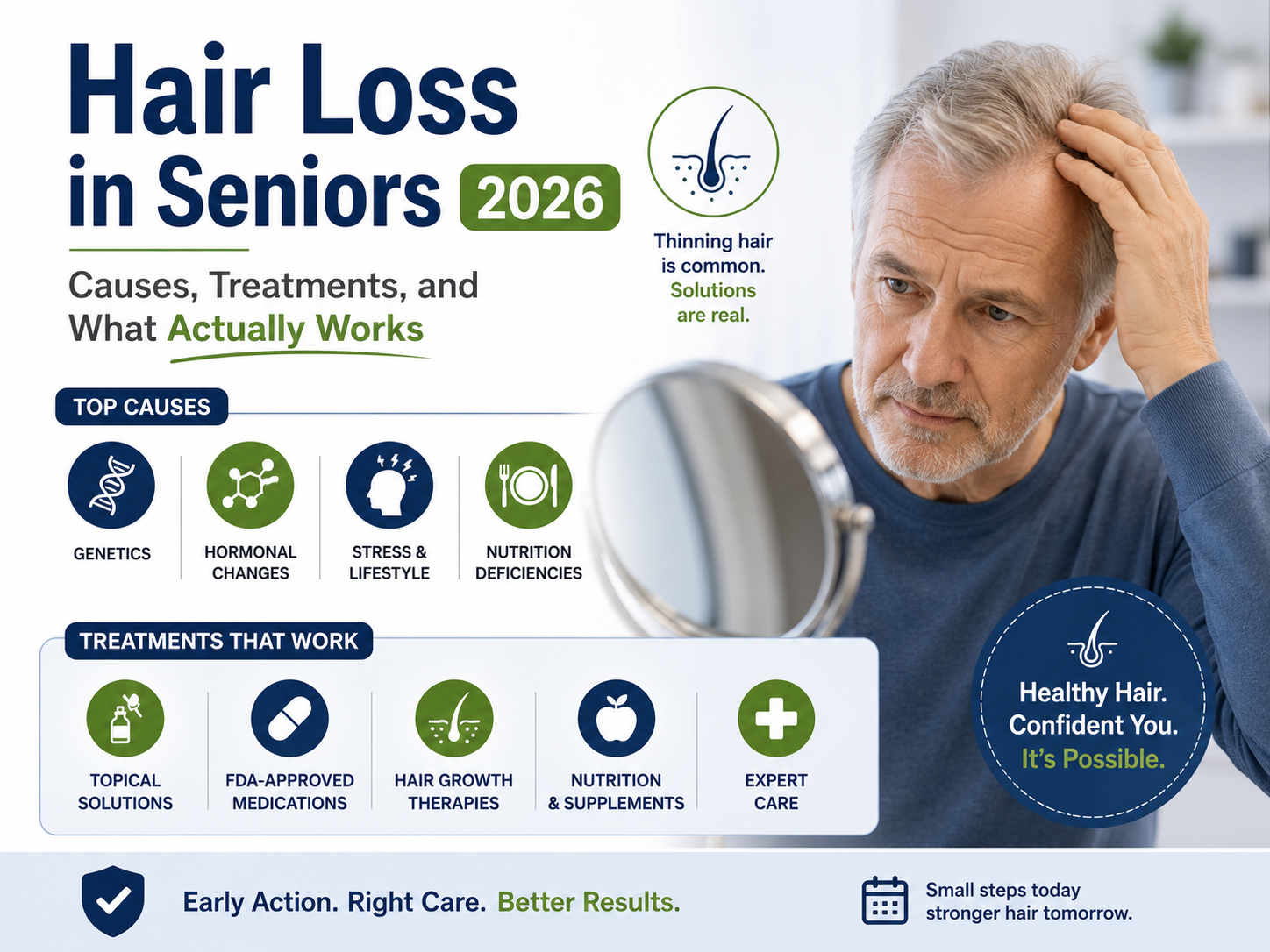
A quick note: This is a practical styling and confidence guide, not medical advice. If your hair loss is sudden, patchy, or new, get it evaluated first — some causes are treatable. For the medical side (causes, treatments, and when to see a doctor), read our companion guide, Hair Loss in Seniors: Causes and Solutions. This article picks up where treatment leaves off: how to look and feel your best today.
Whether or not you pursue medical treatment, thinning hair is something you live with every morning in front of the mirror. The good news is that the gap between "thinning hair" and "hair that looks full and put-together" is often closed not by regrowth, but by technique — the right cut, the right products, and a few small habits. None of this requires a prescription, and most of it works within a single styling session.
Start With the Cut
A skilled cut does more for the appearance of thinning hair than almost anything else, because length and layering change how much scalp shows through.
- Shorter usually reads fuller: Long hair pulls down and separates, exposing the scalp. A shorter, blunter cut sits with more visual density. For many people, chin-length or above is the sweet spot.
- Blunt ends over heavy layers: Thick, choppy layering can thin the ends further. A blunt or lightly layered perimeter keeps weight where it reads as fullness.
- Rethink the part: A part that has widened over time is a spotlight on thinning. Moving the part a half-inch, switching sides, or using a zigzag part covers scalp that a straight part reveals.
- Ask for a consult specifically about density: Tell your stylist your goal is coverage and fullness. Many stylists have go-to techniques for fine or thinning hair and will tailor the cut if you name the priority.
Products That Create Instant Fullness
You don't need regrowth to look fuller. These product categories work by coating, lifting, or filling — effects you see the day you use them.
- Volumizing shampoo and conditioner: Formulas with lightweight proteins and polymers coat each strand to add diameter and lift. Keep heavy conditioner off the roots, where it flattens fine hair — apply it mid-length to ends only.
- Root-lifting spray and mousse: Applied at the roots on damp hair and dried in, these props hold hair up and away from the scalp, which is where fullness is created or lost.
- Keratin hair fibers: Tiny charged fibers that cling to existing hair and instantly hide thin spots and scalp show-through. They are one of the most effective same-day tools available, are undetectable when applied well, and wash out in the shower. A binding spray helps them last through the day.
- Scalp-toning and root cover-up sprays: Tinted sprays that match hair color reduce the contrast between pale scalp and darker hair, so thin areas at the part and crown recede visually.
- Dry shampoo and texturizing spray: A light mist adds grip and body between washes, and clean-but-textured hair reads as fuller than freshly washed, slippery hair.
Toppers, Pieces, and Wigs Have Come a Long Way
Modern hairpieces are nothing like the obvious wigs of a generation ago, and they are worth considering without embarrassment.
- Hair toppers: A topper is a partial piece that clips onto your own hair to add density exactly where you need it — usually the crown or part. Because it blends with your real hair around the edges, a well-matched topper is invisible and can be worn daily.
- Full wigs: For more extensive loss, today's wigs come in natural-looking synthetic and human-hair options, in caps designed for comfort and breathability. Many people keep one for occasions and one for everyday.
- Getting a natural match: The single biggest factor in a piece looking real is a good color and cap match, and a stylist who can trim it to frame your face. Consider a fitting with someone experienced in hair loss rather than buying blind.
Everyday Habits That Protect the Hair You Have
Fine, aging hair breaks more easily, and breakage makes thinning look worse. A few gentle habits preserve length and density.
- Be gentle when wet: Wet hair is at its most fragile. Pat — don't rub — with a towel, and detangle with a wide-tooth comb starting at the ends and working up.
- Ease off the heat: High-heat flat irons and curling wands weaken the shaft. Use the lowest effective temperature, a heat protectant, and give hair heat-free days.
- Loosen tight styles: Daily tight ponytails, buns, and braids create constant pull that can cause lasting thinning at the hairline. Rotate looser styles and vary where the tension sits.
- Sleep on silk or satin: A silk or satin pillowcase reduces the friction that causes overnight breakage on cotton.
- Protect your scalp from the sun: Where hair is sparse, the scalp burns. A hat or a scalp sunscreen prevents both discomfort and long-term skin damage on exposed areas.
The Part Nobody Talks About: How You Feel
Hair is tied up with identity, and feeling self-conscious about thinning is completely valid — not vanity. A few things genuinely help. A stylist who specializes in fine or thinning hair can be transformative, both for the result and for the reassurance of working with someone who takes it seriously. Online communities and support groups connect you with others who understand. And if hair loss is weighing on your mood or confidence more than a little, that's worth mentioning to your doctor too — it's a common and treatable kind of distress, not something to just push through.
Shop Hair and Scalp Care at AllCare Store
AllCare Store carries personal care essentials suited to fine, aging, and thinning hair — gentle shampoos, scalp care, wide-tooth combs, and grooming tools for seniors and caregivers alike. Browse our Personal Care collection to find what fits your routine.
- Free Shipping on every order — no minimums
- Discreet Packaging — plain, unmarked boxes
- 30-Day Returns — full confidence guarantee
- Expert Support — call us at 1-888-889-6260
Frequently Asked Questions: Styling and Living With Thinning Hair
What is the fastest way to make thinning hair look fuller today?
Keratin hair fibers give the most dramatic same-day result — they cling to existing strands and hide scalp show-through in seconds, and they wash out in the shower. Pair them with a shorter, blunter cut and a volumizing product at the roots, and most people see a noticeable difference immediately, with no waiting for regrowth. A tinted root cover-up spray also helps by reducing the contrast between a pale scalp and darker hair.
Should I keep my hair long or cut it short if it's thinning?
For most people, shorter reads fuller. Long hair pulls down and separates, exposing more scalp, while a shorter blunt cut sits with more visual density. Chin-length or above is often the sweet spot. There are exceptions depending on hair type and face shape, so the best move is to tell a stylist your priority is fullness and coverage and let them recommend a length and shape for your specific hair.
Are hair toppers and wigs obvious?
Not when they're matched and fitted well. Modern toppers and wigs use natural-looking fibers and comfortable, breathable caps, and the difference between "obvious" and "invisible" almost always comes down to a good color and cap match plus a stylist trimming the piece to frame your face. A topper — a partial piece that clips into your own hair at the crown or part — is especially seamless because your real hair blends around the edges.
Can styling products cause more hair loss?
Ordinary volumizing and fiber products don't cause hair loss — but rough handling around them can. The real culprits are breakage-related: high-heat styling, harsh brushing of wet hair, and constant tight styles that pull at the hairline. Use gentle technique, low heat, a wide-tooth comb on wet hair, and looser styles, and you can enjoy fuller-looking hair without adding to breakage. If you notice increased shedding from the root (not breakage), that's a medical question worth raising with your doctor.