Enteral feeding pumps allow patients to receive nutrition safely when oral intake is limited or not possible. However, mobility can become difficult when the feeding pump needs to remain connected for long periods. A feeding pump backpack provides a convenient way to carry the pump and formula while maintaining an active lifestyle.
Many caregivers and patients use specialized bags such as the Kangaroo Joey pump, McKesson feeding pump, or other enteral feeding pump backpacks. But if a dedicated bag is unavailable, you can modify a regular backpack to carry a feeding pump safely.
In this guide, we will explain how to modify a backpack for a feeding pump step by step, safety considerations, and the best backpack options available at All Care Store, a trusted online supplier of medical supplies and enteral feeding products.
What Is a Feeding Pump Backpack?
A feeding tube pump backpack is a specially designed bag used to carry an enteral feeding pump, a feeding formula bag, tubing, and related supplies.
These backpacks allow individuals to:
- Move freely during feeding
- Travel comfortably
- Attend school or work
- Maintain daily activities
A backpack for feeding pump systems keeps all equipment organized and ensures the pump operates properly while the user remains mobile.
Why Use a Backpack for a Feeding Pump?
Using a backpack feeding pump setup provides several advantages for patients and caregivers.
Improved Mobility
A feeding pump backpack allows patients to move around freely while receiving nutrition.
Greater Comfort
Backpacks distribute weight evenly across the shoulders, reducing strain.
Discreet Medical Equipment
A backpack keeps feeding equipment less visible, helping users feel more comfortable in public settings.
Easier Caregiver Management
Caregivers can easily transport feeding equipment when traveling or going outdoors.
At All Care Store, many caregivers purchase enteral feeding pump backpacks and feeding accessories designed specifically for daily mobility and comfort.
Types of Feeding Pump Backpacks
There are several types of backpacks designed for enteral feeding pumps.
Kangaroo Joey Pump Backpack
The Kangaroo Joey feeding pump backpack is one of the most widely used feeding pump bags in hospitals and home healthcare settings.
Key features include:
- Designed specifically for the Kangaroo Joey pump
- Secure pump holder
- Formula bag compartment
- Tubing exit ports
- Comfortable shoulder straps
These backpacks help patients maintain mobility while using the Kangaroo Joey enteral feeding pump.
McKesson Feeding Pump Backpack
The McKesson feeding pump backpack is another popular option used by caregivers and healthcare providers.
Features often include:
- Multiple compartments
- Durable materials
- Adjustable straps
- Secure pump positioning
These backpacks are designed to hold enteral feeding equipment during daily activities safely.
Universal Enteral Feeding Pump Backpack
Some backpacks are compatible with multiple pump models and are called universal enteral feeding pump backpacks.
They provide:
- Flexible storage compartments
- Adjustable pump straps
- Additional supply pockets
- Lightweight construction
Many caregivers choose these backpacks for versatility.
When Should You Modify a Backpack?
While specialized bags are recommended, modifying a regular backpack can be helpful in certain situations.
For example:
- Waiting for a medical backpack delivery
- Temporary travel use
- Creating a custom setup for children
- Emergency backup solution
However, it is important to ensure the backpack keeps the feeding pump secure and does not interfere with tubing or pump function.
Materials Needed to Modify a Backpack
To create a safe backpack for feeding pump use, you may need the following materials:
- Medium-size backpack
- Velcro straps
- Elastic bands
- Foam padding
- Fabric tape
- Mesh pouch
- Sewing kit or safety pins
These materials help stabilize the pump and feeding bag inside the backpack.
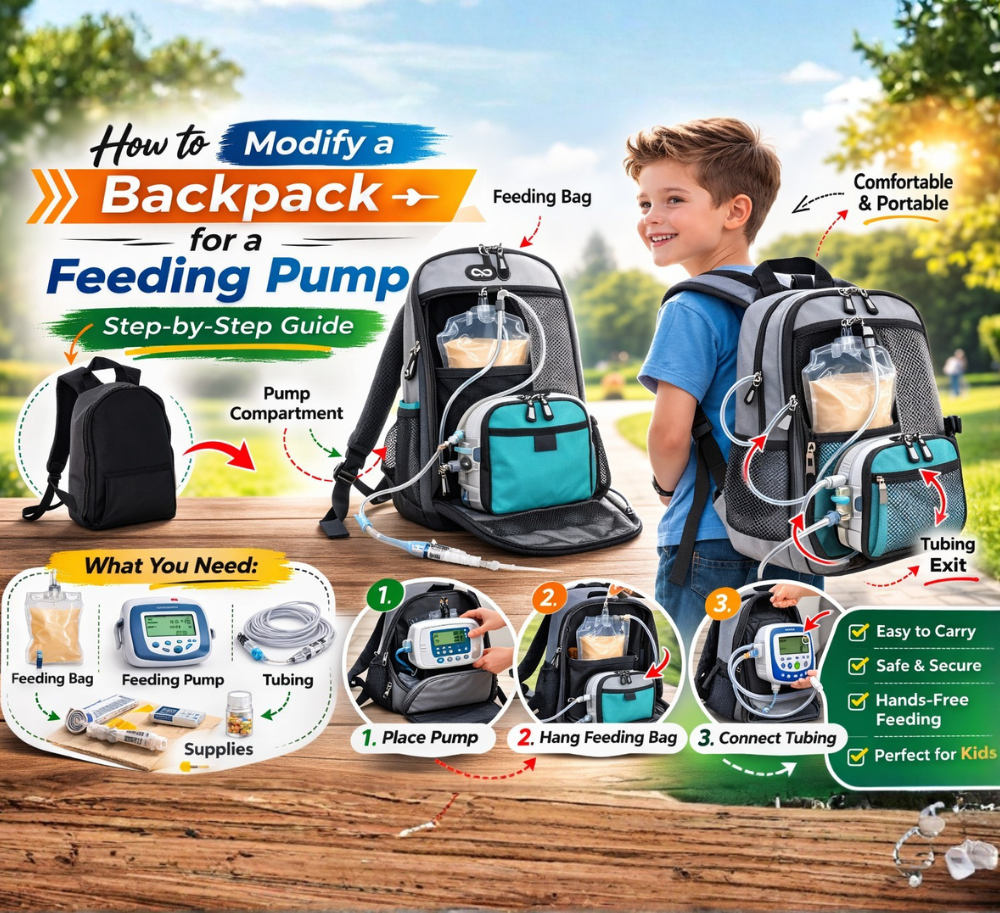
Step-by-Step Guide to Modifying a Backpack for a Feeding Pump
Step 1: Choose the Right Backpack
Select a backpack that has:
- Enough space for the feeding pump
- Durable shoulder straps
- Multiple compartments
- A sturdy back panel
A medium-sized backpack is usually ideal for a feeding pump backpack modification.
Step 2: Create a Pump Compartment
The feeding pump must remain stable while walking.
You can create a pump compartment by:
- Adding foam padding
- Installing a mesh pouch
- Using Velcro straps
This prevents the pump from shifting inside the backpack.
Step 3: Secure the Pump
Attach Velcro straps or elastic bands inside the bag to hold the pump upright.
Keeping the pump upright ensures proper feeding operation.
Step 4: Position the Feeding Bag
The feeding formula bag must remain slightly above the pump.
You can secure it by:
- Installing a hook or strap
- Using a fabric loop
- Adding a clip to hold the bag
This setup mimics the structure of a professional enteral feeding pump backpack.
Step 5: Create a Tubing Exit Opening
The feeding tube must exit the bag smoothly.
You can do this by:
- Leaving a small zipper opening
- Creating a reinforced hole
- Adding a rubber grommet
Make sure the tubing does not kink or bend sharply.
Step 6: Add Storage for Feeding Supplies
A good feeding tube pump backpack should hold extra supplies such as:
- Feeding bags
- Extension tubing
- Syringes
- Cleaning wipes
- Extra formula
Small organizer pouches work well for keeping supplies arranged.
Step 7: Test the Setup
Before daily use, test the backpack.
Check for:
- Pump stability
- Tubing flow
- Weight distribution
- Comfortable fit
Walk around briefly to ensure the pump remains secure.
Safety Tips for Using a Backpack Feeding Pump
When using a backpack feeding pump, safety is essential.
Keep the Pump Upright
Most pumps function best when positioned upright.
Avoid Tubing Kinks
Ensure tubing exits smoothly from the backpack.
Monitor Pump Alarms
Always listen for pump alerts or alarms during feeding.
Ensure Ventilation
Do not completely seal the pump inside the backpack.
Follow Medical Instructions
Always follow the healthcare provider's instructions for enteral feeding.
Traveling with a Feeding Pump Backpack
Traveling with a feeding pump backpack becomes easier with preparation.
Helpful tips include:
- Pack extra feeding bags
- Carry spare tubing
- Bring additional formula
- Carry pump batteries
- Keep cleaning supplies available
These steps help ensure uninterrupted feeding during travel.
Feeding Pump Supplies Available at All Care Store
All Care Store is a trusted online supplier of healthcare and medical equipment in the United States.
The store offers a wide range of products, including:
- Enteral feeding pumps
- Feeding pump backpacks
- Feeding bags
- Tube feeding accessories
- Medical supplies and healthcare products
The goal of All Care Store is to make high-quality medical products accessible to patients, caregivers, and healthcare professionals.
Website: https://allcarestore.com/
Customers can purchase feeding pump backpacks, enteral feeding supplies, and nutrition accessories directly from the store with convenient online ordering.
Why Buy Feeding Pump Supplies from All Care Store?
Many caregivers choose All Care Store for medical supplies because of several benefits.
Wide Product Selection
The store offers thousands of healthcare products, including enteral nutrition equipment.
Trusted Medical Brands
Products from reputable manufacturers are available.
Convenient Online Ordering
Customers can browse and purchase medical supplies from home.
Reliable Delivery
Products are shipped directly to customers for convenience.
Support for Caregivers and Patients
All Care Store focuses on helping families access essential medical equipment easily.
Benefits of Using a Dedicated Feeding Pump Backpack
While modifying a backpack can work temporarily, specialized backpacks offer additional advantages.
Professional feeding pump backpacks provide:
- Built-in pump holders
- Ventilation panels
- Tubing ports
- Balanced weight distribution
- Durable medical-grade construction
These features help ensure safe and comfortable feeding pump use.
Common Mistakes to Avoid
When modifying a backpack for a feeding pump, avoid the following mistakes:
- Using a backpack that is too small
- Allowing the pump to move freely
- Blocking pump ventilation
- Twisting feeding tubing
- Overloading the backpack with supplies
A properly organized backpack improves feeding pump safety.
Who Uses Feeding Pump Backpacks?
A feeding tube pump backpack can benefit many individuals, including:
- Children receiving enteral nutrition
- Adults with gastrointestinal disorders
- Patients recovering from surgery
- Individuals requiring long-term nutrition therapy
- Caregivers managing home feeding routines
These backpacks allow patients to maintain independence while receiving nutrition support.
Final Thoughts
A feeding pump backpack can significantly improve mobility and comfort for individuals using enteral feeding pumps. While specialized options like the Kangaroo Joey pump backpack and McKesson feeding pump backpack are ideal, modifying a regular backpack can serve as a temporary solution when needed.
By following proper setup steps and safety guidelines, caregivers and patients can create a portable feeding system that supports daily activities.
For those looking for high-quality feeding pump backpacks, enteral feeding supplies, and medical equipment, All Care Store provides a convenient online destination with a wide range of healthcare products designed to support patient care at home.
Visit All Care Store to explore feeding pump accessories and other medical supplies that help make daily healthcare management easier.
Frequently Asked Questions (FAQs)
What is a feeding pump backpack?
A feeding pump backpack is a specially designed bag used to carry an enteral feeding pump, formula bag, and tubing. It allows patients receiving tube feeding to move around comfortably while continuing their nutrition therapy.
Can you modify a regular backpack for a feeding pump?
Yes, a regular backpack can be modified to hold a feeding pump by adding padding, straps, and a small tubing exit opening. This helps keep the pump stable and allows the feeding tube to pass safely outside the bag.
What is the Kangaroo Joey pump backpack used for?
The Kangaroo Joey pump backpack is designed specifically for the Kangaroo Joey enteral feeding pump. It includes dedicated compartments for the pump and feeding bag, along with tubing ports for safe and convenient feeding while on the move.
What is an enteral feeding pump backpack?
An enteral feeding pump backpack is a medical bag designed to carry tube feeding pumps and accessories. These backpacks help patients maintain mobility while receiving enteral nutrition during daily activities.
Where can I buy a feeding pump backpack?
Feeding pump backpacks, such as Kangaroo Joey pump and McKesson feeding pump backpacks, can be purchased from medical supply stores like All Care Store, which offers a wide range of enteral feeding equipment and accessories.
Is a feeding tube pump backpack safe for everyday use?
Yes, feeding tube pump backpacks are designed for daily use. They allow patients to walk, attend school, travel, or perform regular activities while receiving nutrition through a feeding pump.
What features should a good feeding pump backpack have?
A high-quality feeding pump backpack should include a secure pump holder, a formula bag compartment, tubing exit ports, padded shoulder straps, and additional pockets for feeding supplies.
What supplies should be kept in a feeding pump backpack?
Most caregivers keep essential supplies in a feeding pump backpack, including feeding bags, extension tubing, syringes, wipes, extra formula, and pump batteries.