When it comes to tube feeding, most people focus on choosing the right formula or equipment. But one equally important aspect that is often overlooked is how these products are stored and handled.
Proper storage and handling are essential to maintain hygiene, prevent contamination, and ensure that the nutrition remains safe for consumption. Even a small mistake in handling can lead to infections, spoilage, or reduced formula effectiveness
This guide explains everything in simple terms so caregivers, patients, and families can confidently manage daily feeding routines.
Understanding Enteral Feeding Products
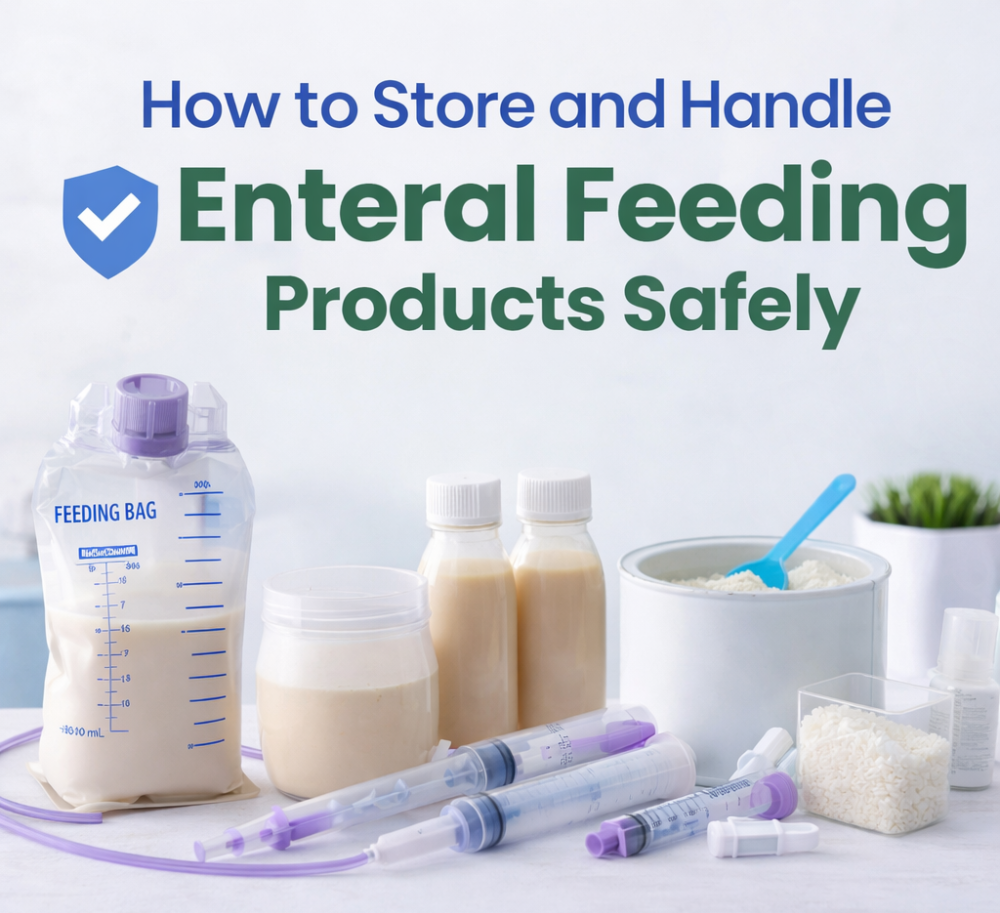
Enteral feeding products include everything used to deliver nutrition directly into the digestive system. These typically include:
- Nutrition formulas
- Feeding bags
- Tubes and connectors
- Syringes and accessories
Each of these items plays a role in delivering safe and effective nutrition. Because they are directly connected to the body, maintaining cleanliness and proper handling is critical.
Why Proper Storage Matters
Nutrition formulas and feeding supplies are sensitive to environmental conditions. Improper storage can:
- Cause bacterial growth
- Reduce nutritional value
- Lead to spoilage
- Increase risk of infection
Safe storage ensures that the formula remains fresh, effective, and safe to use.
General Storage Guidelines
Keep Products in a Clean, Dry Place
Always store feeding formulas and supplies in a clean area away from dust, moisture, and direct sunlight.
Avoid:
- Humid environments
- Kitchen areas with high heat
- Open or exposed shelves
A dedicated storage cabinet works best.
Follow Temperature Recommendations
Most formulas should be stored at room temperature unless specified otherwise.
Important tips:
- Do not freeze formulas
- Avoid excessive heat exposure
- Check label instructions for specific storage conditions
Temperature fluctuations can affect product quality.
Check Expiry Dates Regularly
Always check the expiration date before using any product.
Using expired products can:
- Reduce nutritional effectiveness
- Increase risk of contamination
Create a habit of rotating stock and using older items first.
Handling Feeding Formulas Safely
Wash Hands Before Handling
This is the most basic but most important step.
Always:
- Wash your hands with soap and water
- Dry with a clean towel
This reduces the transfer of bacteria.
Use Clean Equipment
Never use unclean feeding bags or syringes.
Make sure:
- All equipment is washed and dried properly
- Disposable items are not reused beyond guidelines
Clean equipment ensures safe feeding.
Do Not Leave Formula Open for Too Long
Once opened, formulas should be used within the recommended time.
Leaving the formula exposed can:
- Attract bacteria
- Reduce freshness
Always close containers tightly after use.
Storage of Opened Products
Once a formula is opened, extra care is needed.
Refrigeration (If Required)
Some formulas may need refrigeration after opening.
Key points:
- Store in airtight containers
- Use within 24 hours (or as instructed)
Never leave an open formula at room temperature for extended periods.
Label Opened Containers
Write the date and time when the product was opened.
This helps:
- Track freshness
- Avoid accidental use of expired formula
Handling Feeding Equipment
Cleaning Feeding Bags
Feeding bags should be cleaned after each use.
Steps:
- Rinse with warm water
- Wash with mild soap
- Air dry completely
Replace bags as per manufacturer instructions.
Syringe Care
Syringes are used frequently, so hygiene is important.
- Clean after each use
- Store in a clean container
- Replace regularly
Tube Maintenance
Feeding tubes require regular care.
- Flush before and after feeding
- Check for blockages
- Keep the insertion area clean
Avoiding Common Mistakes
Many issues arise due to small mistakes.
Avoid:
- Using expired products
- Storing enteral feeding formulas in warm areas
- Reusing disposable items
- Ignoring cleaning routines
Being careful with these small steps can prevent bigger problems.
Safe Feeding Practices at Home
Maintain a Routine
Consistency helps maintain hygiene.
- Fixed feeding times
- Regular cleaning schedule
- Organized storage
Monitor the Patient
Always observe during feeding.
Look for:
- Discomfort
- Leakage
- Unusual reactions
Early detection helps prevent complications.
Keep Supplies Organized
Store items in an organized manner.
- Separate clean and used items
- Label containers clearly
- Keep everything easily accessible
Special Considerations for Caregivers
Caregivers play a key role in safe feeding.
Important tips:
- Stay informed about product usage
- Follow medical instructions carefully
- Maintain hygiene at all times
Training and awareness make a big difference.
Travel and Storage Tips
If you need to carry feeding products:
- Use insulated bags
- Keep products sealed
- Carry only the required quantity
This ensures safety even outside the home.
Signs of Improper Storage or Contamination
Be alert for warning signs:
- Unusual smell
- Change in color
- Leakage or damaged packaging
If any of these occur, do not use the product.
Choosing Quality Products
Always select reliable and properly packaged products.
Look for:
- Sealed packaging
- Clear labeling
- Trusted suppliers
Quality products reduce risks and ensure better outcomes.
Conclusion
Proper storage and handling of enteral feeding products is just as important as choosing the right formula. By maintaining hygiene, following storage guidelines, and handling supplies carefully, you can ensure safe and effective nutrition delivery.
Simple habits like washing hands, checking expiry dates, and cleaning equipment can make a significant difference in preventing complications.
For those managing tube feeding at home or in clinical settings, having access to reliable products is essential. You can explore a wide range of enteral feeding supplies, formulas, and accessories at All Care Store, helping you maintain safe and efficient feeding practices every day.