A nebulizer can be working perfectly and a treatment can still fall short. When that happens, the cause is usually not the machine — it is something about how the treatment is being taken. The mask sits wrong, the breathing is too fast, the cup gets tilted, or the session gets cut short because the mist looks like it has stopped.
This article is about the human side of nebulizer therapy: technique, positioning, timing and handling the medication. If your device itself is misbehaving — no mist at all, a noisy compressor, leaking connections — that is a different problem, and our nebulizer troubleshooting guide for common device faults is the better starting point.
Everything below is general background for patients and caregivers. Nebulized medication is prescribed, and the instructions that came with your prescription always come first.
Mask or Mouthpiece? It Matters More Than People Expect
Most nebulizer kits arrive with both, and many households use whichever one is nearest. They suit different people.
When a mouthpiece is usually the better choice
A mouthpiece routes the mist straight into the mouth and down the airway, with very little escaping around the edges. Anyone who can hold a mouthpiece between their lips and keep a decent seal will generally get more out of it. It also keeps the mist off the face and eyes, which matters with some medications.
When a mask makes more sense
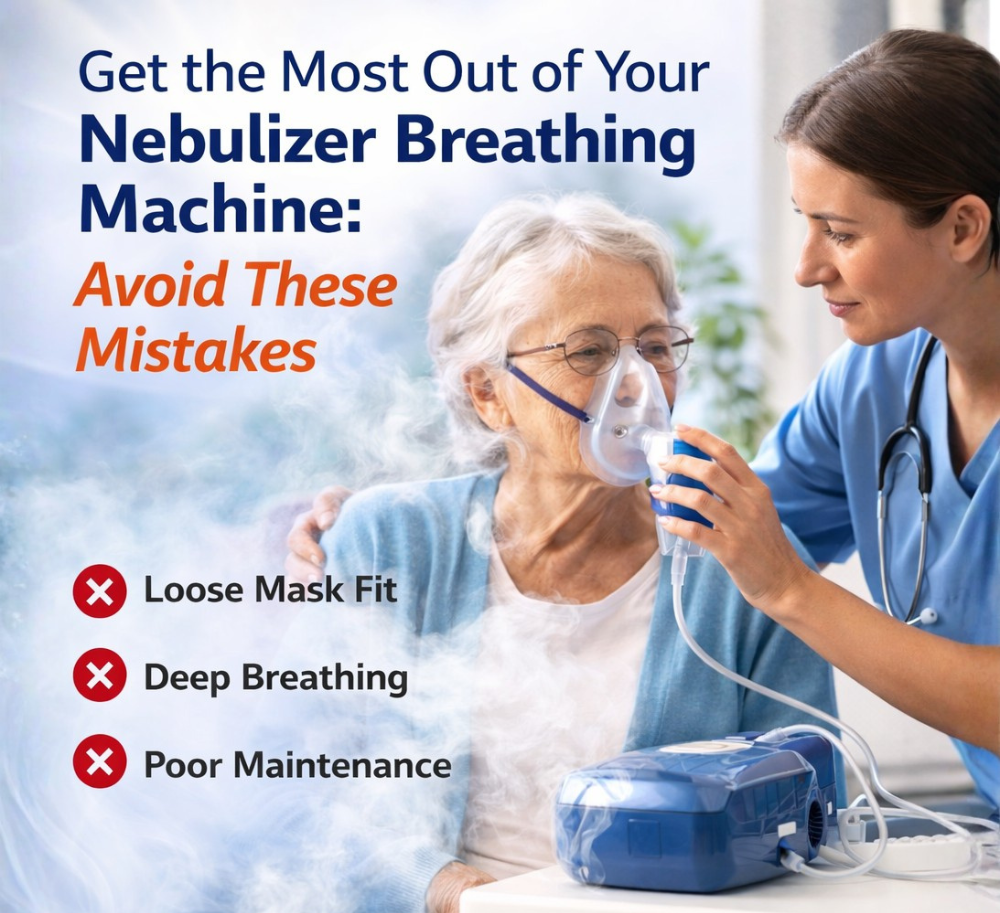
A mask is the practical option for infants and young children, for anyone who cannot maintain a lip seal, and for someone too breathless or too drowsy to manage a mouthpiece. The key is fit. A mask that sits loosely on the face lets mist drift into the room instead of into the lungs.
- The mask should rest against the skin around the nose and mouth without gaps at the cheeks or chin
- Adjust the strap so it is secure but not pressing hard
- Check the fit again as a child grows — an outgrown mask is a common quiet problem
- If mist is visibly escaping upward toward the eyes, the seal needs work
About holding the mask near the face instead of on it
Holding a mask a few centimetres away from a crying child is sometimes the only thing that gets a treatment done at all, and a partly delivered treatment beats a refused one. But it is a compromise, not the goal. If it is happening every single time, mention it at the next appointment — there may be a mask style or a distraction routine that helps.
How to Breathe During a Treatment
This is where a lot of well-intentioned effort goes wrong. People assume that breathing harder means getting more medicine. It usually means the opposite — fast, forceful breaths tend to deposit more of the mist in the mouth and throat and less deep in the airways.
A calmer approach works better:
- Sit upright, ideally in a chair with back support, rather than reclining or lying down
- Breathe normally and steadily through the mouth
- Every so often, take a slightly slower, deeper breath and pause briefly at the top before breathing out
- Do not pant, do not force, and do not try to rush the session
- If you find yourself talking through the treatment, you are losing mist — conversation can wait
Being relaxed genuinely helps. Somewhere quiet, with something to occupy the mind, makes it much easier to sit through a session without breathing raggedly.
Keep the Cup Upright
The medication cup is designed to work in one orientation. Tilt it and the liquid moves away from where the airflow can reach it, so mist output drops or stops. Slouching, leaning over a phone, or letting a child lie back are all ways this happens without anyone noticing.
Rest the cup upright, hold it steady, and if you need to set the whole thing down mid-treatment, put it on a flat surface rather than a lap or cushion.
Run the Whole Treatment
Toward the end of a session the visible mist thins out and the cup starts to sputter. Many people stop there. In practice a small amount of medication is still being delivered as the cup empties, and the sputtering is the signal that you are approaching the end — not that the treatment finished a minute ago.
Ask your clinician or supplier roughly how long a full treatment should take with your particular setup, and use that as a reference. If a treatment that used to take a predictable amount of time is suddenly taking much longer, that points to the equipment rather than the technique, and it is worth checking filters, tubing and the cup itself.
Handling the Medication
Medication mistakes are the ones with the most potential to cause harm, so they deserve care.
- Wash your hands before assembling anything and handling vials
- Use exactly the dose that was prescribed — do not scale it up because symptoms feel worse, or down because things feel better
- Do not mix two medications in the same cup unless you have been specifically told to
- Do not add saline, water or anything else to "stretch" a dose
- Check expiry dates, and follow the storage instructions on the packaging — some medications need refrigeration or protection from light
- Single-dose vials are meant for a single dose; do not save a partly used one for later
- Never use a leftover medication prescribed for someone else, even for the same-sounding symptoms
If you have been given more than one nebulized medication, ask in what order they should be taken — for some combinations the sequence matters.
Small Habits That Make a Difference
- Rinse afterwards. If a steroid is part of your treatment, rinsing the mouth and spitting after a session helps reduce mouth and throat irritation. Ask your clinician whether this applies to what you have been given.
- Wipe the face after a mask treatment. Residue left on skin around the nose and mouth can cause irritation over time, especially in children.
- Keep the session sitting, not lying. Reclining tends to leave more of the dose in the throat.
- Do not share a mask or mouthpiece between household members, even after washing.
- Clean the kit after use. A cup or mask that is not properly cleaned and dried becomes a genuine infection risk. Our sibling guide on cleaning, disinfecting and maintaining a home nebulizer covers the routine in detail.
- Replace parts on schedule. Cups, masks, mouthpieces, tubing and filters all wear out. Replacements are stocked in Nebulizers & Accessories.
Sticking to the Schedule
Some nebulized medications are meant to be taken on a fixed schedule whether or not you feel unwell; others are for symptoms as they arise. Mixing those two up is a common and consequential error. A preventive treatment skipped on good days does not do its job, and a reliever used far more often than expected is a signal that something has shifted.
That last point deserves emphasis. Needing your relief treatment noticeably more often than usual is not a reason to simply use it more — it is a reason to contact your clinician. Our article on recognising an asthma or COPD flare and knowing when a nebulizer is not enough goes through the warning signs in detail.
A Quick Self-Check
Next time you set up a treatment, run through this:
- Hands washed, correct medication, correct prescribed dose
- Sitting upright, cup upright and steady
- Mouthpiece sealed with the lips, or mask fitted snugly with no gaps
- Slow, normal breathing through the mouth — not fast, not forced
- Session run through to sputtering, not stopped early
- Mouth rinsed and face wiped if appropriate
- Kit taken apart, cleaned and left to dry fully
Safety First
Nebulized medication is prescription-directed therapy. Do not change the drug, the dose or the frequency on your own, and follow the instructions your own clinician has given you — they reflect the specific condition being treated.
Seek urgent medical care for severe breathlessness, for symptoms that do not improve after a prescribed treatment, for difficulty speaking in full sentences, for blue-tinged lips or fingertips, or for new confusion or drowsiness. Good technique improves everyday treatments; it is not a substitute for emergency care when breathing is in real trouble.