A nebulizer turns liquid medication into a mist you breathe deep into your lungs. That is exactly why hygiene matters more with this device than with most home equipment: anything growing in a damp medication cup or mask goes straight into your airways along with the medicine.
Cleaning is also the maintenance task most likely to be skipped, and poor cleaning is one of the most common reasons a machine starts misting slowly or unevenly. This guide sets out a realistic routine. Treat it as general good practice — the manual that came with your specific device is the authority, and where it disagrees with anything here, follow the manual. Always use the medication your doctor has prescribed, in the way they have prescribed it.
Know the parts before you start
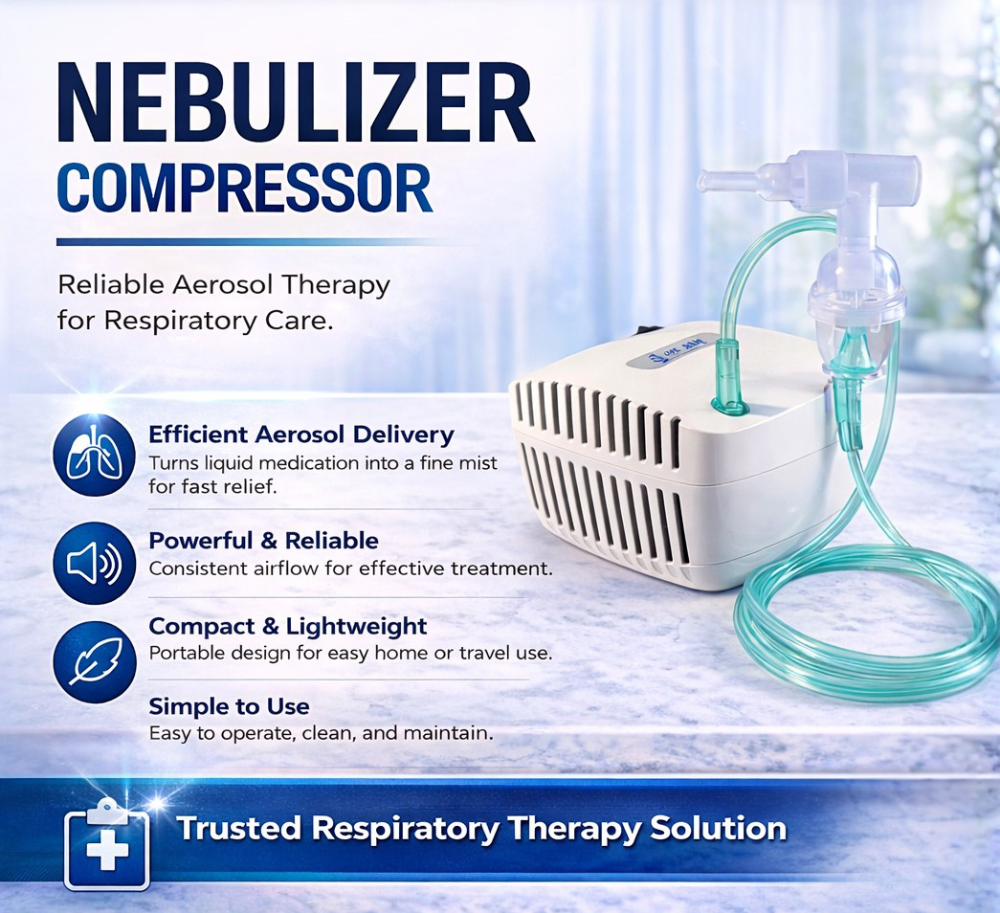
A typical home compressor kit has a small number of components, and they are not all cleaned the same way:
- The compressor — the motor unit that pumps air. Never immersed in water.
- The nebulizer cup or medication chamber — where liquid medicine is placed and turned into mist. Usually several small parts that separate.
- The tubing — connects the compressor to the cup, carrying dry air only.
- The mouthpiece or mask — what you breathe through.
- The air filter — a small pad or cartridge in the compressor that keeps dust out of the air supply.
The rules that prevent most problems
- Clean after every single treatment. Residue left to dry in the cup is the main cause of blocked jets and weak mist.
- Do not wash the tubing. Only dry air passes through it, and moisture trapped inside cannot be dried out properly. If tubing gets wet or has visible condensation or discolouration inside, replace it rather than trying to rinse and dry it.
- Never put the compressor unit in water or under a tap. Wipe the outside with a damp cloth and let it dry.
- Let everything air dry completely before reassembly. Damp parts stored in a bag are the ideal environment for bacteria and mould.
- Do not share equipment. Cups, masks and mouthpieces belong to one person. If two people in a household need treatment, each needs their own set.
- Wash your hands before handling parts or preparing medication.
After every treatment
- Switch the compressor off and disconnect the tubing from the nebulizer cup.
- Take the cup apart into its separate pieces, and detach the mouthpiece or mask.
- Discard any medication left in the cup. Do not top it up and reuse it for the next session.
- Rinse the cup and mouthpiece or mask thoroughly in warm running water. Many manuals recommend washing with warm water and a mild liquid detergent, then rinsing thoroughly to remove all traces of soap.
- Shake off excess water and lay the parts on a clean, dry cloth or paper towel to air dry fully.
- Once dry, reassemble and store. Leaving parts assembled while still damp defeats the whole exercise.
Do not dry parts with a tea towel or tissue that leaves fibres behind, and do not use a hairdryer or radiator to speed things up unless the manual specifically permits it.
Disinfecting: different from cleaning
Washing removes visible residue. Disinfecting reduces the microorganisms washing leaves behind, and it is a separate step done less frequently — many manufacturers specify once or twice a week for the cup, mouthpiece and mask.
The important point is that the acceptable disinfection method depends on the plastics used in your specific kit, so check the manual before choosing one. Manufacturers typically permit one or more of the following:
- A soak in a diluted white vinegar and water solution, at the ratio and for the length of time the manual states, followed by a thorough rinse in clean water.
- Boiling, or immersion in very hot water, but only for parts explicitly listed as suitable — many are not, and will warp.
- The top rack of a dishwasher, again only where the manual says the parts are dishwasher safe.
- A proprietary disinfecting solution supplied or recommended by the manufacturer, used exactly as directed.
Never use bleach, undiluted household disinfectants or abrasive cleaners on parts you breathe through. After any disinfection method, rinse thoroughly with clean water where the instructions call for it, and air dry completely before storing.
Filters and replacement parts
Air filters are cheap, easy to forget, and directly affect performance. A clogged, grey or damp filter restricts airflow, which shows up as a machine that seems slower or noisier than it used to be. Manufacturers specify a replacement interval and it varies considerably between models, so check your manual rather than assuming a figure. Most filters are designed to be replaced rather than washed and reused.
Nebulizer cups, masks, mouthpieces and tubing are consumables with a finite life. Replace them when you notice:
- Cracks, splits or distortion in the cup or mask
- Cloudiness, discolouration or a persistent smell that cleaning does not remove
- Tubing that has become stiff, kinked, discoloured or has moisture inside
- A mask that no longer seals against the face, or connections that have become loose
- Treatments taking noticeably longer than they used to, despite a clean cup and a fresh filter
That last symptom overlaps with several mechanical faults. If a good clean and a new filter do not restore normal output, work through our nebulizer troubleshooting guide before assuming the machine has failed.
Storing the machine
- Store fully dried, reassembled parts in a clean, dry, covered container or a clean bag — not loose in a bathroom cabinet.
- Keep the compressor somewhere dry and dust free, away from radiators and direct sunlight.
- Do not stand the compressor on carpet or soft bedding during use, as this can block the air intake underneath.
- Coil the tubing loosely rather than folding it sharply.
- Keep a spare filter, cup and mask in the house so a worn part never becomes a reason to skip a treatment.
Hygiene is part of the treatment, not an extra
A well-maintained nebulizer delivers a consistent dose in a predictable time. A neglected one delivers an uncertain dose slowly, and carries an avoidable infection risk for someone whose lungs are already vulnerable. The routine above takes a few minutes after each session and one longer step each week.
Good technique matters just as much as good hygiene — our guide to common nebulizer mistakes and correct technique covers mask fit, posture and breathing pattern. If you are managing asthma, breathing easier: understanding asthma care and nebulizers puts device use in the wider context of an asthma plan.
Replacement cups, masks, tubing and filters, along with compressors and accessories, are available in our respiratory care, asthma accessories and respiratory therapy and respiratory care and oxygen management collections.
If your symptoms are not controlled, or you find yourself needing treatments more often than usual, speak to your doctor. A nebulizer delivers prescribed medication — it does not treat or diagnose the underlying condition, and a change in how often you need it is something your clinician should know about.