Disclaimer: This guide is for informational purposes only and does not constitute medical advice. Nerve pain has many causes and requires professional diagnosis. Never start, stop, or change medications without consulting your physician or pharmacist. Some medications discussed in this guide are prescription-only and must be prescribed by a licensed healthcare provider.
"It Feels Like Electricity"
Carol, 61, had been managing type 2 diabetes for nine years when the burning started — in both feet, at night, worse in the cold. "Like electricity," she told her endocrinologist. "Or like someone is holding a lighter to the bottom of my feet." She had been taking ibuprofen for it, which helped with her arthritis but did almost nothing for the burning. She had not mentioned it to her doctor for over a year because she assumed it was just something she had to live with.
Her doctor recognized it immediately: diabetic peripheral neuropathy, the nerve damage caused by chronically elevated blood sugar. He explained that the reason ibuprofen wasn't helping was that nerve pain doesn't work like regular pain. Conventional pain relievers — NSAIDs, acetaminophen — target inflammation and tissue damage signals. Neuropathic pain is generated by damaged or misfiring nerves themselves, a fundamentally different mechanism that requires a different class of medications entirely.
This is the most important thing to understand about nerve pain treatment: the drugs that work for a headache, a sore knee, or post-surgical inflammation often don't work for neuropathic pain. If you've been taking ibuprofen or acetaminophen for burning, shooting, or electric pain and not finding relief, you may not need a higher dose — you may need a different type of medication entirely.
What Is Neuropathic Pain?
Neuropathic pain (nerve pain) is pain caused by damage or dysfunction in the nervous system itself, rather than by tissue injury or inflammation. It is estimated to affect 7–10% of the general population, with significantly higher rates among people with diabetes, cancer survivors, HIV, and autoimmune conditions.
Common causes of neuropathic pain include:
- Diabetic peripheral neuropathy — The most common cause of peripheral neuropathy in developed countries; caused by blood sugar-related nerve damage, typically affecting the feet and hands
- Postherpetic neuralgia — Nerve pain persisting after a shingles outbreak, sometimes for months or years
- Chemotherapy-induced peripheral neuropathy (CIPN) — Damage to peripheral nerves from cancer chemotherapy drugs
- Trigeminal neuralgia — Severe facial pain caused by dysfunction of the trigeminal nerve
- Sciatica — Nerve pain radiating from the lower back down the leg, caused by compression or irritation of the sciatic nerve
- Radiculopathy (pinched nerve) — Nerve compression in the spine causing shooting pain, numbness, or weakness in the limbs
- Post-surgical nerve damage — Neuropathic pain that can persist after surgery due to nerve injury during the procedure
- HIV-associated neuropathy — Peripheral nerve damage associated with HIV infection or certain antiretroviral medications
- Phantom limb pain — Pain perceived in an amputated limb, mediated by the central nervous system
- Multiple sclerosis — Demyelination of nerve fibers can produce neuropathic pain as a primary MS symptom
How Neuropathic Pain Feels
Neuropathic pain has characteristic descriptors that distinguish it from nociceptive (normal tissue-damage) pain. If you recognize your pain in these descriptions, discuss them with your physician:
- Burning, scalding, or heat sensations in the absence of actual heat
- Electric shock or shooting pain — sudden, brief, intense jolts
- Allodynia — pain triggered by stimuli that should not be painful, such as light touch, clothing fabric, or bedsheets
- Hyperalgesia — pain that is disproportionately intense for the stimulus that caused it
- Numbness or tingling (pins and needles) — often mixed with painful sensations
- Pain that is worse at night or at rest than during activity
- Pain that doesn't respond to NSAIDs or acetaminophen
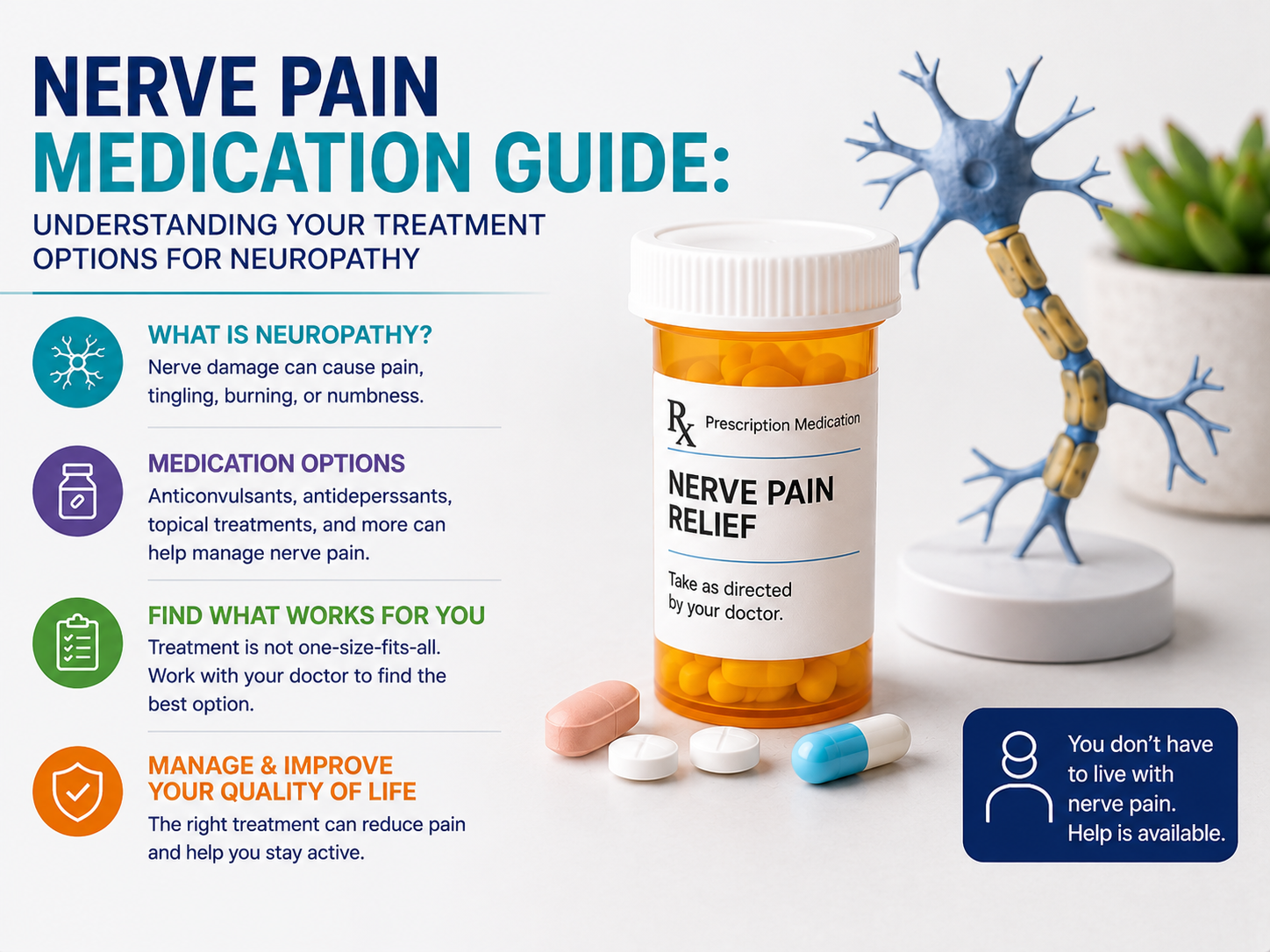
The Main Classes of Nerve Pain Medications
1. Gabapentinoids (Anticonvulsants)
Gabapentinoids are the most widely prescribed drug class for neuropathic pain. They were originally developed as antiseizure medications and discovered serendipitously to relieve neuropathic pain. They work by blocking calcium channels involved in pain signal transmission in the spinal cord and brain.
Gabapentin (Neurontin, generic) is FDA-approved for postherpetic neuralgia and is widely prescribed off-label for diabetic neuropathy, CIPN, fibromyalgia, and radiculopathy. It requires dose titration — starting at a low dose and gradually increasing over days to weeks to find the effective dose while minimizing side effects (dizziness and sedation are the most common). Gabapentin is taken multiple times per day due to its short duration of action.
Pregabalin (Lyrica, generic) has similar mechanisms to gabapentin but is FDA-approved specifically for diabetic peripheral neuropathy, postherpetic neuralgia, fibromyalgia, and spinal cord injury pain. It has more predictable absorption than gabapentin and is taken twice daily. It is a Schedule V controlled substance due to its potential for misuse. Cost can be a factor — while generic pregabalin is now available and substantially cheaper than brand-name Lyrica, it remains more expensive than generic gabapentin.
Common side effects of gabapentinoids: dizziness, sedation, unsteadiness, swelling of the hands and feet, weight gain, cognitive fog ("gabapentin brain"). These are often worst at the beginning of treatment and improve as tolerance develops. Dosage timing, gradual dose increases, and taking doses with food can reduce these effects.
2. Antidepressants
Several classes of antidepressants provide clinically meaningful neuropathic pain relief at doses below those used for depression — through mechanisms distinct from their antidepressant effects. This can cause confusion for patients who don't understand why their doctor prescribed an antidepressant for pain. The analgesic effects are separate from antidepressant effects and work even in people who are not depressed.
Tricyclic antidepressants (TCAs) — including amitriptyline, nortriptyline, and desipramine — were among the first medications identified as effective for neuropathic pain and have decades of evidence. They are FDA-approved for depression but widely prescribed off-label for nerve pain. They are inexpensive (generic, often under $10/month) and effective, but their side effect profile limits their use in older adults: sedation, dry mouth, constipation, urinary retention, cardiac conduction effects, and fall risk from dizziness make them potentially inappropriate for many seniors. Nortriptyline and desipramine generally have fewer side effects than amitriptyline and are sometimes better tolerated.
SNRIs (Serotonin-Norepinephrine Reuptake Inhibitors) — Duloxetine (Cymbalta) is FDA-approved for diabetic peripheral neuropathy and is one of the most commonly prescribed nerve pain medications today. It has a more favorable side effect profile than TCAs, with nausea (usually temporary), dry mouth, and some sedation as the most common complaints. Venlafaxine (Effexor) has similar evidence and is also used off-label for neuropathic pain. SNRIs take 2–4 weeks to reach full effect.
SSRIs (Selective Serotonin Reuptake Inhibitors) — Generally less effective for neuropathic pain than TCAs or SNRIs. Sometimes used when other options are not tolerated.
3. Topical Treatments
Topical medications act locally at the site of application, providing pain relief with minimal systemic absorption — a major advantage for people who are sensitive to the systemic side effects of oral medications or who have localized nerve pain.
Lidocaine patches (Lidoderm, generic) — FDA-approved for postherpetic neuralgia; widely used off-label for localized neuropathic pain in other conditions. Applied directly over the painful area, they provide numbing through local anesthetic action. Up to 3 patches can be used at once, worn for 12 hours on and 12 hours off. Systemic absorption is minimal. Side effects are mainly local (mild skin irritation). Particularly useful for post-surgical nerve pain, focal neuropathy, or localized radiculopathy.
Capsaicin cream and patches — Capsaicin (the compound that makes peppers hot) depletes Substance P, a neuropeptide involved in pain signal transmission. Available as an OTC cream (0.025%–0.075%) for mild-moderate nerve pain, applied 3–4 times daily. Also available as a high-concentration prescription patch (Qutenza, 8% capsaicin) applied in a clinic setting for postherpetic neuralgia and peripheral neuropathy — one application provides relief for up to 3 months. OTC capsaicin cream causes significant burning on initial application that decreases over days to weeks as Substance P is depleted; consistency is essential.
Compounded topical formulations — Compounding pharmacies can prepare topical gels combining agents such as gabapentin, ketamine, clonidine, or amitriptyline for localized application. Evidence is mixed for most formulations, but some patients with localized pain find relief when systemic medications are poorly tolerated. Requires a prescription and is typically not covered by insurance.
4. Opioids
Opioids are sometimes used for neuropathic pain, but with important caveats. The evidence for opioid effectiveness in neuropathic pain is significantly weaker than for non-opioid medications, and the risk profile — addiction, tolerance, diversion, respiratory depression — is substantially higher. Most current clinical guidelines recommend opioids only as third-line treatment for neuropathic pain when first-line (gabapentinoids, antidepressants) and second-line (topicals) treatments have failed. Tramadol is sometimes considered separately because it has both opioid and SNRI-like mechanisms; it has stronger evidence for neuropathic pain than traditional opioids but carries similar addiction risks.
5. Other Agents
Sodium channel blockers: Carbamazepine (Tegretol) is the first-line treatment for trigeminal neuralgia, where it has strong evidence. Less effective for other neuropathic pain conditions. Requires regular blood monitoring for bone marrow suppression.
Alpha-2 agonists: Clonidine (topical or oral) has some evidence for neuropathic pain and is used in some compounded formulations. Tizanidine is sometimes used for central sensitization pain.
NMDA antagonists: Ketamine infusions (at sub-anesthetic doses administered in specialty pain clinics) show promise for refractory neuropathic pain. Memantine (an oral NMDA antagonist) has modest evidence. These remain specialist-level interventions for severe, treatment-resistant cases.
OTC Options: What Actually Helps at the Pharmacy
Most truly effective neuropathic pain medications are prescription-only. But some OTC options provide real, if modest, benefit:
- Capsaicin cream (OTC strength, 0.025%–0.075%): Available without a prescription; clinically meaningful for localized nerve pain with consistent use over weeks. The initial burning is the main barrier to adherence.
- Lidocaine-containing OTC products: Lower-concentration topical lidocaine patches and creams are available OTC for minor pain; less potent than prescription-strength formulations but may help with mild, localized nerve pain.
- Alpha-lipoic acid: An antioxidant supplement with moderate evidence for reducing symptoms of diabetic peripheral neuropathy. Studied at doses of 300–600 mg daily. Not a replacement for prescription treatment but may have an additive effect. Discuss with your physician before adding supplements to your regimen.
- B vitamin supplements: B12 deficiency can cause peripheral neuropathy; supplementation can be effective when deficiency is the cause. B12 levels should be tested before supplementation is initiated, as very high B6 intake can paradoxically cause neuropathy.
Browse vitamins and supplements for nerve health at AllCare Store, including alpha-lipoic acid and B-complex formulations.
Non-Medication Approaches That Complement Drug Therapy
Neuropathic pain often responds best to a multimodal approach combining medication with non-pharmacological strategies:
- Physical therapy: Targeted exercise can reduce neuropathic pain through central sensitization mechanisms; a physical therapist can design a program appropriate for your specific condition and fitness level
- TENS (Transcutaneous Electrical Nerve Stimulation): TENS units deliver low-voltage electrical impulses that may disrupt pain signal transmission; evidence is moderate for some neuropathic conditions; available OTC and by prescription
- Acupuncture: Has evidence for diabetic neuropathy and some other neuropathic conditions; consider as an adjunct when available and affordable
- Cognitive behavioral therapy (CBT): Addresses the psychological component of chronic pain; does not eliminate neuropathic pain but significantly improves function and coping in well-designed trials
- Blood sugar management: For diabetic neuropathy specifically, tight glucose control is the most evidence-based approach to preventing progression and sometimes reducing symptoms
What to Tell Your Doctor
Neuropathic pain is frequently under-reported and undertreated because patients don't know how to describe it, don't realize it has specific treatments, or assume they must simply live with it. When you see your physician, be specific:
- Describe the quality of the pain using neuropathic descriptors: burning, electric, shooting, pins and needles, allodynia (pain from light touch)
- Note the timing: is it worse at night? At rest vs. activity? Constant vs. intermittent?
- Report your previous medication history, including what you've tried and why it didn't work
- Mention any related conditions (diabetes, recent shingles, cancer treatment) that might indicate the cause
- If you've been taking OTC pain relievers without adequate relief, say so explicitly — this is a clinically important signal
Frequently Asked Questions
Why doesn't ibuprofen or Tylenol help my nerve pain?
Ibuprofen (an NSAID) and acetaminophen (Tylenol) work by reducing inflammation and blocking tissue-damage pain signals. Neuropathic pain is generated by damaged or misfiring nerves themselves — not by tissue injury or inflammation. Because the underlying mechanism is different, anti-inflammatory and acetaminophen-based medications typically provide little to no relief for true nerve pain. Medications that work on nerve pain — gabapentinoids, antidepressants, topical anesthetics — act through completely different mechanisms that target abnormal nerve signaling. If conventional OTC pain relievers aren't helping, discuss this specifically with your physician, as it's an important diagnostic clue that a different class of medication may be needed.
How long does it take for gabapentin or pregabalin to work for nerve pain?
Gabapentin and pregabalin typically require dose titration — a gradual increase in dose over days to weeks — to reach an effective therapeutic dose. Many people notice some reduction in pain within the first 1–2 weeks, but the full benefit may not be apparent for 4–8 weeks after reaching an effective dose. Because titration schedules vary depending on the individual and the starting dose, the overall timeline to meaningful relief is often 4–12 weeks from initiation. If you've been on gabapentin or pregabalin for less than a month at a stable dose, it may be too early to judge effectiveness — discuss the titration timeline with your prescribing physician.
Can nerve damage from neuropathy be reversed?
Whether nerve damage can be reversed depends significantly on the cause and duration. For diabetic peripheral neuropathy, improving blood sugar control can slow progression and, in early cases, allow some recovery of nerve function — but established damage is generally permanent. For neuropathy caused by B12 deficiency, correcting the deficiency early can lead to significant recovery. For chemotherapy-induced neuropathy, symptoms sometimes improve after the chemotherapy ends, but recovery varies widely. For postherpetic neuralgia, many people see gradual improvement over months to years. In general, the peripheral nervous system has more regenerative capacity than the central nervous system, but recovery is slow and incomplete in most cases. Medications for nerve pain manage symptoms without reversing the underlying damage.
Is gabapentin habit-forming?
Gabapentin is not classified as a controlled substance at the federal level (though some states have added state-level scheduling), but it does carry potential for misuse, dependence, and withdrawal. Physical dependence can develop with regular use — meaning abrupt discontinuation can cause withdrawal symptoms including anxiety, insomnia, nausea, and in rare cases seizures. For this reason, gabapentin should not be stopped suddenly; if discontinuation is desired, it should be done gradually under physician guidance. Pregabalin (Lyrica) is a Schedule V controlled substance due to a recognized, though modest, potential for misuse. If you have concerns about dependence, discuss them openly with your prescribing physician — this is an important part of managing your treatment plan.
What is the best medication for diabetic nerve pain?
Clinical guidelines for diabetic peripheral neuropathy (from organizations including the American Diabetes Association and the American Academy of Neurology) recommend duloxetine (Cymbalta), pregabalin (Lyrica), and gabapentin as first-line medications, with strong evidence for all three. Duloxetine and pregabalin have FDA approval specifically for diabetic peripheral neuropathy; gabapentin is widely prescribed off-label with comparable evidence. Tricyclic antidepressants (amitriptyline, nortriptyline) are also effective but less commonly used in older adults due to side effects. The "best" medication for an individual depends on their other medical conditions, medications they're already taking, cost considerations, and their specific symptom pattern. Your endocrinologist or primary care physician is the right person to recommend the most appropriate choice for your situation.
Getting the Treatment You Deserve
Carol started duloxetine nine months ago. The burning in her feet is not gone, but she describes it now as a 2 or 3 out of 10 — manageable — compared to the 7 or 8 it had been for over a year. She sleeps through the night. She resumed the walking she had given up because the pain made it feel pointless. "I wish I had asked sooner," she says. "I just didn't know there was something that could actually help."
If you have nerve pain that hasn't responded to conventional pain relievers, the answer may not be more of the same medication — it may be a different one entirely. Talk to your doctor, describe your symptoms precisely, and advocate for a treatment plan that addresses neuropathic pain specifically.
For supplements that support nerve health — including alpha-lipoic acid, B-complex vitamins, and magnesium — visit AllCare Store's vitamins and supplements collection. For questions about our products, call us at 1-888-889-6260 or visit AllCareStore.com.
— The AllCare Store Team