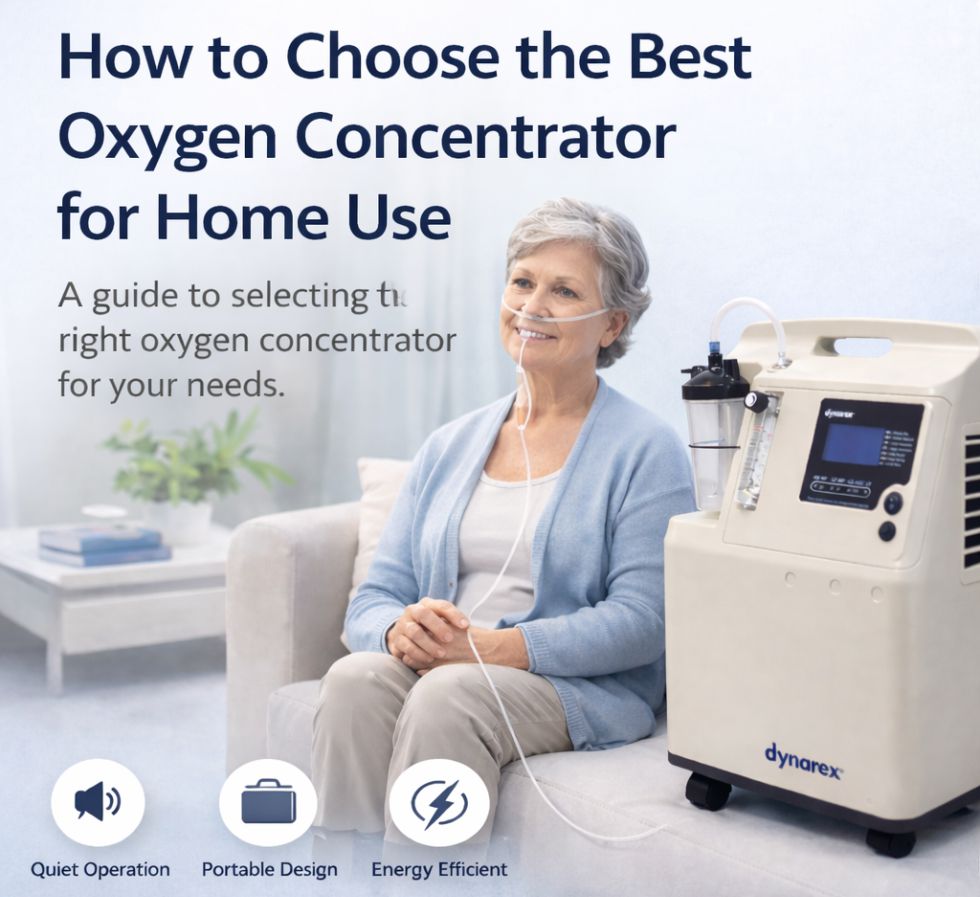
Choosing the best oxygen concentrator for your needs can feel overwhelming, especially with so many options available. Whether you or a loved one requires home oxygen therapy, selecting the right oxygen concentrator machine is essential for comfort, safety, and long-term respiratory health.
An oxygen concentrator pulls air from the environment, filters nitrogen, and delivers purified oxygen through a nasal cannula or mask. These devices are widely used by patients with respiratory conditions such as COPD, asthma, and pulmonary fibrosis who require continuous oxygen support.
If you’re wondering what size oxygen concentrator you need for home oxygen therapy or how to compare models, this guide explains the most important factors to consider when buying an oxygen concentrator for home use.
Explore our selection of oxygen concentrators for home use.
Understanding Oxygen Concentrators for Home Use
Before choosing a device, it’s important to understand how an oxygen concentrator for home works. Unlike oxygen cylinders that store compressed oxygen, concentrators generate oxygen from ambient air and provide a continuous supply as long as they have power.
Most home oxygen concentrators provide 90–95% oxygen concentration and are designed to run continuously, often 24 hours a day, for patients who need long-term oxygen therapy.
Many reliable options are available, such as the Truaire 5 Oxygen Concentrator, which is designed for consistent oxygen delivery in home medical environments.
Another dependable option for home therapy is the Micitech Stationary Oxygen Concentrator 5 Liter, designed for stable oxygen flow and everyday use.
Portable vs Stationary Oxygen Concentrator: Which One Should You Choose?
One of the most common questions patients ask is how to select portable vs stationary oxygen concentrator models.
Stationary Oxygen Concentrators
Stationary oxygen concentrators are larger machines designed primarily for home use. They usually deliver higher oxygen flow rates and operate continuously from a wall outlet.
Key benefits include:
-
Continuous oxygen flow
-
Higher oxygen output (up to 10 liters per minute)
-
Reliable 24/7 operation
-
Ideal for long-term home oxygen therapy
A powerful example is the Micitech 10L Stationary Oxygen Concentrator, which supports higher oxygen requirements for patients needing stronger oxygen flow.
Stationary concentrators are best for:
-
Patients who stay mostly at home
-
Individuals requiring higher oxygen flow
-
Long-term oxygen therapy users
Portable Oxygen Concentrators
A portable oxygen concentrator is a lightweight device designed for mobility and travel. These units run on rechargeable batteries and allow patients to maintain oxygen therapy while on the move.
Typical characteristics include:
-
Lightweight and compact design
-
Battery-powered operation
-
Pulse-dose oxygen delivery
-
Ideal for travel and active lifestyles
For example, the EasyPulse Portable Oxygen Concentrator 5 Litre offers portability while maintaining effective oxygen delivery for home and travel use.
Portable concentrators usually provide lower oxygen flow rates compared to stationary units, making them suitable for mild to moderate oxygen therapy needs.
Key Factors to Consider When Buying an Oxygen Concentrator for Home
When reviewing your buying guide for home oxygen concentrators, several features should influence your decision. Let’s explore the most important ones.
1. Oxygen Flow Rate
The most important factor when selecting an oxygen concentrator machine is the oxygen flow rate.
Flow rate refers to the amount of oxygen delivered per minute and is measured in litres per minute (LPM).
Typical ranges include:
-
1–3 LPM: Mild oxygen support
-
3–5 LPM: Moderate oxygen therapy
-
5–10 LPM: High oxygen demand
If you’re unsure what size oxygen concentrator you need for home oxygen therapy, most patients begin with a 5-litre oxygen concentrator, which is suitable for many respiratory conditions.
2. Oxygen Purity Level
Another important oxygen concentrator feature is oxygen purity.
Medical oxygen concentrators should deliver approximately 90–95% oxygen concentration across most flow settings to ensure effective treatment.
Look for machines that include:
-
Oxygen purity monitoring
-
Alarm systems for low oxygen levels
-
Automatic safety alerts
These features help ensure consistent oxygen delivery and patient safety.
3. Noise Level
Many patients use oxygen concentrators while sleeping or resting. Because of this, noise level plays an important role in comfort.
Modern oxygen concentrators operate at around 40–50 decibels, which is similar to a quiet conversation.
Choosing a low-noise concentrator improves sleep quality and reduces daily discomfort.
4. Portability and Size
Even if you primarily need a home oxygen concentrator, portability within the home can be beneficial.
Many oxygen concentrator machines include:
-
Wheels for easy movement
-
Compact designs
-
Lightweight construction
Portable concentrators are ideal for users who want flexibility and independence outside the home.
5. Power Consumption and Backup Options
Because oxygen concentrators run continuously, energy efficiency is another important factor.
Consider the following power features:
-
Electricity consumption
-
Battery backup options
-
Car charging adapters for portable units
Battery-powered portable oxygen concentrators allow patients to maintain therapy during travel or power outages.
Best Oxygen Concentrator Features for Home Medical Use
When comparing different models, look for these best oxygen concentrator features for home medical use:
✔ Adjustable flow rate
✔ Oxygen purity monitoring
✔ Low oxygen alarm system
✔ LCD display for settings
✔ Easy-to-replace filters
✔ Quiet operation
✔ Lightweight or wheeled design
Advanced concentrators may also include smart alerts, built-in humidifier compatibility, and digital control panels for easier operation.
When Should You Use Home Oxygen Therapy?
Doctors may prescribe home oxygen therapy for conditions that affect oxygen levels in the blood, such as:
-
Chronic Obstructive Pulmonary Disease (COPD)
-
Pulmonary fibrosis
-
Severe asthma
-
Sleep apnea
-
Pneumonia recovery
-
Post-surgery respiratory care
Consistent oxygen therapy can improve energy levels, reduce breathing difficulties, and enhance overall quality of life for patients with chronic respiratory illnesses.
Tips for Choosing the Best Oxygen Concentrator
To summarise the factors to consider when buying an oxygen concentrator for home, keep these tips in mind:
-
Confirm the required oxygen flow rate with your doctor
-
Choose between stationary and portable models based on lifestyle
-
Check oxygen purity levels and safety alarms
-
Compare noise levels and energy consumption
-
Look for reliable warranty and after-sales support
Selecting the right device ensures effective oxygen therapy and long-term convenience.
Final Thoughts
Finding the best oxygen concentrator for your home doesn’t have to be complicated. By understanding your medical requirements and comparing key oxygen concentrator features, you can choose a reliable oxygen concentrator machine that supports safe and effective home oxygen therapy.
Whether you need a powerful stationary device for continuous treatment or a portable oxygen concentrator for mobility, the right equipment can greatly improve comfort and independence.
If you're looking for reliable and high-quality oxygen concentrators for home use, explore our collection of medical-grade oxygen concentrators designed for safe, efficient respiratory support.