When patients require oxygen therapy at home, choosing the right equipment is critical for safety, comfort, and long-term care. Two of the most common types of oxygen therapy equipment are the oxygen concentrator and the oxygen cylinder, also known as an oxygen tank.
Many carers search online for oxygen concentrator vs oxygen cylinder, which is better for home use, before investing in a reliable home oxygen system. Understanding the difference between an oxygen concentrator and an oxygen tank for patients can help families select the most effective oxygen therapy solution.
If you're exploring oxygen therapy options, you can browse various oxygen concentrators and accessories designed for safe and efficient home oxygen therapy.
What Is an Oxygen Concentrator?
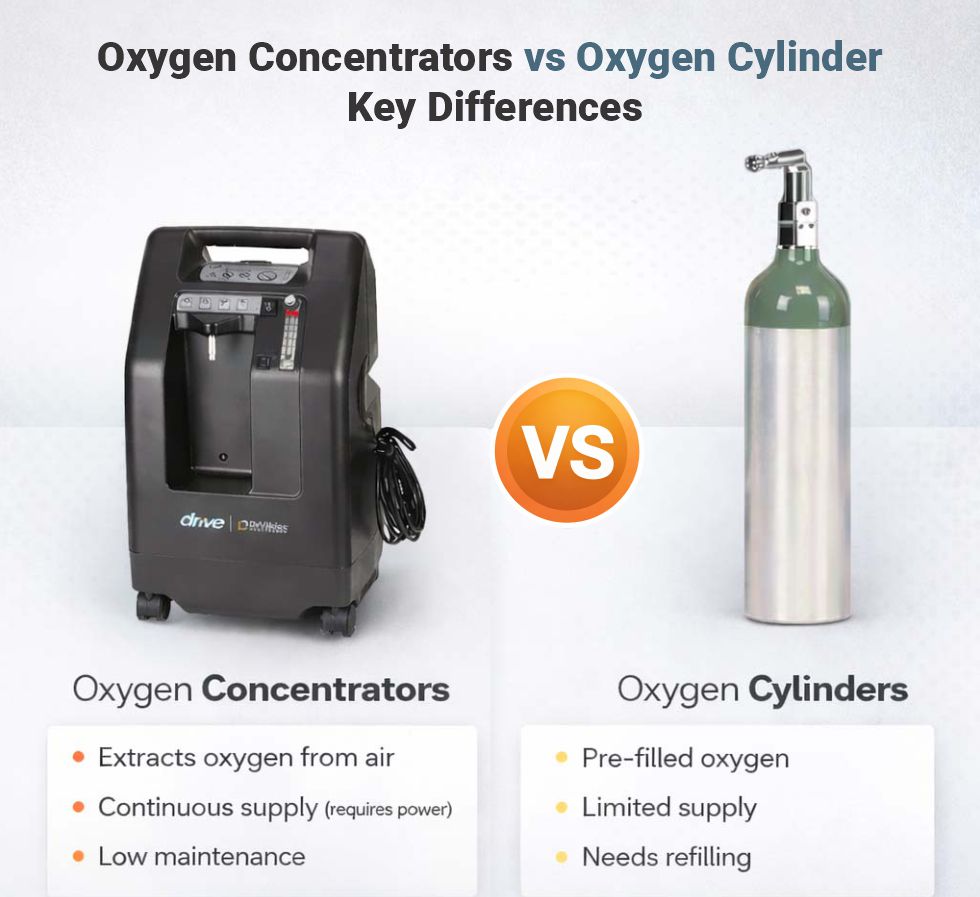
An oxygen concentrator is a medical device that extracts oxygen from the surrounding air and delivers purified oxygen to the patient. Instead of storing oxygen, it filters nitrogen out of ambient air and provides oxygen with a concentration typically between 90% and 96%, which is sufficient for medical oxygen therapy.
Because it generates oxygen continuously, a concentrator provides an unlimited oxygen supply as long as the device has power.
For patients who require long-term oxygen therapy, devices like the Truaire 5 Oxygen Concentrator are designed specifically for home use and provide consistent oxygen flow.
Common Uses
An oxygen concentrator is commonly used for:
-
Chronic respiratory diseases such as COPD
-
Long-term oxygen therapy
-
Home oxygen therapy for elderly patients
-
Post-hospital recovery
Portable devices are also available for patients who require oxygen support while travelling. For example, an EasyPulse portable oxygen concentrator offers mobility and convenience for daily activities.
What is an oxygen cylinder?
An oxygen cylinder (also called an oxygen tank) is a pressurised container filled with medical-grade oxygen. Unlike concentrators, cylinders store a finite amount of compressed oxygen that must be replaced or refilled once it runs out.
Oxygen cylinders are widely used in hospitals, ambulances, and emergency situations where a high concentration of oxygen is required immediately.
Common Uses
-
Emergency oxygen supply
-
Short-term oxygen therapy
-
Ambulance and hospital transport
-
Backup oxygen for home oxygen systems
Many healthcare providers recommend keeping an oxygen cylinder as a backup even if a concentrator is the primary oxygen therapy equipment at home.
Oxygen Concentrator vs Oxygen Cylinder: Key Differences
To better understand the difference between an oxygen concentrator and an oxygen tank for patients, here is a side-by-side comparison.
|
Feature |
Oxygen Concentrator |
Oxygen Cylinder |
|
Oxygen Source |
Extracts oxygen from air |
Stores compressed oxygen |
|
Oxygen Supply |
Continuous and unlimited |
Limited supply |
|
Power Requirement |
Requires electricity or battery |
No electricity required |
|
Upfront Cost |
Higher |
Lower |
|
Long-Term Cost |
Lower operating cost |
Higher due to refills |
|
Portability |
Portable models available |
Often heavy and bulky |
|
Maintenance |
Filter cleaning and servicing |
Refilling and pressure checks |
Patients looking for reliable home therapy solutions often choose stationary devices such as the 5-Litre Stationary Oxygen Concentrator, which provides stable oxygen flow for daily therapy.
Pros and Cons of Oxygen Concentrator vs Oxygen Tank
Understanding the pros and cons of oxygen concentrators vs oxygen tanks helps patients and carers choose the right home oxygen system.
Advantages of Oxygen Concentrators
1. Continuous Oxygen Supply
Oxygen concentrators generate oxygen continuously, eliminating the need for refills.
2. Cost-Effective for Long-Term Use
Although the initial cost may be higher, concentrators are usually more economical over time.
3. Safer for Home Use
Because concentrators do not store compressed oxygen, they are generally considered safer than oxygen cylinders.
4. Easy to Use at Home
Most home oxygen concentrators are designed with simple controls, making them convenient for patients and carers.
Disadvantages of Oxygen Concentrators
-
Requires electricity to operate
-
Higher upfront investment
-
May produce operational noise
Advantages of Oxygen Cylinders
1. No Electricity Required
Oxygen cylinders can be used during power outages.
2. High Oxygen Purity
They provide medical-grade oxygen stored at high pressure.
3. Lower Initial Cost
Purchasing or renting an oxygen cylinder typically costs less upfront.
Disadvantages of Oxygen Cylinders
-
Limited oxygen supply
-
Requires frequent refilling
-
Heavy and difficult to transport
-
Safety precautions required for storage
Is an Oxygen Concentrator Safer Than an Oxygen Cylinder?
Many patients ask, "Is an oxygen concentrator safer than an oxygen cylinder?”
In most home environments, oxygen concentrators are considered safer because they do not store oxygen under high pressure. Instead, they generate oxygen directly from the air.
However, oxygen cylinders store compressed oxygen, which requires careful handling and proper storage to avoid safety risks.
For this reason, healthcare providers often recommend concentrators as the primary home oxygen system, while cylinders serve as a backup.
Oxygen Cylinder vs Concentrator Cost Comparison
Cost is another important factor when selecting oxygen therapy equipment.
Oxygen Concentrator Costs
-
Higher purchase price
-
Low operating cost
-
No refill charges
Oxygen Cylinder Costs
-
Lower upfront cost
-
Ongoing refill expenses
-
Additional delivery or replacement costs
For patients who need oxygen therapy daily, concentrators are typically more cost-effective in the long run compared to cylinders, as they eliminate the need for frequent refills and can provide a continuous supply of oxygen at home.
Oxygen Concentrator vs. Oxygen Cylinder: Which Is Better for Home Use?
Many carers ask, "Oxygen concentrator vs oxygen cylinder: which is better for home use?”
An Oxygen Concentrator Is Better When:
-
Oxygen therapy is needed daily
-
Long-term treatment is required
-
Continuous oxygen supply is necessary
-
Convenience and safety are priorities
An Oxygen Cylinder Is Better When:
-
Oxygen is needed occasionally
-
Emergency oxygen backup is required
-
Electricity is unavailable
Healthcare providers often recommend using a high-quality oxygen concentrator as the primary device for home therapy while keeping an oxygen cylinder as a backup solution.
Final Thoughts
Both oxygen concentrators and oxygen cylinders play important roles in oxygen therapy.
The oxygen concentrator vs oxygen cylinder comparison clearly shows that concentrators are ideal for continuous home oxygen therapy because they provide a steady supply of oxygen without frequent refills.
However, oxygen cylinders remain valuable for emergencies and backup situations.
If you're looking for reliable oxygen therapy equipment for home use, explore our range of oxygen concentrators and portable oxygen concentrator devices designed for safe and convenient home oxygen therapy.