MEDICAL DISCLAIMER: This article is for informational and educational purposes only. Before beginning any new exercise program, especially if you have cardiovascular conditions, recent surgery, joint replacements, or other significant health concerns, consult your physician or physical therapist. Pedal exercisers are not a substitute for medically supervised rehabilitation.
Exercise Without the Barriers
Margaret, 78, had always been an active woman — morning walks, garden work, the occasional swim. After her knee replacement surgery, her world shrank to the living room recliner. Her physical therapist was excellent, but sessions were twice a week. The other five days, she sat. She could feel herself losing ground.
Her daughter found a pedal exerciser on AllCare Store's site. It was small enough to slide under the coffee table. Margaret started with five minutes a day while watching the morning news. By month three, she was doing twenty minutes twice daily, her circulation had improved noticeably, and she'd regained enough strength to return to short walks.
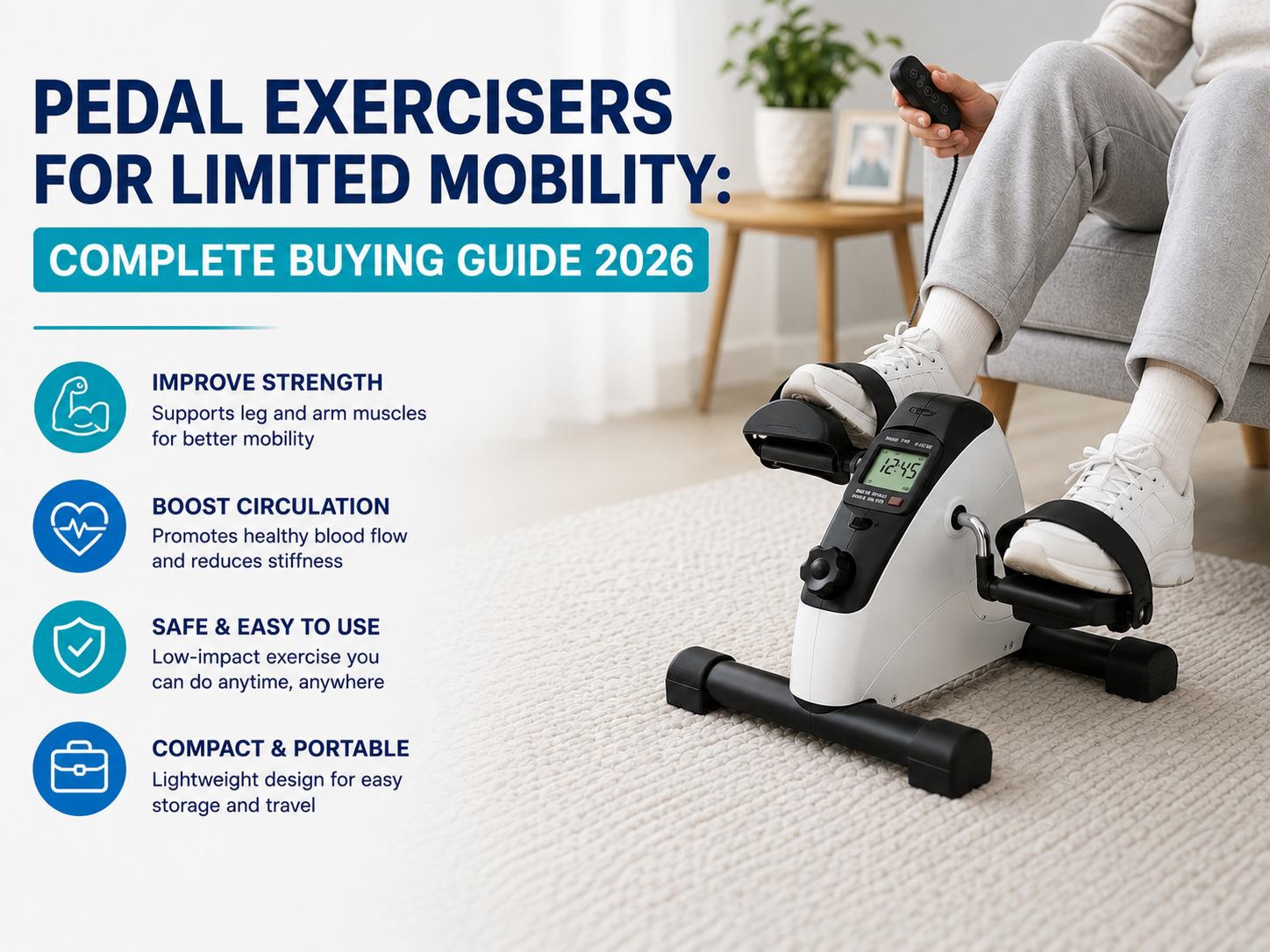
Pedal exercisers — sometimes called desk bikes, mini exercise bikes, or seated pedal exercisers — are compact devices that let people cycle with their legs (or arms) while sitting in a chair, wheelchair, or at a desk. For people with limited mobility, chronic conditions, or recovering from surgery or illness, they offer a way to maintain cardiovascular fitness, improve circulation, and preserve muscle strength without the demands of standing exercise.
This guide covers everything you need to know to choose and use a pedal exerciser effectively in 2026.
Who Benefits Most from Pedal Exercisers?
Pedal exercisers serve a wide range of users, but several groups find them especially valuable.
Seniors with reduced mobility: Aging often brings conditions — arthritis, balance problems, reduced stamina, fall risk — that make traditional exercise difficult or dangerous. Pedal exercisers provide low-impact movement with no standing balance required.
Post-surgical rehabilitation: After joint replacement (especially knee and hip), cardiac surgery, or stroke, gentle range-of-motion exercise is critical to recovery. Pedal exercisers are frequently recommended by physical therapists during recovery phases when walking is limited.
Wheelchair users: Many pedal exercisers can be positioned for wheelchair use, either as leg pedals placed on the footrest area or as arm pedals placed on a table in front of the user. This provides upper or lower body exercise that wheelchairs alone don't offer.
People with circulation problems: Peripheral artery disease, chronic venous insufficiency, diabetes-related circulation issues, and edema in the legs all benefit from gentle, regular leg movement. Pedaling promotes blood flow in the lower extremities without cardiovascular strain.
Sedentary desk workers: Under-desk bike pedals have surged in popularity among office workers who want light activity during the workday. While this population doesn't always have clinical mobility limitations, the same devices serve both purposes.
Those recovering from illness: Extended illness, hospitalization, or COVID-19 recovery often results in deconditioning — significant loss of fitness from inactivity. Pedal exercisers provide a gentle on-ramp back to regular movement.
Types of Pedal Exercisers
Basic Portable Pedal Exercisers
These are the simplest and most affordable type: a pedal mechanism on a low-profile base, designed to sit on the floor in front of a chair. The user sits in their own chair and pedals with their feet. Most have a basic resistance dial and a simple LCD display showing time, RPM, and estimated calories.
Best for: Budget-conscious buyers, seniors who want occasional gentle movement, people with limited floor space, those who travel and want a portable option.
Typical price range: $25–$80
Key limitation: Can slide on smooth floors; stability varies significantly by model.
Magnetic Resistance Pedal Exercisers
Magnetic resistance models use magnets rather than friction to create pedaling resistance. This produces a smoother, quieter pedaling motion and allows more precise resistance adjustment — often 8 levels or more via a knob or digital controls. The magnetic mechanism also requires less maintenance and tends to last longer than friction-based systems.
Best for: People who will use their pedal exerciser regularly and want a quality feel; those doing rehabilitation who need specific resistance levels as prescribed by a therapist.
Typical price range: $60–$150
Under-Desk Bike Pedals
Designed specifically for desk use, these models are engineered to be quiet enough not to disturb coworkers or family members in the same room. Many are Bluetooth-connected with companion apps that track workout data over time. They typically have a lower-profile design and may include non-slip mats or stabilizing features for desk use.
Best for: Remote workers, anyone who wants to combine light exercise with work or computer tasks.
Typical price range: $80–$200
Arm Pedal Exercisers (Upper Body)
These models are designed to sit on a table surface and be operated with the hands and arms, providing upper body cardiovascular exercise and range-of-motion work. They're particularly valuable for people who cannot use their legs for pedaling due to lower limb conditions, paralysis, or severe joint problems.
Best for: Wheelchair users needing upper body exercise; people with lower limb amputations; stroke rehabilitation for arm strength and coordination; those with severe lower extremity conditions.
Typical price range: $30–$120
Dual-Use Pedal Exercisers
Some models are designed to function as both leg and arm exercisers — they can be placed on the floor for leg use or elevated on a table for arm use. These versatile units offer flexibility but may make trade-offs in stability or optimal positioning for one mode versus the other.
Best for: Users who want one device for both upper and lower body; physical therapy settings where the device may serve multiple patients with different needs.
What to Look for When Buying a Pedal Exerciser
Stability and Non-Slip Base
The single most common complaint about budget pedal exercisers is that they slide across the floor during use. Look for models with rubber non-slip feet, a heavy base, or suction cup stabilizers. If you have smooth hardwood or tile floors, this matters even more. Some users place a yoga mat or non-slip rug under the device. Heavier units (7+ lbs) are generally more stable than ultra-light models.
Resistance Range and Adjustability
For rehabilitation users, resistance control matters. You want to start at very low resistance and increase gradually as strength improves. Look for units with at least 5–8 distinct resistance levels. Magnetic resistance offers the smoothest adjustment; friction resistance (twist knob) is common in budget models and works adequately for gentle use.
Pedal Design and Straps
Foot straps keep feet securely on the pedals — important for users with reduced leg control, foot drop, or spasticity. Wider pedals accommodate larger feet and provide better stability. Check that the pedal surface is textured or rubber-coated to prevent slipping. For arm pedal use, handles should be comfortable to grip for extended periods.
Pedal Clearance Height
The height of the pedal mechanism matters for comfort. If you're using the exerciser from a standard chair, check that the pedal height and crank arm length allow comfortable leg extension without requiring you to raise your knees too high. Users in recliners or wheelchairs should verify clearance based on their specific seating position.
Display and Tracking
Most pedal exercisers include a basic LCD display showing time, RPM (revolutions per minute), distance, and estimated calorie burn. More advanced models connect via Bluetooth to smartphone apps for long-term progress tracking. For rehabilitation purposes, being able to track session duration and effort helps both users and therapists monitor progress.
Noise Level
If you're pedaling while watching TV, on phone calls, or in a shared space, noise matters. Magnetic resistance models are substantially quieter than friction-based models. If quiet operation is a priority, look specifically for "whisper quiet" or "nearly silent" in product descriptions, and check user reviews for real-world noise feedback.
Weight Capacity
Standard pedal exercisers typically support users up to 220–250 lbs. If the user exceeds this, look specifically for heavy-duty models rated for higher weights. Exceeding weight ratings can cause instability and premature mechanical wear.
How to Use a Pedal Exerciser Safely
Starting Out
Begin with very short sessions — 5 to 10 minutes — at low resistance. Even this amount of activity represents meaningful cardiovascular and circulation benefit for someone who has been sedentary. Trying to do 30 minutes on day one often results in sore muscles, discouragement, and abandonment of the device.
Aim to increase duration by 2–5 minutes per week as tolerated. A realistic goal for most mobility-limited seniors is building to 20–30 minutes of gentle pedaling daily, which provides meaningful health benefits.
Chair and Posture Setup
Sit in a sturdy chair with good back support. Your feet should reach the pedals comfortably without having to slouch forward. The ideal position has your knee at approximately 90 degrees when the pedal is at its lowest point — similar to a properly fitted bicycle seat height. If you need to slide to the edge of the chair to reach the pedals, the exerciser may be positioned too far away, or you may need a slightly raised seating position.
Keep your back against the chair back. Avoid hunching forward, which strains the lower back and reduces the effectiveness of the exercise.
Resistance Guidelines
For general circulation and gentle mobility work, use minimal to low resistance and focus on smooth, rhythmic movement. For building leg strength, increase resistance to a level where you feel moderate effort but can still maintain smooth pedaling for the full session duration. You should be able to carry on a conversation while pedaling — if you're too breathless to talk, reduce resistance.
Monitoring How You Feel
Stop pedaling and rest if you experience chest pain, significant shortness of breath, dizziness, joint pain (as opposed to mild muscle fatigue), or any concerning symptoms. These warrant a call to your physician before resuming. Mild muscle soreness after the first few sessions is normal; sharp joint pain is not.
Consistency Over Intensity
For older adults and those with limited mobility, the single most important factor is consistency. Ten minutes every day delivers far more benefit than 60 minutes once a week. Keep the pedal exerciser visible and accessible — the less friction between you and the activity, the more likely it becomes a habit.
Pedal Exercisers in Physical Therapy
Physical therapists frequently recommend pedal exercisers as home exercise tools between therapy sessions. If your therapist has prescribed pedal exercise, ask them specifically about:
- Target session duration and frequency
- Appropriate resistance level for your current condition
- Whether you should focus on cadence (speed) or resistance (effort)
- Any positioning modifications specific to your condition
- Warning signs that should cause you to stop and contact them
Having specific parameters from your therapist transforms a general activity recommendation into a structured home program — which significantly improves outcomes and adherence.
Pedal Exercisers vs. Other Low-Impact Exercise Options
| Option | Requires Standing? | Balance Risk? | Space Needed | Cost Range | Best For |
|---|---|---|---|---|---|
| Pedal Exerciser | No | Very low | Minimal | $25–$200 | Limited mobility; rehabilitation; desk use |
| Recumbent Bike | No | Low | Moderate | $200–$800+ | More intense cardio; larger space available |
| Seated Rowing Machine | No | Low | Moderate | $150–$500+ | Upper + lower body combined; more intense |
| Walking | Yes | Moderate–High | Outdoor/hallway | Free | Those with adequate balance and stamina |
| Chair Yoga/Aerobics | Partial | Low | Minimal | Free–low | Full-body flexibility and light strength |
| Water Aerobics | Yes (pool) | Low in water | Pool required | Class fees | Joint conditions; excellent low-impact cardio |
Pedal exercisers occupy a unique niche: they require no standing, no balance, minimal space, and minimal cost, while still providing meaningful cardiovascular and muscular benefits. For many mobility-limited individuals, they are the most accessible entry point to regular physical activity.
Frequently Asked Questions
Can I use a pedal exerciser from a wheelchair?
Yes, but with some planning. Place the pedal exerciser on the floor in front of the wheelchair's footrests, then lower the footrests or fold them aside so your feet can reach the pedals. The wheelchair should be locked during use. Stability can be an issue — heavier units with non-slip bases work best. Arm pedal exercisers placed on a table in front of a wheelchair user are often easier and safer for those with limited lower limb function.
How long should I pedal each day?
Start with 5–10 minutes and build gradually. Most healthy older adults can work up to 20–30 minutes daily over a few weeks. For rehabilitation purposes, follow your physical therapist's specific prescription. Even short sessions of 10–15 minutes provide meaningful circulation and mobility benefits compared to prolonged sitting. Consistency matters far more than session length — daily short sessions outperform infrequent long ones.
Will a pedal exerciser help with swollen legs and ankles?
Gentle pedaling promotes venous blood return from the legs to the heart and can help reduce mild dependent edema (swelling from prolonged sitting or standing). Many users and healthcare providers find it a useful complement to compression stockings for managing chronic lower leg swelling. However, significant or sudden leg swelling can indicate serious conditions (deep vein thrombosis, heart failure, kidney issues) that require medical evaluation. If you have unexplained leg swelling, consult your physician before relying on exercise as the solution.
Is a pedal exerciser good for knee pain?
Gentle low-resistance pedaling is often recommended for knee osteoarthritis because it promotes joint lubrication and maintains range of motion without the impact forces of walking. The American College of Rheumatology includes low-impact cycling among its recommended activities for knee arthritis. However, if pedaling aggravates your knee pain, stop and consult your physical therapist or orthopedist. Joint pain that worsens with exercise should always be evaluated — it may indicate a need to modify technique, reduce resistance, or address an underlying issue before continuing.
Can you use a pedal exerciser after hip replacement?
Many orthopedic surgeons and physical therapists include gentle cycling (low resistance, limited range of motion) as part of hip replacement recovery protocols. However, the timing and parameters depend on your specific surgery, implant type, and healing progress. Always follow your surgeon's and physical therapist's instructions. Typically, pedal exerciser use begins only after the acute recovery phase and under PT guidance to ensure proper positioning that avoids precautionary movement restrictions.
What is the difference between a pedal exerciser and a recumbent bike?
A pedal exerciser is a small, portable device used from your own chair — it has no frame, seat, or handlebars. A recumbent bike is a full piece of exercise equipment with its own padded seat, back support, and handlebars, typically providing a more complete workout and greater resistance range. Pedal exercisers cost far less, require almost no space, and are suitable for people who need to stay in their own seating (wheelchair, recliner, standard chair). Recumbent bikes are better for people who want more intense cardiovascular training and have the space and mobility to use them safely.
Shop Pedal Exercisers at AllCare Store
AllCare Store carries a curated selection of pedal exercisers, under-desk bikes, and seated exercise equipment for seniors and those with limited mobility. We focus on models with proven stability, smooth resistance, and appropriate features for rehabilitation and daily wellness use.
Browse our Exercise & Fitness collection, or explore our full Physical Therapy & Rehabilitation category for additional tools to support active recovery and long-term mobility.
Questions about which model fits your needs or your loved one's situation? Call us at 1-888-889-6260, Monday–Friday, 7:00 AM–4:00 PM CST. We're happy to help you find the right fit.
And for Margaret — she eventually graduated from the pedal exerciser back to her morning walks. The little machine that started as a stopgap became a permanent fixture alongside her recliner, something she still uses on rainy days when walking outside isn't an option.