You've probably heard it a hundred times: "You need more protein." Fitness influencers, doctors, nutritionists, your gym buddy — everyone seems to be talking about protein shakes. But if you're a total beginner — and you don't even step foot in a gym — do you actually need one? And how do you pick the right one without getting scammed?
Don't worry. This guide cuts through all the noise and breaks everything down in plain, simple English. No confusing science, no jargon. By the end of this article, you'll know exactly what protein shakes are, whether you need one, when to drink it, and how to make one at home without spending a lot of money.
What Is a Protein Shake? (Plain & Simple)
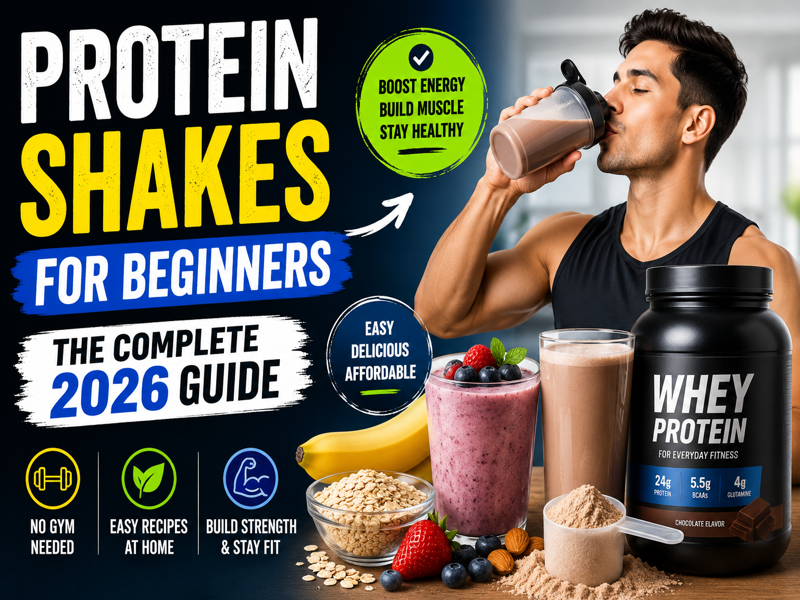
A protein shake is a drink that's high in protein. You mix protein powder with water, milk, or another liquid — blend it or shake it — and drink it. That's really all it is. It's a quick, easy, convenient way to give your body extra protein when you don't have time to cook a proper meal.
Most protein shakes contain three main things:
-
A protein powder base — whey, casein, plant-based (pea, soy, hemp), or egg white protein
-
A liquid — water, regular milk, almond milk, oat milk, or coconut milk
-
Optional extras — fruits, oats, peanut butter, honey, chia seeds, or spinach
Think of it like a really nutritious smoothie that just happens to be packed with protein. It is not a magic drink. It is food — just in liquid form. And just like any food, it works best as part of a balanced diet.
"A protein shake is a supplement — not a replacement. It is designed to fill the gaps in your diet, not to replace your actual meals."
How Much Protein Do Beginners Actually Need?
Your daily protein needs depend on three things: your body weight, your age, and how active you are. The more active you are, the more protein your body needs to repair and build muscle. Here is a simple, easy-to-understand breakdown:
|
Who You Are |
Daily Protein |
Example (150 lbs) |
Need a Shake? |
|
Mostly inactive / desk job |
0.36g per lb |
~54g / day |
Optional |
|
Active beginner (walks, light exercise) |
0.54–0.72g per lb |
~81–108g / day |
Recommended |
|
Trying to lose weight |
0.63–0.82g per lb |
~94–123g / day |
Very helpful |
|
Building muscle |
0.72–1.0g per lb |
~108–150g / day |
Strongly advised |
Quick formula: Take your body weight in pounds and multiply it by 0.54. That gives you a solid daily protein target if you are an active beginner.
If you can already hit that number through your everyday meals — chicken, eggs, Greek yogurt, beans, cottage cheese — then you might not even need a protein shake. But for most people, consistently hitting that target through food alone is tough. That is exactly where protein shakes make life a lot easier.
Real Talk: The average American only gets about 55–65g of protein per day. If you weigh 160 lbs and are active, you probably need 86–100g. That gap is why protein shakes exist.
When Is the Best Time to Drink a Protein Shake?
Timing matters more than most people think. The same shake can give you very different results depending on when you drink it. Here is a breakdown of the four best times — along with which one works best for each goal:
Option 1: Before Your Workout (Pre-Workout)
-
Gives your muscles the fuel they need before you exercise
-
Helps prevent your body from breaking down muscle tissue for energy
-
Ideal timing: 30 to 45 minutes before you start
-
Best protein type: Whey or a whey + carb blend
Option 2: After Your Workout — This Is Usually the Best Time
-
Right after exercise, your muscles are like a sponge — they absorb protein faster than any other time
-
Protein consumed post-workout speeds up muscle repair, reduces soreness, and promotes growth
-
Ideal timing: Within 30 minutes of finishing your workout
-
This applies even if your "workout" was just a 30-minute walk or a yoga session
-
Best protein type: Whey protein — it digests the fastest
Option 3: In the Morning With Breakfast
-
After 7 to 8 hours of sleep, your body has been fasting all night and is protein-depleted
-
A morning protein shake jumpstarts your metabolism and signals your body to stop burning muscle
-
Keeps you full significantly longer — reducing cravings and overeating later in the day
-
This is the best option if you are not working out regularly
-
Best protein type: Whey or a blend with carbs
Option 4: Before Bed (Casein Only)
-
Casein is a slow-digesting protein — it releases amino acids slowly over 6 to 8 hours
-
Most of your muscle repair happens during deep sleep, so having protein available overnight is a big advantage
-
Do not use whey here — it digests too fast and will not give you the same overnight benefit
-
Best protein type: Casein protein powder specifically
Not going to the gym? Do not overthink it. Morning is your best bet. A protein shake alongside breakfast boosts your energy, keeps hunger in check, and supports healthy muscle tone — all without a single gym visit.
4. How to Make a Protein Shake at Home — 3 Easy Recipes
Here is the truth: you do not need a $60 tub of fancy protein powder to get started. These three recipes use simple, affordable ingredients you can grab at any grocery store — and all three are beginner-friendly, genuinely delicious, and ready in under 5 minutes.
Recipe #1: The Classic Banana Peanut Butter Shake
Best for: Morning energy or post-workout recovery
-
1 ripe banana (the riper, the sweeter)
-
1 cup whole milk — or almond milk if you prefer dairy-free
-
2 tablespoons of natural peanut butter
-
1 tablespoon of honey
-
1 scoop of whey protein (optional — adds an extra 20–25g of protein)
-
4 to 5 ice cubes
How to make it: Toss everything into a blender. Blend on high for about 30 seconds. Pour and drink.
Nutrition (without extra protein powder): Protein: ~18g | Calories: ~320 kcal | Carbs: ~38g
Nutrition (with 1 scoop whey protein): Protein: ~40g | Calories: ~420 kcal
Recipe #2: The Chocolate Oatmeal Power Shake
Best for: Weight loss, staying full for hours, and killing chocolate cravings the healthy way
-
1/2 cup rolled oats (soaking them overnight makes the texture much smoother)
-
1 cup of milk (any type)
-
1 tablespoon of unsweetened cocoa powder
-
1 scoop of chocolate protein powder
-
1 teaspoon of chia seeds
-
A small pinch of salt — it brings the chocolate flavor out
-
Ice cubes to your liking
How to make it: Blend everything until completely smooth. If it is too thick, add a splash more milk.
Nutrition: Protein: ~30–35g | Calories: ~380 kcal | Fiber: ~7g — you will feel full for 3 to 4 hours.
Recipe #3: The Simple Greek Yogurt Berry Shake
Best for: Budget-friendly protein, great taste, zero complicated ingredients
-
1 cup of plain Greek yogurt (full-fat or 2% for the creamiest texture)
-
1/2 cup of milk
-
1/2 cup of mixed berries — fresh or frozen both work perfectly
-
1 tablespoon of honey
-
Optional: 1 scoop of vanilla protein powder for an extra boost
How to make it: Blend everything for about 20 seconds. Or skip the blender and just stir well if you prefer a chunkier texture.
Nutrition (without extra powder): Protein: ~18–22g | Calories: ~280 kcal | Bonus: packed with probiotics from the Greek yogurt.
All CareStore Tip: Add any of our affordable protein powders to these recipes for an extra 20–25g of protein per serving. Our whey and plant-based options mix smoothly with no clumping — and they come in flavors like chocolate, vanilla, and strawberry.
Common Mistakes Beginners Make (And How to Avoid Them)
Almost every beginner makes at least one or two of these mistakes. Learn from them now and save yourself weeks of wasted effort:
Mistake #1: Drinking Way Too Much Protein
Bigger does not always mean better with protein. Your body can only absorb and use a certain amount of protein at one time — roughly 20 to 40 grams per sitting. Anything beyond that does not build extra muscle. It either gets converted to fat or gets flushed out through your kidneys. Stick to your daily target and spread your protein intake across your meals throughout the day.
Mistake #2: Treating Shakes as Full Meal Replacements
A protein shake is a supplement. It is not engineered to fully replace a real meal. Whole foods provide vitamins, minerals, antioxidants, fiber, and complex carbohydrates that no shake can fully replicate. Use your shake to complement your meals — not to skip them. Your body needs variety.
Mistake #3: Forgetting to Drink More Water
Protein requires significantly more water to metabolize than carbohydrates or fat. If you dramatically increase your protein intake without also increasing your water intake, you risk dehydration, kidney stress, and even constipation. A good rule of thumb: for every protein shake you add to your day, add at least two extra glasses of water.
Mistake #4: Falling for Cheap, Sketchy Products
The supplement industry is unfortunately full of products that do not deliver on their promises — and some that contain harmful fillers, undisclosed ingredients, or wildly inaccurate labels. Always buy from brands that are third-party tested and clearly list every ingredient on the label. AllCareStore products go through independent quality testing before they ever reach your door.
Mistake #5: Giving Up After Two Weeks
Protein shakes are not a 14-day magic fix. With consistent use alongside regular movement and a balanced diet, you will typically feel a difference in energy levels within 2 weeks — but visible physical changes take 4 to 8 weeks. The people who see the best results are simply the ones who stick with it. Consistency beats intensity every single time.
Mistake #6: Ignoring Lactose Intolerance
Whey protein is derived from milk, which means it contains lactose. If your stomach has ever felt bloated, gassy, or uncomfortable after drinking regular milk, whey protein will likely cause the same reaction. The easy solution: switch to a plant-based protein powder — pea, soy, hemp, or brown rice protein. They are just as effective and completely dairy-free. AllCareStore carries a full plant-based line for exactly this reason.
AllCareStore Products — Best Picks for Beginners
Finding the right protein powder when you are just starting out can feel overwhelming. There are hundreds of options, and most of them are overpriced or overhyped. AllCareStore keeps it simple: quality ingredients, honest pricing, and no unnecessary fillers. Here is our beginner-recommended lineup:
|
Product |
Type |
Price |
Best For |
|
AllCare Whey Protein |
Whey Concentrate |
$19.99–$29.99 |
Beginners, post-workout recovery |
|
AllCare Plant Protein |
Pea + Soy Blend |
$21.99–$31.99 |
Vegetarian, vegan, lactose-free |
|
AllCare Slim Shake |
Meal Support |
$17.99–$24.99 |
Weight loss, calorie control |
|
AllCare Casein Night |
Slow-Release Casein |
$22.99–$34.99 |
Overnight muscle recovery |
Our top recommendation for beginners: Start with AllCare Whey Protein. It is affordable, mixes smoothly into milk or water, comes in four popular flavors (chocolate, vanilla, strawberry, and unflavored), and delivers 24 grams of protein per serving. If you are vegetarian or dairy-free, AllCare Plant Protein gives you the exact same quality without any animal products.
Real Story: How Marcus Lost 13 Pounds in 3 Months — No Gym
"I was sitting at 195 pounds, constantly exhausted, and my doctor flagged that I was not getting nearly enough protein in my diet. I had zero interest in joining a gym — I just wanted to feel like a normal human again. A colleague suggested I try AllCare Whey Protein as a simple starting point.
Within the first two weeks, my energy was noticeably better. After three months — no gym, no strict diet, just one shake every morning and a 20-minute walk most days — I dropped to 182 pounds. My arms look more defined, I sleep better, and I do not crash at 3 PM anymore. I genuinely did not expect results this good without a gym membership."
A Note From Our Registered Dietitian
Dr. Sarah Collins, RD — Registered Dietitian, New York, NY
"Protein shakes are a genuinely safe and effective nutritional tool — when used with some common sense. My advice for anyone just getting started: before you buy anything, spend one week tracking how much protein you already eat through your normal diet. Use a free app like MyFitnessPal to track it. You might be surprised.
If you are already getting 70 to 80 percent of your daily protein goal through food, one shake per day is more than enough to fill the gap. There is absolutely no need to overdo it.
A few important cautions: people with existing kidney disease, liver conditions, or poorly controlled diabetes should always speak with their physician before adding protein supplements to their routine. For the vast majority of healthy adults, a high-quality protein powder used as directed is completely safe for long-term use.
One last thing I always remind my patients: protein alone does not make a complete diet. Pair your shake with whole grains, vegetables, fruits, and healthy fats for genuinely balanced nutrition. Variety is not just good for your health — it makes eating a lot more enjoyable too."
Final Thoughts
You now have everything you need to make a smart, informed decision about protein shakes. Here is a quick action plan to get started the right way:
-
Figure out your daily protein target: multiply your body weight in pounds by 0.54
-
Track your current protein intake for 3 to 5 days using a free app
-
If there is a gap, add one protein shake per day — morning is the easiest starting point
-
Pick a quality product: AllCare Whey for most people, AllCare Plant Protein if dairy-free
-
Try one of the three home recipes from this guide — no blender required for the yogurt version
-
Drink at least 8 to 10 glasses of water every day
-
Give it a full 6 to 8 weeks before judging your results — consistency is the only real secret
Ready to take the first step? Browse AllCareStore's beginner protein collection at the link below. Clean ingredients, honest pricing, and a team that actually answers your questions.