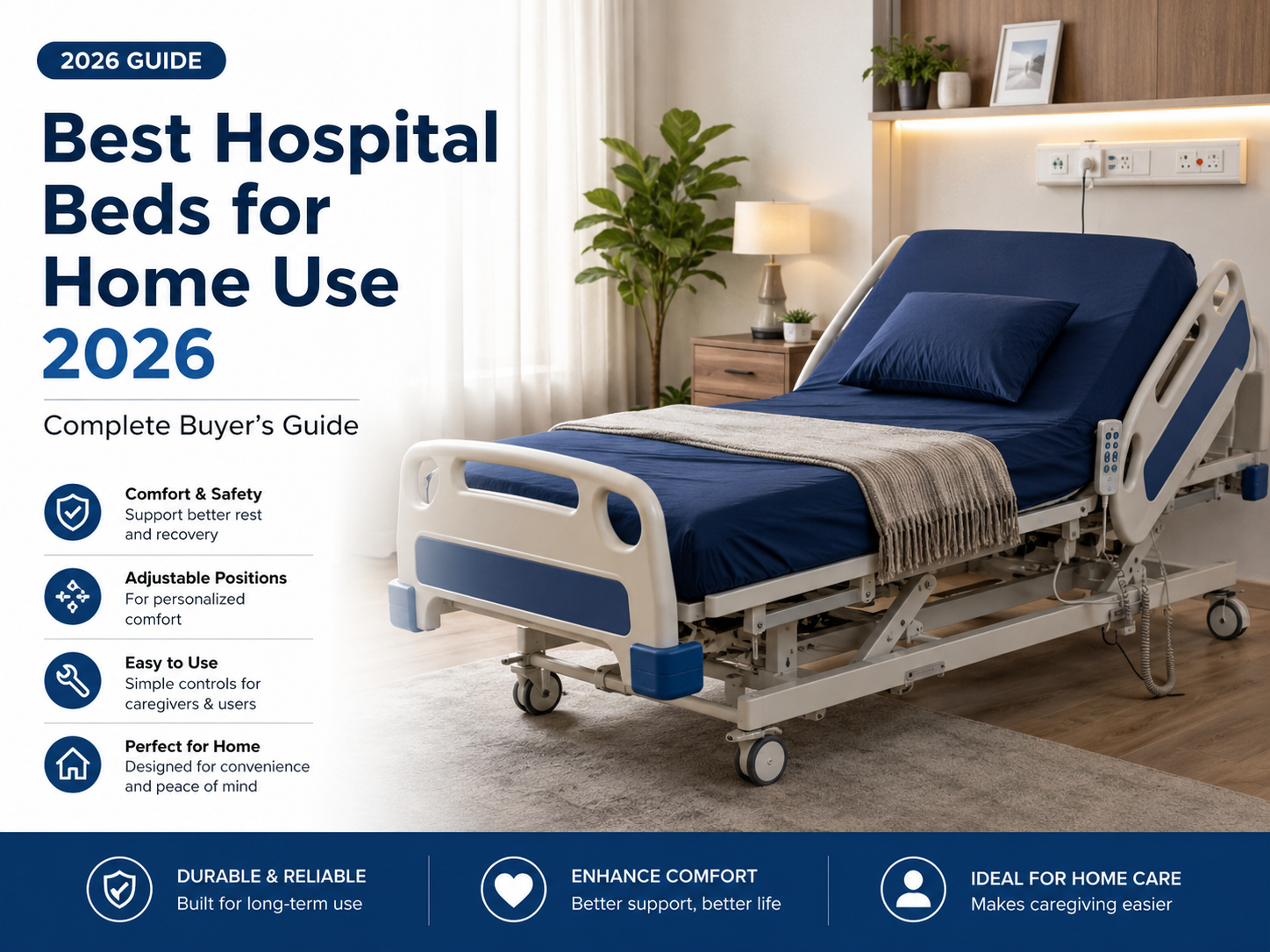
MEDICAL DISCLAIMER: This article is for informational purposes only and does not constitute medical advice. Hospital beds involve mechanical equipment that must be set up correctly for patient safety. Consult your physician, home health agency, or a certified medical equipment supplier before purchasing or using a home hospital bed.

Margaret's Story: When Coming Home Meant Starting Over
Margaret, 74, had planned to spend her retirement gardening, traveling with her husband Ray, and watching her grandchildren grow up. Then came the fall — a slippery bathmat on a Tuesday morning — and suddenly everything changed. A fractured hip, surgery, two weeks in a rehabilitation facility, and then the conversation with the discharge coordinator: Margaret was going home, but home would need to change.
The standard queen bed they'd slept in for thirty-eight years was now a hazard. Margaret couldn't raise herself to sitting without help. Ray had a bad back. The mattress was too low, too soft, and impossible to position around. Their daughter Sarah drove them to a medical supply showroom and Margaret sat down on her first hospital bed. "It felt clinical," she admitted later. "But then I pressed the button and the head raised and I realized — I could sit up by myself. I could do that. For the first time in three weeks I did something for myself."
Six months later, Margaret's recovery exceeded her surgeon's expectations. Her occupational therapist credited the hospital bed directly: proper positioning accelerated healing, improved circulation, reduced pressure-injury risk, and — crucially — gave Margaret back a measure of independence that kept her spirits high. Ray's back also improved. He wasn't lifting Margaret anymore. The bed was.
If you or someone you love is facing a recovery period, managing a chronic condition, or navigating the challenges of aging at home, a home hospital bed may be one of the most important investments you make. This guide explains everything you need to know to choose the right one.
Who Needs a Home Hospital Bed?
Hospital beds at home are appropriate for a wider range of situations than most people realize:
- Post-surgical recovery — Hip replacement, knee replacement, spinal surgery, cardiac surgery
- Stroke or neurological conditions — Difficulty changing positions independently
- Chronic illness management — COPD, congestive heart failure, severe GERD (head elevation reduces nighttime symptoms dramatically)
- Wound care and pressure injury prevention — Frequent repositioning prevents bedsores
- Hospice and palliative care — Comfort positioning for end-of-life care at home
- Long-term disability — Spinal cord injury, ALS, multiple sclerosis
- Caregiver injury prevention — Adjustable height protects family caregivers from back injury
- Bariatric needs — Reinforced frames for patients over 350 lbs
Types of Hospital Beds: Manual, Semi-Electric, and Full-Electric
| Type | How It Adjusts | Best For | Price Range |
|---|---|---|---|
| Manual | Hand crank for head, foot, and height | Short-term recovery, budget-conscious, caregiver always present | $400–$800 |
| Semi-Electric | Electric for head/foot; crank for height | Most home care situations; best value | $700–$1,400 |
| Full-Electric | Electric for head, foot, and height | Long-term care, patient independence, less caregiver lifting | $1,200–$3,000+ |
| Bariatric | Full-electric, reinforced frame | Patients 350–1,000 lbs depending on model | $1,500–$5,000+ |
| Low/Floor Bed | Lowers very close to floor level | Fall-risk patients, dementia care, pediatric | $1,800–$4,000 |
The semi-electric bed is the right choice for the vast majority of home care situations. The head and foot adjustments (the ones used constantly) are electric, while the height adjustment (used mainly during caregiving tasks) is a crank that a caregiver operates. This provides the best combination of patient independence and value.
Key Features to Evaluate
1. Weight Capacity
Standard hospital beds support 350–450 lbs. If the patient weighs more than 300 lbs, consider a heavy-duty or bariatric model with capacity of 600–1,000 lbs. Never exceed a bed's stated capacity — frame failure can cause serious injury.
2. Height Range
The bed should lower far enough that the patient can place their feet flat on the floor when sitting on the edge (typically 9–15" from floor to sleeping surface at lowest setting). At its highest, the bed should allow caregivers to work without bending — usually 27–30" from floor. Full-electric beds with a wide height range protect caregivers from chronic back injury.
3. Side Rails
Half-length rails (also called assist rails or grab rails) on one or both sides help patients reposition and get in and out of bed independently. Full-length rails restrict exit and can pose entrapment hazards — check FDA guidance. Most home care situations call for half-length assist rails.
4. Mattress Compatibility
Standard hospital bed mattresses are 80" × 36" — narrower than a twin (38") and longer than a standard twin (75"). Do not use a regular mattress on a hospital bed frame; it will not fit correctly and may create dangerous gaps at the rails. Purpose-built foam, innerspring, or pressure-relief (alternating air) mattresses are available separately or as bundles.
5. Head and Foot Articulation
Look for smooth, quiet electric motors with at least 0–60° head elevation and 0–40° foot/knee elevation (the "Fowler" and "Trendelenburg" positions used in clinical care). The knee-break function (raising the middle section) prevents the patient from sliding down when the head is elevated — essential for long-duration positioning.
6. Frame and Caster Quality
Steel frames are standard. Look for locking casters on all four corners — two should be directional (for moving the bed) and two should lock completely. Beds that roll unexpectedly are a safety hazard.
Top Hospital Beds for Home Use 2026
1. Invacare Full-Electric Hospital Bed — Best Overall
Why It's #1: Invacare is one of the most trusted names in home medical equipment. Their full-electric homecare bed combines reliable motors, a wide height range, and durable steel construction at a price point accessible for most families.
- Weight Capacity: 450 lbs
- Height Range: 9" – 27" (floor to sleeping surface)
- Head Elevation: 0–65°
- Foot Elevation: 0–40°
- Rails: Half-length assist rails included
- Motor Noise: Quiet — comparable to a household fan
- Remote: Pendant-style hand control for patient use
Pros: Industry-leading reliability, widely covered by Medicare/Medicaid, excellent parts and service availability, smooth positioning, wide height range
Cons: Assembly requires two people, delivery can take 1–2 weeks for some regions
Best For: Post-surgical recovery, long-term home care, situations where patient will operate the bed independently
Available at AllCare Store: Browse our home health care equipment collection for current hospital bed inventory and pricing.
2. Drive Medical Semi-Electric Hospital Bed — Best Value
Why It Ranks High: Drive Medical produces one of the most widely used semi-electric homecare beds in the United States. The electric head and foot positioning serves patients' daily needs, while the crank height adjustment is simple for caregivers.
- Weight Capacity: 450 lbs
- Height Range: 11" – 24" (crank-adjusted)
- Head Elevation: 0–60°
- Foot Elevation: 0–40°
- Rails: Full-length rails included (consider replacing with half-length assist rails for home use)
- Assembly: Tools included, one-person assembly possible
Pros: Excellent value, widely available, well-supported, Medicare-reimbursable, reliable motor, good weight capacity
Cons: Height range narrower than full-electric models, full-length rails should be assessed for safety with patient's specific needs
Best For: Short-to-medium term recovery, budget-conscious families, situations where a caregiver handles positioning
3. Medline Bariatric Full-Electric Hospital Bed — Best for Heavier Patients
Why It Stands Out: Medline's bariatric homecare bed handles patients up to 600 lbs with the same electric convenience of standard models. The wider frame (42" sleeping surface vs. 36" standard) adds comfort and safety margin.
- Weight Capacity: 600 lbs
- Sleeping Surface Width: 42"
- Height Range: 8" – 28"
- Head/Foot: Full-electric
- Reinforced Frame: Extra-gauge steel throughout
Best For: Patients 300–600 lbs, those needing extra sleeping surface width, bariatric post-surgical recovery
4. Invacare Low Hospital Bed — Best for Fall-Risk Patients
Why It's Essential for Some: The low-profile bed drops to just 7–9" from floor to mattress surface, dramatically reducing fall injury risk for patients with dementia, delirium, or significant fall history.
- Lowest Height: 7–9" (floor to sleeping surface)
- Use with: Crash mats placed alongside the bed
- Weight Capacity: 350–450 lbs depending on model
Best For: Dementia care, patients with fall history, hospice care, pediatric home care
Essential Accessories
Mattresses
Never use a home hospital bed without a purpose-built mattress. Options include:
- Foam mattresses — Most affordable, appropriate for short-term recovery in lower-risk patients
- Innerspring mattresses — Better long-term durability, firmer feel preferred by some patients
- Alternating pressure / air mattresses — For patients at risk of pressure injuries (limited mobility, diabetes, poor circulation) — redistributes pressure automatically
- Gel/memory foam overlays — Placed atop standard mattresses to add pressure relief without the cost of a full alternating-air system
Browse pressure relief mattresses and overlays at AllCare Store.
Bed Rails and Assist Bars
Half-length assist rails attach to the bed frame and give patients something to grip when repositioning or getting up. They are distinct from full-length rails — the FDA advises against full-length rails for most home use due to entrapment risk. Confirm the rail model is compatible with your bed frame before purchasing.
Overbed Table
An overbed (or over-bed) table swings across the bed on a wheeled base, giving patients a surface for meals, reading, devices, and personal items without getting up. Essential for anyone spending significant time in bed.
Trapeze Bar
A trapeze bar mounts to the bed frame above the patient, providing an overhead grip to assist with repositioning, transfers, and strengthening. Particularly useful for post-hip and post-knee surgery recovery.
Medicare and Insurance Coverage
Hospital beds are classified as Durable Medical Equipment (DME) by Medicare. Medicare Part B may cover a hospital bed (rental or purchase) if:
- Your doctor certifies the bed is medically necessary
- You have a qualifying condition (e.g., severe COPD, heart failure requiring head elevation, pressure injuries requiring position changes)
- You use a Medicare-enrolled DME supplier
Medicare typically covers: 80% of the approved amount after your Part B deductible. Your supplemental insurance (Medigap) may cover the remaining 20%.
What Medicare covers:
- Semi-electric beds — covered when a physician certifies the patient cannot operate a manual bed
- Full-electric beds — more restrictive criteria; typically requires documentation that a caregiver is unable to operate the height crank safely
- Pressure-relief mattresses — covered for documented pressure injury risk
Important: Medicare covers rental for the first 13 months, after which ownership transfers to you. Work with a Medicare-enrolled supplier and get a Certificate of Medical Necessity (CMN) from your physician before ordering.
Contact AllCare Store at 1-888-889-6260 for guidance on Medicare documentation and coverage for home hospital beds.
Room Preparation: What You Need to Know
Space Requirements
A standard hospital bed is approximately 88" long × 40" wide with rails deployed. You need at least 36" of clear space on each side of the bed for caregiver access and safe patient transfers. Total recommended room footprint: approximately 13 × 12 feet minimum for a bed with working space.
Doorway Clearance
Hospital beds must be assembled inside the room — they do not fit through standard 32" interior doorways when fully assembled. Most home hospital beds can be partially disassembled for delivery (frame in sections) and reassembled inside. Measure your doorways and hallways before ordering. Standard interior doors are 28–32"; you may need a 36" doorway for comfortable delivery access.
Flooring
Hardwood or tile floors are preferable — carpet impedes bed mobility and caster function. If the bed will be on carpet, request locking casters and note that height adjustments may be slightly more difficult. A rigid mat under the bed can improve caster performance on thick carpet.
Electrical Access
Electric beds require a standard 110V outlet within reach of the power cord (typically 8–10 feet). Plan cord routing carefully — cords across traffic paths are a trip hazard. Use a surge protector.
Setting Up for Patient Independence
The goal of a home hospital bed is not just safety — it's maximizing what the patient can do independently. Set the bed up with this in mind:
- Hand control placement: Clip the pendant control to the bed rail where the patient can reach it without stretching or rolling
- Bed height for exit: Set the lowest position so the patient's feet reach the floor flat when sitting on the edge — this makes standing easier and safer
- Nighttime lighting: A motion-activated night light near the bed helps patients orient safely if they wake in the dark
- Call system: Consider a bedside call button or medical alert device so the patient can summon help if needed
- Personal items: Position an overbed table, water, medications, and phone within reach so the patient doesn't need to stretch or stand for common needs
Caregiver Tips: Protecting Your Back
Hospital beds reduce — but do not eliminate — caregiver physical strain. Use the bed's height adjustment consistently: raise the bed to your hip height before providing care, and lower it after. Never lean over a low bed to provide sustained care. Use a gait belt for transfers. Consider a transfer board or patient lift if the patient cannot bear weight.
Studies consistently show that family caregiver back injuries are a leading cause of premature nursing-home placement. Protecting the caregiver's health is inseparable from maintaining the patient's home care.
Frequently Asked Questions
Q: How long does it take to receive and set up a home hospital bed?
A: Delivery times vary from same-day (for local DME suppliers) to 1–2 weeks for shipped orders. Assembly typically takes 45–90 minutes with two people. Factor this into discharge planning — ideally the bed is in place before the patient comes home from the hospital or rehab facility.
Q: Can a regular mattress be used on a hospital bed frame?
A: No. Standard hospital bed mattresses are 80" × 36" — a regular twin (38" × 75") does not fit correctly. Gaps between the mattress and rails create entrapment and fall hazards. Always use a purpose-built hospital bed mattress.
Q: Do hospital beds fit in standard bedroom furniture arrangements?
A: Usually yes, but they require more clearance than a standard bed — at least 36" on each side. Many families rearrange the bedroom or designate a ground-floor room (living room, dining room) as the care room to provide easier access and eliminate stair navigation entirely.
Q: What's the difference between a hospital bed and an adjustable base bed?
A: Consumer adjustable base beds (like those sold by mattress companies) offer head and foot elevation but lack the variable height adjustment critical for safe patient transfers and caregiver back protection. They also typically lack medical-grade rails. For genuine home care needs, a purpose-built hospital bed is the safer, more functional choice.
Q: How long will a home hospital bed last?
A: Quality hospital beds from established manufacturers (Invacare, Drive Medical, Medline) typically last 10–15 years or more with normal use. Motors are usually the first component to require service — most manufacturers sell replacement motors and parts separately.
Q: Is assembly included with delivery?
A: When purchasing through a local DME supplier or Medicare-enrolled provider, delivery and setup are typically included. When ordering online for direct shipment, assembly is generally the customer's responsibility. Confirm assembly services and delivery terms at the time of purchase.
Shop Home Hospital Beds at AllCare Store
AllCare Store carries a complete selection of home hospital beds, mattresses, rails, overbed tables, and patient care accessories with free shipping on all orders.
- Home Health Care Equipment — Full hospital bed selection
- Incontinence & Toileting — Bedside commodes and related care supplies
- Adult Diapers & Incontinence — Essential for extended bed rest
Why Shop AllCare Store for Home Care Equipment:
- ✅ Trusted brands — Invacare, Drive Medical, Medline, and more
- ✅ Free shipping — All orders, no minimum
- ✅ Expert guidance — Call 1-888-889-6260
- ✅ Medicare documentation support — We can help guide you
- ✅ 30-day returns — Risk-free
Have questions about which bed is right for your situation? Our home care specialists are available to help. Call 1-888-889-6260 or browse our complete home health care equipment collection today.
Medical Disclaimer: This article is for informational purposes only and does not constitute medical advice. Individuals at high risk for pressure injuries should consult a physician, occupational therapist, or certified rehabilitation engineer before selecting a wheelchair cushion.