Note: This article is for informational and educational purposes only. It does not constitute medical advice. Every postpartum recovery is different. Always follow your OB-GYN's or midwife's specific postpartum instructions and contact your provider with any concerns about your recovery.
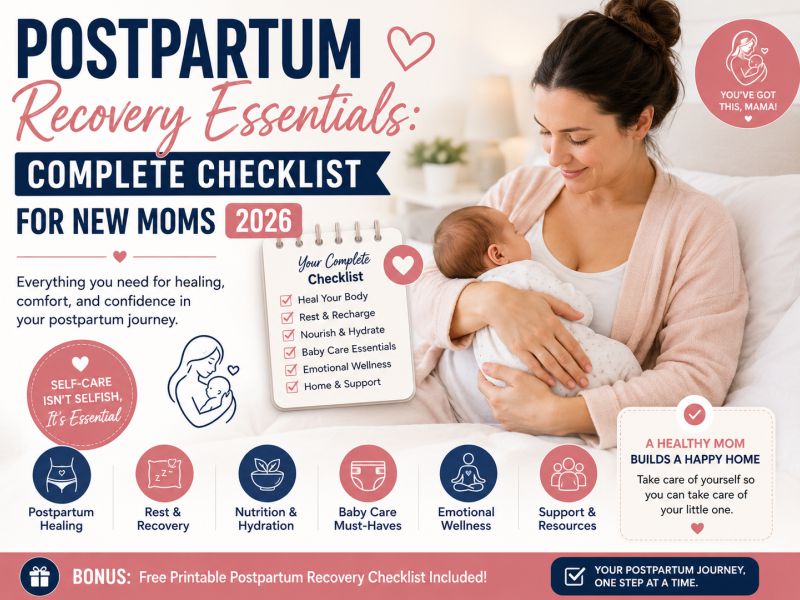
Postpartum Recovery Essentials: Complete Checklist for New Moms 2026
The Fourth Trimester: What No One Fully Prepares You For
Months of preparation go into welcoming a new baby — the nursery, the car seat, the baby shower. The postpartum experience for the birthing parent, by contrast, often gets a single 45-minute childbirth class session and a take-home pamphlet. Yet the weeks following delivery involve significant physical recovery from one of the most demanding events the human body undergoes, all while sleep-deprived and learning a new and completely consuming role.
The "fourth trimester" — roughly the first three months after birth — is a period of profound physical and emotional transition. Having the right supplies ready before delivery, and understanding what your body actually needs to heal, makes this period more manageable. This checklist covers everything for postpartum recovery, organized by category, along with explanations of why each item matters.
Perineal and Vaginal Recovery
For vaginal deliveries, perineal recovery is the most immediately pressing physical concern. The perineum (the area between the vaginal opening and the anus) stretches dramatically during delivery and may involve tears or an episiotomy. Postpartum perineal care significantly affects healing speed and comfort.
Perineal Care Essentials
Peri bottle (perineal irrigation bottle): A squeeze bottle used to rinse the perineum with warm water after using the toilet, replacing wiping which is too painful and abrasive in the early postpartum period. This is one of the most universally praised postpartum items. Standard peri bottles are upright; angled-spout versions allow easier reach without contorting. Fill with warm water and use after every bathroom visit for 4–6 weeks. Many hospitals send you home with one, but having a backup — or an upgraded angled version — is worthwhile.
Sitz bath: A shallow basin that sits over the toilet, allowing you to soak the perineum in warm water for 15–20 minutes. Sitz baths reduce pain, promote healing, and soothe hemorrhoids. Use 2–3 times daily in the first week. Some postpartum providers recommend adding Epsom salts or witch hazel; confirm with your provider. A dedicated sitz bath basin is easier and more comfortable than attempting a full bathtub soak in the early postpartum days when mobility is limited.
Witch hazel pads or spray: Witch hazel is a natural astringent that reduces inflammation, soothes irritated tissue, and provides cooling relief to the perineum and hemorrhoids. Prepackaged witch hazel cooling pads (like Tucks) can be layered on top of a postpartum pad between sitz baths, providing ongoing comfort. Witch hazel spray is easier to apply than pads for some women.
Perineal cold packs: Ice packs designed specifically for the perineum reduce swelling and provide pain relief in the first 24–48 hours after delivery. Many hospitals provide these; having additional packs at home ensures you can continue cold therapy during the critical first days. Wrap in a thin cloth before use to prevent direct ice contact with skin.
Numbing spray (benzocaine perineal spray): OTC topical anesthetic sprays reduce perineal pain between sitz baths and cold packs. Dermoplast and similar products are commonly recommended by postpartum nurses. Confirm with your provider before use, particularly if you have had a significant tear or episiotomy.
Postpartum Pads and Underwear
Extra-large postpartum pads: Lochia (postpartum bleeding) is heavier than a typical period, especially in the first week, and can last 4–6 weeks. Overnight-sized pads or dedicated postpartum pads with additional length and absorbency are necessary. Hospital mesh underwear and giant maternity pads from the hospital are genuinely effective and many women prefer to take extras home. Adult briefs (like Depends) work equally well for the first few days and some women find them more comfortable and less prone to shifting.
High-waisted disposable underwear: Mesh hospital underwear or disposable high-waisted underwear are particularly useful in the first 1–2 weeks when regular underwear may be too restrictive over a perineal wound or a cesarean incision. Comfort-waist disposable options mean you don't have to worry about ruining your own underwear during heavy lochia.
For cesarean deliveries, the incision site needs its own attention: breathable, high-waisted underwear that sits above the incision line (not pressing against it) is important. C-section recovery belts provide gentle abdominal support and help hold the incision area stable, which reduces pain with movement.
Pain Management and Healing Support
OTC pain relievers: Ibuprofen and acetaminophen are both safe for postpartum use and during breastfeeding (confirm with your provider). Alternating them on a schedule — rather than waiting until pain is severe — maintains more consistent relief. Your provider will typically establish a pain management protocol; having these on hand before you return home avoids a pharmacy run on a difficult day.
Stool softeners: The first postpartum bowel movement is something no one prepares new mothers for. A combination of pain medications (which cause constipation), reduced mobility, dehydration during labor, and apprehension about straining near a perineal wound makes the first BM a significant concern. Docusate sodium (Colace) started immediately postpartum, combined with adequate hydration and fiber, significantly eases this process. Most postpartum providers recommend beginning stool softeners in the hospital.
Abdominal binder or belly wrap: Provides support to weakened abdominal and pelvic floor muscles after delivery. For cesarean deliveries, a postpartum binder provides gentle compression at the incision site, reduces pain with movement, and helps support the abdomen while core muscles heal. For vaginal deliveries, a supportive wrap provides comfort and can improve posture during extended feeding sessions. Confirm with your provider before use.
Heating pad: Useful for postpartum afterpains (uterine cramping as the uterus contracts back to its pre-pregnancy size — often most intense during breastfeeding in the first few days) and general back discomfort. Browse our pain relief collection for heating pads and relief products.
Breastfeeding Support
If you plan to breastfeed, having supplies ready before delivery makes the early learning curve more manageable.
Nipple cream or lanolin: Nipple soreness is almost universal in the first 1–3 weeks of breastfeeding as the nipple adapts. Purified lanolin (such as Lansinoh) applied after each feeding soothes cracked or sore nipples and is safe for the baby. Nipple butter made from plant-based ingredients (shea butter, coconut oil) is a lanolin-free alternative for those who prefer it.
Nursing pads: Breast milk leakage between feedings is common, especially as supply establishes. Washable fabric pads reduce waste and are more comfortable for extended wear; disposable pads are more convenient in the early postpartum period. Have both on hand.
Breast pump: Useful for relieving engorgement, building a milk supply, enabling other caregivers to feed the baby, and returning to work. Many insurance plans cover breast pumps — check your coverage before purchase. If pumping is planned from the beginning, having the pump and supplies at home before delivery (and ideally taking a pumping class beforehand) simplifies the early weeks. Browse our mom and baby care collection for feeding supplies.
Nipple shields: Thin silicone shields that fit over the nipple during breastfeeding, useful for latch difficulties, flat or inverted nipples, or extreme nipple soreness. Use under lactation consultant guidance — they are a helpful tool in specific situations but can affect milk transfer if used without proper technique.
Nursing bras and sleep bras: Supportive, accessible nursing bras that open easily for feeding make the frequent feeding schedule more practical. Soft sleep bras without underwire provide support during sleep (when leakage is more likely) without the discomfort of a structured bra. Have 3–5 nursing bras so you always have a clean, dry option available.
Nursing pillow: A firm nursing pillow (Boppy or similar) positions the baby at breast height, reducing arm and shoulder strain during prolonged feeding sessions. For cesarean recovery mothers, a pillow across the lap also protects the incision site. This is one of the most-used items in the first months.
Comfort and Rest
Donut pillow or coccyx cushion: A ring-shaped cushion with a cutout that allows sitting without putting pressure directly on the perineum. Essential for vaginal deliveries involving tears or episiotomies — sitting on ordinary surfaces is painful without this accommodation in the first week or two. Browse our rest and comfort collection for cushions and support products.
Nursing tank tops or gowns: Easy-access tops with built-in support that allow for feeding without completely undressing. Dual-layer nursing tanks with a built-in shelf bra are particularly practical for around-the-clock access.
Compression socks: Swelling in the legs and feet (edema) is common postpartum as the body processes the extra fluid volume accumulated during pregnancy. Compression socks improve circulation and reduce ankle and foot swelling. Your provider may specifically recommend them if you had a cesarean or if swelling was significant during pregnancy. See our physical therapy collection for compression hosiery options.
Water bottle with straw: Hydration is particularly important when breastfeeding (your body needs additional fluids to support milk production) and for recovery overall. A large water bottle you can reach and drink from without sitting up fully — especially important in the early days — makes staying hydrated easier when you're pinned under a sleeping baby.
Mental Health and Emotional Support
Physical recovery is only one dimension of the postpartum period. Mental health is equally important and often receives less attention in postpartum planning.
Know the difference between the baby blues and postpartum depression: Baby blues — mood swings, tearfulness, anxiety, and irritability — affect up to 80% of new mothers and typically peak around day 3–5 postpartum as hormone levels shift dramatically. They usually resolve within 2 weeks. Postpartum depression (PPD) is more persistent, more severe, and occurs in approximately 10–15% of new mothers. Symptoms include persistent sadness, anxiety, difficulty bonding with the baby, feelings of hopelessness, or intrusive thoughts. PPD requires professional support — contact your OB or midwife if symptoms persist beyond 2 weeks or are severe at any point.
Postpartum anxiety is less commonly discussed but equally common as PPD, characterized by excessive worry, racing thoughts, physical tension, and hypervigilance that goes beyond normal new-parent concern. If anxiety is significantly interfering with sleep or daily function, discuss it with your provider.
Ask for and accept help: The postpartum period is not meant to be navigated alone. Accept meals when offered, let household standards slide, and be specific with partners and family about what support is needed. Sleep deprivation is the primary driver of postpartum emotional difficulty — any opportunity to sleep should be taken.
Complete Postpartum Checklist at a Glance
| Category | Must-Have Items |
|---|---|
| Perineal Care | Peri bottle, sitz bath basin, witch hazel pads, perineal ice packs, numbing spray |
| Pads & Underwear | Extra-large postpartum pads, disposable high-waisted underwear, nursing pads |
| Pain & Healing | Ibuprofen, acetaminophen, stool softeners, abdominal binder (especially for C-section), heating pad |
| Breastfeeding | Nipple cream, nursing pads, breast pump, nursing bras, nursing pillow |
| Comfort | Donut cushion, nursing tank tops, compression socks, large water bottle |
| Mental Health | Know PPD signs, OB/midwife contact info, postpartum support network, planned support schedule |
Shop Postpartum Care and Mom & Baby Essentials at AllCare Store
AllCare Store carries a comprehensive selection of postpartum recovery supplies, breastfeeding products, and mom and baby care essentials. Browse our mom and baby care collection and personal care collection to find what you need for a more comfortable postpartum recovery.
- Free Shipping on every order — no minimum required
- Discreet Packaging — all orders arrive in plain, unmarked packaging
- 30-Day Returns — shop with confidence
- Expert Help — reach our team at 1-888-889-6260, Monday–Friday 7 AM–4 PM CST
Frequently Asked Questions: Postpartum Recovery
How long does postpartum recovery take?
The timeline varies significantly based on type of delivery, individual health, and birth circumstances. For vaginal deliveries without significant tears, most women feel substantially better at 2–3 weeks postpartum, though full recovery of pelvic floor strength can take 6–12 months. Significant perineal tears (3rd or 4th degree) require 6–8 weeks for the wound to heal. Cesarean section recovery typically involves 6 weeks before resuming normal activity, as it is major abdominal surgery — though many women feel significantly improved by 3–4 weeks. Postpartum lochia (bleeding) lasts 4–6 weeks for most women. The 6-week postpartum appointment is a milestone, but not a finish line — full recovery, especially of pelvic floor function, often takes longer.
What helps with postpartum perineal pain?
The most effective combination for perineal pain relief is: cold therapy (perineal ice packs) in the first 24–48 hours to reduce swelling, sitz baths 2–3 times daily to promote healing and relieve pain, witch hazel pads between sitz baths for ongoing cooling relief, a peri bottle with warm water after each bathroom visit instead of wiping, and OTC pain relievers (ibuprofen is particularly effective for perineal pain as it addresses inflammation) taken on a schedule rather than waiting for pain to spike. A donut cushion for sitting and wearing loose-fitting, breathable underwear also significantly improves comfort in the first week or two.
What are signs of postpartum depression vs baby blues?
Baby blues are mild, resolve within 2 weeks of delivery, and include tearfulness, mood swings, irritability, and anxiety that doesn't significantly interfere with daily function. Postpartum depression (PPD) is more persistent (lasting beyond 2 weeks), more intense, and may include: deep sadness or hopelessness that doesn't lift, inability to sleep even when the baby sleeps, difficulty bonding with the baby, feeling like a bad mother, withdrawal from family and friends, loss of interest in activities, and in severe cases, intrusive thoughts. Postpartum anxiety involves persistent, overwhelming worry, rapid heartbeat, or panic attacks. Both PPD and postpartum anxiety require professional support — contact your OB, midwife, or therapist. These conditions are not personal failures; they are medical conditions that respond well to treatment.
When can I exercise after giving birth?
Gentle walking is typically appropriate within days of an uncomplicated vaginal delivery, and is encouraged for circulation and recovery. For cesarean deliveries, light walking begins in the hospital but more active movement should wait until cleared by your provider, typically at the 6-week appointment. High-impact exercise (running, jumping) and heavy lifting should generally wait until after the 6-week postpartum visit for vaginal deliveries and longer for C-sections. Pelvic floor physical therapy — working with a specialized PT on Kegel exercises, pelvic floor rehabilitation, and core reconnection — is recommended for nearly all postpartum women and can safely begin as early as 6 weeks. Many women wait too long to return to exercise; others return too quickly. A pelvic floor PT evaluation is the safest way to determine your individual readiness.
What do I need to prepare for postpartum recovery before the birth?
Set up your postpartum supplies before your due date — you won't want to send someone on a pharmacy run while you're recovering. Key items to have ready: peri bottle, sitz bath basin, witch hazel pads, perineal ice packs, extra-large postpartum pads, disposable underwear, stool softeners, OTC pain relievers, a donut cushion, breastfeeding supplies if planning to nurse, and comfortable high-waisted underwear or postpartum binders. Meal prep and freezing food, setting up a feeding station with snacks and a water bottle, and arranging postpartum support (who will be there to help in the first 1–2 weeks) are equally important preparations. The goal is to have everything within easy reach so you can focus on recovery and caring for your newborn.