Understanding Tube Feeding at Home
Taking care of someone who depends on tube feeding at home can feel confusing in the beginning. There are different tools and products involved, and knowing how each one works makes the process much easier and safer.
Tube feeding is a way of providing nutrition directly into the body when a person cannot eat normally. With the right setup and proper care, it can be managed smoothly at home.
What Are Enteral Feeding Supplies?
Enteral feeding supplies include all the equipment and products used to provide nutrition through a feeding tube. These supplies help ensure that the patient receives the right amount of nutrition safely and comfortably.
They are commonly used for patients who cannot eat normally due to medical conditions, surgery recovery, or swallowing difficulties.
Why Having the Right Supplies Matters
Using the correct equipment is not just about convenience; it directly affects safety, comfort, and nutrition.
When the right products are used:
-
Feeding becomes more consistent
-
The risk of complications is reduced
-
Caregivers feel more confident
Even small mistakes, like using the wrong item or skipping cleaning steps, can cause problems. That’s why understanding each essential item is important.
Feeding Pump
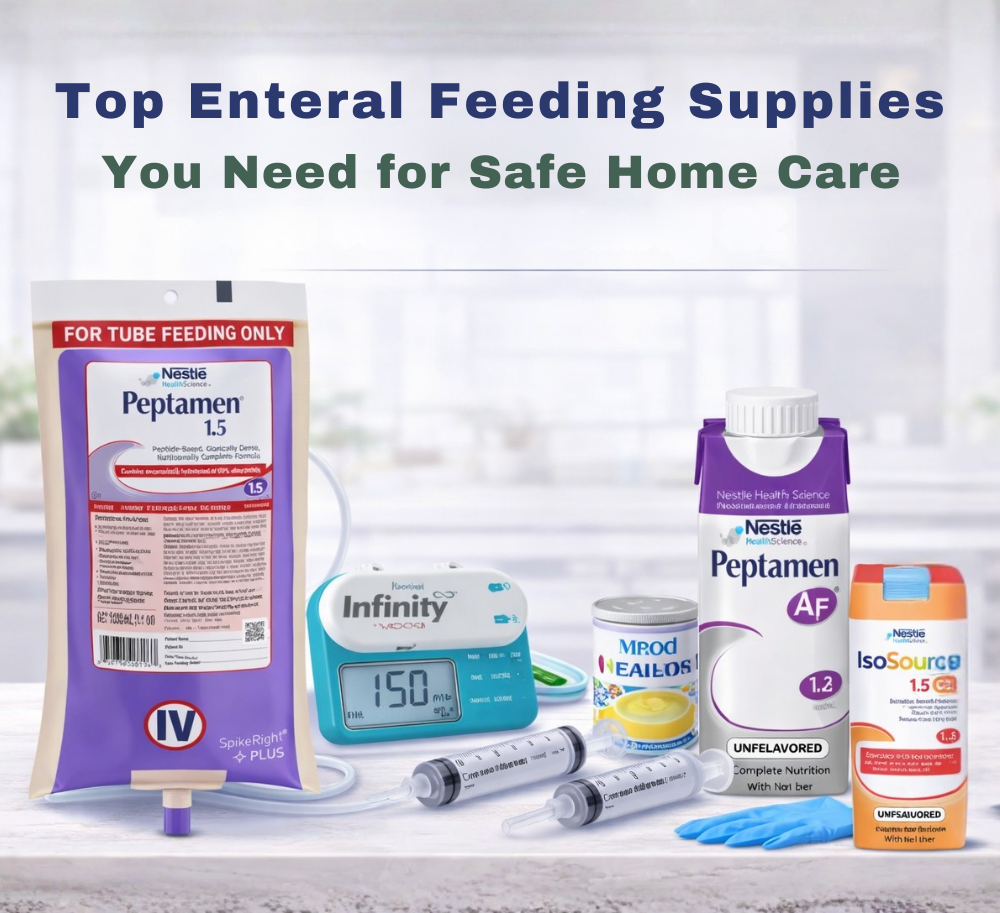
A feeding pump is a device that controls how quickly nutrition is delivered into the body.
Why is it important:
-
Ensures steady and controlled feeding
-
Reduces the risk of discomfort
-
Helps maintain proper nutrition timing
When it is used:
Feeding pumps are commonly used for patients who need continuous or precise feeding.
Feeding Bags
Feeding bags are used to hold the liquid nutrition before it enters the tube.
They may seem simple, but they play a key role in maintaining hygiene and smooth feeding.
Key points:
-
Available in different sizes
-
Designed for single use or limited reuse
-
Easy to connect with feeding systems
A clean feeding bag helps reduce the risk of contamination.
Tip:
Always check the bag for cleanliness and replace it regularly to maintain hygiene.
Feeding Tube
The feeding tube is the most important part of the system. It delivers nutrition directly into the body.
Since it is directly connected to the body, proper care is very important.
Types of tubes:
-
Short-term tubes
-
Long-term tubes
Care tips:
-
Keep the tube clean
-
Avoid bending or twisting
-
Checking for any discomfort or irritation
Regular care helps prevent blockages and infections.
Enteral Feeding Products (Nutrition Formulas)
The formula is what provides the actual nutrition, so selecting the right one is essential.
Different people need different types of nutrition depending on their condition.
Types of formulas:
-
Standard nutrition for daily support
-
High-calorie feeding tube formula for recovery or weight gain
-
Specialized formulas for digestion issues and medical conditions
Important note:
For adults or children, the right feeding tube formula depends on their health condition and nutritional needs. It’s always best to follow medical advice before making a choice.
High-Calorie Options for Extra Support
In some cases, patients need more energy in smaller amounts.
This is where high-calorie formulas are useful.
They are commonly used when:
-
A patient is recovering from illness or surgery
-
There is weight loss or weakness
-
The body needs additional support
These formulas help deliver more nutrition without increasing feeding volume too much.
Accessories That Make Feeding Easier
Along with the main equipment, smaller tools are also important.
These include:
-
Syringes for flushing and medication
-
Connectors to attach different parts
-
Extension sets for flexibility
These items help ensure that feeding is smooth and hygienic.
Daily Care and Cleaning Essentials
Maintaining cleanliness is one of the most important parts of tube feeding.
Basic daily care includes:
-
Washing hands before handling equipment
-
Cleaning all reusable parts properly
-
Storing items in a clean environment
Good hygiene helps prevent infections and keeps the system working properly.
Things to Consider When Choosing Supplies
Not every product works the same for every patient.
Before selecting supplies, consider:
-
The patient’s condition
-
Ease of use at home
-
Compatibility with existing equipment
-
Comfort during feeding
Choosing the right combination makes daily care much easier.
Simple Tips for Safe Home Feeding
Here are a few practical tips that can make a big difference:
-
Keep everything clean and organized
-
Follow a regular feeding schedule
-
Monitor the patient during feeding
-
Replace items when needed
-
Stay alert for any unusual signs
These habits help ensure a smooth and safe experience.
Common Mistakes to Avoid
Even with the right setup, some common mistakes can cause issues.
Avoid:
-
Skipping flushing of the tube
-
Using expired or damaged items
-
Ignoring early signs of discomfort
-
Improper storage of nutrition
Being aware of these mistakes can help prevent complications.
Conclusion
Managing tube feeding at home becomes much easier once you understand the purpose of each item and how to use it correctly. From the pump and feeding bag to the formula and accessories, every part plays an important role in delivering safe and effective nutrition.
By maintaining hygiene, choosing the right products, and following simple care practices, you can create a comfortable and reliable routine for the patient.
For those looking for dependable options, a wide range of feeding equipment, nutrition formulas, Enteral Feeding Kits and Accessories is available at All Care Store, helping make home care more manageable and efficient.
FAQ
What supplies are needed for home tube feeding?
Basic supplies include a feeding pump, feeding bag, feeding tube, nutrition formula, and accessories like syringes and connectors. These items work together to ensure safe and smooth nutrition delivery.
How do I choose the right formula for my baby?
The right formula depends on the patient’s age, medical condition, and nutritional needs. It is always best to consult a healthcare professional before selecting a formula.
Can tube feeding be managed safely at home?
Yes, with proper training, hygiene, and the right supplies, tube feeding can be safely managed at home. Following instructions carefully is important for patient safety.
How often should feeding supplies be replaced?
Replacement depends on the type of item. Some items are single-use, while others can be reused for a limited time. Always follow the manufacturer’s guidelines.
What are high-calorie feeding formulas used for?
High-calorie formulas are used when patients need extra energy, such as during recovery, weight loss, or increased nutritional requirements.
What should I monitor during feeding?
You should observe the patient for any discomfort, leakage, or unusual reactions. Keeping the patient in a proper position during feeding is also important.
Are tube feeding supplies easy to use for beginners?
With proper guidance and practice, most caregivers find tube feeding supplies easy to use. Training from a healthcare provider can make the process much simpler.
Where can I buy reliable feeding supplies?
You can find a wide range of feeding pumps, bags, formulas, and accessories from trusted suppliers like All Care Store for safe and convenient home care.