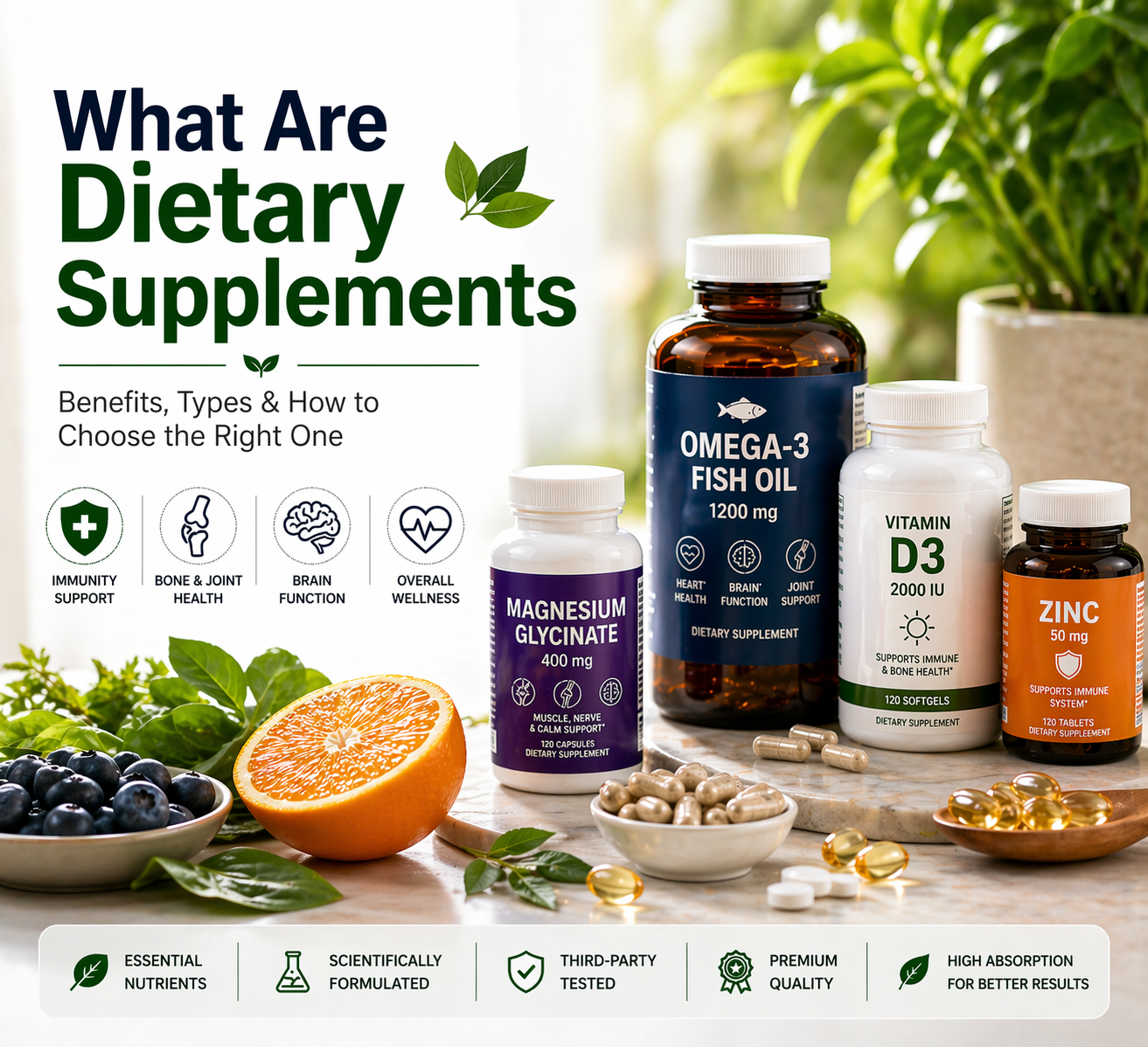
What Are Dietary Supplements?
Dietary supplements are concentrated sources of nutrients — including vitamins, minerals, herbs, amino acids, and enzymes — taken in addition to your regular diet to support overall health. They are available in various forms such as tablets, capsules, powders, liquids, and gummies. While they are not intended to replace a balanced diet, dietary supplements help fill nutritional gaps and support specific health goals.
Dietary supplements include vitamins, minerals, botanicals, amino acids, and enzymes. They are used to complement your diet, correct deficiencies, and support health — but should always be taken based on personal needs and medical guidance.
Why Are Dietary Supplements Important in 2026?
Modern lifestyles, processed food diets, and increased nutrient depletion in soil have made nutritional supplements more relevant than ever. According to recent health data, over 75% of adults in the US have some form of nutritional deficiency — most commonly Vitamin D, Magnesium, Iron, and B12.
Whether you are an elderly adult, a caregiver managing a patient's nutrition, a new mother, or simply someone trying to stay healthy — understanding supplement benefits and how to use them correctly can make a real difference in your quality of life.
Key Benefits of Dietary Supplements
The benefits of dietary supplements are backed by decades of research. Here are the most important ones:
1. Filling Nutritional Gaps
Even with a healthy diet, it is difficult to get 100% of every essential nutrient daily. Dietary supplements bridge that gap, especially for people with restricted diets (vegetarian, vegan, lactose intolerant).
2. Supporting Immune Health
Vitamins C, D, and Zinc are among the most researched supplements for supplement benefits related to immune function. Regular use during cold and flu season may reduce severity and duration of illness.
3. Bone and Joint Health
Calcium, Vitamin D3, and Magnesium together form the cornerstone of bone health. This is especially critical for elderly adults and post-menopausal women at risk of osteoporosis.
4. Energy and Brain Function
B-complex vitamins, Iron, and Omega-3 fatty acids are known for supporting cognitive performance, reducing mental fatigue, and improving focus. These are among the best supplements for people with demanding lifestyles.
5. Managing Vitamin Deficiency Signs
Common vitamin deficiency signs include fatigue, hair loss, brittle nails, poor concentration, and frequent illness. Dietary supplements help reverse these symptoms when the root cause is nutritional.
6. Supporting Specific Health Conditions
Targeted supplements — like Biotin 10000 mcg for hair growth, Prostate-support formulas for men, Iron for anemia, or Prenatal vitamins for pregnant women — address condition-specific needs precisely.
Do Supplements Really Work?
This is one of the most searched questions in 2026: do supplements really work?
The honest answer: Yes — when used correctly, for the right deficiency, in the right form.
Here is what the science says:
-
Vitamin D has over 1,000 studies confirming its role in bone health, immune function, and mood regulation.
-
Magnesium Glycinate is clinically proven to reduce anxiety and improve sleep quality.
-
Iron supplements for anemia have a well-established track record in treating iron-deficiency anemia.
-
Omega-3 (Fish Oil) is one of the most studied supplements, with strong evidence for heart and brain health.
Where supplements do not work is when they are taken without a known deficiency, in poor-quality forms (like Magnesium Oxide, which has low absorption), or in place of real food nutrition.
Pro tip: Always get a blood test first. Knowing your actual deficiency levels ensures you take what your body actually needs.
Types of Dietary Supplements: A Complete Overview
Understanding the types of nutritional supplements helps you make smarter choices:
|
Type |
Examples |
Common Use |
|
Vitamins |
Vitamin A, B12, C, D3, K2 |
Immunity, energy, vision, bone health |
|
Minerals |
Iron, Calcium, Magnesium, Zinc |
Bone density, anemia, muscle function |
|
Herbal/Botanical |
Turmeric, Ashwagandha, Ginkgo Biloba |
Stress, inflammation, cognition |
|
Amino Acids |
L-Glutamine, L-Carnitine |
Muscle recovery, metabolism |
|
Specialty |
Probiotics, Omega-3, Coenzyme Q10 |
Gut health, heart, cellular energy |
|
Protein |
Whey, Collagen, Plant Protein |
Muscle repair, skin health, satiety |
How to Choose Supplements: A 2026 Buyer's Guide
Knowing how to choose supplements correctly is the most important skill for anyone looking to buy supplements online. Here is a simple, step-by-step framework:
Step 1 — Identify Your Need
Start with a blood test or consult your doctor. Common deficiencies to check: Vitamin D, B12, Iron, Magnesium, and Folate.
Step 2 — Check the Form (Bioavailability Matters)
Not all forms are equal:
-
Magnesium Glycinate > Magnesium Oxide (better absorbed)
-
Vitamin D D3 > D2 (more effective)
-
Folate as Methylfolate > Folic Acid (especially for MTHFR gene variants)
Step 3 — Verify Third-Party Testing
Look for seals like USP Verified, NSF Certified, or Informed Sport. These confirm the supplement contains what the label says — no more, no less.
Step 4 — Check Dosage Against RDA
Do not assume "more is better." Excess fat-soluble vitamins (A, D, E, K) accumulate in the body and can cause toxicity. Stick to recommended daily allowances unless medically advised.
Step 5 — Consider Your Age and Health Status
-
Seniors: prioritize Vitamin D, B12, Calcium, Magnesium
-
Pregnant women: Prenatal Folate, Iron, DHA
-
Men over 50: Prostate support, Zinc, Vitamin E
-
Children: Multivitamins with age-appropriate dosing (gummy or liquid forms)
Step 6 — Buy From Trusted Sources
When you buy supplements online, choose retailers with clear product descriptions, dosage information, and return policies. AllCareStore's vitamins and supplements collection carries clinically trusted brands including Natrol, Nature's Answer, Geri-Care, and SmartyPants.
Vitamin Deficiency Signs You Should Never Ignore
Early detection is key. Watch for these vitamin deficiency signs:
-
Bone pain or muscle cramps → Low Vitamin D or Magnesium
-
Constant fatigue → Low Iron, B12, or Vitamin D
-
Hair thinning or hair loss → Low Biotin, Iron, or Zinc
-
Brain fog or poor concentration → Low B12, Omega-3, or Iron
-
Getting sick frequently → Low Vitamin C, D, or Zinc
-
Night blindness → Low Vitamin A
-
Bleeding gums → Low liquid Vitamin C
If you notice 2 or more of these signs, consult a healthcare provider and consider getting a comprehensive nutritional panel done.
Who Should Consider Taking Dietary Supplements?
Not everyone needs supplements, but certain groups benefit significantly from dietary supplements:
-
Elderly adults (60+): Absorption of B12, D, and Calcium decreases with age
-
Vegetarians and vegans: Commonly deficient in B12, Iron, Omega-3, and Zinc
-
Pregnant and breastfeeding women: Need Folate, Iron, Iodine, DHA
-
People with chronic conditions: Diabetes, IBS, Celiac — all affect nutrient absorption
-
Athletes and active individuals: Need higher protein, electrolytes, and antioxidants
-
Caregivers and patients at home: Especially relevant for those managing tube feeding or post-surgical recovery
Supplements vs. Whole Food: What's the Difference?
Dietary supplements are not food replacements — they are additions. Whole foods contain a complex matrix of nutrients, fiber, antioxidants, and phytochemicals that no pill can fully replicate.
Think of it this way: an orange gives you Vitamin C plus flavonoids, fiber, and enzymes that work synergistically. A liquid Vitamin C tablet gives you the ascorbic acid — beneficial for deficiency, but not a whole-food experience.
The best approach: Eat a nutrient-rich diet first, and use nutritional supplements to fill the specific gaps your diet cannot.
Final Thoughts: Making the Right Supplement Choice in 2026
Understanding what are dietary supplements is the first step toward making informed health decisions. The supplement market in 2026 is more sophisticated than ever — with better bioavailable forms, cleaner ingredients, and more personalized options.
The key principles to remember:
-
Test before you supplement
-
Choose quality-verified brands
-
Match the form to your biology
-
Use supplements to complement, not replace, a healthy diet
-
Buy from trusted retailers with clear product information
Explore our full collection of vitamins and supplements to find the right support for your health journey.