
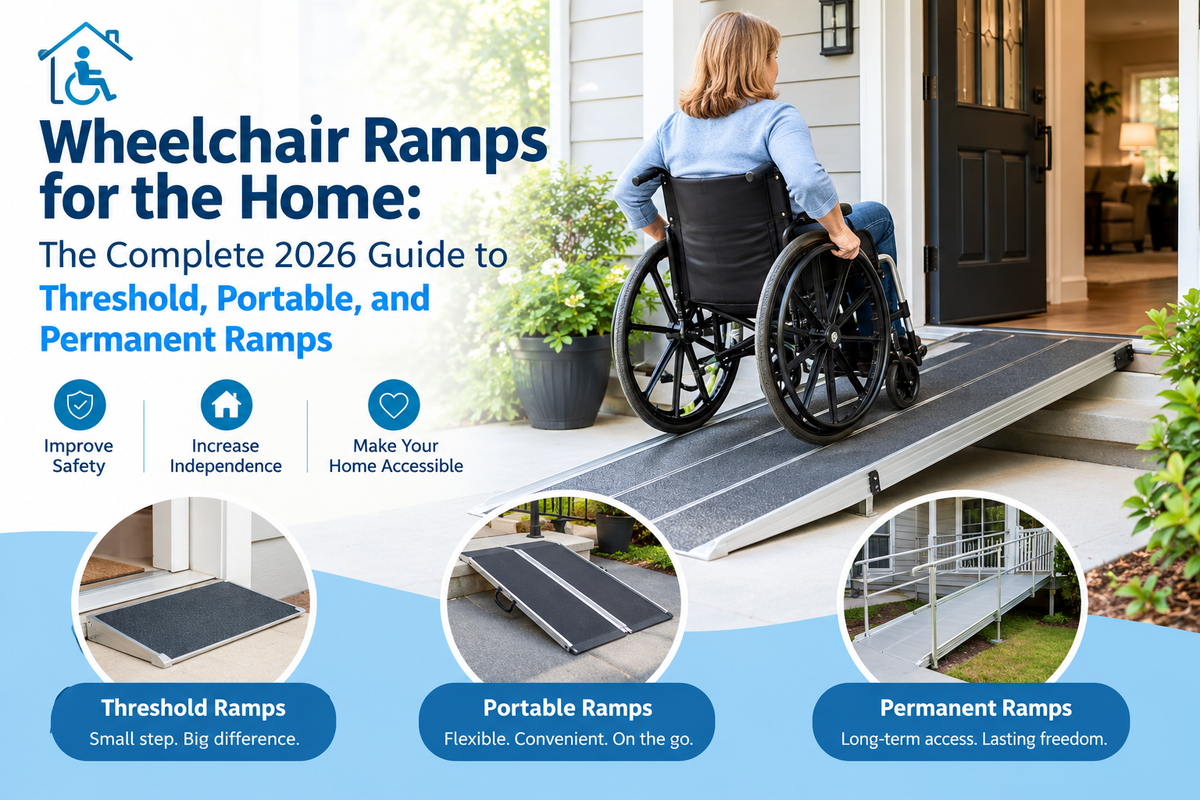
The Three Steps That Became a Wall
Ray is 74, a retired postal carrier, and for forty years he walked ten miles a day without thinking about it. Then a stroke took most of the strength on his left side, and a wheelchair came home with him from rehab. His wife, Delia, had prepared for a lot of things — the grab bars, the shower chair, the rearranged bedroom. What neither of them had thought about was the front door.
Between their living room and the driveway sat three concrete steps. Twenty-one inches, total. For most of their lives, those steps were nothing. Now they were a wall. Ray could get to the door, and there he stopped. Getting to a doctor’s appointment meant Delia and their son each taking a side of the chair and bumping it down one step at a time, both of them terrified the whole way. After the second near-miss, Ray simply stopped asking to go out. He spent six weeks inside a house he could no longer leave on his own terms.
The thing that ended it was not dramatic. It was a folding aluminum ramp, delivered in a box, unfolded across those three steps in an afternoon. The first time Ray rolled himself down it and out to the mailbox without anyone holding the chair, he cried a little, and so did Delia. Not because a ramp is a miracle — it is a sloped piece of metal — but because it gave him back the one thing the steps had taken: the ability to leave.
That is what this guide is about. Not just the specifications, though those matter enormously, but the difference between a home that traps someone and a home they can move through freely.
What a Wheelchair Ramp Actually Does
A wheelchair ramp replaces a step, a curb, or a threshold with a gentle slope that a wheelchair, mobility scooter, rollator, or walker can travel safely. It sounds simple, and the good ones are — but the single most important fact about ramps is that the slope has to be gentle enough to be safe, and that requirement drives almost every other decision you will make.
Ramps solve problems at three common places in a home: the doorway threshold (that raised strip under the door, usually half an inch to two inches), the entry steps (one to four steps up to a porch, deck, or landing), and the vehicle (getting a chair or scooter into a van or over a curb). Different heights and different places call for genuinely different ramps, which is why there is no single best wheelchair ramp — only the right one for your rise, your space, and your device.
The One Rule That Governs Everything: The 1:12 Slope
Here is the rule that matters more than any product: for a wheelchair user to go up and down safely and independently, the recommended slope is 1:12. That means every 1 inch of vertical rise needs 12 inches (1 foot) of ramp length. It is the accessibility standard used for public buildings under the ADA, and it is the target you should aim for at home whenever you can.
Why so gentle? Because a steeper ramp is harder to push up, and — more dangerously — faster and harder to control coming down. A slope that a strong helper can manage can be genuinely unsafe for someone self-propelling a manual chair, and a heavy power chair or scooter on too steep a ramp can tip or run away.
Steeper slopes are sometimes used, but only with clear trade-offs:
- 1:12 (about 4.8 degrees) — the gold standard. Safe for independent, unassisted use. Aim for this.
- 2:12 (about 9.5 degrees) — steeper; acceptable for many portable situations only when a capable helper is present to assist, and generally not for unassisted manual-chair users.
- 3:12 (about 14 degrees) — steep; used only for very short rises with strong assistance, never for independent use.
When in doubt, go longer and gentler. The most common mistake people make is buying a ramp that is too short for the height they need to climb, because a shorter ramp is cheaper and easier to store. It is also the mistake most likely to cause a fall.
How to Measure and Choose the Right Length
Choosing a ramp is mostly arithmetic. Do this before you buy anything:
- Measure the total rise. Put a level out from the top surface (the porch, landing, or door sill) and measure straight down to the lower ground level. That vertical number — not the length of the stairs — is your rise.
- Multiply by 12 for independent use. A 12-inch rise needs roughly a 12-foot ramp at 1:12. A 6-inch rise needs about 6 feet.
- Check the space. Make sure the ramp run — plus a flat, level landing at the top and bottom — actually fits. For long rises, a straight ramp may not fit, and you will need a modular ramp that turns with switchbacks and platforms.
Here is a quick reference for common heights:
| Total rise | Ramp length at 1:12 (independent) | Typical situation |
|---|---|---|
| Up to 2 in | Threshold ramp / entry mat | Door sill or single small lip |
| 4 in | 4 ft | One step |
| 8 in | 8 ft | One tall step or low porch |
| 12 in | 12 ft | Two steps |
| 21–24 in | 21–24 ft (often modular with a turn) | Three steps to a porch |
| 30 in+ | 30 ft+ (modular system) | Full flight or raised deck |
The Five Types of Wheelchair Ramps
1. Threshold Ramps
Small, wedge-shaped ramps that bridge a single raised threshold or doorway sill — the half-inch to two-inch lips that stop a wheelchair at a door, a sliding-glass track, or a garage entry. They are the least expensive ramp you can buy and often the highest-value, because a single un-ramped threshold can make a room unreachable. The Aluminium Threshold Ramp (Modular Entry) starts around 145 dollars and comes in several heights, and the EZ-Access Transitions Angled Entry Mat gives a smooth, slip-resistant bridge over a low doorway.

Best for: doorways, sliding doors, garage sills, single small lips.
Watch out for: they only solve very small heights — anything over about two inches needs a longer ramp.
2. Portable Folding (Suitcase) Ramps
These fold in the middle like a briefcase, or tri-fold, with a carry handle — light enough to move, store in a closet, or throw in a trunk. They are the workhorse of home use for one to a few steps, and the right answer for renters and anyone who needs a ramp today. The EZ-Access Suitcase Signature Series Ramp (from about 255 dollars) and the Suitcase Advantage Series Single-Fold Ramp (from about 307 dollars) come in lengths from 2 to 8 feet, and the Suitcase Trifold Ramp folds into a more compact width for longer runs.
Best for: one to a few steps, renters, travel, situations that change.
Watch out for: weight and length — a longer folding ramp gets heavy, so check that whoever sets it up can lift it. Match the length to a true 1:12 slope, not to what fits in the trunk.
3. Track and Channel Ramps
Two separate lightweight channels that line up with the wheels, plus a telescoping version that extends and retracts. They are the lightest and most compact option for getting a chair or scooter over a couple of steps or into a van, but they require careful lining-up and are best used with a helper.
Best for: maximum portability, vehicle loading, occasional use with assistance.
Watch out for: they do not support a walking person well and demand accurate positioning.
4. Modular and Semi-Permanent Ramps
Bolt-together aluminum systems with platforms, turns, and handrails that can be configured to almost any height and layout, then unbolted and reconfigured or removed later. This is the right category for longer rises, switchbacks around a porch, and situations where a straight ramp simply will not fit. Because they include handrails and level rest platforms, they behave much like a permanent ramp while staying removable. Browse the wheelchair ramps collection and the mobility accessories and parts collection for modular components, and the Top Lip Extension for bridging higher vehicle or landing edges.
Best for: long rises, porches and decks, longer-term needs, rental homes where a permanent ramp is not allowed.
Watch out for: more planning, and often a level top and bottom landing requirement.
5. Permanent Ramps (Aluminum, Wood, or Concrete)
Built to stay. Aluminum permanent ramps arrive pre-engineered and install quickly; wood ramps are lower-cost and blend with a home but need upkeep; concrete is the most durable and the most expensive. For long-term needs and higher rises, a permanent ramp with proper handrails is often the safest and most comfortable choice — and may require a building permit. The heavy-duty Gateway 3G Portable Ramp with Two-Line Handrails and the Gateway 3G Solid-Surface Aluminum Ramp bridge the gap between portable and permanent, with a solid one-piece surface and integrated handrails.
Materials: Aluminum vs. Wood vs. Steel
| Material | Strengths | Trade-offs |
|---|---|---|
| Aluminum | Lightweight, rust-proof, no maintenance, slip-resistant surface, portable or modular | Higher upfront cost than wood; can be noisy underfoot |
| Wood | Lower cost, blends with a house, easy for a contractor to build | Gets slippery when wet, needs sealing and upkeep, not portable |
| Steel | Very strong, high weight capacity | Heavy, can rust without coating, usually for commercial or fixed use |
| Concrete | Most durable, permanent, excellent traction when finished | Most expensive, not removable, requires construction and permits |
For most homes, aluminum is the practical winner: it never rusts, needs no maintenance, has a built-in non-slip surface, and comes in portable, modular, and permanent forms.
Ramps for Vehicles and Travel
Getting a wheelchair or mobility scooter into a minivan or SUV is its own problem. Folding suitcase ramps and telescoping track ramps both handle vehicle loading; the key is choosing a length that keeps the slope manageable given how high the vehicle floor sits, and a weight rating that covers the device plus the person if they ride up. If you are also shopping for the chair or scooter itself, see the wheelchairs collection and the mobility scooters collection, and match the ramp width and capacity to the device.
What Ramps Cost — and Whether Insurance Helps
| Type | Typical 2026 cost | Best when |
|---|---|---|
| Threshold ramp / entry mat | 50–260 dollars | Doorways and small lips |
| Portable folding ramp | 150–1,100 dollars (by length) | One to a few steps, renters, travel |
| Modular aluminum system | 1,000–5,000 dollars+ | Long rises, porches, removable long-term |
| Permanent wood or concrete | 1,500–8,000 dollars+ | Long-term, higher rises, built to stay |
On insurance: Medicare Part B generally does not pay for home wheelchair ramps, because it treats them as home modifications rather than covered durable medical equipment. That said, other routes sometimes help — some Medicaid Home and Community-Based Services (HCBS) waivers cover ramps, the VA has grant programs for eligible veterans, and many Area Agencies on Aging, nonprofits, and local programs offer ramp assistance or loaner ramps. Ramps are also usually an eligible expense under an HSA or FSA when recommended for a medical need. Rules vary by plan and program, so call your plan and your local Area Agency on Aging before you assume you are on your own, and keep receipts and any physician recommendation.
Installation and Safety Checklist
- Confirm the slope first. Re-check that the length gives you 1:12 for independent use before anything else.
- Provide level landings. There should be a flat, stable area at the top and bottom so a chair can pause and turn safely — never let a ramp dump straight into a slope or a step.
- Secure both ends. The top lip must sit flush and stable against the landing; the bottom must meet the ground without a gap or a jolt.
- Add handrails on longer ramps. Any meaningful rise benefits from handrails on both sides for the person and for a helper.
- Check the surface and width. Use a slip-resistant surface and confirm the ramp is wider than the device, with a raised edge or curb to keep wheels from running off the side.
- Mind the weight rating. Add up the device plus the heaviest user and stay well under the ramp capacity, especially for power chairs and scooters.
- Check permits for permanent ramps. Many municipalities require a permit and an inspection for a fixed exterior ramp.
- Light the path. A ramp used after dark needs lighting, and a medical alert system is worth considering for anyone going in and out alone.
Choosing the Right Ramp: A Quick Decision Guide
If you are bridging a doorway or a single small lip, buy a threshold ramp and be done. If you have one to a few steps and need flexibility (renting, travel, a changing situation), a portable folding ramp sized to a true 1:12 slope is almost always the answer. If you face a tall rise, a porch, or a layout a straight ramp will not fit, move to a modular aluminum system with turns and handrails. And if the need is long-term and the budget allows, a permanent aluminum or concrete ramp is the most comfortable and durable choice. When two options are close, pick the longer, gentler, wider one.
Maintenance: A Few Minutes Now and Then
- Keep the surface clear of leaves, ice, and debris — small wheels stop hard on what a shoe steps over. Non-slip surfaces still need snow and ice removed.
- Check the fasteners on modular and folding ramps periodically; vibration and use loosen bolts and hinges.
- Inspect the lips and transitions for a flush fit after any bump or repositioning.
- Reseal wood ramps on schedule and watch for soft or splintering boards.
- Wipe aluminum ramps occasionally so grit does not build up in the traction surface.
Why Shop Wheelchair Ramps at AllCare Store
AllCare Store carries threshold ramps, portable folding ramps, track ramps, and modular systems — along with the wheelchairs, scooters, walkers, and accessories that go with them, and the small parts like top-lip extensions that make an existing ramp work in a new spot. Everything ships free within the U.S. with 30-day returns. If you are not sure which ramp fits your rise and your entryway, the fastest route is a phone call: our team measures these problems every day and can tell you in a few minutes whether a threshold ramp, a folding ramp, or a modular system is right for your steps.
Start with the wheelchair ramps collection, the mobility accessories and parts collection, the wheelchairs collection, or the walkers and rollators collection.
Frequently Asked Questions
What slope should a home wheelchair ramp be?
Aim for 1:12 — one foot of ramp for every inch of rise — for safe, independent use. Steeper slopes like 2:12 should only be used with a capable helper, and never for someone self-propelling a manual chair.
How long a ramp do I need for two steps?
Measure the total rise, not the number of steps. Two steps are often about 12 inches, which needs roughly a 12-foot ramp at 1:12. Always measure the actual height before buying.
Do I need a permit for a wheelchair ramp?
Portable ramps generally do not require a permit. Permanent exterior ramps often do, and may need an inspection. Check with your local building department before building a fixed ramp.
Does Medicare pay for a wheelchair ramp?
Generally no — Medicare treats ramps as home modifications rather than covered equipment. Some Medicaid waivers, VA programs, Area Agencies on Aging, and nonprofits help, and ramps are usually HSA/FSA eligible. Confirm with your plan before buying.
Are aluminum or wood ramps better?
Aluminum is lighter, rust-proof, maintenance-free, and available in portable and modular forms, making it the practical choice for most homes. Wood costs less and blends with a house but gets slippery when wet and needs upkeep.
Can a wheelchair ramp be too steep?
Yes, and it is the most common and most dangerous mistake. A ramp that is too short for the height is steep, hard to push up, and difficult to control coming down. When in doubt, choose a longer ramp.
What is a threshold ramp?
A small wedge ramp that bridges a raised doorway sill or a single low lip — usually half an inch to two inches. It is the cheapest ramp and often the one that reopens a room that was blocked by a single threshold.
Can I use a ramp for a mobility scooter?
Yes, but scooters and power chairs are heavier and longer, so choose a ramp with enough width, a suitable weight rating, and a gentle slope. Track ramps and solid-surface folding ramps both work for scooters.
How much weight can a wheelchair ramp hold?
Capacity varies by model, commonly from around 600 to 800 pounds or more. Add the device and the heaviest user together and choose a ramp rated well above that total, especially for power equipment.
Can I install a ramp myself?
Threshold and portable ramps are typically ready to use out of the box. Modular systems bolt together and are DIY-friendly with planning. Permanent wood or concrete ramps usually call for a contractor and, often, a permit.
The Takeaway: The Right Ramp Reopens the Door
A ramp does not heal anything and it is not complicated — it is a sloped surface. But between a home someone can leave and a home that traps them, that sloped surface is everything. Measure the rise, respect the 1:12 rule, buy the longer and gentler option when you are unsure, and secure both ends. Get those four things right and the front door stops being a wall.
Ready to Reopen Your Front Door? We Can Help.
AllCare Store stocks threshold, portable, track, and modular wheelchair ramps, plus the wheelchairs, scooters, and accessories that go with them. Explore the wheelchair ramps collection and the mobility accessories and parts collection to get started.
Call 1-888-889-6260 to speak with a specialist about which ramp fits your rise, your entryway, and your device, or visit AllCareStore.com to browse the full range. Free U.S. shipping and 30-day returns on every order.
This guide was written and reviewed by the AllCare Store editorial team. For a ramp that must carry someone safely every day, confirm the slope and installation with a licensed contractor or a physical or occupational therapist.
SAFETY DISCLAIMER: This guide is for general information and is not a substitute for a professional home-accessibility assessment. The right ramp for your home depends on the exact height you need to climb, the space available, the weight of the person and their mobility device, and local building and permit rules, which vary by city and state. Before buying or installing a ramp — especially a permanent one — have the rise measured accurately, confirm any permit requirements with your local building department, and ask a physical or occupational therapist to confirm the slope is safe for the specific user. An incorrectly sloped or poorly secured ramp is a fall hazard.



