Medical Disclaimer: This article is for educational purposes only and does not constitute medical advice. Compression gloves are a supportive aid, not a medical treatment. Consult a rheumatologist, hand therapist, or physician before use, especially if you have severe joint deformity, open wounds, circulatory conditions, or are unsure of your diagnosis.
Why Hands Are So Vulnerable to Arthritis
Helen, a 68-year-old former pianist, noticed the stiffness first in her knuckles — mornings when her fingers felt swollen and reluctant to move, making opening a jar or buttoning a coat a twenty-minute project. Her rheumatologist confirmed early rheumatoid arthritis and, alongside her prescribed medication, recommended compression gloves for symptomatic relief during flare-ups and morning stiffness. Within a month of wearing them overnight and for the first few hours of her day, Helen found her morning stiffness reduced noticeably and was able to resume modified piano playing. "They can't stop the disease," she said, "but they take the edge off enough to let me function."
The hands and wrists are among the joints most commonly affected by both rheumatoid arthritis (RA) and osteoarthritis (OA), for good reason: they contain 54 bones, numerous small joints, and elaborate networks of tendons and ligaments — all subject to daily mechanical stress and, in autoimmune conditions like RA, immune-mediated inflammation. The knuckles (MCP and PIP joints), wrists, and base of the thumb (CMC joint) are particularly vulnerable.
Arthritis compression gloves have become one of the most widely used non-pharmacological tools for hand arthritis. They're inexpensive, drug-free, and for many people genuinely helpful — though understanding how and why they work is essential to using them correctly.
How Compression Gloves Work
Compression gloves apply gentle, graduated pressure to the hand and fingers. This compression provides several overlapping benefits:
Edema Reduction: In rheumatoid arthritis, inflamed joints produce excess synovial fluid, causing visible swelling (edema) in the fingers and knuckles. Gentle compression helps move this fluid out of the tissue and back into circulation, reducing swelling and the stiffness that accompanies it. This is similar to how compression stockings reduce ankle edema.
Warmth and Circulation: Compression gloves retain body heat around the joints. Warmth improves blood flow to the joint capsule and surrounding soft tissues, which can reduce the viscosity of synovial fluid (making joints feel less stiff) and ease muscle tension in the hand.
Proprioceptive Feedback: The gentle constant pressure from compression provides sensory feedback to the nervous system about joint position. This "proprioceptive input" may reduce the perception of pain through mechanisms similar to how rubbing a sore area temporarily reduces pain signals — the same gate-control theory that underlies TENS therapy.
Joint Support: Firmer compression gloves or those with reinforced joint areas provide light structural support to unstable or hypermobile joints, reducing excess range of motion that can cause pain during use.
Types of Arthritis Compression Gloves
Open-Finger (Fingerless) Compression Gloves
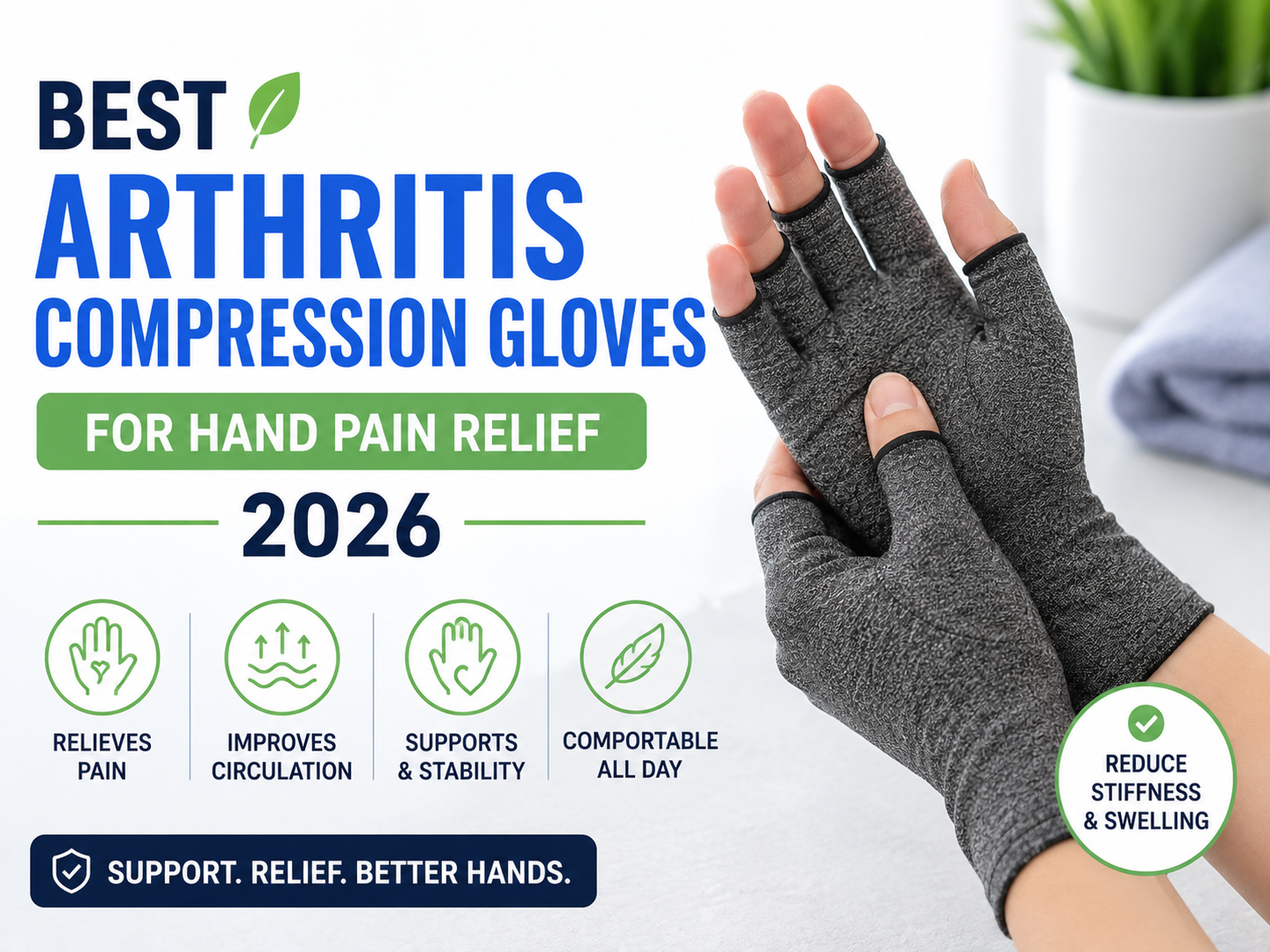
The most popular design for daytime use. These cover the palm and knuckles while leaving the fingertips exposed, allowing full tactile sensation and normal dexterity. You can type, handle objects, and manage daily tasks while wearing them. The compression focuses on the MCP knuckle joints — the most commonly affected in RA — and the wrist.
Open-finger gloves are the practical choice for most people during waking hours. They're discreet enough to wear in public, and the exposed fingertips reduce the frustration that comes from trying to use a touchscreen or pick up small objects through full coverage.
Full-Finger Compression Gloves
Full-finger gloves cover all fingers to the tips and provide the most comprehensive compression, including the PIP (middle) and DIP (end) joints of the fingers. These are particularly useful if your arthritis predominantly affects the finger joints rather than the knuckles, and they're the better choice for overnight use when dexterity is not needed.
The trade-off is reduced tactile sensitivity and dexterity. Most people find full-finger gloves practical for sleeping and resting periods but cumbersome for active tasks.
Copper-Infused Compression Gloves
Copper-infused fabric is a popular feature in arthritis gloves marketed for its purported anti-inflammatory and antimicrobial properties. The clinical evidence for copper ions specifically providing additional arthritis relief beyond the compression effect is limited — most well-controlled studies have not found copper infusion to add measurable benefit over standard compression. That said, many users report preferring copper gloves and find them effective; the compression mechanism is real regardless of the copper's contribution. These gloves also tend to have good antimicrobial properties and resist odor, which is a practical benefit for daily wear.
Wrist-Inclusive Compression Gloves
Some compression gloves extend up the wrist and lower forearm, providing additional support for wrist arthritis or carpal tunnel syndrome. If your hand pain is accompanied by wrist pain or morning wrist stiffness, a glove that covers the wrist joint provides more comprehensive benefit. These are particularly useful for people whose arthritis has affected multiple joints across both the hand and wrist.
What to Look for When Choosing Compression Gloves
Compression Level
Arthritis compression gloves are typically mild (8–15 mmHg) to moderate (15–20 mmHg) compression — far lighter than medical-grade compression stockings for venous insufficiency. Mild compression is appropriate for most users as a comfortable daily aid. Avoid gloves that feel so tight they restrict circulation — fingers should not turn white, blue, or feel numb. Remove immediately if you experience increased pain, color changes, or numbness.
Material and Breathability
You'll wear these gloves for hours at a time, so breathable fabric matters. Look for moisture-wicking materials (spandex blends, nylon-spandex, or technical knit fabrics) rather than heavy cotton, which retains moisture and becomes uncomfortable during extended wear. Good ventilation through the fabric structure reduces skin maceration, particularly in the web spaces between fingers.
Sizing and Fit
Compression gloves that are too loose provide no therapeutic compression. Gloves that are too tight restrict circulation. Most brands provide sizing charts based on hand circumference measured at the knuckles. Measure both hands — dominant hands are often slightly larger — and size for the larger hand if there's any difference. Slight snugness when first put on is expected; they should feel comfortable after the first few minutes of wear.
Ease of Donning (Putting On)
This is often overlooked but genuinely important: if your hands hurt from arthritis, pulling on tight gloves can itself be painful and discouraging. Look for designs with smooth inner surfaces, slightly flared wrist edges, and minimal seaming that catches on skin. Some users keep a pair of thin cotton glove liners to help slip compression gloves on more easily. Gloves with a wide wrist opening are notably easier to get on than those with a tight wrist band.
Washability and Durability
Plan on washing your gloves frequently — daily wear accumulates hand cream, sweat, and skin cells. Most compression gloves are machine washable on a gentle cycle and should be air-dried rather than tumble-dried to preserve elasticity. Compression fabric loses its elasticity over time; most arthritis gloves need replacement every 3–6 months with regular use. Check that replacement pairs are readily available in your size.
When to Wear Compression Gloves
Morning Stiffness
Morning stiffness is the hallmark symptom of rheumatoid arthritis — joints that feel swollen, painful, and reluctant to move upon waking. Wearing compression gloves overnight is one of the most evidence-supported uses for arthritis compression gloves. Several small but well-designed trials have found that overnight glove use significantly reduces the duration and severity of morning stiffness in RA patients. Some people sleep in full-finger gloves nightly as a routine part of managing RA symptoms.
During Flare-Ups
During active RA flares, when hands are visibly swollen and painful, compression gloves provide both physical symptom relief (edema reduction, warmth) and the comfort of gentle support. Using them during flares — in combination with prescribed anti-inflammatory medications — is an appropriate complementary approach.
During Activity
For osteoarthritis, where joint pain is typically triggered by use, wearing open-finger compression gloves during activities that stress the hands — typing, cooking, gardening, handwriting — can reduce the pain provoked by repetitive motion. The warmth and proprioceptive feedback reduce discomfort without significantly restricting movement.
What Compression Gloves Cannot Do
It's important to be realistic. Compression gloves do not slow joint damage progression in RA — that requires disease-modifying medications managed by a rheumatologist. They do not cure arthritis or eliminate pain entirely. They provide symptomatic relief, and for many people that relief is meaningful. They work best as part of a comprehensive management plan that includes appropriate medical treatment, hand exercises, and other non-pharmacological strategies.
Hand Exercises to Complement Compression Therapy
Compression gloves work best when combined with a regular hand exercise routine. A hand therapist or occupational therapist can design a specific program; general exercises that benefit most arthritis patients include:
- Finger bends — slowly curl fingers into a fist, hold 3 seconds, open fully; repeat 10 times each hand
- Thumb opposition — touch thumb tip to each fingertip in sequence; improves CMC joint mobility and reduces base-of-thumb pain
- Wrist circles — slow controlled circles to maintain wrist range of motion
- Gentle finger spreading — place hand flat on table, spread fingers as wide as comfortable, hold 5 seconds; improves intrinsic muscle strength
Performing these exercises after removing morning gloves, while hands are warm from overnight wear, maximizes the benefit of both interventions.
AllCare Store: Everyday Comfort for Joints and Beyond
At AllCare Store, we offer a curated selection of pain management, personal care, and mobility products designed to support comfort and independence at every stage of life.
- Free Shipping on every order — no minimums
- Discreet Packaging — plain, unmarked boxes on every shipment
- 30-Day Returns — shop with complete confidence
- Expert Support — reach us at 1-888-889-6260
Explore our Pain Relief collection and Personal Care collection for arthritis support products and more.
Frequently Asked Questions: Arthritis Compression Gloves
Do compression gloves really help arthritis?
For many people with rheumatoid arthritis and osteoarthritis, yes — compression gloves provide meaningful relief from morning stiffness, swelling, and activity-related hand pain. The mechanisms are well understood: compression reduces edema, warmth improves circulation, and constant pressure provides proprioceptive feedback that modulates pain perception. Multiple small trials support overnight use for reducing RA morning stiffness specifically. Results vary by individual; some patients report significant benefit, others modest improvement. They're safe, inexpensive, and non-pharmacological, making them worth trying as part of a comprehensive arthritis management plan.
Should I wear compression gloves at night or during the day?
Both approaches have value depending on your symptoms. Overnight wear (full-finger gloves) is specifically supported by evidence for reducing morning stiffness in rheumatoid arthritis — the compression reduces nocturnal edema accumulation in joints. Daytime wear (typically open-finger gloves) is useful for reducing pain during activities that stress the hands, such as typing, cooking, or handwriting. Many people with RA use gloves overnight during flares and during high-demand daytime activities, while others find consistent all-day wear most beneficial. Start with the timing that matches your worst symptoms.
How tight should arthritis compression gloves be?
Compression gloves should feel snug — like a firm, supportive hug around the hand — but not painfully tight. When properly fitted, you should be able to make a loose fist without the glove cutting into your fingers, and your fingertips should not change color (white, blue, or deep red). A slight tingling when first donned that fades within minutes is normal as circulation adjusts. If numbness, pain, or color changes persist, remove the gloves immediately and size up or try a different brand. When in doubt, consult a hand therapist or occupational therapist for fitting guidance.
What is the difference between arthritis gloves and regular compression gloves?
Arthritis-specific compression gloves are designed with joint-centered compression mapping — more compression over the MCP knuckle joints and wrist, with consideration for the specific swelling patterns of arthritis. Many feature reinforced or padded areas over vulnerable joints and are made from softer, more breathable fabrics suited for all-day wear. General compression gloves (often marketed for sports or carpal tunnel) apply more uniform compression and may not address the joint-specific anatomy of arthritic hands. While either can provide benefit, arthritis-specific designs are usually more comfortable for patients with active joint swelling.
Can I use compression gloves for carpal tunnel syndrome?
Compression gloves that extend over the wrist can provide some symptomatic relief for mild carpal tunnel syndrome, but dedicated wrist splints that immobilize the wrist in a neutral position are the standard first-line conservative treatment. Wrist splints specifically prevent the flexion and extension that compress the median nerve, which compression gloves alone don't fully achieve. Some patients use a compression glove during the day for warmth and circulation support, and a wrist splint at night to prevent nerve compression during sleep. Consult a hand specialist or occupational therapist for guidance if carpal tunnel symptoms are affecting your daily function or sleep.