Medical Disclaimer: This article is for educational purposes only and does not constitute medical or physical therapy advice. Before beginning any new exercise program, especially if you have a history of falls, vertigo, cardiovascular conditions, or musculoskeletal problems, consult your physician or a licensed physical therapist. Some balance conditions require professional evaluation and treatment beyond home exercise.
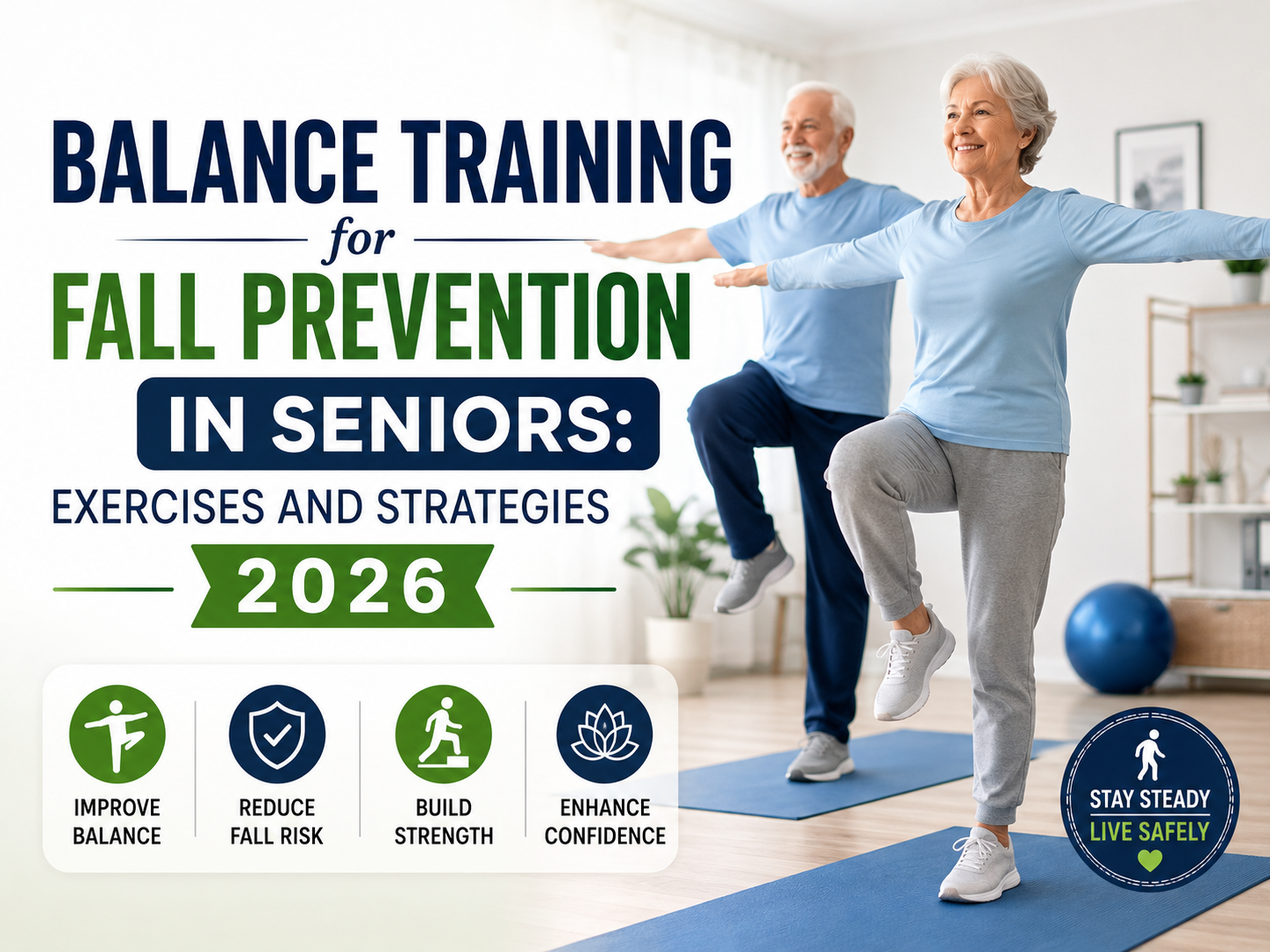
Balance Training for Fall Prevention in Seniors: Exercises and Strategies 2026
How Dorothy Got Her Confidence Back After Her Fall
Dorothy had always been active — gardening, walking the neighborhood, visiting grandchildren. But after a fall on the back porch at 74, something changed. She was physically fine — a bruised hip, nothing broken — but she became hesitant. She held the wall when she walked from room to room. She stopped gardening because kneeling and rising felt uncertain. "I lost my nerve," she said later.
Her doctor referred her to a physical therapist, who assessed her balance and found what she described as "nothing that can't be fixed." Over six weeks of targeted balance exercises, Dorothy noticed the hesitation fading. She went back to the garden. She started a local senior fitness class. "I didn't realize I could get it back," she said. "I thought once you started falling, that was just it."
Dorothy's recovery reflects an important and underappreciated truth: balance is not a fixed trait that declines inevitably with age. It is a skill — involving the interaction of vision, the inner ear, and proprioception (the body's sense of its own position) — that responds to training at any age. This guide explains the science, the exercises, and the strategies that make balance training one of the most effective fall-prevention tools available.
Why Balance Declines With Age
Balance depends on the integration of three sensory systems: vision (which helps orient us relative to our surroundings), the vestibular system (the inner ear's detection of head movement and position), and proprioception (nerve sensors in the feet, ankles, and joints that feed information about ground contact and body position to the brain). When all three systems function well and the brain integrates their signals efficiently, maintaining balance is largely automatic.
As we age, all three systems change: visual acuity and contrast sensitivity decline, the vestibular system becomes less sensitive and more prone to benign positional vertigo, and proprioceptive nerves in the feet and legs lose some sensitivity — particularly in people with diabetes, peripheral neuropathy, or a history of ankle injuries. Muscle strength, reaction time, and the speed at which the brain processes and responds to balance disturbances also decline. The cumulative result is that recovering from a trip, stumble, or unexpected surface change becomes harder and slower.
The good news: targeted training can slow and partially reverse many of these changes. Multiple large clinical trials have demonstrated that structured balance and strength training programs reduce fall rates in older adults by 20–35%, with the largest effects in those with the greatest initial impairment.
The Three Pillars of Balance Training
1. Strength Training (Particularly Legs and Core)
Balance is partly a strength problem. Weak legs mean slower correction when you trip; weak hips mean less stability during single-leg stance (which occurs with every step); weak core means less torso control during weight shifts. Resistance exercises targeting the quadriceps, hamstrings, glutes, calves, hip abductors, and core muscles form the foundation of any comprehensive balance program.
2. Balance-Specific Exercises
Challenging the balance system directly — by reducing the base of support, removing visual input, standing on unstable surfaces, or practicing weight shifts — trains the neuromuscular response needed to prevent falls. These exercises force the brain to process and respond to balance challenges in a controlled, safe environment, building the automatic responses that protect against real-world stumbles.
3. Gait and Functional Movement Training
Walking patterns and movement transitions (sitting to standing, bending and rising, stepping over obstacles) are where many falls occur. Practicing these movements with attention to form — and sometimes in challenging conditions like slower speed, narrower base, or tandem walking — directly addresses the real contexts where falls happen.
Evidence-Based Balance Exercises to Start With
The following exercises are recommended by physical therapists and are appropriate for most seniors beginning balance training. Start near a sturdy surface (kitchen counter, solid chair back) for safety, and progress to more challenging versions as confidence and stability improve.
Standing on One Foot (Single-Leg Stance)
How: Stand behind a sturdy chair. Lift one foot a few inches off the floor and hold for 10–30 seconds. Switch feet. Aim for 3 repetitions per side.
Progression: Perform without holding the chair → perform with eyes closed → perform while turning head slowly side to side.
Why it helps: Every step requires a brief single-leg stance phase. Building this capacity directly reduces stumbling and tripping.
Heel-to-Toe (Tandem) Walking
How: Walk in a straight line placing the heel of the front foot directly against the toe of the back foot with each step. Use a wall or countertop for safety. Aim for 20 steps.
Progression: Walk without a support surface nearby → walk backward → walk while slowly turning the head.
Why it helps: Tandem walking narrows the base of support dramatically, challenging the lateral balance systems that prevent sideways falls — the most common fall direction.
Sit-to-Stand
How: From a standard chair height, rise to standing and lower back to seated, using as little hand support as possible. Aim for 10–15 repetitions.
Progression: Perform from a lower surface → perform without using hands at all → perform with arms crossed.
Why it helps: The transition from sitting to standing is one of the highest-risk moments for falls. Strengthening this movement pattern also develops quadriceps and hip strength simultaneously.
Weight Shifting
How: Stand with feet hip-width apart, hands lightly touching a counter. Slowly shift your weight from side to side, lifting the unweighted foot slightly off the floor at the end of each shift. Then shift forward and back. Aim for 10 repetitions in each direction.
Why it helps: Controlled weight shifting trains the ankle and hip strategies the body uses to recover from balance disturbances.
Heel and Toe Raises
How: Stand behind a chair. Rise up onto the balls of your feet (heel raise), hold 2–3 seconds, lower slowly. Then rock back onto your heels (toe raise), lifting your toes, hold 2–3 seconds. Aim for 10–15 repetitions of each.
Why it helps: Calf strength is critical for the ankle strategy used to recover from forward stumbles. Toe raises strengthen the tibialis anterior, which lifts the foot during walking and prevents toe-dragging.
Marching in Place
How: Standing behind a chair, alternate lifting your knees to hip height, marching briskly for 30–60 seconds. Use the chair for support if needed.
Progression: March without holding the chair → add arm swings → march while turning your head.
Why it helps: Marching builds hip flexor strength and practiced single-leg balance simultaneously, while simulating the demands of walking on uneven terrain.
Backward Walking
How: In a clear hallway with walls to touch if needed, walk backward slowly for 10–20 steps. Maintain upright posture.
Why it helps: Backward walking activates hip extensors and challenges the balance system in an unfamiliar direction, improving proprioceptive responsiveness that transfers to forward gait stability.
Balance Training Aids and Equipment
Certain tools can enhance balance training at home by creating safe, progressive challenges:
Balance Boards and Wobble Boards
These angled or domed platforms create an unstable surface for standing exercises, forcing the ankle and hip stabilizers to work harder. Balance boards range from simple tilting platforms to fully adjustable balance trainers. Begin by standing on the board while holding a sturdy support until comfortable, then progress to unsupported standing and eventually dynamic exercises.
Foam Balance Pads
Dense foam pads (typically 3–4 inches thick) provide a softer, less stable surface than a balance board, making them a gentler first step for beginners. Standing on foam reduces the proprioceptive information from the floor, forcing greater reliance on the vestibular system and hip strategies — a targeted and effective training stimulus.
Resistance Bands
Resistance bands are ideal for strengthening the hip abductors, glutes, and ankle stabilizers that support balance. Side-stepping with a band around the ankles, clamshell exercises, and standing hip abduction all target muscles essential for lateral stability. Our Physical Therapy & Recovery collection includes resistance bands in a variety of resistance levels suitable for beginners through advanced users.
Walking Poles
Nordic walking poles (used in pairs, with an active push-off technique) improve gait stability, engage the upper body, and reduce fall risk during outdoor walking — particularly on uneven terrain. They can also serve as training tools for confidence during the early stages of a balance program.
Ankle Weights
Light ankle weights (0.5–2 lbs) added to marching and leg-raise exercises increase the strength training stimulus and are a simple way to progress lower-extremity strengthening at home.
Structured Programs With Strong Evidence
Several structured programs have strong clinical evidence for fall prevention in older adults:
Otago Exercise Programme
A New Zealand-developed home exercise program of leg strengthening and balance exercises, originally delivered by a physical therapist or nurse in the home. The core exercise set is available as a printable handout from many health agencies and has been shown in multiple trials to reduce falls by approximately 35% in adults over 65.
Tai Chi
Tai Chi — a Chinese movement practice involving slow, flowing sequences of postures — is one of the most extensively studied balance interventions in older adults. Meta-analyses of randomized controlled trials consistently show significant reductions in fall rate and fear of falling with regular Tai Chi practice. Most community centers and senior centers offer beginner classes specifically designed for older adults.
Yoga
Chair yoga and gentle yoga programs adapted for seniors improve flexibility, lower-body strength, and balance. They also address the fear of falling — a significant and underappreciated risk factor, as fear leads to inactivity, which leads to further decline.
Matter of Balance
A widely available 8-session group program that addresses both fall prevention strategies and the psychological dimension of fall fear. Many community organizations and senior centers offer it free or at low cost. Contact your local Area Agency on Aging to find a class near you.
Beyond Exercise: Other Fall Prevention Strategies
Balance training is most effective as part of a comprehensive fall prevention approach. Key complementary strategies include:
- Home hazard assessment: Remove throw rugs, secure loose carpet edges, clear walking paths, and ensure adequate lighting throughout the home — especially on stairs and in the bathroom
- Footwear: Wear low-heeled, well-fitting shoes with non-slip soles indoors and out. Avoid walking in socks, slippers without backs, or sandals with poor heel support
- Vision check: Uncorrected vision problems are a significant fall risk factor. Annual eye exams and prompt updating of eyeglass prescriptions are important
- Medication review: Some medications — including sedatives, blood pressure medications, diuretics, and muscle relaxants — increase fall risk. Ask your doctor or pharmacist to review your medications for fall risk at least annually
- Grab bars and handrails: Install grab bars in the shower and beside the toilet; ensure stair handrails are secure and extend the full length of the stairs
Our Fall Prevention collection and Home Safety collection include grab bars, non-slip mats, bathroom safety equipment, and mobility aids to complement your exercise program.
When to Work With a Physical Therapist
While the exercises described here are appropriate for most older adults, a licensed physical therapist provides individualized assessment and prescription that home programs cannot replicate. Consider a PT referral if you have had a fall in the past year, experience dizziness or vertigo, have significant ankle or knee weakness, have been diagnosed with Parkinson's disease, neuropathy, or stroke-related balance impairment, or feel that your balance problems are worsening despite exercise. Medicare Part B covers physical therapy visits when medically necessary — a fall history or documented balance impairment typically qualifies.
AllCare Store: Supporting Active, Independent Living
At AllCare Store, we carry balance training tools, physical therapy accessories, and home safety products to support older adults in building the strength and confidence to live actively. Whether you're just starting a balance program or looking to progress, we're here to help.
- Free Shipping on every order — no minimum required
- Discreet Packaging — all orders arrive in plain, unmarked packaging
- 30-Day Returns — shop with confidence
- Expert Help — reach our team at 1-888-889-6260
Browse our Physical Therapy & Recovery and Fall Prevention collections, or visit AllCare Store for the full range of home health and wellness products.
Frequently Asked Questions: Balance Training for Seniors
How long does it take to improve balance with exercise?
Most adults begin noticing improvements in balance confidence and stability within 4–6 weeks of consistent practice (3–5 sessions per week). Measurable improvements in balance tests and reductions in fall risk are typically seen within 8–12 weeks. Balance, like any physical skill, continues to improve with sustained practice — the key is consistency over months, not just weeks.
Is Tai Chi really effective for fall prevention?
Yes — Tai Chi is one of the most evidence-supported balance interventions for older adults. Multiple randomized controlled trials and systematic reviews have found that regular Tai Chi practice reduces fall rate by approximately 20–45% in community-dwelling older adults, with effects on both balance performance and fear of falling. Beginner classes designed for seniors require no prior experience and are available through most community centers.
What are the best balance exercises for seniors with arthritis?
For seniors with arthritis, seated balance exercises (seated marching, seated weight shifts, seated leg raises) provide a low-impact starting point. Pool-based exercise and tai chi are especially well-tolerated because they minimize joint impact while challenging balance effectively. Weight-bearing exercises like sit-to-stand and supported single-leg stance are also generally safe when pain is managed, and the strengthening they provide benefits arthritic joints over time. A physical therapist can tailor a program to your specific joints and severity.
How often should seniors do balance exercises?
Most evidence-based programs recommend balance exercises 3–5 times per week for meaningful benefit. Sessions can be as short as 15–20 minutes when exercises are done consistently. Even daily practice of simple exercises like standing on one foot, heel-to-toe walking, and sit-to-stand provides cumulative benefit. The key is frequency and consistency rather than session length.
When should I see a doctor or physical therapist about balance problems?
See a healthcare provider promptly if you experience sudden onset of dizziness or vertigo, a fall resulting in injury, progressive worsening of balance despite exercise, balance problems accompanied by hearing changes, tinnitus, or neurological symptoms (numbness, weakness, visual changes). A physical therapist evaluation is appropriate if you have had a fall in the past year, feel significantly unsteady, or have a medical condition known to affect balance (Parkinson's, stroke, neuropathy, inner ear disorders).