Safety Note: This article is for informational purposes only. Walk-in tub installation involves plumbing and electrical work. Always consult a licensed contractor and, if applicable, an occupational therapist before purchasing or installing a walk-in tub.
Walk-In Tubs for Senior Safety: The Complete 2026 Guide
Why Margaret Finally Made the Switch
Margaret, 74, had been stepping over the side of a standard bathtub for decades without a second thought. Then came the hip replacement. Her physical therapist was clear: the high tub wall was now a real fall hazard, and climbing in and out of a traditional tub was not something Margaret should be doing on her own anymore. Her daughter suggested a walk-in shower, but Margaret had always loved a long soak — it helped with her arthritis pain in ways that standing in a shower simply didn't.
After some research and a conversation with her occupational therapist, Margaret and her family decided on a walk-in tub. The decision wasn't simple — the cost was significant, the installation took two days, and she had to learn the fill-then-enter routine. But six months later, she takes a bath three or four times a week. The low-threshold door, the built-in grab bars, the warm water jets working on her hip and lower back — Margaret says it changed her daily life more than almost anything else since her surgery.
Margaret's experience reflects what many seniors and their families find: the bathtub is one of the most dangerous places in the home, and walk-in tubs address real risks that standard tubs and showers don't. But they're also expensive, permanent, and not right for everyone. This guide will help you understand what walk-in tubs actually offer and whether one makes sense for your situation.
Still deciding whether a walk-in tub is the right choice at all — versus a walk-in shower, a transfer bench, or a few grab bars? Our companion article, Is a Walk-In Tub Worth It? An Honest 2026 Decision Guide, walks through that decision step by step.
What Is a Walk-In Tub?
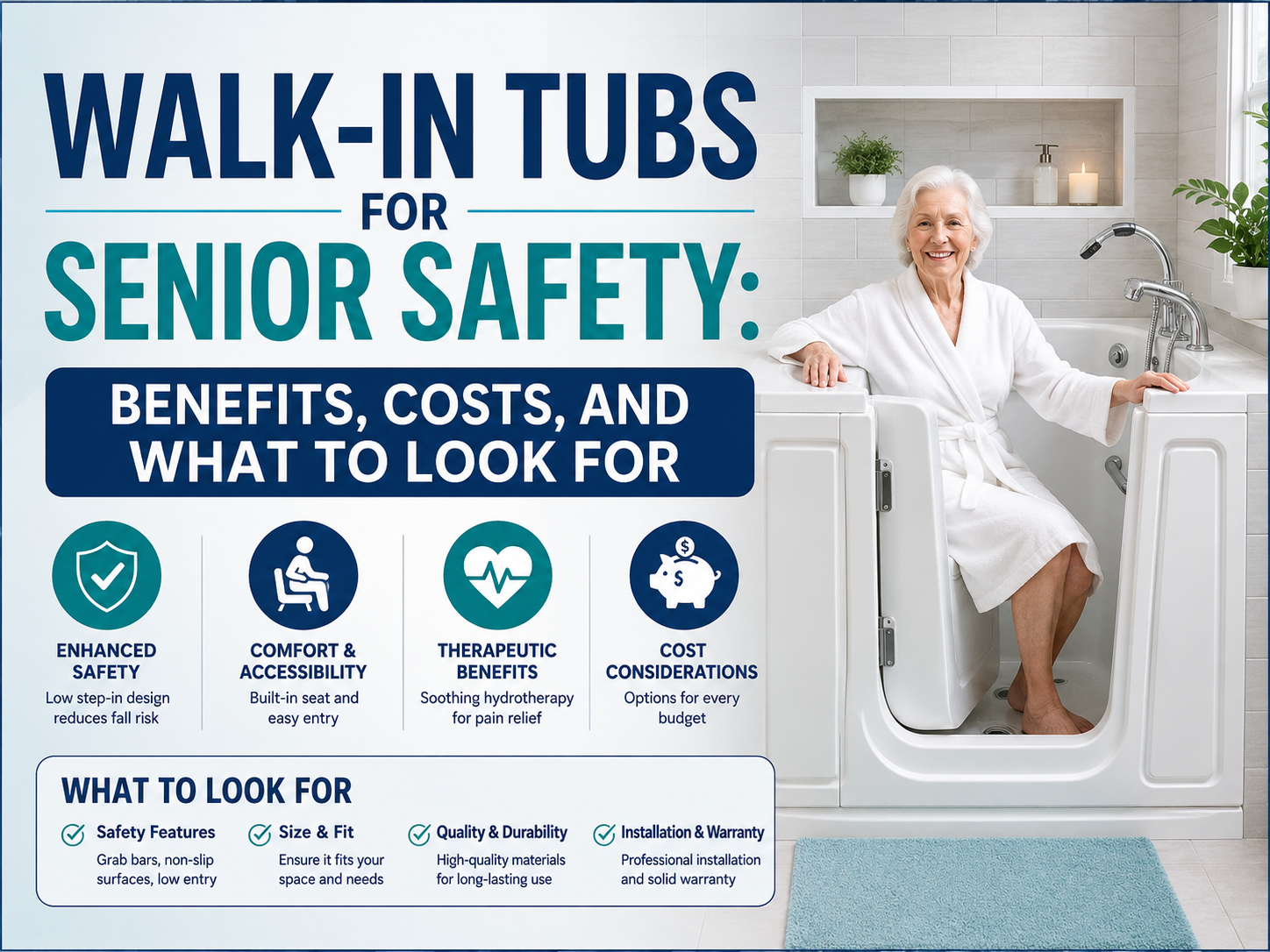
A walk-in tub is a bathtub with a watertight door built into its side, allowing the user to step into the tub through the door rather than climbing over the rim. The threshold — the step height to enter — is typically 2 to 7 inches, compared to the 16 to 22 inches of a standard bathtub rim. Most walk-in tubs also include built-in seating, grab bars, anti-slip flooring, and various therapeutic features such as air jets or water jets.
The fundamental design constraint of a walk-in tub is that you must enter the tub before filling it and remain inside until it drains after bathing. This means the user sits in the tub while it fills with warm water, bathes, drains the tub, and then exits. This sequence — sometimes called the 'fill and drain' wait — is the most common adjustment for new users, particularly in colder climates where sitting in an empty tub while it fills and then waiting while it drains can be uncomfortable. Heated seats and fast-drain systems in newer models substantially reduce this concern.
Who Benefits Most from a Walk-In Tub
Walk-in tubs are not for everyone, but for certain people they represent a meaningful safety and quality-of-life improvement. The clearest candidates include:
- Seniors with balance or stability issues: The leading cause of bathtub falls is stepping over the high rim of a standard tub. Walk-in tubs eliminate this risk with their low-threshold entry.
- People recovering from hip, knee, or leg surgery: Post-surgical mobility limitations make standard tub entry dangerous. The low door threshold and built-in seat make bathing manageable during recovery.
- People with arthritis: Hydrotherapy — warm water massage via jets — has well-documented benefits for joint pain and stiffness. Walk-in tubs make therapeutic bathing accessible daily, not just at a physical therapy clinic.
- People with Parkinson's disease or multiple sclerosis: Progressive neurological conditions that affect balance and coordination make standard bathing increasingly risky. Walk-in tubs accommodate declining mobility over time.
- People who prefer bathing to showering: For those who rely on a daily soak for comfort, pain management, or simple preference, a walk-in tub preserves that option when a standard tub becomes unsafe.
- Wheelchair users: Bariatric and wheelchair-accessible walk-in tub models are available with wider doors and reinforced seating for users who transfer from a wheelchair.
Walk-in tubs are a poorer fit for people who primarily shower, for households where a caregiver needs to assist from outside the tub, or for people who may not tolerate waiting in the tub during fill and drain cycles. For those situations, a roll-in shower or a walk-in shower with a seat and grab bars may be a better solution.
Key Features to Evaluate
Door Style: Inward vs. Outward Opening
Walk-in tub doors open either inward (into the tub) or outward (into the bathroom). Inward-opening doors are sealed by water pressure when the tub fills, making them very watertight — but they require enough clear space inside the tub for the door to swing open when entering. Outward-opening doors are easier to open when entering (no step over the door threshold is needed), but they require clear floor space in the bathroom for the door swing. Outward-opening designs are increasingly common and often preferred for ease of entry.
Threshold Height
The lower the threshold, the easier entry is for people with limited mobility. Standard walk-in tubs have thresholds of 3 to 7 inches. Low-threshold models go as low as 2 inches, making them appropriate even for people with significant gait limitations. If the user walks with a cane or uses a rollator, prioritize models with thresholds at or below 4 inches.
Seat Design
Built-in seats in walk-in tubs vary considerably in height, depth, and material. A seat height of 17 to 19 inches (similar to a toilet seat) makes it easiest to lower down and rise from. Some seats are heated — an important comfort feature given the fill-and-drain wait. Contoured seats with non-slip surfaces are preferred. For bariatric users, verify weight capacity, which should be clearly listed in product specifications (typically 300–600 lbs depending on the model).
Grab Bars and Anti-Slip Surfaces
Virtually all walk-in tubs include grab bars, but their placement and sturdiness vary. Look for bars positioned at points where the user will naturally brace during entry, lowering to the seat, and rising. Anti-slip textured surfaces on the floor and seat are standard but worth verifying, particularly for users with neuropathy who may not easily detect slippery surfaces.
Drain Speed
A standard tub drain empties in 8 to 15 minutes. Many walk-in tubs use fast-drain systems — often 2-inch rather than standard 1.5-inch drains — that empty in 2 to 4 minutes. This is a meaningful quality-of-life feature: waiting in an empty tub for 10+ minutes after bathing is uncomfortable and can lead to chilling. Ask specifically about drain speed and look for models with fast-drain systems if this is a concern.
Jet Systems: Air Jets vs. Water Jets
Many walk-in tubs offer one or both types of jet therapy:
| Feature | Air Jets | Water Jets (Whirlpool) |
|---|---|---|
| How they work | Pump air through small holes in the tub floor/sides, creating a gentle effervescent massage | Recirculate bath water through nozzles at variable pressure |
| Feel | Gentle, whole-body sensation; good for sensitive skin | Targeted, deeper pressure; more intense massage |
| Best for | Relaxation, circulation, skin sensitivity | Arthritis, muscle pain, deeper tissue relief |
| Maintenance | Lower; air doesn't accumulate soap or bacteria | Requires regular jet cleaning to prevent biofilm buildup |
| Noise level | Quieter | Louder motor |
Combination systems (both air and water jets) are available and popular, though they add cost. For arthritis specifically, water jets targeted at affected joints — hands, hips, lower back — tend to provide more therapeutic relief than air systems alone.
Heated Surfaces
Higher-end walk-in tubs include inline water heaters that maintain water temperature throughout the bath (preventing the water from cooling during the soak), heated seats for comfort during fill and drain, and sometimes heated backrests. These features add meaningful cost but substantially improve the experience, particularly in colder climates.
Walk-In Tub Costs: What to Expect
| Category | Typical Cost Range | Notes |
|---|---|---|
| Basic walk-in tub (tub only) | $1,500 – $3,500 | Low-threshold entry, built-in seat and grab bars; minimal jet features |
| Mid-range walk-in tub | $3,500 – $7,000 | Air or water jets, fast-drain system, better seat ergonomics |
| High-end / combination system | $7,000 – $15,000+ | Heated surfaces, inline heater, dual jet systems, chromotherapy lighting, premium materials |
| Installation | $1,000 – $3,500 | Varies significantly by bathroom configuration, local labor rates, and whether electrical work is required |
| Total installed cost (typical) | $5,000 – $17,000 | Most households pay $7,000 – $10,000 for a solid mid-range unit installed |
These figures don't include potential additional costs for electrical upgrades (if a dedicated circuit or GFCI outlet is needed), plumbing modifications (if the drain location doesn't align with the new tub), or cosmetic work (tile, surround panels) after installation. Get at least two written quotes that itemize tub cost, installation, and any required modifications separately.
Insurance and Financial Assistance
Walk-in tubs are typically classified as home modifications rather than durable medical equipment, which affects insurance coverage:
- Medicare: Standard Medicare Parts A and B do not cover walk-in tubs. Medicare Advantage plans vary — some include a home modification benefit that may partially cover costs. Call your plan directly to ask.
- Medicaid: Some state Medicaid waiver programs cover home modifications including accessible bathing equipment for eligible individuals. Eligibility and coverage vary substantially by state.
- VA Benefits: Veterans may qualify for home modification grants through the Specially Adapted Housing (SAH) or Special Housing Adaptation (SHA) programs. The Home Improvements and Structural Alterations (HISA) grant specifically covers accessible bathing modifications.
- Area Agency on Aging: Local aging services organizations sometimes administer home modification programs for low-income seniors. Find your local agency at eldercare.acl.gov.
- Tax deductions: Medical home modifications may be partially deductible as medical expenses if you itemize — consult a tax professional.
Installation Considerations
Walk-in tub installation is not a DIY project for most homeowners. Key professional considerations include:
- Plumbing alignment: The drain in a walk-in tub must connect to your existing drain line. If the new tub's drain location doesn't match, plumbing modification is needed — this is a common source of unexpected installation cost.
- Electrical requirements: Jet systems and heated components require electrical connections, typically a GFCI-protected circuit. Some models require a dedicated circuit. This work must be done by a licensed electrician.
- Structural support: A walk-in tub filled with water weighs substantially more than an empty tub. Verify that the floor structure can support the load (most standard floor joists can, but older homes sometimes cannot).
- Surround and finishing: Once the old tub is removed and the new one installed, the surrounding walls, tile, or panels need to be finished and sealed. Some installers offer a complete package; others only handle the tub itself.
Comparing Walk-In Tubs to Alternatives
| Option | Approximate Cost | Best For | Limitations |
|---|---|---|---|
| Walk-in tub | $5,000 – $17,000 installed | People who want to bathe (soak); arthritis/hydrotherapy needs | Fill/drain wait; significant upfront cost |
| Walk-in shower conversion | $3,000 – $10,000 installed | Wheelchair users; caregiver-assisted bathing; no fill/drain wait | No soaking option; cold/wet standing environment |
| Tub transfer bench | $30 – $150 | Budget; partial mobility limitation; preference to keep current tub | Still requires navigating over tub rim; less safe than full conversion |
| Bath lift | $200 – $600 | People who can get to tub edge but can't lower/rise safely | Requires existing tub; user must still swing legs over rim |
| Grab bars + non-slip mat | $50 – $300 installed | Minimal mobility limitation; early-stage fall prevention | Does not address high tub rim entry hazard |
Questions to Ask Before Buying
- What is the threshold height, and will the intended user be able to step over it comfortably?
- Does the door open inward or outward, and is there adequate space in my bathroom for the door swing?
- What is the seat height and weight capacity?
- How fast does the tub drain, and is a fast-drain system included or an add-on?
- What type of jets are included (air, water, or both), and what does the maintenance involve?
- Is the water heater inline (maintains temperature during bath) or does the tub use household water temperature only?
- What is included in the installation quote — does it cover plumbing modifications, electrical work, and finishing, or only the tub swap?
- What is the warranty, and who services it if something goes wrong?
Frequently Asked Questions
Do you have to wait in the tub while it fills and drains?
Yes — this is a fundamental design characteristic of walk-in tubs. Because the door must be closed and sealed while bathing, you enter before the tub fills and must stay inside until it drains before opening the door. Filling a standard tub takes 8–12 minutes; draining takes 8–15 minutes with a standard drain or 2–4 minutes with a fast-drain system. Models with heated seats, heated water systems, and fast-drain features significantly reduce the discomfort of waiting. This is one of the most important features to evaluate before purchasing.
Are walk-in tubs covered by Medicare?
Standard Medicare (Parts A and B) does not cover walk-in tubs, which are classified as home modifications rather than durable medical equipment. Some Medicare Advantage plans include a home modification benefit that may partially offset costs — contact your specific plan to ask. Veterans may have options through VA home modification grants. Some state Medicaid waiver programs cover accessible bathing modifications for eligible individuals.
How long does walk-in tub installation take?
A straightforward walk-in tub installation — removing the old tub, placing and connecting the new one, finishing the surround — typically takes one to two days. More complex installations involving plumbing rerouting, electrical work, or tile work can take three to five days. During this time, the bathroom is generally out of service. If the household has only one bathroom, planning for alternative bathing arrangements during installation is important.
Do walk-in tubs affect home resale value?
Walk-in tubs can affect resale value in both directions. In markets with a high proportion of older buyers or buyers interested in aging-in-place features, a walk-in tub can be a selling point. In markets skewing toward younger buyers, some prospective purchasers may prefer a standard tub or a shower conversion. Unlike a standard tub, a walk-in tub cannot easily be converted back. This is worth factoring into the decision if you anticipate selling the home within a few years, and worth discussing with a real estate professional familiar with your market.
What is the difference between a walk-in tub and a wheelchair-accessible tub?
Standard walk-in tubs are designed for users who can walk, step over a low threshold (typically 2–7 inches), and lower themselves onto a built-in seat. Wheelchair-accessible or bariatric walk-in tubs have wider doors (typically 17–22 inches) and reinforced seating to accommodate transfer from a wheelchair. Some models are designed so the door opening aligns with a wheelchair, allowing a direct side transfer. If the intended user is a wheelchair user, look specifically for models marketed as ADA-compliant or wheelchair-accessible, and verify the door width and seat height against the user's specific transfer needs.
Margaret's Bathtime Ritual
Margaret follows the same routine every Tuesday, Thursday, and Saturday morning. She opens the door, steps over the three-inch threshold, closes it behind her, and settles into the heated seat while the tub fills. She runs the water jets on her hip and lower back for about fifteen minutes. Then she drains the tub — it takes about three minutes with the fast-drain system — opens the door, and steps out. Start to finish: about forty minutes of unassisted bathing that she wasn't sure she'd ever be able to do safely again after her hip replacement.
'I didn't think I'd care that much,' she told her physical therapist at her six-month follow-up. 'But it turns out a bath is one of those things that quietly matters a lot to how you feel about your day.'
For bathroom and bathing safety products — grab bars, shower chairs, bath transfer benches, non-slip mats, and more — explore AllCare Store's Bedroom & Bathroom Safety collection. Questions? Call us at 1-888-889-6260 or visit AllCareStore.com.
— The AllCare Store Team