Medical Disclaimer: This article is for informational purposes only and should not be considered medical advice. Hearing loss and hearing aids are serious health matters that require professional evaluation. Please consult your healthcare provider, audiologist, or physician before making any decisions about hearing aids or hearing health treatment. If you experience sudden hearing loss, seek immediate medical attention.
Harold's Story: Rediscovering Connection Through Better Hearing
Harold sat at the dining table, surrounded by his three grandchildren chattering excitedly about their school day. At 74 years old, he loved these moments more than anything, but lately, they'd become a source of quiet frustration. "What did they say?" he'd ask his wife, Martha, for the third time. The children's faces would fall slightly as they repeated themselves, speaking louder each time until Harold felt less like their grandfather and more like an obstacle to their conversation.
One evening, after the kids left, Martha gently took his hand. "Harold, I think it's time we did something about your hearing," she said softly. Harold had been ignoring the problem for years—turning up the television volume, asking people to repeat themselves, withdrawing from social gatherings where the background noise made conversation impossible. Like many seniors, he'd convinced himself it was just a natural part of aging, something to accept rather than address.
But the thought of missing his granddaughter's voice on the phone, of not hearing his grandson's laugh, of becoming more isolated—that was something he couldn't accept. Within a month, Harold had consulted an audiologist, explored his options, and found a modern hearing aid that worked perfectly for his lifestyle. Six months later, he was the one initiating conversations, hearing every word his grandchildren said, and feeling like himself again.
If Harold's story resonates with you, you're not alone. Approximately 1 in 3 people over age 65 experience hearing loss, yet many delay seeking help. The good news? Today's hearing aids are nothing like your grandfather's chunky, feedback-prone devices. They're discreet, intelligent, and can dramatically improve your quality of life. This comprehensive guide will help you understand your options and find the best hearing aid for your unique needs.
Understanding Hearing Loss in Seniors
Before we explore hearing aid solutions, it's important to understand what causes hearing loss in seniors. Age-related hearing loss, or presbycusis, is the most common type affecting older adults. It typically develops gradually over years, often making it difficult to notice until it significantly impacts daily life.
Common signs you might need a hearing aid include:
- Difficulty understanding conversations, especially in noisy environments
- Frequently asking people to repeat themselves
- Turning up the volume on television or radio
- Avoiding social gatherings because of hearing difficulties
- Feeling embarrassed or frustrated during conversations
- Difficulty hearing phone conversations
- Struggling to hear high-pitched sounds (like doorbell or alarm clock)
- Feeling isolated or withdrawn from family and friends
If you recognize several of these signs, scheduling a hearing test with an audiologist is the first step toward better hearing. Many insurance plans and Medicare cover these evaluations.
Types of Hearing Aids: Finding Your Perfect Fit
Modern hearing aids come in several styles, each with distinct advantages. The best choice depends on your hearing loss severity, lifestyle, and personal preferences. Let's explore each type:
Behind-the-Ear (BTE) Hearing Aids
Behind-the-ear hearing aids remain the most popular choice for seniors, and for good reason. These devices sit behind the ear with a tube directing sound into the ear canal. BTE aids are durable, offer the longest battery life, and provide the most powerful amplification for severe hearing loss.
Advantages: Maximum power, longest battery life, easy to handle and maintain, affordable, robust design
Disadvantages: Most visible style, can sometimes cause feedback, larger size
Receiver-in-Canal (RIC) Hearing Aids
RIC hearing aids are a modern variation of BTE that offers excellent performance in a more discreet package. The speaker sits in the ear canal while the processing unit stays behind the ear. These have become increasingly popular among seniors who want powerful amplification without a bulky appearance.
Advantages: Discreet appearance, excellent sound quality, natural hearing, handles wind noise better than traditional BTE
Disadvantages: More expensive than BTE, smaller components can be harder to handle
In-the-Ear (ITE) Hearing Aids
In-the-ear aids fit entirely within the outer ear bowl. They're more discreet than BTE aids while still offering good battery life and ease of use. ITE hearing aids work well for mild to moderate hearing loss.
Advantages: More discreet than BTE, good battery life, easier to use than smaller styles
Disadvantages: More visible than other styles, may pick up wind noise, requires more dexterity for adjustments
In-the-Canal (ITC) and Completely-in-Canal (CIC) Hearing Aids
These are the most discreet options, fitting partially (ITC) or completely (CIC) inside the ear canal. They offer excellent cosmetic appeal but are best suited for mild to moderate hearing loss and require good manual dexterity for handling.
Advantages: Most discreet options, natural sound quality, minimal wind noise
Disadvantages: Difficult to handle, shorter battery life, limited power for severe hearing loss, can be expensive
Comparison Table: Hearing Aid Types at a Glance
| Type | Visibility | Power | Battery Life | Ease of Use |
|---|---|---|---|---|
| BTE | Most visible | Highest | 5-7 days | Easiest |
| RIC | Discreet | High | 4-6 days | Easy |
| ITE | Visible | Medium-High | 4-6 days | Moderate |
| ITC | Very discreet | Medium | 3-5 days | Difficult |
| CIC | Invisible | Lower | 2-4 days | Most difficult |
Key Hearing Aid Features for Seniors
Beyond style and design, modern hearing aids offer advanced features that can significantly enhance your listening experience. When shopping for hearing aids, look for these important capabilities:
Noise Cancellation and Noise Reduction
One of the biggest challenges seniors face is hearing conversations in noisy environments. Modern hearing aids use sophisticated algorithms to identify and reduce background noise while preserving speech clarity. This is particularly valuable in restaurants, family gatherings, and crowded social events.
Bluetooth and Wireless Connectivity
Wireless-enabled hearing aids can connect directly to smartphones, televisions, and other Bluetooth devices. This allows you to stream phone calls, music, and audiobooks directly to your hearing aids. For seniors who want to stay connected, this feature is invaluable.
Rechargeable Batteries
Rechargeable hearing aids eliminate the frustration of changing tiny batteries. Simply place your hearing aids in a charging case overnight, and they're ready for the next day. This is especially helpful for seniors with arthritis or limited dexterity. Many rechargeable models provide 24 hours of use on a single charge.
Telecoil Technology
Telecoil (or t-coil) hearing aids can pick up electromagnetic signals from compatible hearing loop systems installed in theaters, churches, and conference centers. This allows you to hear announcements and performances more clearly without relying on amplified speaker systems.
Directional Microphones
Directional microphones focus on sounds coming from the front while reducing sounds from behind and the sides. This helps isolate conversations from background noise, making it easier to follow what someone is saying even in a crowded room.
Automatic Program Switching
Smart hearing aids automatically detect your environment and adjust settings accordingly. Whether you're in a quiet room, outdoors with wind noise, at a restaurant, or listening to music, the hearing aid adapts in real-time for optimal sound quality.
Fall Detection and Health Monitoring
Some premium hearing aids now include fall detection technology and can monitor physical activity. If you fall, the hearing aid can send alerts to family members or emergency contacts. This added safety feature is increasingly important for seniors living independently.
Choosing the Right Hearing Aid: A Senior's Guide
With so many options available, choosing the right hearing aid can feel overwhelming. Here's a step-by-step approach to finding the best solution for your needs:
Step 1: Get a Professional Hearing Test
The foundation of choosing the right hearing aid is understanding your specific hearing loss. An audiologist will conduct tests to determine the type and severity of your hearing loss. This information is essential for selecting an appropriate device. Many Medicare plans cover hearing evaluations, and many health insurance plans offer coverage as well.
Step 2: Consider Your Lifestyle
Think about your daily activities and hearing challenges. Do you spend time in noisy restaurants? Do you take phone calls regularly? Do you watch television while others are in the room? Do you attend religious services or lectures? Your lifestyle should influence which features matter most.
Step 3: Assess Your Manual Dexterity
Be honest about your ability to handle small devices. If you have arthritis or tremors, rechargeable hearing aids with larger size are preferable to tiny CIC aids requiring daily battery changes. There's no shame in choosing convenience over invisibility.
Step 4: Determine Your Budget
Hearing aids range from $1,000 to $6,000 per pair, depending on style and features. Many are not covered by health insurance, though Medicare now covers hearing aids under certain circumstances. Ask about payment plans, trial periods, and return policies. AllCare Store offers 30-day returns and free shipping on all hearing aids, making it risk-free to try options.
Step 5: Take Advantage of Trial Periods
Most reputable hearing aid providers offer 30-day trial periods. Use this time to ensure the hearing aids work well for your hearing loss and lifestyle. If they're not right, you can exchange them with no penalty.
Step 6: Get Professional Fitting and Adjustments
Even the best hearing aid requires proper fitting by an audiologist. They'll adjust the settings to match your hearing loss profile and ensure comfort. Most providers offer free adjustments during the trial period and beyond.
OTC vs. Prescription Hearing Aids: What's the Difference?
Since 2022, over-the-counter (OTC) hearing aids have become available without a prescription. This has created an important question: which is better for seniors—OTC or prescription hearing aids?
OTC Hearing Aids: These devices are designed for mild to moderate hearing loss and can be purchased directly without professional fitting. They're typically more affordable ($300-$1,500) and offer a low-risk entry point.
Prescription Hearing Aids: These require a hearing evaluation by an audiologist and professional fitting. They offer greater customization, better performance for severe hearing loss, and ongoing professional support.
The Bottom Line: For most seniors, prescription hearing aids fitted by an audiologist provide superior results and support. Professional guidance ensures you get devices matched to your specific hearing loss and lifestyle. However, OTC hearing aids can be a reasonable starting point for those with mild hearing loss and budget constraints.
Medicare and Insurance Coverage for Hearing Aids
Understanding your coverage options is crucial when budgeting for hearing aids. Here's what you need to know:
Original Medicare: Traditional Medicare (Parts A and B) does not cover hearing aids. However, the Affordable Care Act requires Medicare Advantage plans to provide hearing aid coverage for beneficiaries. Check with your specific plan about coverage limits and approved providers.
Medicare Advantage (Part C): Most Medicare Advantage plans now include hearing aid coverage. Benefits vary, but many cover up to $2,000-$3,000 per year for hearing aids.
Medicaid: Coverage varies by state, but many state Medicaid programs cover hearing aids for eligible seniors.
Health Insurance: Some private health insurance plans cover hearing aids. Check your policy or contact your insurance provider directly.
Veterans Benefits: Veterans may be eligible for hearing aid coverage through the VA.
When you're ready to purchase, ask your audiologist about insurance verification and billing assistance. They can often submit claims directly to your insurance provider.
Proper Hearing Aid Care and Maintenance
Hearing aids are precision electronic devices that require proper care to function optimally and last for years. Here are essential maintenance tips:
Daily Cleaning
Earwax and moisture are the primary enemies of hearing aid longevity. Clean your hearing aids daily using a soft, dry cloth. AllCare Store's hearing aid care collection includes professional-grade Audio-kit Hearing Aid Cleaner ($25.99), which removes debris safely without damaging the device.
Moisture Management
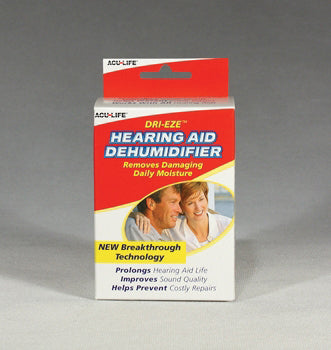
Never shower with hearing aids in, and keep them away from water and high humidity. Each night, store your hearing aids in a dry case. For extra protection, use a Dri-eze Hearing Aid Dehumidifier ($20.99), which uses electronic dry heat to remove moisture buildup. Learn more about why dehumidifiers are essential for optimal device performance.
Battery Care
If your hearing aids use disposable batteries, always store batteries in a cool, dry place. Never place batteries in the refrigerator. For rechargeable devices, charge overnight using the provided charging case. Most rechargeable hearing aids maintain battery health for 4-6 years.
Regular Professional Cleaning
Have your hearing aids professionally cleaned by an audiologist at least once yearly. They have specialized equipment to remove stubborn earwax and debris that home cleaning can't reach.
Use an Air Blower
The Hearing Aid Air Blower ($16.99) provides a gentle stream of air to dislodge particles from hearing aid vents and microphone ports. This is particularly useful before storing them in the dehumidifier.
Avoid Extreme Temperatures
Never expose hearing aids to direct sunlight, high heat, or extreme cold. Don't leave them in a hot car or near a heating vent. Store them in a cool, safe place when not in use.
Get Regular Adjustments
Your hearing can change over time. Visit your audiologist annually for adjustments and programming updates. This ensures your hearing aids continue performing optimally.
For comprehensive hearing aid maintenance products and supplies, visit our hearing aid cleaning kits collection.
Why Hearing Aids Matter: The Emotional and Health Impact
Beyond the practical benefit of hearing better, addressing hearing loss has profound effects on quality of life. Studies consistently show that seniors who wear hearing aids experience:
- Improved Social Connection: Being able to hear conversations fully allows you to participate more actively in family events, gatherings, and social activities.
- Enhanced Cognitive Function: Hearing loss is linked to cognitive decline. Treating hearing loss with hearing aids can help maintain mental sharpness and reduce dementia risk.
- Better Safety: Hearing important sounds like sirens, door chimes, and alarms is essential for personal safety. Hearing aids ensure you don't miss critical auditory warnings.
- Increased Confidence: Like Harold in our opening story, many seniors feel a renewed sense of confidence and independence when they can hear clearly without struggling.
- Reduced Depression and Isolation: Untreated hearing loss is associated with depression and social withdrawal. Hearing aids help combat these serious health issues.
- Better Work Performance: For seniors who continue working, hearing aids enable better communication with colleagues and clients.
AllCare Store: Your Trusted Hearing Aid Partner
At AllCare Store, we understand the importance of hearing clearly and staying connected with the people you love. We're committed to making hearing aid shopping easy, affordable, and convenient.
Why Choose AllCare Store?
- Free Shipping: We offer complimentary shipping on all hearing aid orders, making quality hearing care more accessible.
- Discreet Packaging: We respect your privacy with discreet packaging that doesn't advertise the contents.
- 30-Day Returns: We stand behind our products with a full 30-day return policy. If you're not satisfied, return them for a full refund—no questions asked.
- Wide Selection: Browse our complete hearing aids and accessories collection featuring top brands and styles.
- Expert Accessories: We offer everything you need to care for your hearing aids, from cleaning solutions to dehumidifiers and air blowers.
- Knowledgeable Support: Our team is ready to answer questions and help you make informed decisions.
FAQs About Hearing Aids for Seniors
How long do hearing aids last?
Most hearing aids last 5-7 years with proper care and maintenance. The lifespan depends on how well you care for them, how often you use them, and the quality of the device. Regular professional cleaning and using protective cases (like those available at AllCare Store) can extend the life of your hearing aids significantly.
Is there an adjustment period for hearing aids?
Yes, most people need 2-4 weeks to adjust to hearing aids. You'll notice sounds you haven't heard in years, which can feel overwhelming initially. This is normal. During your trial period, work closely with your audiologist to fine-tune settings and gradually increase daily wear time. By the end of the trial period, most users report being very satisfied.
Can hearing aids prevent hearing loss from getting worse?
No, hearing aids don't stop hearing loss from progressing, as age-related hearing loss is typically irreversible. However, wearing hearing aids prevents your brain from working harder to process sound, which can reduce cognitive strain. Additionally, protecting your remaining hearing by avoiding loud noises helps slow further deterioration.
What's the best way to clean hearing aids?
Daily cleaning with a soft, dry cloth is essential. For deeper cleaning, use a professional cleaning solution like the Audio-kit Hearing Aid Cleaner available at AllCare Store. An air blower can remove particles from vents. Store your hearing aids nightly in a dehumidifier to remove moisture. Never use water or alcohol to clean hearing aids.
How much do hearing aids cost?
Hearing aids typically range from $1,000 to $6,000 per pair. Budget options and OTC hearing aids start around $300. Prices depend on style, features, and brand. Check your Medicare Advantage plan, health insurance, and Medicaid for coverage options. AllCare Store offers free shipping and 30-day returns to make purchasing more accessible.
Are behind-the-ear hearing aids better than in-the-ear models?
Neither is universally "better"—the best choice depends on your hearing loss severity, lifestyle, and preferences. BTE aids offer more power and longer battery life, making them ideal for severe hearing loss and seniors with dexterity challenges. ITE and smaller in-canal aids offer more discretion but have limitations for severe hearing loss. Discuss your lifestyle and priorities with your audiologist to find the best fit.
Can I wear hearing aids if I have earwax buildup?
Yes, but excess earwax can interfere with hearing aid fit and performance. Have your earwax professionally removed by a doctor or audiologist before getting fitted for hearing aids. Afterward, regular cleaning with products from AllCare Store helps prevent buildup and keeps your hearing aids functioning optimally.
What should I do if my hearing aids aren't working properly?
First, check battery level or charge status. Clean your hearing aids thoroughly with products from AllCare Store's care collection. If problems persist, contact your audiologist immediately. Most issues can be resolved with software adjustments or professional servicing. During your warranty period, repairs are typically covered at no cost.
How do I travel with hearing aids?
Always carry hearing aids in your carry-on luggage, never checked baggage. Bring extra batteries or ensure your rechargeable hearing aids are fully charged before travel. Use a protective case and keep cleaning supplies handy. Humidity from flights can affect hearing aids, so use a portable dehumidifier during travel. Store them in a dry case overnight at your destination.
Your Journey to Better Hearing Starts Today
Like Harold, thousands of seniors have discovered that modern hearing aids can truly transform their lives. If you've been putting off addressing hearing loss, now is the time to take action. The technology is better than ever, the options are more accessible, and the impact on your quality of life can be profound.
Start with a professional hearing test to understand your unique hearing needs. Then explore the options we've discussed in this guide. When you're ready to purchase, AllCare Store is here to support you every step of the way.
Remember: you don't have to struggle to hear the voices of the people you love. You don't have to withdraw from social activities or feel embarrassed about asking people to repeat themselves. With today's hearing aids, you can reclaim the rich, full experience of sound and connection that makes life meaningful.
Take Action: Call AllCare Store Today
Ready to improve your hearing and reconnect with the people you love?
Contact AllCare Store today to explore our complete selection of hearing aids and accessories. Our knowledgeable team is ready to answer your questions and help you find the perfect solution for your hearing needs.
Call us now: 1-888-889-6260
Why wait? Your better hearing journey begins with one call.
- Free shipping on all orders
- Discreet packaging for your privacy
- 30-day returns with no questions asked
- Expert advice from our knowledgeable team
- Wide selection of top-quality hearing aids and care products
Don't let hearing loss keep you from fully participating in life. Contact AllCare Store today and take the first step toward better hearing, improved relationships, and renewed confidence. Your loved ones are waiting to hear from you—help yourself hear them clearly with the right hearing aid solution.