
DISCLAIMER: This article is for informational purposes only and does not constitute medical or dietary advice. Consult your physician or registered dietitian before making significant changes to your diet or starting a nutritional supplement program, especially if you have diabetes, kidney disease, or other chronic health conditions.

Dorothy's Story: Finding the Right Fuel After 75
Dorothy had never been a big eater, even in her younger years. But at 77, after a knee replacement that kept her off her feet for six weeks, her appetite had shrunk to almost nothing. Her daughter Janet noticed it first — the half-eaten plates left on the table, the refrigerator full of untouched leftovers, the way Dorothy's clothes had begun to hang on her frame. "Mom, you have to eat," Janet would say. And Dorothy would nod and push the food around her plate and say she just wasn't hungry.
Her physician, Dr. Reeves, put it plainly at her follow-up appointment: "Dorothy, you've lost eleven pounds since your surgery. Your body can't heal or stay strong without fuel." He explained that as we age, appetite naturally decreases even as our nutritional needs actually increase — particularly for protein, calcium, and vitamin D. He recommended supplementing her meals with a nutritional drink, something easy to consume even on days when solid food seemed unappealing.
Dorothy was skeptical. She'd seen nutritional drinks in the pharmacy and assumed they were all thick, overly sweet, and tasted like something you'd find in a hospital. Janet brought home a small assortment — different brands, different flavors — and they sat at the kitchen table and sampled them together. By the end of the afternoon, Dorothy had found two she genuinely liked. She started having one each morning alongside a light breakfast.
Three months later, she'd regained seven pounds, her energy had improved noticeably, and her physical therapist remarked that her muscle recovery was progressing better than expected for her age. "Whatever you changed, keep doing it," he told her.
If Dorothy's story sounds familiar — a loved one or even yourself struggling to eat enough, or simply looking for a reliable nutritional boost — this guide will help you navigate the world of senior nutritional drinks and find the right option for your needs. Browse our full selection at AllCare Store's nutritional drinks collection.
Why Nutritional Drinks Matter for Seniors
Aging changes the body's relationship with food in several important ways. Understanding these changes helps explain why nutritional supplements are so commonly recommended for older adults.
Decreased Appetite — More Common Than You Think
Studies estimate that 15 to 30 percent of seniors experience significant appetite loss. This phenomenon, sometimes called "anorexia of aging," stems from hormonal changes that reduce hunger signals, slower gastric emptying that keeps seniors feeling full longer, decreased sensitivity to taste and smell that makes food less appealing, and medication side effects that suppress appetite in many common drugs for blood pressure, diabetes, and depression.
Increased Nutritional Demands
Even as appetite decreases, nutritional needs don't. In fact, they often increase. Seniors need more protein to prevent sarcopenia (age-related muscle loss), more calcium and vitamin D to protect bone density, more B12 because aging reduces the stomach acid needed to absorb it from food, and more antioxidants to counter the increased oxidative stress of aging. The result is a challenging gap: less food consumed, but more nutrients needed.
Chronic Illness and Recovery
Surgery, illness, cancer treatment, dental problems, and swallowing difficulties (dysphagia) can all make eating solid food difficult or impossible for extended periods. Nutritional drinks provide an accessible, easily consumable source of complete nutrition during these critical windows.
Types of Nutritional Drinks for Seniors
The nutritional drink market for seniors has expanded considerably in recent years. Here's an overview of the main categories:
Complete Nutritional Supplements (Meal Replacements)
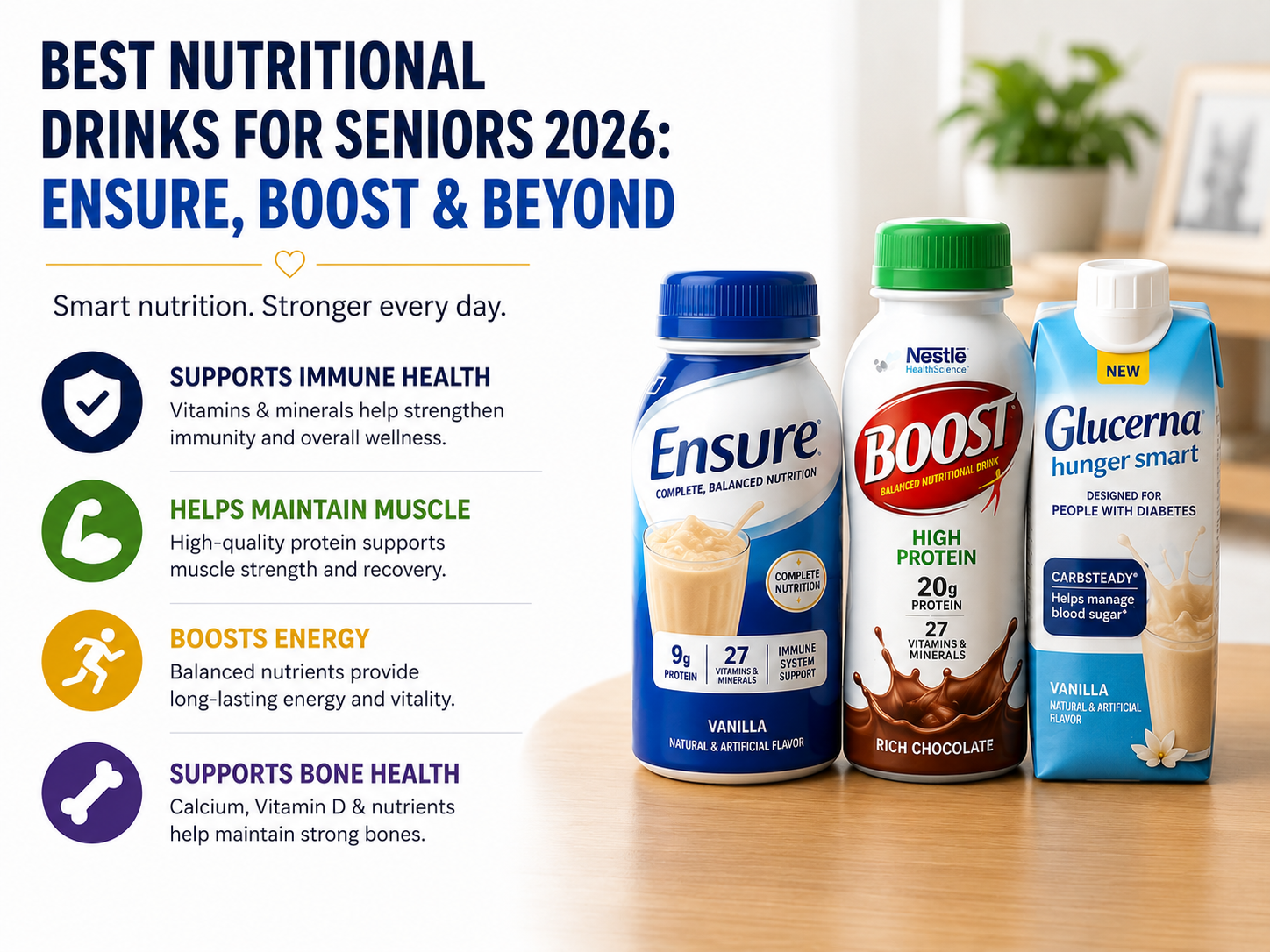
These are the most well-known products in the category — drinks like Ensure and Boost Original that provide a broad spectrum of vitamins, minerals, protein, carbohydrates, and fat in a single serving. They're designed to serve as a meal supplement (not always a full meal replacement) and to fill nutritional gaps for seniors who aren't eating enough.
Best for: General nutritional supplementation, appetite loss, post-surgery recovery, weight maintenance, dental problems that limit solid food intake.
High-Protein Formulas
High-protein variants (like Ensure High Protein, Boost High Protein) deliver 15 to 20 or more grams of protein per serving, compared to 8 to 9 grams in standard formulas. These are particularly valuable for seniors recovering from surgery or illness, those with sarcopenia risk, or anyone advised by their physician to increase protein intake.
Best for: Post-surgical recovery, wound healing, muscle preservation, seniors with elevated protein requirements.
Diabetes-Specific Formulas
Brands like Glucerna are specifically formulated for people with diabetes or prediabetes. They use a slow-digesting carbohydrate blend designed to produce a lower, more gradual rise in blood sugar compared to standard nutritional drinks. These are an important distinction — standard supplements can cause significant blood sugar spikes in diabetic patients.
Best for: Seniors with type 2 diabetes, prediabetes, or insulin resistance. Always consult your physician or diabetes care team before adding these to your regimen.
Calorie-Dense Formulas
When a senior needs to gain weight or requires more calories in a smaller volume, calorie-dense formulas (like Ensure Plus, Boost Plus) provide 350 or more calories per serving vs. 220 to 250 in standard formulas. These are often recommended for seniors who are significantly underweight or who need to rebuild after illness.
Best for: Unintentional weight loss, post-hospital recovery, cancer-related malnutrition, very low appetite where even drinking a full standard shake feels like too much.
Plant-Based and Dairy-Free Options
For seniors with lactose intolerance, dairy allergies, or a preference for plant-based nutrition, newer plant-based options have improved significantly in taste and nutritional completeness. These typically use soy, pea, or rice protein and are free of dairy ingredients.
Best for: Lactose intolerance, dairy allergies, vegetarian or vegan seniors.
Clear Nutritional Drinks
A newer category, clear nutritional drinks (like Ensure Clear) have a juice-like consistency rather than the milky texture of traditional supplements. Many seniors who find thick, creamy shakes unappealing — particularly those with nausea or dysphagia — find these easier to tolerate.
Best for: Post-surgery clear liquid diets, nausea, those who dislike the texture of creamy supplements.
Head-to-Head: Top Nutritional Drinks Compared
| Product | Calories | Protein (g) | Best For | Special Feature |
|---|---|---|---|---|
| Ensure Original | 220 | 9 | General nutrition | 27 vitamins & minerals |
| Ensure Plus | 350 | 13 | Weight gain/calorie boost | High-calorie formula |
| Ensure High Protein | 160 | 16 | Muscle support | Low sugar |
| Boost Original | 240 | 10 | General nutrition | 26 vitamins & minerals |
| Boost High Protein | 240 | 20 | Protein needs | 20g protein per serving |
| Glucerna (Shake) | 180 | 10 | Diabetes management | Low-glycemic carbs |
| Boost Glucose Control | 190 | 16 | Blood sugar management | CARBSTEADY technology |
| Ensure Clear | 180 | 8 | Texture sensitivity/nausea | Juice-like consistency |
Ensure vs. Boost: The Classic Debate
Ensure and Boost are the two dominant brands in senior nutrition, and the question of which is better comes up constantly. The honest answer is that the difference between comparable products is minimal for most seniors, and personal taste preference matters more than small nutritional variations.
Ensure (manufactured by Abbott) generally has a slightly thicker, creamier texture. Seniors who prefer a "milkshake-like" consistency tend to favor Ensure. The brand also has a longer track record and slightly wider availability in clinical settings.
Boost (manufactured by Nestlé) tends to have a lighter, slightly less sweet taste that some seniors prefer. Boost High Protein offers more protein (20g) in its base shake than Ensure High Protein (16g), which matters for seniors with elevated protein needs.
Our recommendation: Buy a small variety pack of both and sample them. Taste preference is highly individual, and the drink you'll actually consume consistently is far more valuable than the one with marginally better numbers on a label.
Choosing the Right Formula: A Senior's Decision Guide
Step 1: Clarify Your Primary Goal
Are you trying to maintain weight, gain weight, boost protein, manage blood sugar, or simply fill nutritional gaps? Your primary goal should drive your choice of formula. A senior trying to gain weight needs a calorie-dense formula; a diabetic trying to manage blood sugar needs a diabetes-specific product.
Step 2: Check for Dietary Restrictions
Many standard nutritional drinks are milk-based and contain lactose, soy, and common allergens. Review ingredient labels carefully if you have food allergies or intolerances. Look specifically for plant-based or lactose-free options if needed.
Step 3: Consider Kidney and Liver Health
Standard nutritional drinks contain levels of protein, potassium, and phosphorus that are appropriate for most people but can be problematic for seniors with kidney disease. Seniors with chronic kidney disease (CKD) often require specially formulated renal supplements. Consult your nephrologist before choosing any nutritional drink.
Step 4: Start Low and Go Slow
If you're new to nutritional supplements, start with one serving per day alongside regular meals, rather than replacing meals entirely. This gives your digestive system time to adjust (some people experience bloating or loose stools initially) and helps you gauge your tolerance and preference.
Step 5: Serve Chilled
Almost universally, seniors report that nutritional drinks taste significantly better when served well-chilled. Some even enjoy them over ice or semi-frozen as a "shake." Room-temperature supplements are often described as too sweet or cloying — don't judge a product by a room-temperature can.
Creative Ways to Use Nutritional Drinks
Beyond simply drinking them from the bottle, nutritional supplements can be incorporated into recipes to boost the nutrition of everyday foods:
Smoothies: Use a nutritional drink as the liquid base for a blender smoothie with banana, berries, or peanut butter. The result is more flavorful and more nutritious than the shake alone.
Oatmeal: Cook oatmeal with a nutritional drink instead of water or milk for a protein-and-nutrient-fortified breakfast that tastes rich and creamy.
Soups and sauces: Unflavored or vanilla varieties can be stirred into cream soups or mashed potatoes to boost caloric and protein content without altering flavor significantly.
Frozen Treats: Pour into popsicle molds and freeze for a nutritious frozen treat that can tempt seniors who find drinking supplements unexciting.
Signs Your Loved One May Need Nutritional Support
Nutritional deficiency in seniors often develops gradually and can be mistaken for normal aging. Watch for these warning signs:
- Unintentional weight loss of 5% or more in 6 months
- Visible muscle wasting, particularly in arms and legs
- Increased fatigue and weakness
- Poor wound healing or frequent illness
- Hair thinning or brittle nails
- Confusion or cognitive changes (may indicate B12 or other deficiencies)
- Difficulty swallowing solid foods
- Skipping meals regularly due to lack of appetite
- Poorly fitting dentures that limit what can be eaten
If you notice several of these signs in yourself or a loved one, bring them to the attention of a physician. Nutritional drinks are a helpful tool, but they work best as part of a comprehensive nutrition plan developed with medical guidance.
When to See a Doctor or Registered Dietitian
Nutritional drinks are supplements, not replacements for professional care. Seek medical or dietitian guidance if weight loss is significant or rapid, if there are swallowing difficulties (dysphagia) that may require thickened formulas or tube feeding, if the senior has diabetes, kidney disease, or cancer, if a senior is refusing to eat entirely, or if over-the-counter supplements don't seem to be helping after 4 to 6 weeks.
A registered dietitian can conduct a full nutritional assessment, calculate individualized calorie and protein targets, and recommend specific products based on a senior's complete health profile.
Shop Senior Nutritional Drinks at AllCare Store
At AllCare Store, we carry a comprehensive selection of nutritional drinks for seniors, including Ensure, Boost, Glucerna, and more. Whether you need a standard daily supplement, a high-protein formula for recovery, or a diabetes-friendly option, we have what you need — delivered directly to your door.
- Free shipping on qualifying orders
- Bulk pricing available on cases for regular users
- Discreet packaging delivered right to your door
- 30-day returns on unused product
For expert guidance on senior nutrition and supplement selection, our team is always ready to help. Call us at 1-888-889-6260.
Frequently Asked Questions About Senior Nutritional Drinks
Can seniors drink Ensure or Boost every day?
Yes, for most healthy seniors, one to two servings per day of Ensure or Boost is safe and beneficial when used as a supplement to regular meals. However, using nutritional drinks as a complete meal replacement over the long term or in high quantities can lead to imbalances in some nutrients. Always discuss regular use with your physician, particularly if you have chronic health conditions or take multiple medications.
Are nutritional drinks safe for seniors with diabetes?
Standard nutritional drinks like Ensure Original or Boost Original can cause significant blood sugar spikes in people with diabetes due to their carbohydrate content. Seniors with diabetes should use diabetes-specific formulas like Glucerna or Boost Glucose Control, which use slow-digesting carbohydrates designed to produce a lower glycemic response. Always consult your physician or diabetes care team before starting any supplement.
What is the difference between Ensure and Ensure Plus?
Ensure Original provides approximately 220 calories and 9 grams of protein per serving. Ensure Plus provides approximately 350 calories and 13 grams of protein — significantly more of both in the same serving size. Ensure Plus is designed for seniors who need to gain weight or require additional calories due to illness, recovery, or very low appetite. For general supplementation without weight gain goals, Ensure Original is typically recommended.
How many nutritional drinks should a senior have per day?
Most physicians and dietitians recommend one to two servings per day as a supplement to regular meals. The specific amount depends on the senior's overall caloric needs, appetite level, and health goals. Seniors who are severely malnourished may need more, while those who eat reasonably well may only need one. Your physician or registered dietitian can give you a personalized recommendation based on your specific situation.
Can I use nutritional drinks for tube feeding?
Some nutritional drinks are formulated for both oral and tube feeding use, but not all. If you or a loved one requires tube feeding, consult your physician or clinical dietitian for a recommendation of a formula specifically approved for enteral nutrition. Using the wrong formula in a feeding tube can cause clogs or adverse effects. Your medical team will specify the correct product and feeding protocol.
What's the best nutritional drink for a senior who has had surgery?
Post-surgical recovery places high demands on protein for wound healing, tissue repair, and immune function. High-protein formulas such as Ensure High Protein (16g protein) or Boost High Protein (20g protein) are commonly recommended for post-surgical seniors. Some physicians also recommend Ensure Surgery or Ensure Pre-Surgery for specific peri-operative protocols. Always follow your surgical team's specific nutritional recommendations.
Nourish Well, Age Well
Dorothy's story has a good ending — not because a supplement drink is magic, but because she filled a real gap in her nutrition during a critical recovery window, and her body had what it needed to heal. For many seniors, the right nutritional drink, used thoughtfully as part of a broader approach to wellness, can genuinely make a meaningful difference in energy, strength, and quality of life.
Explore our full selection of senior nutritional drinks at AllCare Store — from everyday supplements to specialized diabetes formulas to high-protein recovery options. We're here to help you or your loved one get the nutrition needed to live fully and well.
Call 1-888-889-6260 or visit AllCareStore.com today. Free shipping on qualifying orders. 30-day returns. Expert support when you need it.



