DISCLAIMER: This article is for informational purposes only and does not constitute medical advice. Menstrual health concerns should be discussed with a qualified healthcare provider.
Period underwear has moved from niche reusable product to mainstream menstrual care option in just a few years — and for good reason. For many people, they offer a comfortable, lower-waste, and genuinely reliable alternative (or backup) to traditional pads and tampons. But the market is crowded, the technology varies widely, and questions about reliability, hygiene, and care are legitimate.
This guide gives you a complete, honest picture: how period underwear actually works, how absorbent different styles really are, who they're best suited for, how to clean and care for them, and how they compare to other menstrual products.
How Period Underwear Actually Works
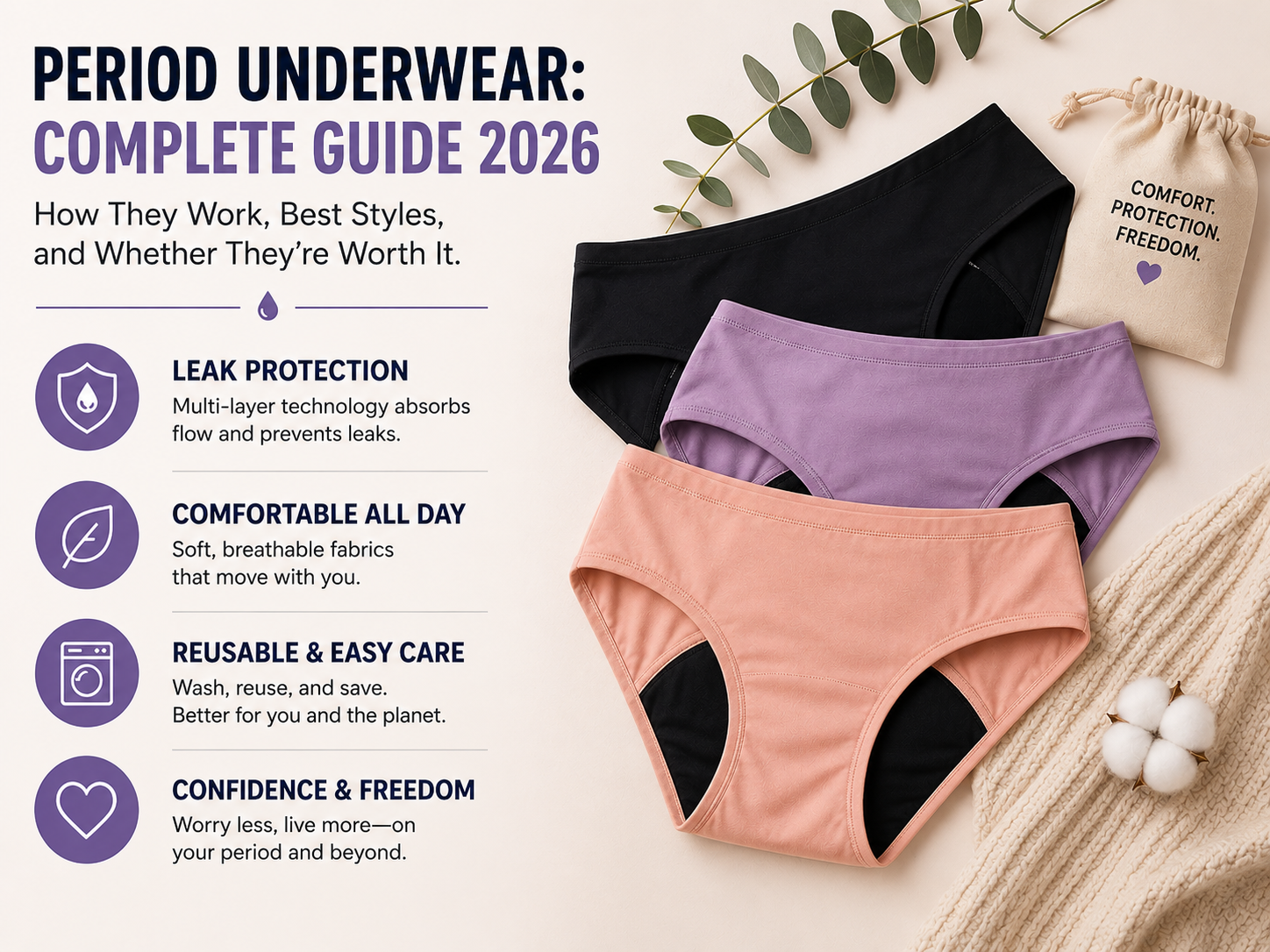
Period underwear looks like regular underwear but has a multi-layer absorbent gusset (the reinforced panel in the crotch area) built directly into the fabric. That gusset is typically made of 2-4 layers of specialized fabric, each with a specific function:
The innermost layer — the one touching your skin — is usually made from moisture-wicking fabric (often a blend of modal, cotton, or synthetic fibers) designed to pull fluid away from skin quickly so you feel dry rather than wet and uncomfortable.
The middle layer or layers are the absorbent core. These are typically made from highly absorbent materials like microfiber, organic cotton, or proprietary fabric blends. This is where the fluid is actually held. Quality matters enormously here — the absorbent layer in premium brands can hold significantly more than budget alternatives.
The outermost layer is a moisture barrier — a thin, breathable material that prevents fluid from soaking through to clothing. This is often a polyurethane laminate (PUL) fabric or a similar breathable waterproof material. It keeps leaks from showing through while allowing some airflow.
The whole system works by: wicking fluid in quickly, spreading it through the absorbent core, and stopping it from passing to the outside. Done well, this means you feel dry even hours into wearing them.
How Much Can Period Underwear Absorb?
Absorbency varies significantly by brand and style, and this is one of the most important variables to understand before buying. Most brands rate their underwear in terms of "tampon equivalents" or milliliters of fluid.
| Absorbency Level | Approx. Capacity | Best Used For |
|---|---|---|
| Light | ~5-10 ml (1-2 tampons) | Light flow days, spotting, discharge, backup protection with tampon/cup |
| Medium / Moderate | ~15-20 ml (2-3 tampons) | Average flow days, reliable standalone use for moderate flow |
| Heavy | ~25-35 ml (4-5 tampons) | Heavier flow days, standalone use for heavier periods |
| Super / Overnight | ~40-60 ml (5-7+ tampons) | Overnight protection, very heavy flow, postpartum bleeding |
Be skeptical of claims that seem extraordinarily high, especially from budget brands. The best way to gauge absorbency is to start with a pair on a lighter day and evaluate how they perform for your body before relying on them solo on heavy days.
Period Underwear vs. Pads vs. Tampons vs. Menstrual Cups
| Product | Pros | Cons | Best For |
|---|---|---|---|
| Period Underwear | Comfortable, no insertion, reusable, good for sensitive skin, works for bladder leaks too | Higher upfront cost, requires laundering, less suitable for very heavy flow without layering | Everyday comfort, light-medium flow, backup protection, overnight use, eco-conscious menstruators |
| Pads | Easy to use, no insertion, widely available, disposable convenience | Can feel bulky, can shift or bunch, not suitable for swimming, ongoing waste | Overnight use, postpartum, anyone preferring external protection |
| Tampons | Discreet, allows swimming, suitable for active use | Requires correct insertion, TSS risk (extremely rare), needs changing every 4-8 hrs | Active lifestyles, swimming, lighter daily use |
| Menstrual Cups | Very high capacity, eco-friendly, can be worn 12 hrs, cost-effective long-term | Learning curve for insertion/removal, requires cleaning access | Heavy flow, travel, those comfortable with internal products |
Who Benefits Most from Period Underwear?
Period underwear is particularly well-suited for several groups. Teenagers and beginners often find period underwear less intimidating and more comfortable than tampons for their first periods — there's nothing to insert, no application technique to learn, and the feel is much closer to regular underwear. People with sensitive skin who react to the materials in disposable pads frequently find period underwear more comfortable, as quality options use soft organic cotton or modal against skin. Those with light-to-moderate flow who want to move away from single-use products can often make period underwear their primary menstrual product. And people with stress urinary incontinence find that period underwear designed for period use also handles light bladder leakage effectively.
Period underwear is less suited as a standalone product for people with very heavy flow (though used in combination with a menstrual cup or tampon, it works well as backup). It's also not ideal for situations where laundering access is limited.
Styles and Coverage Options
Period underwear comes in essentially every underwear style, and coverage matters for both comfort and protection. Brief and hipster styles offer the most coverage and absorbent area, making them the best choice for heavier days and overnight use. Bikini styles balance everyday comfort with reasonable coverage — a good everyday option for moderate flow. High-waisted styles have become very popular, especially postpartum and for those who prefer more coverage and abdominal comfort during cramps. Thong-style period underwear exists for lighter days or backup use, with absorbency concentrated in a narrow strip.
For overnight use, look specifically for overnight or "sleep" styles that have extended absorbent panels both front and back — this is key for preventing leaks during different sleeping positions.
How to Wash and Care for Period Underwear
Proper care dramatically extends the life of period underwear and maintains their absorbency. Follow these steps for every wash cycle. After removing the underwear, rinse them in cold water — running cold water through the gusset — until the water runs mostly clear. This removes the bulk of fluid and prevents staining. Do not use hot water at this stage, as heat sets stains and can damage the waterproof layer.
Machine wash on cold with a gentle, fragrance-free detergent. Avoid fabric softeners and dryer sheets — both coat fabric fibers and significantly reduce the absorbency of the inner layers over time. Also avoid bleach, which degrades the waterproof membrane. Air dry rather than machine drying, especially for the first dozen washes. High heat from dryers can delaminate the waterproof layer. Once you know the pair holds up well, tumble dry on very low heat occasionally is acceptable for most brands, but air drying maximizes lifespan.
With proper care, quality period underwear typically lasts 2-5 years. Replacing them when you notice reduced absorbency or visible wear to the gusset.
PFAS Concerns: What to Know
In recent years, some period underwear brands received scrutiny over PFAS (per- and polyfluoroalkyl substances) — a class of synthetic chemicals used in some waterproofing applications that have raised health and environmental concerns. Several major brands have responded by testing their products and committing to PFAS-free manufacturing.
When purchasing period underwear, look for brands that explicitly state their products are PFAS-free or that have published third-party testing results confirming this. This information is increasingly available on brand websites and is a legitimate factor to consider when choosing.
Building a Period Underwear Wardrobe
If you're transitioning to period underwear as your primary period product, planning your collection strategically makes the switch easier. For a typical 4-5 day cycle, having 6-8 pairs total gives you comfortable rotation with washing. Start with 2-3 heavy or overnight pairs for your heaviest days, 2-3 medium pairs for middle days, and 1-2 light pairs for the tail end of your period or as backup.
Rather than buying a full set from one brand immediately, many people find it useful to buy 1-2 pairs from a couple of different brands first, test them during a cycle, and then invest in more of whichever brand fits and performs best for their body.
Shop Menstrual Hygiene Products at AllCare Store
AllCare Store carries a comprehensive selection of menstrual hygiene and personal care products to suit every preference and flow. Browse our Mom & Baby Care and personal care collections for period products, panty liners, and related supplies.
For postpartum recovery, our selection of maternity and postpartum care products supports the weeks after delivery. And for general personal care needs, our AllCare Store homepage is your source for health, wellness, and hygiene supplies with free shipping on qualifying orders. Reach our team at 1-888-889-6260, Monday through Friday, 7:00 AM – 4:00 PM CST.
Frequently Asked Questions: Period Underwear
Can you use period underwear as your only period protection?
Yes — for most people with light to moderate flow, period underwear can be used as standalone protection. For heavier flow days, you may need to change pairs mid-day, or use period underwear in combination with a menstrual cup or tampon for added capacity. Many people use period underwear solo on lighter days and as backup protection on heavier days. Start testing on lighter days to understand how your specific pairs perform for your body before relying on them alone on heavy days.
Do period underwear smell?
With proper care, period underwear should not develop significant odor. Rinsing promptly after removal in cold water, washing in gentle detergent, and air drying prevents most odor issues. Avoid leaving worn pairs sitting damp for extended periods before washing. If odor persists after washing, soaking in a mixture of cold water and white vinegar before laundering can help. Fabric softeners — which many people add for freshness — actually trap odor-causing bacteria by coating fibers, so avoid them with period underwear.
How long can you wear period underwear?
Most period underwear is designed to be worn for 8-12 hours, depending on your flow and the absorbency level of the pair. Heavy-flow pairs can often be worn overnight. On heavier days, you may need to change after 6-8 hours if the pair reaches capacity. Unlike tampons, period underwear doesn't carry a risk of toxic shock syndrome and is not subject to the same strict time limits — but changing when saturated is both more comfortable and better for hygiene.
Are period underwear good for teenagers?
Period underwear is an excellent option for teenagers, particularly those just starting their periods. There's no insertion technique to learn, the fit is comfortable and familiar, and they can provide confident protection during the school day without the anxiety of tampon or cup use. Medium or heavy absorbency styles are good starting points for teenage use. The only adjustment is learning to rinse and launder them properly — which is a straightforward habit to build.
For menstrual hygiene products and personal care essentials, visit AllCare Store. Free shipping on qualifying orders. Call 1-888-889-6260, Monday–Friday 7 AM–4 PM CST for personalized product recommendations.