NUTRITIONAL DISCLAIMER: This article is for informational purposes only and does not constitute medical or dietary advice. Nutritional supplement needs vary significantly based on individual health conditions. Always consult your physician or a registered dietitian before making significant changes to an older adult's diet or starting nutritional supplementation, particularly if they have diabetes, kidney disease, or other chronic conditions.
Helen's Story: When Eating Became a Struggle
Helen, 81, had always been a good eater. Her daughter, Carol, remembers childhood dinners as elaborate, lively affairs — Helen took real pride in cooking from scratch, setting a proper table, and making sure everyone ate well. So when Carol visited her mother last spring and noticed that the refrigerator held almost nothing, that Helen's clothes hung loosely on a frame that had visibly shrunk, and that Helen brushed off concern with "I just don't have much appetite these days" — Carol understood something had shifted significantly.
A visit to Helen's doctor confirmed it. Helen had lost eleven pounds in four months. Her protein levels were low. She had mild anemia. The doctor explained what Carol hadn't fully understood before: appetite loss in elderly adults is extremely common, and its consequences are serious. Without adequate nutrition — particularly protein — older adults lose muscle mass rapidly, their immune systems weaken, wounds heal slowly, and the risk of falls increases dramatically. Helen wasn't being picky or stubborn. Her sense of hunger had simply diminished, a physiological change that affects a large percentage of people over 75.
The solution the doctor recommended, as part of a broader nutritional plan, was straightforward: add two nutritional shakes per day to Helen's routine — one mid-morning and one mid-afternoon, in addition to whatever meals she managed to eat. Within six weeks, Helen had regained four pounds, her energy had noticeably improved, and her follow-up bloodwork showed better protein levels. Carol now keeps a case of Helen's preferred flavor in her mother's kitchen, and it's become part of their weekly phone ritual to confirm Helen drank both of hers that day.
If Helen's story sounds familiar — if you're caring for an aging parent with reduced appetite, supporting a loved one recovering from illness or surgery, or simply trying to make sure an older adult in your life gets adequate nutrition — this guide will walk you through everything you need to know about nutritional shakes for seniors.
Why Seniors Often Need Nutritional Supplements
Understanding why older adults become nutritionally vulnerable helps explain why products like Ensure and Boost exist and why they work so well when used appropriately.
Reduced Appetite with Age
Appetite naturally declines with age, a phenomenon called "anorexia of aging." Multiple factors contribute: a slower metabolism means the body genuinely needs fewer calories, reducing hunger signals. The senses of taste and smell diminish, making food less appealing. Dental problems can make eating uncomfortable or difficult. Social isolation — eating alone rather than with family — reduces the pleasure associated with meals. Medications commonly used by older adults can suppress appetite as a side effect. The cumulative result is that many seniors simply eat less than they need, not from choice but from physiology.
Higher Protein Requirements Despite Lower Calorie Needs
Here's the nutritional paradox older adults face: while their calorie needs may decrease with age, their protein requirements remain the same or actually increase. Maintaining and building muscle mass (which naturally declines with age, a process called sarcopenia) requires adequate dietary protein. Recovering from illness, surgery, or injury also increases protein demands significantly. When seniors eat less overall, they often fall short of these protein requirements — contributing to muscle loss, weakness, and increased fall risk.
Difficulty with Meal Preparation
For older adults living alone, the logistics of cooking balanced meals can become genuinely difficult. Arthritis makes chopping and cooking painful. Fatigue sets in quickly. Grocery shopping requires transportation and energy. The result is often simplified eating — toast, crackers, tea — that is convenient but nutritionally sparse. Ready-to-drink nutritional shakes eliminate the preparation burden entirely.
Recovery and Healing
After hospitalization, surgery, or a significant illness, older adults face enormous nutritional demands at precisely the time when appetite is lowest. Wound healing requires protein, zinc, and vitamin C. Rebuilding lost muscle mass after a period of inactivity requires high protein intake. Immune recovery requires a full complement of vitamins and minerals. Nutritional shakes designed for recovery deliver concentrated nutrition in a form that's easy to consume even when solid food is unappealing.
Ensure vs. Boost: Understanding the Two Giants
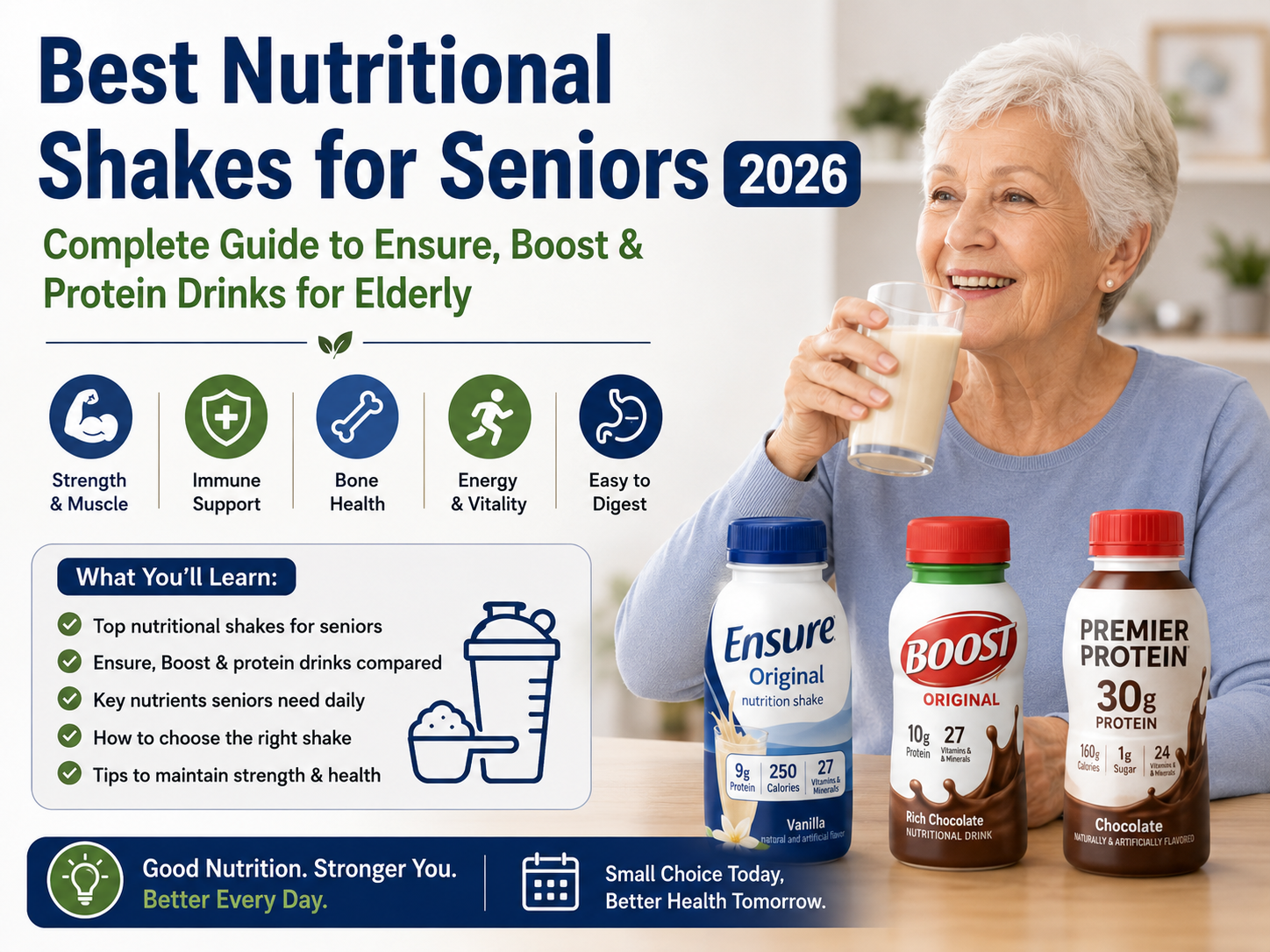
If you're shopping for nutritional shakes for a senior family member, you'll quickly encounter two dominant brands: Ensure (Abbott Nutrition) and Boost (Nestlé Health Science). Both have been used in clinical and home settings for decades, and both offer multiple product lines targeting different nutritional needs. Here's how they compare:
Ensure: The Standard
Ensure Original is the baseline product — a complete, balanced nutritional drink providing approximately 220–250 calories per 8 oz serving with 9 grams of protein. It contains 26 vitamins and minerals and is available in multiple flavors. Ensure is designed as a nutritional supplement to complement meals, not necessarily replace them entirely.
The Ensure product line has expanded significantly to address specific needs:
Ensure Plus provides higher calories (350–360 per serving) for seniors who need weight gain support or have very high calorie needs. It also delivers 13 grams of protein per serving.
Ensure High Protein prioritizes protein with 16 grams per serving at a lower calorie count (160 calories), designed for seniors focused on muscle maintenance rather than weight gain. This is particularly relevant for post-surgery recovery or seniors diagnosed with sarcopenia.
Ensure Max Protein goes even further with 30 grams of protein per serving — comparable to many sports nutrition products — in a 150-calorie, low-sugar format. This is designed for seniors under medical direction to aggressively address protein deficiency.
Ensure Plant-Based Protein offers a dairy-free, plant-protein alternative for seniors who are lactose intolerant or prefer plant-based nutrition, with 20 grams of pea protein per serving.
Ensure Enlive is a premium formulation with 20 grams of protein and HMB (beta-hydroxy-beta-methylbutyrate), a compound clinically studied for its role in preserving muscle mass in older adults. It's among the most complete formulations in the Ensure line.
Boost: The Competitor
Boost Original provides similar baseline nutrition to Ensure Original — approximately 240 calories and 10 grams of protein per 8 oz serving, with a complete vitamin and mineral profile. Many users prefer Boost's taste profile, describing it as slightly less sweet and creamier than Ensure.
The Boost line includes:
Boost Plus provides 360 calories and 14 grams of protein per serving — the high-calorie option in the Boost family, comparable to Ensure Plus.
Boost High Protein delivers 20 grams of protein per serving at 240 calories, a middle-ground option for seniors who need substantial protein without dramatically increasing calorie intake.
Boost Glucose Control is specifically formulated for people with diabetes or prediabetes — it has a lower glycemic impact than standard nutritional shakes, with a slow-release carbohydrate blend and no sucrose. This is a critical distinction for seniors managing blood sugar.
Boost Very High Calorie packs 530 calories into a small 8 oz serving — designed for seniors with very high energy needs or significant unintentional weight loss. The caloric density means they can meet significant nutritional needs without consuming large volumes.
Side-by-Side Comparison: Popular Nutritional Shakes for Seniors
| Product | Calories | Protein | Best For | Special Feature |
|---|---|---|---|---|
| Ensure Original | 220 | 9g | General supplementation | 26 vitamins & minerals |
| Ensure Plus | 350 | 13g | Weight gain support | High calorie density |
| Ensure High Protein | 160 | 16g | Muscle maintenance | Lower calorie, higher protein |
| Ensure Enlive | 350 | 20g | Muscle preservation | Contains HMB |
| Ensure Max Protein | 150 | 30g | Protein deficiency (medical) | Very high protein, low sugar |
| Boost Original | 240 | 10g | General supplementation | Creamier taste profile |
| Boost Plus | 360 | 14g | Weight gain support | Rich, shake-like consistency |
| Boost High Protein | 240 | 20g | Post-surgery recovery | Balance of calories & protein |
| Boost Glucose Control | 190 | 16g | Diabetes management | Low glycemic, no sucrose |
| Boost Very High Calorie | 530 | 22g | Severe weight loss | Very high calorie density |
Choosing the Right Nutritional Shake: A Decision Guide
For General Nutritional Support
If your loved one is eating reasonably well but you want to fill nutritional gaps and provide a reliable daily nutritional top-up, Ensure Original or Boost Original are the right starting points. They provide balanced calories, protein, and micronutrients without being designed for specific medical conditions. The choice between them often comes down to taste preference — try both and let the senior decide.
For Unintentional Weight Loss
Unintentional weight loss in seniors is a medically significant concern. If your loved one has been losing weight, higher-calorie options like Ensure Plus, Boost Plus, or Boost Very High Calorie deliver more calories in each serving. This matters particularly if appetite is suppressed and volume is an issue — your loved one may be able to drink 8 ounces but struggle to consume more. Getting 350–530 calories in that same 8 oz serving maximizes the nutritional return on what they can manage to consume.
For Muscle Mass and Strength Preservation
For seniors specifically concerned with maintaining or rebuilding muscle strength — particularly those who are physically active, enrolled in physical therapy, or recovering from a period of immobility — prioritize protein content. Ensure High Protein, Ensure Enlive, or Boost High Protein are appropriate starting points. For more aggressive protein supplementation under medical guidance, Ensure Max Protein provides 30 grams per serving.
For Post-Surgery or Post-Illness Recovery
The nutritional demands of recovery are high: protein for tissue repair, vitamin C and zinc for wound healing, B vitamins for energy metabolism, and overall caloric support to fuel healing. A combination of adequate calories and high protein is ideal. Ensure Enlive or Boost High Protein work well here, providing meaningful protein alongside balanced micronutrients. If appetite is very poor during recovery, higher-calorie-density options reduce the burden of eating enough.
For Seniors with Diabetes
Standard nutritional shakes contain significant amounts of sugar and carbohydrates that can cause problematic blood glucose spikes in diabetic seniors. Boost Glucose Control is specifically formulated to have a lower glycemic impact, using a slow-release carbohydrate blend and eliminating sucrose. Ensure Diabetes Care (also sometimes called Glucerna for Abbott's diabetes-specific line) serves a similar purpose. Always involve the senior's physician or endocrinologist when selecting nutritional supplements for people with diabetes.
For Seniors with Kidney Disease
Chronic kidney disease (CKD) significantly complicates nutritional supplementation. Standard high-protein shakes can overburden damaged kidneys because they must process the nitrogen from protein metabolism. Seniors with CKD typically need specially formulated renal supplements that are lower in protein, potassium, phosphorus, and sodium. Standard Ensure or Boost should not be used for CKD patients without physician guidance — specialized renal formulas exist for this population.
For Lactose-Intolerant Seniors
Most standard Ensure and Boost products are made with milk protein concentrate and contain some lactose. For seniors with significant lactose intolerance, look for lactose-free formulations (Ensure makes a lactose-free version) or plant-based alternatives like Ensure Plant-Based Protein, which uses pea protein and contains no dairy ingredients.
Beyond Ensure and Boost: Other Quality Options
Ensure and Boost dominate the market, but several other nutritional shake options are worth knowing:
Orgain Organic Nutritional Shakes
Orgain offers organic, plant-based nutritional shakes that appeal to seniors who prefer cleaner ingredient lists. Their products use organic protein blends (typically pea, rice, and chia protein) and contain no artificial colors, flavors, or preservatives. Nutritional profiles are comparable to Ensure/Boost at similar or slightly lower protein levels.
Kate Farms
A premium plant-based option used in some clinical settings, Kate Farms shakes are pea protein-based, certified organic, and free from common allergens. They're often recommended for seniors with multiple food sensitivities. The price point is higher than conventional options.
Premier Protein
Premier Protein shakes provide 30 grams of protein per serving at 160 calories, making them one of the highest protein-per-calorie options available in mainstream retail. They're less specifically designed for seniors than Ensure/Boost but are appropriate for seniors focused primarily on protein intake who tolerate the taste (which is more "sports shake" in profile).
Carnation Breakfast Essentials
For seniors who can drink regular milk but need nutritional supplementation, Carnation Breakfast Essentials powder mixed with milk provides a customizable, affordable option. The powder adds vitamins, minerals, and some protein to milk's natural nutrition. It works best for seniors who find ready-to-drink shakes too thick or sweet.
Practical Tips for Getting Seniors to Drink Nutritional Shakes
Even when the need for supplementation is clear, getting older adults to consistently consume nutritional shakes can be challenging. Here are practical strategies:
Temperature and Serving
Most seniors find nutritional shakes more palatable when served cold. Try pouring over ice, serving in a wine glass or attractive mug (presentation matters), or blending with a small amount of ice cream to create a milkshake consistency. Some people prefer room temperature — experiment to find what works.
Timing Relative to Meals
Serve nutritional shakes between meals rather than with meals. A shake consumed right before dinner can suppress appetite for the meal itself — counterproductive for someone who already has low appetite. Mid-morning and mid-afternoon are ideal timing windows.
Flavor Rotation
Taste fatigue is real — drinking the same chocolate shake every day for weeks leads to declining willingness to consume it. Stock two or three different flavors and rotate them to maintain novelty and palatability.
Integration into Foods
For seniors who genuinely resist drinking shakes as a beverage, many nutritional formulas can be incorporated into foods: used as the liquid in oatmeal, blended into smoothies with fruit, mixed into mashed potatoes (unflavored varieties), or poured over cereal. The nutritional benefit is the same regardless of how it's consumed.
Making It Social
Loneliness suppresses appetite in older adults. A daily "shake time" that coincides with a phone call from a family member, a visit from a neighbor, or a social activity creates positive association with the supplement and helps establish routine.
Signs a Senior May Need Nutritional Supplementation
If you're unsure whether your loved one needs nutritional shakes, watch for these warning signs that nutritional status may be declining:
- Unintentional weight loss (any amount, but particularly 5% or more of body weight in 1–3 months)
- Clothes and rings fitting more loosely than before
- Visible muscle loss, particularly in the arms, legs, and face
- Increased fatigue and reduced energy for activities they previously enjoyed
- Slower wound healing or frequent minor infections
- Hair thinning or becoming more brittle
- Reporting that food tastes "bland" or that they're simply not hungry
- Consistently leaving most of meals uneaten
- Refrigerator or pantry with minimal food, or expired items
If you notice several of these signs, schedule an appointment with the senior's physician. They can assess nutritional status through bloodwork (checking albumin, prealbumin, complete blood count, and vitamin/mineral levels) and make appropriate recommendations — which may include nutritional shakes as part of the plan.
Nutritional Shake Safety: What to Watch For
Drug Interactions
Some nutritional shakes, particularly those high in vitamin K, can interact with blood thinners like warfarin (Coumadin). Seniors on anticoagulant therapy should maintain consistent vitamin K intake and discuss any new supplements with their prescribing physician.
Blood Sugar Impact
Standard nutritional shakes can cause significant blood glucose elevation in diabetic seniors. Monitor blood sugar more closely when starting supplementation and consult with the physician about appropriate formula selection.
Kidney Function
As discussed above, high-protein formulas are not appropriate for seniors with compromised kidney function. If there is any known kidney disease, physician guidance is essential before starting high-protein supplementation.
Digestive Tolerance
Some seniors experience GI side effects when first starting nutritional shakes — bloating, gas, or loose stools. This often improves as the gut microbiome adjusts. Starting with one shake per day and gradually increasing to two or three over 1–2 weeks can minimize these effects. Lactose intolerance is a common cause of GI discomfort — switch to a lactose-free formula if symptoms persist.
Supporting Senior Nutrition at AllCare Store
At AllCare Store, we're committed to supporting the complete health and wellbeing of older adults. Alongside nutritional supplementation, consider these complementary products from our collection:
- Vitamins & Supplements — Browse our full range of vitamins, minerals, and supplements to complement nutritional shake programs. Calcium, vitamin D, B12, and omega-3s are among the most commonly needed by seniors.
- Nutrition & Feeding — Explore our nutritional products collection, including supplements, feeding aids, and nutrition support accessories.
- Medicine & Monitors — Blood glucose monitors, blood pressure cuffs, and health tracking tools for seniors managing chronic conditions alongside nutritional needs.
- Daily Living Aids — Adaptive cups, grip aids, and kitchen tools that make meal preparation and eating easier for seniors with arthritis or limited hand strength.
Call us at 1-888-889-6260 for guidance on nutritional products suited to your loved one's specific health situation. We offer free shipping on most orders and a 30-day return policy.
Frequently Asked Questions About Nutritional Shakes for Seniors
How many Ensure or Boost shakes should a senior drink per day?
Most seniors use 1–2 nutritional shakes per day as a supplement to regular meals. The appropriate number depends on how much solid food the senior is eating, their specific nutritional goals, and any medical conditions. Seniors with very poor appetite may benefit from 2–3 shakes daily to meet basic nutritional needs, while those supplementing an otherwise adequate diet typically use 1 per day. Always follow physician or dietitian guidance for specific recommendations, especially for seniors with chronic illness.
What is the difference between Ensure and Boost?
Ensure (made by Abbott Nutrition) and Boost (made by Nestlé Health Science) are both complete nutritional drinks with similar calorie and protein profiles at their baseline formulations. The main differences are taste (many users find Boost slightly less sweet and creamier), product line breadth, and specialized formulas. Both brands offer high-calorie, high-protein, and condition-specific variants. The best choice often comes down to the individual's taste preference — trying samples of both is the most practical approach.
Can seniors with diabetes drink Ensure or Boost?
Standard Ensure and Boost formulas contain significant sugar and can raise blood glucose levels in diabetic seniors. Boost Glucose Control and Ensure Diabetes Care (Glucerna) are specifically formulated with low-glycemic carbohydrates to minimize blood sugar impact. Seniors with diabetes should discuss nutritional supplementation with their physician or endocrinologist before starting, and should monitor blood glucose when introducing any new supplement. Never replace diabetes medications with dietary changes without medical guidance.
Are nutritional shakes a replacement for meals?
Nutritional shakes are generally intended to supplement meals rather than replace them entirely. They lack dietary fiber and some of the phytonutrients and other beneficial compounds found in whole foods. That said, in situations where a senior is unable or unwilling to eat solid food — during illness recovery, for example — nutritional shakes can serve as temporary meal replacements with physician supervision. For long-term use as a primary nutrition source, medical oversight is important to ensure all nutritional needs are being met.
Do nutritional shakes help seniors gain weight?
Yes — for seniors experiencing unintentional weight loss, adding 1–2 high-calorie nutritional shakes (such as Ensure Plus or Boost Plus, which provide 350–360 calories each) per day can meaningfully contribute to weight gain over several weeks. The key is consistent use in addition to regular food intake, not as a replacement for meals. Seniors who have lost significant weight or continue to lose weight despite supplementation should be evaluated by their physician to rule out underlying medical causes.
Are there plant-based nutritional shakes for seniors?
Yes. Ensure Plant-Based Protein uses pea protein and is dairy-free. Orgain Organic Nutritional Shakes offer certified organic, plant-based options. Kate Farms provides clinically formulated plant-based shakes used in medical settings. These options are appropriate for seniors who are vegan, lactose intolerant, or prefer plant-based nutrition. Protein quality and digestibility from plant sources can vary, so look for products with complete amino acid profiles or blended plant protein sources.
Nourishing Independence: The Bigger Picture
Helen now drinks her two shakes every day. She still cooks when she feels up to it — simpler meals than before, but the act of preparing food still gives her pleasure and purpose. The shakes fill the gaps on days when cooking feels like too much, or when her appetite simply doesn't cooperate with her body's nutritional needs.
That's what nutritional shakes for seniors are really for: not replacing the pleasure of eating, but providing a reliable nutritional safety net on the days when eating enough isn't possible. They're a practical, clinically validated tool for helping older adults maintain the strength, energy, and resilience they need to continue living well and independently.
Explore our Nutrition & Feeding and Vitamins & Supplements collections at AllCare Store to find the nutritional support products that fit your loved one's needs. Our team is here to help you navigate the options and make confident, well-informed choices.
Call us at 1-888-889-6260 — free shipping on most orders, 30-day returns, and knowledgeable staff who understand senior health needs.
Visit AllCareStore.com for our complete range of health, wellness, and senior care products.
Medical Disclaimer: This article is for informational purposes only and does not constitute medical advice. Individuals at high risk for pressure injuries should consult a physician, occupational therapist, or certified rehabilitation engineer before selecting a wheelchair cushion.