DISCLAIMER: This article is for general informational and educational purposes only. It does not constitute medical, legal, or financial advice. Care needs vary by individual; consult a physician, elder care specialist, or certified senior advisor when making housing and care decisions for yourself or a loved one.
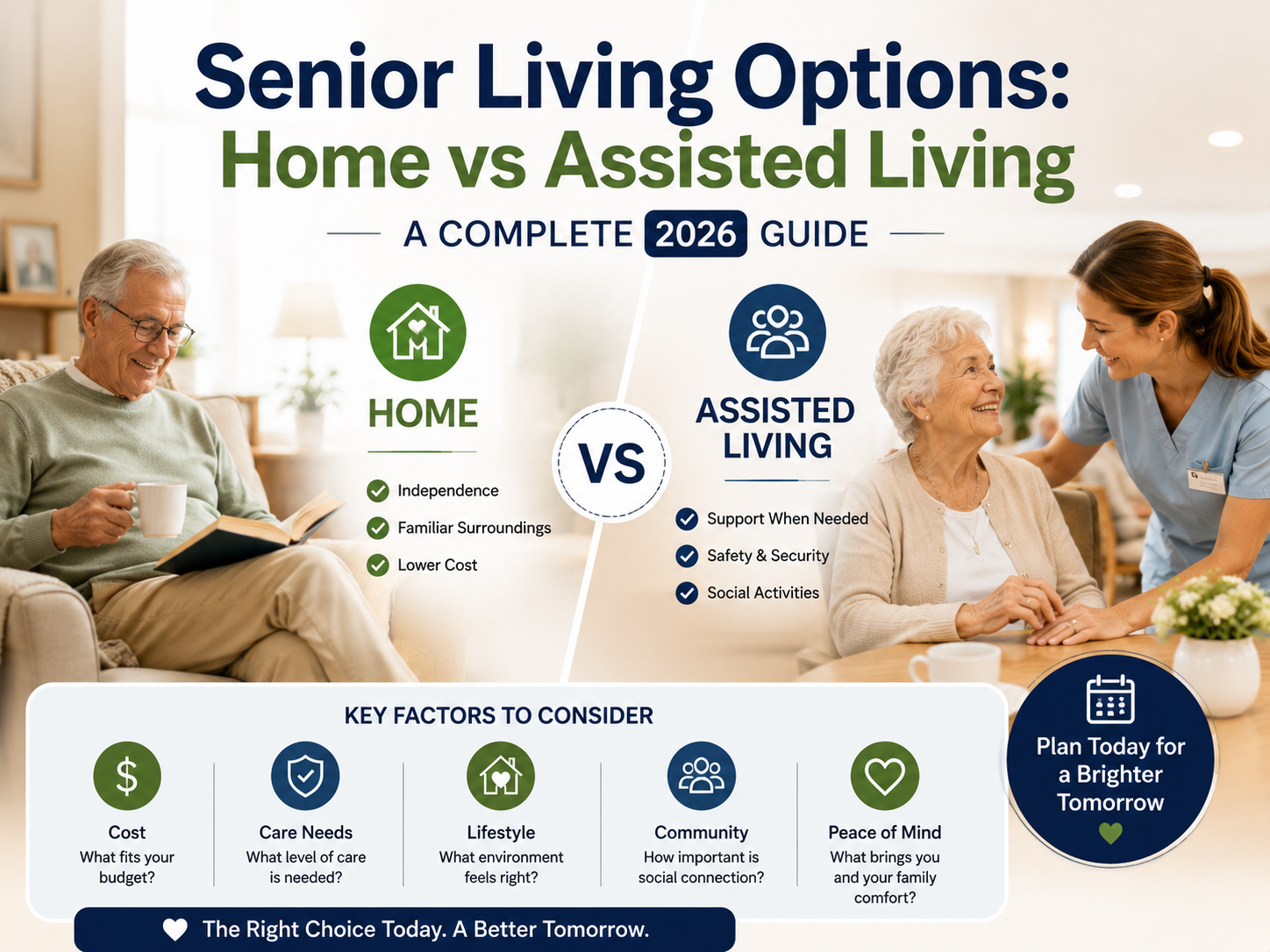
At some point, most families face a deeply personal question: is it safer and better for an aging parent or spouse to remain at home, or is it time to consider assisted living? There is no universal right answer — the best choice depends on health status, finances, family capacity, and personal preferences. This 2026 guide walks through every major option, the real costs, the honest pros and cons, and the signs that can help guide the decision.
Understanding the Spectrum of Senior Living
Senior living is not a single category — it is a spectrum that ranges from full independence at home to round-the-clock skilled nursing care. Understanding where on this spectrum a person's current needs fall (and where they may fall in the future) is the foundation of any sound decision.
Aging in place at home means continuing to live in one's own residence — with or without support services. For many seniors, this is the strongly preferred option. Familiarity, independence, community ties, and avoiding the upheaval of a move are all powerful factors. Whether aging in place is sustainable depends on the level of care needed, the safety of the home environment, and the availability of family or professional support.
Independent living communities (also called active adult communities or 55+ communities) are for seniors who are largely self-sufficient but want the benefits of community — social activities, maintenance-free living, and proximity to peers. These are not care facilities; they do not provide personal care or medical services. They are a lifestyle choice for healthy, active older adults.
Assisted living facilities provide housing combined with personal care services — help with activities of daily living (ADLs) such as bathing, dressing, grooming, medication management, and meals — for seniors who need support but do not require the intensive medical care of a skilled nursing facility. Assisted living is the middle tier of the care spectrum.
Memory care communities are specialized assisted living facilities designed specifically for individuals with Alzheimer's disease, other dementias, or significant cognitive impairment. They offer secured environments, staff trained in dementia care, and programming designed to support cognitive function and quality of life.
Skilled nursing facilities (SNFs) / nursing homes provide 24-hour nursing care, rehabilitation services, and medical management for individuals with serious or complex health conditions. Skilled nursing is the highest level of long-term residential care outside of a hospital.
Continuing care retirement communities (CCRCs) offer multiple care levels on one campus — typically independent living, assisted living, memory care, and skilled nursing. Residents can transition between levels as their needs change without moving to a new community.
Aging in Place: What It Really Takes
Aging in place successfully is not simply about staying at home — it requires honest assessment of whether the home and the support system can realistically meet evolving care needs. Many seniors and families underestimate the challenges until a health crisis forces a reassessment.
Home Safety and Modification
Most homes are not designed for aging adults. Falls are the leading cause of injury-related death among Americans 65 and older — and many fall risks are architectural. A safety assessment should identify hazards including loose rugs, poor lighting, slippery bathroom surfaces, high thresholds, absence of grab bars, and staircases that become impassable if mobility declines.
Common home modifications that support aging in place include: grab bars in the bathroom and shower; a walk-in shower or roll-in shower replacing a traditional tub-over-shower; raised toilet seats or comfort-height toilets; stair lifts or ramps for level changes; lever-style door handles replacing round knobs; non-slip flooring and stair treads; improved lighting throughout; and a main-floor bedroom and bathroom so stairs can be avoided altogether.
The cost of modifications varies widely — from a few hundred dollars for grab bar installation to $10,000–$30,000 or more for a full bathroom renovation or stair lift installation. Some modifications may be covered partially by Medicare or Medicaid under certain programs; state and local aging services agencies sometimes offer grants or low-interest loans for home modification.
In-Home Care Services
Professional home care can fill gaps in what family members are able to provide. There are two primary categories:
Non-medical home care (also called personal care or custodial care) covers assistance with ADLs — bathing, dressing, grooming, toileting — plus homemaking services such as meal preparation, light housekeeping, laundry, and medication reminders. These services are provided by home health aides or personal care aides and do not require a physician's order. The national median cost is approximately $30–$35 per hour in 2026, with significant regional variation.
Skilled home health care involves nursing, physical therapy, occupational therapy, speech therapy, or other clinical services delivered in the home. It requires a physician's order and is covered by Medicare for homebound patients who meet eligibility criteria. Skilled home health is typically short-term and episodic (following a hospitalization, for example) rather than ongoing.
The cost of home care adds up quickly. Full-time (40+ hours per week) non-medical home care often exceeds $5,000–$6,000 per month in most U.S. markets. Around-the-clock live-in care typically costs $10,000–$15,000+ per month, depending on location and care needs — often comparable to or exceeding the cost of assisted living.
Family Caregiver Considerations
Family caregiving is the backbone of most home-based care for aging adults. According to AARP, more than 53 million Americans provide unpaid care to an adult family member or friend. The contributions of family caregivers are immense and often underacknowledged — but caregiver burnout is real and carries serious consequences for both the caregiver and the person receiving care.
Families considering aging in place should honestly evaluate: the caregiving capacity of family members (including their own health, employment, and geographic proximity); whether the level of care needed is realistic to provide at home long-term; and what happens if a primary family caregiver becomes unavailable due to their own illness, job change, or other life event. A plan that depends entirely on one family caregiver without a backup is fragile.
Assisted Living: What It Provides and What It Costs
Assisted living has grown substantially in the past two decades. The U.S. now has more than 30,000 assisted living communities serving approximately 800,000 residents. Quality, cost, and culture vary enormously — from modest smaller-scale board-and-care homes serving six to eight residents to large resort-style communities with extensive amenities.
What Assisted Living Typically Includes
A standard assisted living package generally includes a private or semi-private apartment or room; three meals per day in a communal dining room; housekeeping and laundry services; personal care assistance (help with bathing, dressing, grooming, and toileting as needed); medication management; social and recreational programming; transportation to appointments; 24-hour staff availability; and emergency call systems.
Additional care services — such as incontinence care, memory care programming, or higher levels of nursing attention — are often billed on a tiered basis above the base rate. Understanding exactly what the base monthly rate covers and what costs extra is essential when comparing communities.
Assisted Living Costs in 2026
The national median monthly cost of assisted living in 2026 is approximately $5,500–$6,000 per month, according to industry benchmarks. However, costs range widely by geography: in high-cost-of-living markets (California, New York, Massachusetts, Washington), monthly costs commonly exceed $7,000–$9,000. In more affordable markets (rural Midwest, parts of the South), quality assisted living communities may be available for $3,500–$5,000 per month. Memory care is typically $1,000–$2,000 per month above standard assisted living rates due to the specialized staffing required.
It is important to understand how assisted living is paid for. Medicare does not cover assisted living (Medicare is an acute and skilled care program, not a long-term custodial care program). Medicaid does cover assisted living in many states for income-eligible individuals through Medicaid waiver programs — but availability varies significantly by state and there are often long waitlists. Long-term care insurance (purchased before the need arises) may cover assisted living costs for policyholders with qualifying policies. Most assisted living residents pay privately, primarily from retirement savings, proceeds from the sale of a home, or family contributions.
Head-to-Head Comparison: Home vs Assisted Living
| Factor | Aging in Place (Home) | Assisted Living |
|---|---|---|
| Independence & familiarity | Maximum — own home, own routines, own community | Moderate — private apartment, but communal setting |
| Cost (typical) | Variable: $0 (family-only care) to $15,000+/mo (round-the-clock paid care) | $3,500–$9,000+/mo depending on location and care level |
| Medical/care oversight | Lower — depends on family vigilance and scheduled visits | Higher — 24/7 staff, structured medication management |
| Social connection | At risk — isolation is a major health concern for seniors at home alone | Built-in — daily activities, dining, peer community |
| Safety | Depends heavily on home modification and supervision level | Higher for falls, emergencies, and medication errors |
| Family caregiver burden | Often significant; can lead to caregiver burnout | Reduced — professional staff handles daily care |
| Flexibility | High — services can be added/reduced as needed | Lower — structured environment, move-in commitment |
| Continuity | Risk of crisis-driven move if needs escalate suddenly | Care can often escalate within same community |
| Medicare coverage | Skilled home health (short-term); no coverage for custodial care | Not covered by Medicare |
| Best for | Seniors with mild needs, strong family support, safe home | Seniors needing daily assistance, isolation risk, or family unable to provide care |
Signs It May Be Time to Consider Assisted Living
One of the hardest aspects of this decision is timing. Many families wait until a health crisis forces action — a fall resulting in hospitalization, a wandering episode, or a medication error — rather than planning proactively. These are signals worth taking seriously:
Declining ability to manage activities of daily living. If a senior is having significant difficulty bathing, dressing, preparing meals, managing medications, or toileting independently, and the support needed exceeds what family can reliably provide, assisted living warrants serious consideration.
Fall history or high fall risk. A fall — especially one resulting in injury — is a major warning sign. If home modification and supervised care cannot adequately reduce fall risk, a supervised environment may be safer.
Isolation and loneliness. Social isolation is a serious health risk for older adults — associated with cognitive decline, depression, cardiovascular disease, and premature death. A senior who rarely leaves home and has limited social contact may benefit enormously from an assisted living community's built-in social programming.
Caregiver burnout. When family caregivers are exhausted, resentful, or experiencing their own health problems due to caregiving demands, the quality of care inevitably suffers. Caregiver burnout is a legitimate and serious reason to transition to professional care.
Cognitive decline and safety concerns. Dementia introduces safety risks — forgetting to turn off the stove, wandering, medication mismanagement — that can be difficult to manage safely at home. Memory care communities are specifically designed for these challenges.
Medication management failures. Missed doses, double-dosing, or taking medications incorrectly are common and dangerous. If a senior cannot reliably manage their medications and in-home support is insufficient, assisted living's structured medication management may be safer.
Frequent emergency visits or hospitalizations. A pattern of ER visits or hospitalizations often signals that the current level of care is insufficient to manage health conditions before they escalate.
Having the Conversation
Discussing a transition to assisted living with a parent or loved one is emotionally challenging. The senior may feel that moving means losing independence, admitting decline, or giving up their home — feelings that are deeply understandable. Approaching the conversation with empathy rather than urgency, focusing on safety and quality of life rather than burden, and involving the senior as an active participant in the decision wherever possible tends to yield better outcomes.
Touring communities together — framing it as information-gathering rather than a commitment — allows the senior to form their own impressions. Connecting with a geriatric care manager or certified senior advisor (CSA) can provide an objective third-party assessment of care needs and options, which can be especially helpful when family members disagree.
Products That Support Aging in Place at AllCare Store
If aging in place is the right choice, having the right equipment and supplies makes it safer and more sustainable. AllCare Store carries a comprehensive range of home care and mobility products to support independent and assisted living at home.
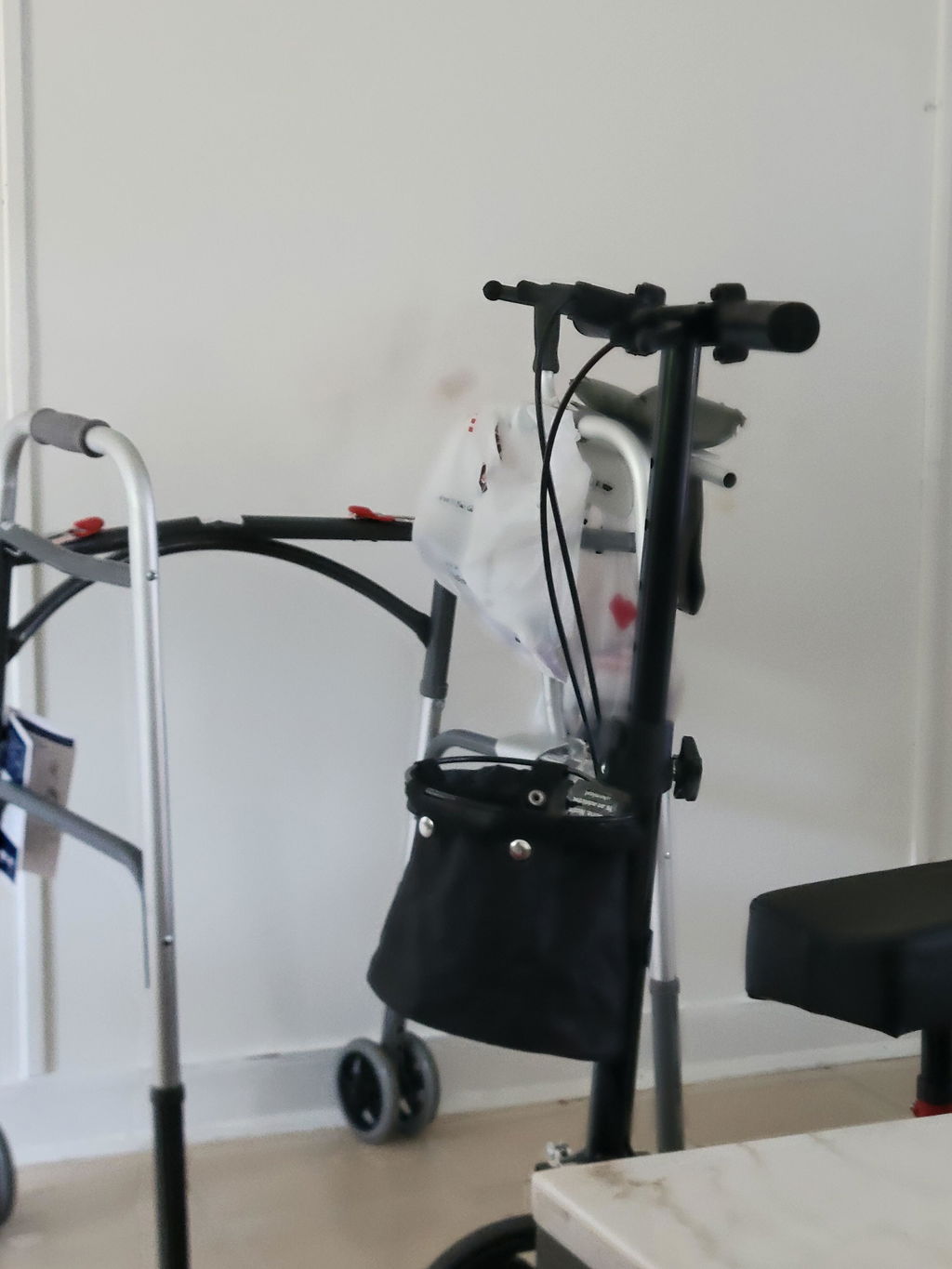
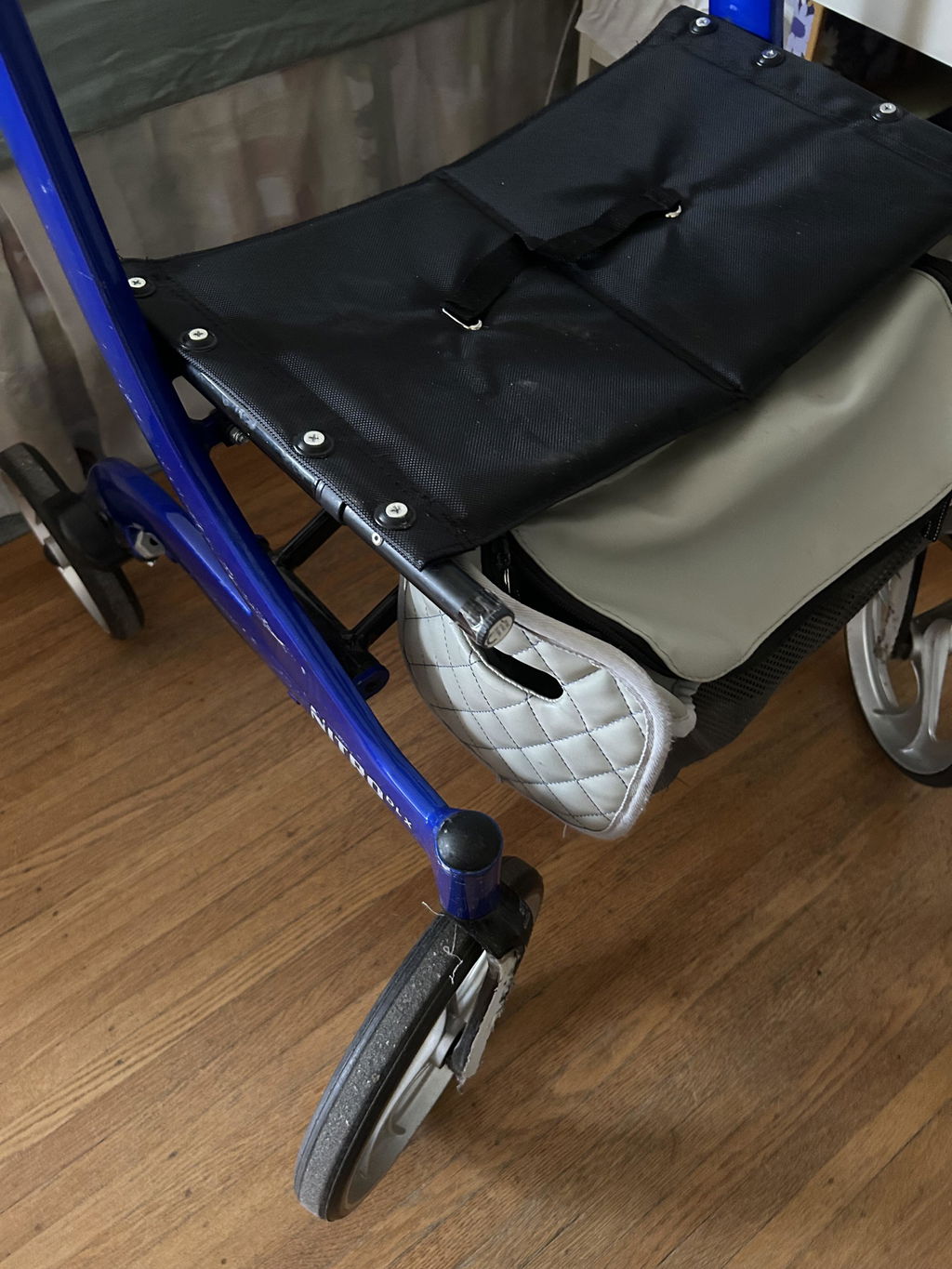
For fall prevention and bathroom safety, browse our bathroom safety collection — grab bars, shower chairs, bath benches, raised toilet seats, and non-slip products. For mobility support, visit our walkers, canes, and rollators collection. For incontinence care supplies used both at home and in care facilities, see our adult incontinence collection. For daily living aids and adaptive equipment, visit our daily living aids collection.
Call our team at 1-888-889-6260, Monday–Friday 7:00 AM–4:00 PM CST for product guidance. Free shipping on qualifying orders at AllCare Store.
Frequently Asked Questions: Home vs Assisted Living
How do I know when it's time for assisted living?
Key signs that assisted living may be appropriate include: significant difficulty with daily activities such as bathing, dressing, and meal preparation; a recent fall or high fall risk in the home; social isolation and loneliness; caregiver burnout in family members; cognitive decline with associated safety concerns (wandering, medication mismanagement, leaving the stove on); frequent emergency room visits or hospitalizations; and weight loss or poor nutrition suggesting meals are being skipped or poorly prepared. A geriatric care manager or the senior's physician can help assess the level of care needed and whether it can be realistically met at home.
Is assisted living covered by Medicare?
No — Medicare does not cover assisted living. Medicare is a health insurance program covering acute medical care, hospitalization, short-term skilled nursing facility care (post-hospitalization), and some home health services. It does not cover custodial care — the personal care and daily living support that assisted living provides. Medicaid may cover assisted living in some states for income-eligible individuals through Medicaid waiver programs, but availability varies by state and waitlists can be long. Long-term care insurance policies (purchased before the need arises) often cover assisted living costs. Most assisted living residents pay privately, from retirement savings, home sale proceeds, or family support.
What is the difference between assisted living and a nursing home?
Assisted living and nursing homes (skilled nursing facilities) are different levels of care. Assisted living provides housing combined with help for activities of daily living — bathing, dressing, medication management, meals — for people who need support but do not require intensive medical care. Assisted living residents typically live in private or semi-private apartments and have significant independence. Nursing homes (skilled nursing facilities) provide 24-hour nursing care and medical management for people with serious or complex health conditions who need clinical oversight that cannot be provided at home or in assisted living. Nursing home residents often have more significant medical needs, mobility limitations, or cognitive impairment. Costs and regulatory requirements also differ significantly between the two.
How much does assisted living cost per month in 2026?
The national median cost of assisted living in 2026 is approximately $5,500–$6,000 per month for a private apartment with standard personal care services. Costs vary significantly by geography: high-cost markets like California, New York, and Massachusetts commonly see monthly rates of $7,000–$9,000 or more, while more affordable markets may offer quality assisted living for $3,500–$5,000 per month. Memory care communities are typically $1,000–$2,000 per month above standard assisted living rates. Additional care services above the base rate may be charged separately on a tiered basis. It's important to carefully review what the base monthly rate includes and what services cost extra before comparing communities.
What questions should I ask when touring an assisted living community?
Key questions to ask when touring an assisted living community include: What is included in the base monthly rate, and what costs extra? What is the staff-to-resident ratio, and how does it vary by shift? What training do staff members receive, especially for dementia and behavioral care? How is care assessed when a new resident moves in, and how frequently is the care plan reviewed? What is the process if a resident's care needs increase — can care be escalated within the community, or would they need to move? What happens if a resident runs out of funds? What are the policies on medication management? Ask to see the most recent state inspection report. Visit unannounced if possible, at a meal time, to observe the actual environment and staff interactions.
For home care products, mobility aids, bathroom safety equipment, and senior care supplies, visit AllCare Store. Browse our bathroom safety collection and mobility aids. Free shipping on qualifying orders. Call 1-888-889-6260, Monday–Friday 7 AM–4 PM CST.