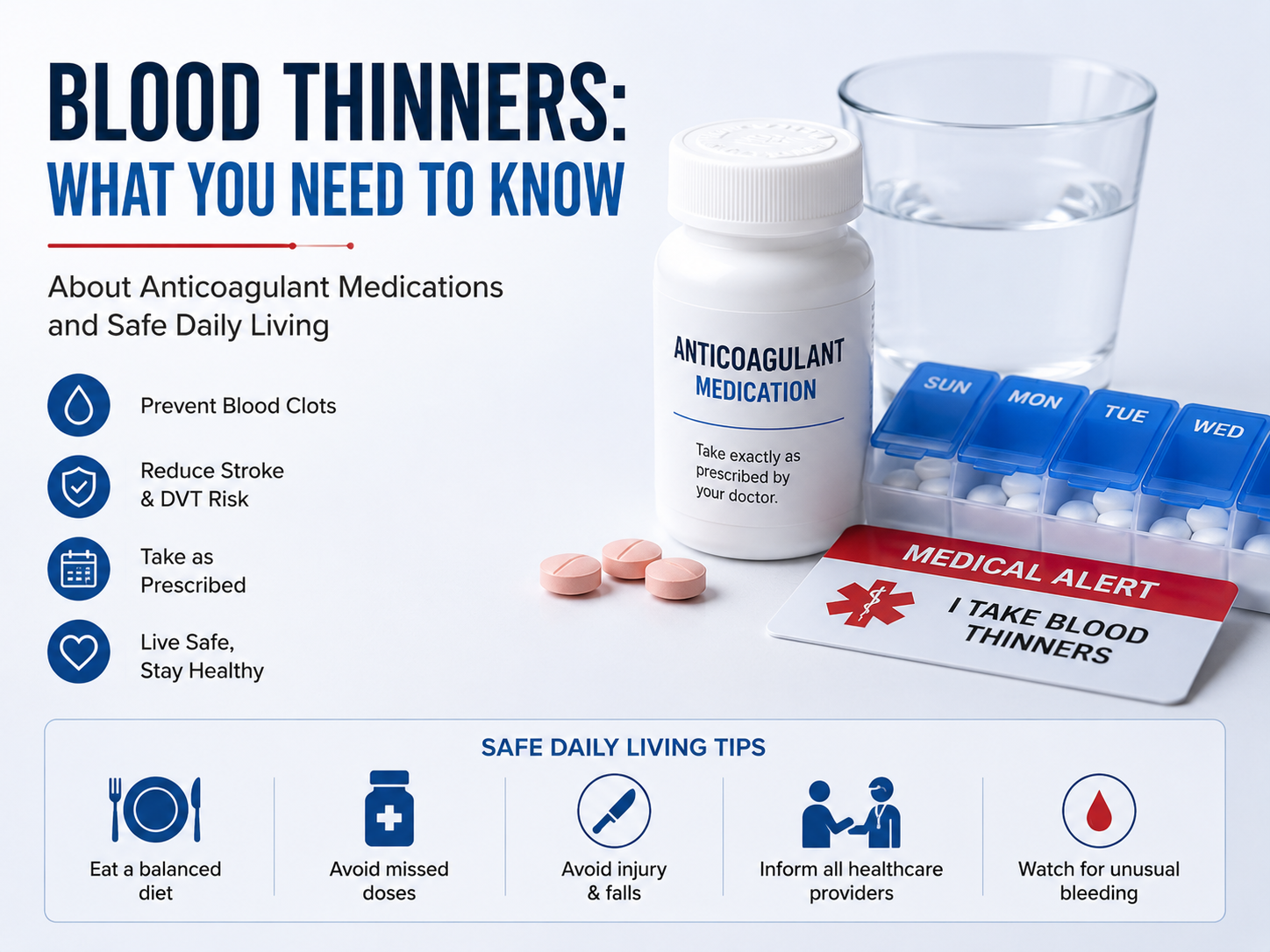
MEDICAL DISCLAIMER: This article is for educational purposes only and does not constitute medical or pharmaceutical advice. Blood thinners (anticoagulant medications) carry serious risks and require careful medical supervision. Never start, stop, or change your anticoagulant dose without consulting your prescribing physician. If you experience unusual bleeding, severe bruising, or other concerning symptoms while on anticoagulants, seek medical attention immediately. If you are experiencing a medical emergency, call 911.
George's New Normal: Learning to Live Well on Warfarin
George was 71 years old when his doctor told him his atrial fibrillation diagnosis meant he'd need to start a blood thinner. He'd heard the term before — a neighbor took warfarin — but he didn't really understand what it meant. That first prescription came with a dense pamphlet, a referral to an anticoagulation clinic, and a quiet anxiety that followed him home.
The first few months were rocky. He had a small bruise that alarmed him. He cut himself shaving and couldn't get the bleeding to stop for twenty minutes. He avoided leafy greens because someone told him they were "dangerous" on warfarin — and then his INR came back too high at his next check. He was doing everything he could think of, but navigating life on anticoagulants felt like crossing a minefield blindfolded.
But gradually, with patient guidance from his anticoagulation clinic and his cardiologist, George found his footing. He learned the difference between concerning bleeding and manageable bleeding. He understood his INR numbers and what they meant. He discovered that leafy greens weren't to be avoided — they just needed to be eaten consistently. He set up a home blood pressure monitoring routine that gave his care team better data. And he developed the daily habits and home organization system that made managing his medication reliable instead of stressful.
"It's not as scary as I thought," he told his daughter. "You just have to understand what you're dealing with."
That's exactly the goal of this guide. Millions of Americans take blood thinners — for atrial fibrillation, blood clot treatment and prevention, mechanical heart valves, and other conditions. Understanding anticoagulant therapy helps you live safely, confidently, and actively within it. At AllCare Store, we're here to support that journey with the right products and reliable information.
What Blood Thinners Actually Do
Despite the common name, blood thinners don't actually make your blood thinner or more watery. They work by interfering with the blood clotting process — reducing the ability of blood to form clots. This distinction matters because it explains both why they're prescribed and what risks they carry.
Blood clots are a normal and essential function of the body — they stop bleeding from wounds. But in certain medical conditions, clots form inside blood vessels where they don't belong, potentially blocking circulation to the heart, lungs, or brain. Anticoagulant medications reduce this risk by making it harder for clots to form.
Who Needs Blood Thinners?
Doctors prescribe anticoagulants for a range of conditions:
- Atrial fibrillation (AFib): The irregular heart rhythm in AFib allows blood to pool in the heart's chambers, where it can clot and travel to the brain as a stroke. Blood thinners reduce stroke risk in AFib patients by 60-70%.
- Deep vein thrombosis (DVT): Blood clots in the deep leg veins require anticoagulant treatment to prevent the clot from growing or breaking off and traveling to the lungs.
- Pulmonary embolism (PE): A blood clot in the lungs is treated with anticoagulants to allow the body to dissolve the clot and prevent new ones from forming.
- Mechanical heart valves: Artificial heart valves require long-term anticoagulation because the mechanical materials can trigger clotting.
- Post-surgical prevention: Major surgeries (especially orthopedic procedures like hip and knee replacement) often require short-term anticoagulation to prevent post-operative clots.
- Certain inherited clotting disorders: Conditions like Factor V Leiden or antiphospholipid syndrome may require long-term anticoagulation.
Types of Blood Thinners: Understanding Your Medication
Not all blood thinners work the same way. Understanding the type you take helps you understand your monitoring requirements and lifestyle considerations.
Warfarin (Coumadin, Jantoven)
Warfarin has been used for over 60 years and remains one of the most commonly prescribed anticoagulants worldwide. It works by blocking the liver's use of vitamin K to produce clotting factors.
Key features of warfarin:
- Requires regular INR blood testing (typically monthly when stable) to ensure the dose keeps you in the target therapeutic range
- Highly sensitive to dietary vitamin K — consistency with leafy green vegetables (don't avoid them; just be consistent in how much you eat) is more important than avoiding them
- Affected by many medications, supplements, and herbal products — always inform every healthcare provider you're on warfarin before starting anything new
- Alcohol interacts significantly; discuss safe limits with your doctor
- Has an antidote (vitamin K) that can reverse its effects when needed
- The only oral anticoagulant that can be used with mechanical heart valves
Direct Oral Anticoagulants (DOACs)
Newer anticoagulants introduced in the past decade — rivaroxaban (Xarelto), apixaban (Eliquis), dabigatran (Pradaxa), and edoxaban (Savaysa) — work by directly blocking specific clotting factors rather than through vitamin K. They have several advantages over warfarin for many patients:
- No routine blood monitoring required — major advantage for quality of life
- Fewer food interactions
- More predictable dosing
- Lower risk of intracranial (brain) bleeding compared to warfarin
However, they also have important considerations:
- Higher cost (often much higher than generic warfarin)
- Some require twice-daily dosing, which increases the importance of not missing doses
- Reversal agents exist but may not be available in all settings
- Not appropriate for mechanical heart valves or certain kidney conditions
Antiplatelet Agents: Related but Different
Aspirin, clopidogrel (Plavix), and other antiplatelet drugs are sometimes grouped loosely with blood thinners, but they work differently — preventing platelets from clumping together. They're used after heart attacks, stents, or stroke. Some patients are on both an antiplatelet and a full anticoagulant; this combination significantly increases bleeding risk and requires careful management.
Living Safely on Blood Thinners: What You Need to Know
Understanding Bleeding Risk
The fundamental trade-off with anticoagulant therapy is that by reducing clotting ability, you increase bleeding risk. Managing this risk safely is about understanding the difference between minor bleeds (common, manageable) and serious bleeds (rare but requiring immediate attention).
Common, manageable bleeding on anticoagulants:
- Easy bruising
- Cuts that take longer to stop bleeding than usual
- Nosebleeds that stop within 10 minutes with sustained pressure
- Heavier menstrual periods
- Pink or orange urine (trace blood in urine)
- Minor gum bleeding with brushing
Seek immediate medical attention for:
- Cuts that don't stop bleeding after 10-15 minutes of firm, sustained pressure
- Coughing or vomiting blood
- Black, tarry, or bright red stools (signs of GI bleeding)
- Heavy or bright red blood in urine
- Sudden severe headache, confusion, weakness, or vision changes (possible brain bleed)
- Abdominal pain with swelling
- Nosebleeds that don't stop after 30 minutes of pressure
- Any significant head injury — even with no visible bleeding, anticoagulants increase intracranial bleed risk after head trauma
Fall Prevention: A Critical Priority
For patients on blood thinners, falls are more dangerous than for the general population — both because falls can cause serious bleeding and because head injuries can be life-threatening on anticoagulants even when they appear minor externally.
Fall prevention at home is a medical priority, not just a comfort measure. Key strategies include:
- Remove trip hazards: Area rugs, loose cords, clutter on walkways
- Adequate lighting: Night lights in hallways and bathrooms; motion-activated lighting
- Bathroom safety equipment: Grab bars at the toilet and shower, non-slip bath mats, shower chairs for unstable patients
- Footwear: Non-slip slippers or shoes indoors at all times; no walking in socks on smooth floors
- Exercise: Balance-focused exercise programs (tai chi, balance PT) reduce fall risk substantially in older adults
Our Bathroom Safety collection and Fall Prevention & Home Management collection offer a comprehensive range of safety products important for anticoagulant patients.
Medication Management: Never Miss a Dose
Consistency is everything with blood thinners. Missing doses of warfarin raises your clotting risk; doubling up to compensate for a missed dose raises your bleeding risk. For DOACs, missing doses can leave you unprotected against clots.
Using a reliable pill organizer is one of the most practical and important steps for anticoagulant patients:
- A weekly pill organizer with compartments for AM/PM doses makes it visually obvious whether a dose was taken
- Phone alarm reminders are valuable for twice-daily medications
- Medication management apps can provide dosage logs useful for medical appointments
- Travel pill organizers ensure maintenance of medication schedule when away from home
Monitoring Blood Pressure at Home
Blood pressure monitoring is directly relevant to anticoagulant safety. Poorly controlled hypertension significantly increases bleeding risk in patients on blood thinners, particularly the risk of hemorrhagic (bleeding) stroke. Tracking your blood pressure at home gives you and your care team important safety data.
The Omron 3 Series Upper Arm Blood Pressure Monitor is an easy-to-use, clinically validated device ideal for daily home monitoring. Regular readings help your doctor understand how your blood pressure patterns relate to your anticoagulant therapy and overall cardiovascular risk.
Browse our complete Blood Pressure Monitors collection for options ranging from simple single-user models to Bluetooth-enabled devices that sync with smartphone health apps for easy sharing with your care team.
Diet and Blood Thinners
For Warfarin Patients: Vitamin K Consistency
Vitamin K is essential to warfarin management — but the rule is consistency, not avoidance. Vitamin K (found in leafy greens, broccoli, Brussels sprouts, avocado, and other foods) counteracts warfarin's effect. Many patients make the mistake of strictly avoiding these foods; this is unnecessary and nutritionally counterproductive.
The correct approach: eat approximately the same amount of vitamin K-rich foods each week. If you normally eat salads 3 times a week, keep eating salads 3 times a week. Abrupt changes — eating a large amount of spinach one week and none the next — cause INR swings that make management difficult. Consistent intake allows your warfarin dose to be calibrated around your typical diet.
Supplements and Herbal Products
Many common supplements interact with anticoagulants and can dangerously alter your clotting status. Always check with your doctor or pharmacist before starting any supplement while on blood thinners:
- Increases bleeding risk: Fish oil/omega-3s (high doses), vitamin E, garlic supplements, ginkgo biloba, ginseng, turmeric supplements, St. John's Wort (increases warfarin metabolism)
- May reduce anticoagulant effect: Coenzyme Q10 (high doses), large amounts of vitamin K
- Varies by medication and dose: Cranberry products, chamomile, green tea extracts
Alcohol
Alcohol interacts with all anticoagulants, though the effect is most pronounced with warfarin. Occasional moderate alcohol (1 drink per day or fewer) is generally acceptable, but discuss safe limits with your prescribing physician. Heavy drinking dramatically increases bleeding risk.
Dental Care and Minor Procedures on Blood Thinners
Dental procedures, surgery, and many other medical procedures require specific planning for patients on anticoagulants. Never stop or adjust your medication before a procedure without explicit instructions from your prescribing physician — stopping anticoagulants abruptly can be dangerous.
For dental procedures, modern evidence shows that minor dental work (cleanings, routine fillings) generally does not require stopping anticoagulants; the risk of stopping the medication may outweigh the risk of bleeding. More involved dental procedures require coordination between your dentist and anticoagulation provider.
Before any procedure — including colonoscopies, injections, biopsies, or surgery — inform every provider that you are on an anticoagulant and what type. The timing of holding and resuming the medication depends on the procedure's bleeding risk and which anticoagulant you take.
The Importance of Medical Alert Identification
Patients on anticoagulants should carry medical identification indicating their anticoagulant use. In an emergency, first responders need to know that you're on a blood thinner — it affects how bleeding is managed, which medications can be given, and which reversal agents may be needed. Options include:
- Medical alert bracelet or pendant
- Wallet card identifying your medication and emergency contacts
- Medical information stored in your smartphone's emergency contacts
Staying Active on Anticoagulants
Many patients on blood thinners assume they need to significantly restrict physical activity. In most cases, this is not true — and exercise is actually important for cardiovascular health in the conditions that require anticoagulation, including AFib and DVT prevention.
General guidance:
- Walking, swimming, cycling: Generally safe and strongly encouraged for cardiovascular health
- Contact sports and activities with high fall risk: Should be discussed with your cardiologist; the bleeding risk from injury must be weighed against benefits
- Resistance exercise: Generally safe; be aware of bruising at injection or IV sites
- Core and balance training: Particularly valuable for reducing fall risk
Our Physical Therapy & Rehab Equipment collection offers exercise tools appropriate for maintaining fitness safely while on anticoagulant therapy.
Frequently Asked Questions About Blood Thinners
How long will I need to be on a blood thinner?
Duration depends entirely on why you're taking a blood thinner. For a first DVT or PE caused by a temporary risk factor (like surgery), anticoagulation may be prescribed for 3-6 months. For recurrent clots, unprovoked clots, or permanent risk factors (like atrial fibrillation or a mechanical heart valve), anticoagulation is typically lifelong. Your prescribing physician will review your specific situation and make recommendations based on the balance of your clotting and bleeding risks. Always discuss any questions about duration with your doctor rather than stopping independently.
What's the difference between warfarin and the newer blood thinners like Eliquis or Xarelto?
Warfarin is a vitamin K antagonist that has been used for decades. It requires regular INR blood monitoring and is significantly affected by diet and other medications. The newer drugs (apixaban/Eliquis, rivaroxaban/Xarelto, dabigatran/Pradaxa, edoxaban/Savaysa) are called direct oral anticoagulants (DOACs). They target specific clotting factors directly, require no routine blood monitoring, have fewer food interactions, and have shown lower rates of serious brain bleeding compared to warfarin in clinical trials. However, they're more expensive, not suitable for all conditions (especially mechanical heart valves), and require strict dose consistency. Your doctor will determine which option is most appropriate for your medical history and the condition being treated.
What should I do if I accidentally miss a dose?
The approach depends on which medication you take and how much time has passed since the missed dose. For warfarin: if you remember the same day, take the dose; if you realize the next day, skip the missed dose and continue your regular schedule — do not double up. For DOACs: if it's a once-daily medication, take it as soon as you remember on the same day; if it's twice daily, take it if it's within 6 hours of the scheduled time. Never take a double dose to compensate. Document the missed dose and inform your anticoagulation provider at your next contact. If you're unsure what to do, call your pharmacist or doctor's office — most have guidance for this scenario available 24/7.
Can I take ibuprofen or aspirin while on blood thinners?
For most anticoagulant patients, ibuprofen, naproxen, and other NSAIDs should generally be avoided because they have their own antiplatelet effect and also irritate the stomach lining, significantly increasing GI bleeding risk when combined with anticoagulants. Aspirin at prescription doses is sometimes prescribed alongside anticoagulants for specific indications, but this is a deliberate medical decision. For pain relief, acetaminophen (Tylenol) is generally the preferred OTC option for anticoagulant patients — though at doses above 2,000mg/day, it can interact with warfarin and affect INR. Always discuss pain management options with your prescribing physician.
Should I change my diet to avoid vitamin K if I'm on warfarin?
No — eliminating vitamin K from your diet is the wrong approach. Vitamin K-rich foods (leafy greens, broccoli, Brussels sprouts, and others) are nutritious and should remain part of a healthy diet. The key is consistency: eat approximately the same amount of vitamin K-containing foods each week, and your warfarin dose can be adjusted to account for your typical intake. Avoiding these foods entirely, then eating a large amount at a restaurant, causes dangerous INR swings. Many anticoagulation clinics provide specific guidance on vitamin K content in foods; ask your provider for this resource. Eating vitamin K consistently is far better than unpredictably.
Is it safe to travel on blood thinners?
Yes, most people on anticoagulants can travel safely with appropriate preparation. Key considerations: carry extra medication (at least a 2-week supply beyond your trip length), keep medications in carry-on baggage when flying, bring documentation of your prescription and prescribing physician, wear compression stockings during long flights (immobility increases clot risk even on anticoagulants), stay hydrated, and move around every 1-2 hours during long travel. For warfarin patients, be aware that INR testing services are available internationally. Research local emergency medical resources at your destination. Inform your anticoagulation provider of your travel plans so they can provide specific guidance for your medication and destination.
Building Your Heart Health Home Toolkit
For patients managing anticoagulant therapy, having the right products at home supports both safety and quality of life. At AllCare Store, we recommend building a heart health toolkit that includes:
- Home blood pressure monitor — daily monitoring is important for patients on anticoagulants due to the connection between hypertension and bleeding risk. See our Blood Pressure Monitors collection.
- Reliable pill organizer — medication consistency is non-negotiable with anticoagulants
- First aid supplies — bandages, gauze, and wound care materials for cuts that may take longer to clot. Browse our Medicine & Health collection for first aid essentials.
- Bathroom safety equipment — grab bars and non-slip mats as a core fall prevention strategy. See our Bathroom Safety collection.
- Medical alert identification — ensure emergency responders know you're on an anticoagulant
You Can Live Well on Blood Thinners
Like George, millions of people manage their anticoagulant therapy and live full, active, connected lives. The adjustment period is real — there are new habits to build, a new vocabulary to learn, and a new level of medical engagement to maintain. But the alternative — the stroke, the pulmonary embolism, the recurrent clot — is what your medication is protecting you against. The therapy is worth the adjustment.
Knowledge is your most important tool. Understand your medication, know your warning signs, build consistent daily habits, and maintain an open, proactive relationship with your anticoagulation provider. The right home monitoring and safety products support all of these goals.
AllCare Store is here to help at every step. Explore our Senior Health and Medicine & Monitors collections, or call our team at 1-888-889-6260 for personalized guidance on the right products for your health management needs. Living safely on blood thinners isn't just possible — for most people, it becomes simply part of how they take care of themselves.