MEDICAL DISCLAIMER: This article is for informational purposes only and does not constitute medical advice. Erectile dysfunction can be a symptom of underlying health conditions including cardiovascular disease and diabetes. Always consult your physician before using any ED device or making changes to your treatment plan. If you experience sudden or severe changes in sexual function, seek medical evaluation promptly.
Frank's Story: Finding His Way Back
Frank was 64 when his doctor first mentioned it. He'd gone in for a routine check-up — a bit of fatigue, some joint stiffness, the usual complaints of a man who'd worked hard his whole life. He hadn't planned on bringing up the other thing, the thing that had been quietly affecting his marriage for the past two years. But his doctor asked a direct question, and Frank found himself answering honestly.
"It's more common than you think," the doctor told him. "And there are real options." Frank learned that his erectile dysfunction wasn't just a personal failing — it was a medical condition, one with known causes and established treatments. He'd been prescribed a medication, but side effects made it difficult to use consistently. His doctor referred him to a urologist, who explained that FDA-cleared vacuum erection devices offered a non-pharmaceutical alternative that millions of men used safely and effectively every day.
Frank was skeptical. He'd never heard anyone talk about these devices. But his wife was supportive, and he was tired of the quiet distance that had grown between them. He gave the vacuum erection device a try, spent a few sessions learning the technique, and within weeks experienced something he hadn't expected: not just physical results, but a restored sense of confidence and closeness with his partner.
His story isn't unusual. Erectile dysfunction affects an estimated 30 million men in the United States, and it becomes increasingly common with age — affecting roughly 40% of men at age 40 and 70% by age 70. Yet it remains one of the most under-discussed health issues men face. At AllCare Store, we believe men deserve straightforward, compassionate information about the products that can genuinely help. This guide covers everything you need to know about erectile dysfunction aids — from how they work to how to choose the right one for your situation.
Understanding Erectile Dysfunction: What's Actually Happening
Before exploring solutions, it helps to understand what erectile dysfunction is and why it occurs. An erection requires a coordinated process involving nerves, blood vessels, muscles, and hormones. When any part of this system is disrupted, achieving or maintaining an erection becomes difficult.
Common Physical Causes
In older men especially, ED is most often related to physical factors:
- Cardiovascular disease: The same arterial narrowing that affects the heart can restrict blood flow to penile tissue. ED is frequently an early warning sign of cardiovascular issues.
- Diabetes: Chronically elevated blood sugar damages nerves and blood vessels, affecting the erectile response. Men with diabetes are two to three times more likely to experience ED.
- Hormonal changes: Declining testosterone levels with age can reduce sexual desire and contribute to erectile difficulty.
- Prostate cancer treatment: Surgery, radiation, and hormone therapy for prostate cancer commonly affect erectile function, sometimes permanently.
- Medications: Blood pressure medications, antidepressants, antihistamines, and many other common drugs list ED among their side effects.
- Neurological conditions: Parkinson's disease, multiple sclerosis, and spinal cord injuries can disrupt the nerve signals required for erection.
Psychological Factors
Even when physical causes are primary, psychological components often compound the problem. Anxiety about performance can trigger a cycle where the fear of not achieving an erection actually prevents one — making occasional difficulty into a persistent pattern. Depression, relationship stress, and past sexual trauma can all contribute. This is why addressing ED holistically — both physically and emotionally — tends to produce better outcomes.
Why This Matters Beyond the Bedroom
Erectile dysfunction is associated with significant effects on quality of life, relationship satisfaction, and psychological well-being. Men with untreated ED report higher rates of depression, lower self-esteem, and greater relationship strain. Addressing ED isn't a vanity concern — it's a legitimate healthcare need with real implications for overall health and happiness.
Types of Erectile Dysfunction Aids
ED aids include a range of devices and products designed to either facilitate erection mechanically or support sexual activity. Understanding the options helps you make an informed choice in consultation with your doctor.
Vacuum Erection Devices (VEDs): The Gold Standard in Non-Pharmaceutical ED Treatment
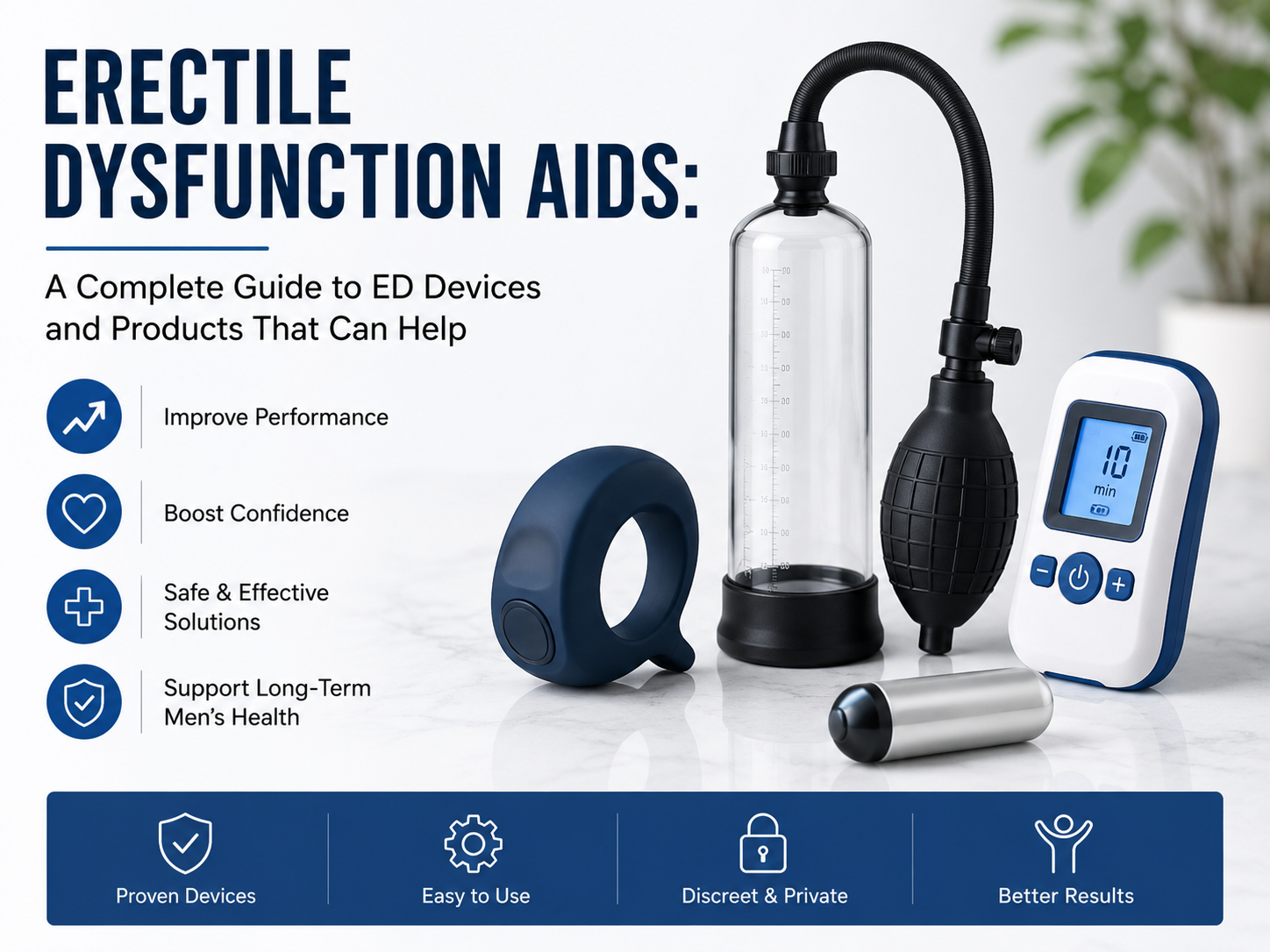
A vacuum erection device — sometimes called a penile pump or vacuum pump — is an FDA-cleared medical device that uses gentle suction to draw blood into the penis, creating an erection. A constriction ring is then placed at the base of the penis to maintain the erection for intercourse.
How VEDs work:
- The cylinder is placed over the penis and pressed against the body to create a seal
- A pump (manual or battery-operated) creates a vacuum inside the cylinder, drawing blood into penile tissue
- When an erection is achieved, a constriction ring is slid from the base of the cylinder onto the base of the penis
- The cylinder is removed; the ring maintains the erection for up to 30 minutes
Clinical evidence for VEDs: Multiple clinical studies have demonstrated that vacuum erection devices are effective for 80-90% of men with erectile dysfunction, regardless of the underlying cause. They work for men with diabetes, cardiovascular disease, following prostate cancer surgery, and for those who cannot tolerate oral medications. The American Urological Association recognizes VEDs as a first-line treatment option for ED.
Who benefits most from VEDs:
- Men who cannot take oral ED medications due to heart conditions or drug interactions
- Men who experience side effects from medications (headache, visual changes, nasal congestion)
- Men who prefer a non-pharmaceutical approach
- Men recovering from prostate cancer surgery (VEDs are commonly recommended as part of penile rehabilitation)
- Men with diabetes or vascular disease that limits medication effectiveness
- Those seeking a cost-effective long-term solution (a quality VED may be a one-time purchase vs. ongoing medication costs)
Browse our selection of men's health and personal care products to find vacuum therapy systems from trusted medical device brands.
Penile Constriction Rings
Penile constriction rings (also called cock rings or erection rings) work by restricting venous blood outflow from the penis, helping to maintain an erection once achieved. They can be used alone by men who can achieve but struggle to maintain an erection, or in combination with a VED.
These rings come in different sizes and materials — silicone is most comfortable for regular use. Rings used medically should be removed within 30 minutes to prevent injury. Never use a ring that cannot be quickly removed in an emergency.
Important safety note: Do not use constriction rings if you have bleeding disorders, are taking blood thinners, or have sickle cell disease. Always purchase rings specifically designed for this purpose — improvised rings made from other materials are dangerous.
Penile Support Devices
For men with severe ED or following certain surgeries, penile support devices can enable sexual activity by providing structural support without relying on a natural erection. These semi-rigid prosthetic-style aids are a niche but valuable option for men who have exhausted other approaches.
Supportive Products for Men's Sexual Health
Beyond devices directly targeting erection, a number of supportive products contribute to men's sexual health and overall well-being:
- Lubricants: Personal lubricants reduce friction and enhance comfort, particularly important for men whose partners experience vaginal dryness (a common issue in post-menopausal women).
- Men's health supplements: Certain supplements — including zinc, L-arginine, DHEA, and ashwagandha — have some evidence for supporting testosterone levels and sexual function. They should be viewed as supportive, not curative.
- Blood pressure monitors: Because ED is closely linked to cardiovascular health, regular monitoring with a quality home blood pressure monitor helps men track a key risk factor.
VEDs vs. Oral Medications: Understanding Your Options
Most men first turn to oral medications (PDE5 inhibitors like sildenafil, tadalafil, vardenafil, or avanafil) when ED is diagnosed. These medications work by relaxing smooth muscle in penile arteries, improving blood flow. They're effective for about 70% of men, but they're not right for everyone.
| Factor | Vacuum Erection Device | Oral Medications |
|---|---|---|
| How it works | Mechanical — draws blood into penis via suction | Chemical — relaxes arterial smooth muscle |
| Effectiveness rate | 80-90% of men with ED | ~70% of men with ED |
| Heart medication interactions | No drug interactions | Dangerous with nitrates; caution with many BP drugs |
| Cost over time | One-time purchase; long-lasting | Ongoing prescription cost |
| Side effects | Possible bruising with incorrect use; discomfort | Headache, flushing, nasal congestion, visual changes |
| Spontaneity | Requires preparation (5-10 minutes) | Requires advance dosing (30-60 min or daily) |
| Partner involvement | Can involve partner in preparation | More private |
| Prostate surgery recovery | Highly recommended for penile rehab | Also used, but less effective immediately post-surgery |
Many men use both — medications when they work well, a VED when medications are unavailable, ineffective, or contraindicated. Having multiple options gives you flexibility and confidence.
How to Choose the Right ED Aid
Choosing an erectile dysfunction aid depends on your individual health situation, preferences, and relationship context. Here's a framework to guide your thinking:
Start With Your Doctor
ED is a medical condition with medical causes. Before purchasing any device, have a conversation with your physician or urologist. They can:
- Identify underlying causes (cardiovascular, hormonal, neurological, medication-related)
- Rule out conditions that could make certain devices risky
- Prescribe a VED as a covered medical device (some insurance plans and Medicare cover VEDs with a prescription)
- Recommend specific brands and features appropriate for your situation
Consider Your Health History
Vacuum erection devices are generally safe, but certain conditions warrant additional caution:
- Blood clotting disorders or anticoagulant therapy: VEDs can cause bruising or petechiae (small hemorrhages); discuss with your doctor
- Sickle cell disease or blood dyscrasias: Avoid VEDs without medical clearance
- Penile abnormalities (Peyronie's disease): VEDs may need modification; consult a urologist
- Recent penile surgery: Allow full healing before using a VED
Manual vs. Battery-Operated Pumps
VEDs come with either manual (squeeze or trigger) pumps or battery-operated electric pumps:
- Manual pumps: More affordable, more control over the suction pressure, no batteries required
- Battery/electric pumps: Easier to use with limited hand strength or dexterity; may be preferable for men with arthritis or neurological conditions affecting hand function
Cylinder Size
The cylinder must fit properly to create an effective seal. Most VEDs come in standard sizes, but larger options are available. Measure carefully and consult size guides provided by manufacturers.
Using a Vacuum Erection Device: Practical Tips
Like any medical device, a VED works best when used correctly. Here's what to know:
Getting Started
- Apply a small amount of water-based lubricant to the base of the cylinder opening to improve the seal
- Trim pubic hair if it interferes with the seal
- Start with the lowest vacuum setting and increase gradually
- Practice without the constriction ring initially to become comfortable with the device
Using the Constriction Ring
- Select a ring size that is snug but not uncomfortably tight
- Set a timer — remove the ring within 30 minutes
- Never wear a ring while sleeping
- If you experience pain, numbness, or color change, remove the ring immediately
Building Confidence Over Time
Most men benefit from practicing with their VED several times before using it in a sexual context. Allow yourself a learning curve — most users report feeling comfortable with the device within 2-3 weeks of regular practice. Many couples find that involving a partner in the process reduces anxiety and builds intimacy.
ED and Cardiovascular Health: The Important Connection
Erectile dysfunction is now considered a significant marker for cardiovascular disease. The same arterial disease process that restricts blood flow to the penis can affect the coronary arteries — and ED often precedes heart disease symptoms by several years. This means that if you're experiencing ED, it's worth asking your doctor to evaluate your cardiovascular risk profile.
Monitoring your blood pressure regularly at home is one of the most important things men with ED can do. Hypertension is both a cause of ED and a condition that limits treatment options (since some ED medications interact with blood pressure drugs). Our Omron 3 Series Upper Arm Blood Pressure Monitor provides accurate, convenient home readings that help you and your doctor track this critical indicator.
A heart-healthy lifestyle — regular exercise, a balanced diet, not smoking, managing weight and blood sugar — improves erectile function in addition to cardiovascular health. ED, in many cases, improves or resolves when the underlying health condition is addressed.
Having the Conversation: Talking to Your Partner About ED
One of the most difficult aspects of erectile dysfunction is not the physical experience itself, but the silence around it. Many men carry the burden alone for months or years before mentioning it to their partner or doctor. This silence often makes things worse — partners may misinterpret ED as disinterest or lack of attraction, leading to relationship strain that compounds the psychological component of ED.
Consider these approaches when opening the conversation:
- Frame it as a health issue, not a relationship failure: "I've been dealing with something physical that my doctor confirmed is very common" is different from "there's a problem with us."
- Invite your partner to the appointment: Having a partner present when a urologist explains ED removes mystery and stigma
- Focus on intimacy broadly: While working on solutions, emphasize connection and closeness rather than performance
- Acknowledge your partner's feelings: Partners often feel helpless or confused; validating their experience helps
Frequently Asked Questions About Erectile Dysfunction Aids
Are vacuum erection devices covered by insurance or Medicare?
Some insurance plans and Medicare Part B do cover vacuum erection devices when prescribed by a physician as a medical device for erectile dysfunction. Coverage varies significantly by plan. Ask your doctor to write a prescription specifying "vacuum erection device for erectile dysfunction" and contact your insurance provider to determine coverage. Many Medicare Advantage plans include this benefit; traditional Medicare Part B covers VEDs under certain conditions related to spinal cord injury.
Is it safe to use a vacuum erection device if I take blood pressure medication?
Unlike oral ED medications, vacuum erection devices have no drug interactions — including with blood pressure medications. VEDs are mechanical devices that work independently of your medication regimen. However, men on blood thinners (anticoagulants like warfarin or aspirin) should discuss VED use with their doctor, as VEDs can occasionally cause bruising or petechiae. In general, VEDs are considered safe for men taking most cardiovascular medications who cannot take oral ED medications due to interactions.
How effective is a vacuum erection device after prostate cancer surgery?
Vacuum erection devices are widely recommended by urologists as part of "penile rehabilitation" following radical prostatectomy. The theory is that regular use helps maintain penile tissue oxygenation and flexibility during the nerve recovery period. Studies suggest that men who begin VED therapy within weeks of surgery (with doctor approval) have better long-term erectile function recovery than those who wait. VEDs are typically recommended even before natural erections return, as a therapeutic tool. Success rates for enabling sexual activity with a VED after prostatectomy are high — around 80% of motivated patients report satisfactory outcomes.
Will using a VED feel unnatural or uncomfortable for my partner?
Most partners report little difference in sensation. The erection produced by a VED is similar in rigidity to a natural erection. The constriction ring does cool the penis slightly relative to body temperature, which some partners notice. Some men find the erection from a VED is slightly less firm at the very base (below the ring), which is normal and rarely affects sexual satisfaction for either partner. Most couples report that any initial adjustment is minor compared to the significant improvement in intimacy and connection that comes from addressing ED.
At what age is ED considered normal, and when should I see a doctor?
Occasional difficulty achieving or maintaining an erection can happen to men of any age and is not necessarily concerning. ED that occurs more than 25% of the time, is persistent, or is worsening warrants medical evaluation at any age. Because ED can be an early warning of cardiovascular disease, diabetes, and hormonal conditions, even men in their 40s should not dismiss it as simply "normal aging." A urologist or primary care physician can assess whether ED has an identifiable and treatable cause. Seeking evaluation is not a sign of weakness — it is a responsible health decision.
Can lifestyle changes improve erectile dysfunction without devices or medications?
For mild to moderate ED caused by lifestyle factors, yes — significantly. Research shows that regular aerobic exercise (particularly cardiovascular exercise like brisk walking or cycling for 40 minutes, 4 times per week) can reduce ED severity equivalent to oral medication in some men. Weight loss in overweight men also has a substantial documented effect. Quitting smoking, reducing alcohol consumption, managing blood pressure and blood sugar, and addressing sleep disorders (particularly sleep apnea, which is strongly associated with ED) can all improve erectile function meaningfully. These approaches work best when started early and combined with other treatments as needed.
Your Next Steps
If erectile dysfunction is affecting your quality of life, your relationship, or your confidence, the first and most important step is talking to your doctor. ED is a medical condition with medical solutions — and you don't have to simply accept it as an inevitable part of aging.
Once you have medical guidance, AllCare Store is here to help. Browse our Personal Care collection for men's health products, or explore our broader Senior Health category for products supporting active, healthy aging at every stage of life.
Our knowledgeable team is available to answer questions and help you find the right products for your needs. Call us at 1-888-889-6260 — confidentially and without judgment. You deserve to feel like yourself again.