MEDICAL DISCLAIMER: This article is for informational purposes only and does not constitute medical advice. Arthritis is a medical condition — consult your rheumatologist, physician, or occupational therapist before starting any new treatment, including compression therapy. This article does not substitute for professional medical evaluation or treatment.
For the more than 58 million Americans living with arthritis, hand pain, stiffness, and swelling are often among the most limiting and persistent daily challenges. Compression gloves have become one of the most widely recommended non-pharmacological tools for managing these symptoms — endorsed by rheumatologists, occupational therapists, and hand specialists as a safe, accessible complement to medical treatment. This guide covers everything you need to know to choose the right pair in 2026.
How Compression Gloves Help Arthritis
Compression gloves work through several overlapping mechanisms that address the core symptoms of both rheumatoid arthritis (RA) and osteoarthritis (OA) in the hands:
Edema reduction. Arthritis — particularly RA — causes inflammatory processes that drive fluid accumulation (edema) in the joint spaces and surrounding soft tissue of the fingers and hands. Compression applies gentle, graduated external pressure that assists the lymphatic and venous systems in clearing this fluid, reducing visible swelling and the sensation of fullness or tightness in the joints.
Proprioceptive input and joint stability. Compression gloves provide continuous tactile and proprioceptive input to the joints of the hand — enhancing the brain's awareness of joint position (proprioception). This can improve grip coordination and reduce the sensation of instability in affected joints. Some research suggests that enhanced proprioceptive feedback can modulate pain perception.
Warmth retention. Arthritis symptoms are frequently worsened by cold. Compression gloves — especially those made from thermal fabrics — maintain warmth around the joint, improving local circulation and reducing the stiffness that worsens in cold environments. This is why many people with arthritis find gloves most helpful in the morning, when joints are at their stiffest, and in cold weather.
Morning stiffness management. Wearing compression gloves during sleep (using soft, open-fingertip nighttime designs) has been studied for morning stiffness in RA. Research published in rheumatology journals has found that overnight compression wear can significantly reduce the duration and severity of morning stiffness — the characteristic joint rigidity that many RA patients experience for an hour or more after waking.
Types of Compression Gloves
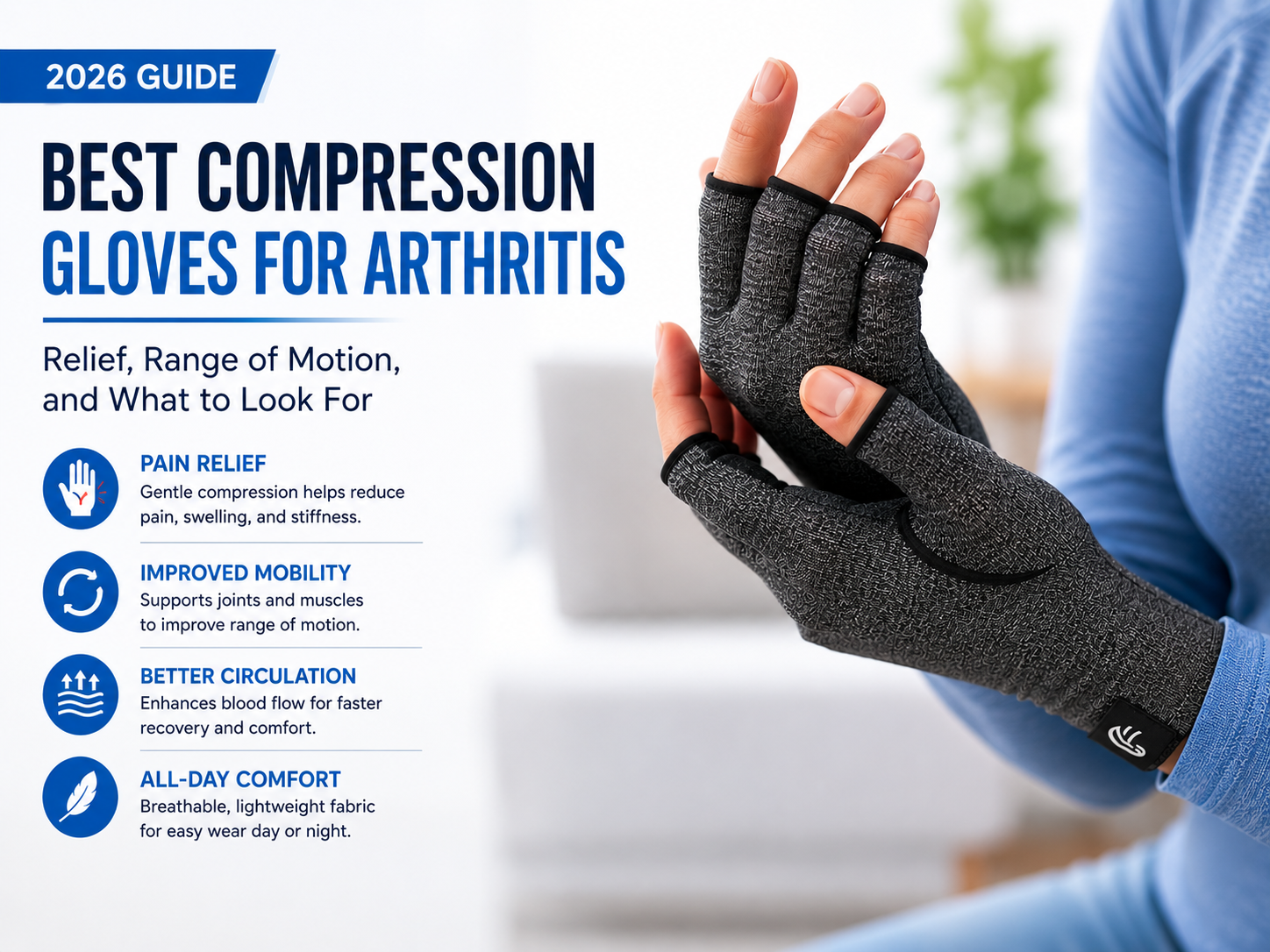
Fingerless (Open-Tip) Compression Gloves
Open-tip gloves cover the palm, back of the hand, and the proximal finger joints while leaving the fingertips exposed. This is the most popular design for daytime use because it allows full tactile sensation at the fingertips — essential for tasks like typing, buttoning, cooking, writing, and using a touchscreen. The compression is applied across the metacarpophalangeal (MCP) and proximal interphalangeal (PIP) joints — the primary sites of arthritis pain and swelling in the hand.
Open-tip designs are available in a wide range of compression levels, materials, and lengths (wrist length vs. extending up the forearm for added wrist support). They are suitable for most daytime activities and are the recommended starting point for most people new to compression therapy.
Full-Finger Compression Gloves
Full-coverage gloves enclose the entire finger including the fingertip. They provide the most comprehensive compression across all finger joints and retain the most warmth. The tradeoff is reduced tactile sensitivity and dexterity — making precision hand tasks more difficult. Full-finger gloves are better suited for rest periods, cold weather activities where warmth is the priority, or for conditions where distal finger joint involvement (DIP joints, which affect the last joint of the finger) is a prominent symptom, as in some forms of psoriatic arthritis or erosive osteoarthritis.
Nighttime Compression Gloves
Designed specifically for overnight wear, nighttime compression gloves use softer, more pliable fabrics and gentler compression levels. Because the hands are at rest during sleep, the primary goals are maintaining warmth, providing mild swelling control, and reducing morning stiffness duration. They often have looser cuffs to avoid restricting circulation during prolonged wear. If morning stiffness is one of your primary complaints, nighttime gloves are worth considering as a complement to your daytime pair.
Wrist-Extension / Gauntlet-Style Gloves
These extend from the hand up over the wrist and often part of the forearm, providing additional support and compression for the wrist joint — commonly affected in RA and in repetitive-stress conditions that sometimes coexist with arthritis (such as carpal tunnel syndrome or wrist tendinitis). If wrist pain or instability is part of your symptom picture, a gauntlet-style compression glove or a combination of a hand glove with a separate wrist brace may provide more comprehensive relief than a standard wrist-length glove.
Materials and Their Properties
| Material | Properties | Best For |
|---|---|---|
| Spandex/Lycra blend | High stretch, excellent compression, durable, moisture-wicking | Active daytime use; most common compression glove material |
| Cotton-spandex blend | Softer feel, more breathable than pure synthetic, good for sensitive skin | All-day comfort; sensitive skin; daytime wear |
| Bamboo-spandex blend | Naturally antimicrobial, very soft, moisture-wicking, thermoregulating | Sensitive skin; all-day wear; odor reduction |
| Copper-infused fabric | Copper ions incorporated into fiber; marketed for antimicrobial and anti-odor properties; some compression benefit | People who want antimicrobial properties; the "copper compression" category |
| Neoprene | Very warm, good for cold sensitivity; less breathable for extended wear | Cold weather; when thermal effect is primary goal |
| Merino wool blend | Natural thermal regulation; soft; less elastic than synthetic | Cold-weather use; natural fiber preference |
A note on copper-infused compression gloves: "Copper compression" gloves have been heavily marketed for arthritis. The copper ions do provide genuine antimicrobial properties (reducing odor from prolonged wear), and the garments provide real compression from the spandex component of the fabric. However, the claim that copper ions directly reduce arthritis pain or inflammation through skin absorption is not supported by strong clinical evidence. The compression itself is the evidence-backed mechanism — copper may provide incidental benefits for odor and hygiene in extended-wear scenarios.
Compression Level: What the Numbers Mean
Compression in gloves is measured in millimeters of mercury (mmHg) — the same unit used for medical compression hosiery and blood pressure. Standard categories for arthritis compression gloves:
Light compression (8–15 mmHg): Suitable for mild morning stiffness, mild swelling, and general warmth. Good starting point for people new to compression, those with mild symptoms, or for overnight use.
Moderate compression (15–20 mmHg): The most widely recommended range for arthritis hand management. Effective for moderate swelling reduction and joint support during daily activities without restricting circulation.
Firm compression (20–30 mmHg): For more significant chronic swelling (lymphedema of the hand, moderate-to-severe edema) or when recommended by a physician or occupational therapist. At this level, fit is critical — too tight or poorly fitted gloves at 20–30 mmHg can restrict circulation. Seek professional fitting guidance for firm-compression gloves.
Most over-the-counter arthritis compression gloves fall in the 8–20 mmHg range. If your physician or occupational therapist has prescribed compression for lymphedema or significant edema management, follow their recommendation on compression level and seek a medically fitted garment from a certified fitter.
Sizing and Fit: Getting It Right
Proper fit is essential — a compression glove that is too tight restricts circulation, potentially worsening symptoms rather than relieving them. One that is too loose provides insufficient compression and may feel uncomfortable due to bunching. Most manufacturers provide a sizing guide based on hand circumference (measured around the widest part of the palm, just below the knuckles, excluding the thumb) and sometimes hand length.
Measure in the morning, before activities that might cause swelling. If your measurement falls at the borderline between sizes, consider sizing up — a slightly less-aggressive compression is better than a too-tight glove. If your dominant hand is significantly different in size from your non-dominant hand, you may need two different sizes (most gloves are sold in pairs, but some manufacturers sell singles).
Signs a glove is too tight: fingertips become pale, bluish, or numb; visible indentation from the edge of the glove after removal; tingling or loss of sensation during wear. If any of these occur, remove the gloves immediately and try a larger size.
How to Use Compression Gloves Effectively
Duration: Most compression glove guidelines recommend wearing for 2–4 hours at a time, followed by a break. For overnight gloves, the full night is appropriate for designs specifically rated for prolonged wear. Many people find the greatest benefit in the morning — putting on compression gloves when they wake up to address morning stiffness and keeping them on through morning activities when symptoms tend to be at their worst.
Activities: Open-fingertip gloves are appropriate for most daily activities — typing, cooking, light household work, driving. Remove gloves for activities requiring precision grip with wet materials or where the gloves would interfere with safety (e.g., working with tools or machinery).
Donning and doffing: Putting on compression gloves with arthritic hands can itself be challenging. Turn the glove inside out, slip fingers in, then roll the glove over the hand. Rubber-tipped donning aids or latex gloves worn briefly over the compression glove fingers can help roll the material on more easily. Remove by gently rolling from the wrist down rather than pulling by the fingers.
Care: Wash compression gloves regularly — at minimum every 2–3 uses — according to care instructions. Most are machine washable in cold water on a gentle cycle; avoid fabric softener (degrades elastic fibers) and tumble drying (high heat damages spandex). Replace gloves every 3–6 months or when they lose their elasticity — stretched-out compression gloves no longer provide therapeutic compression.
What the Research Says
Several randomized controlled trials and systematic reviews have examined compression gloves for RA. A frequently cited study published in the journal Rheumatology (Hammond et al.) found that silver-coated compression gloves worn overnight significantly reduced morning stiffness duration and hand pain compared to control conditions. Cochrane reviews on RA hand interventions have noted evidence supporting compression gloves as beneficial for swelling and stiffness, with a low risk of adverse effects. Evidence for osteoarthritis specifically is more limited but consistent with the mechanism: compression, warmth, and proprioceptive input provide meaningful symptomatic benefit for many patients.
While the evidence base is not as extensive as for pharmaceutical treatments, the safety profile of compression gloves is excellent — the main risks (improper fit restricting circulation) are avoidable with correct sizing. Compression gloves are endorsed by the Arthritis Foundation as a safe, inexpensive option for non-pharmacological symptom management.
Compression Gloves vs. Other Hand Arthritis Aids
Compression gloves are one component of a broader toolkit for hand arthritis management. Other commonly used devices include rigid or semi-rigid hand and wrist braces (for immobilization during activity or sleep), ring splints (for specific unstable finger joints — commonly used in RA), and paraffin wax baths (for deep warmth before activity). Occupational therapists can evaluate your specific joint involvement, function, and goals and recommend a combination of aids tailored to your needs. Compression gloves are particularly valued for daytime wear because they allow function — unlike rigid braces that immobilize — while still providing symptom relief.
Shop Compression Gloves and Arthritis Aids at AllCare Store
AllCare Store carries a comprehensive selection of compression gloves, hand and wrist braces, and arthritis relief products. Browse our braces, splints, and supports collection for compression gloves, wrist supports, and hand splints, or explore our full range at AllCare Store.
Free shipping on qualifying orders. Call our team at 1-888-889-6260, Monday–Friday, 7:00 AM–4:00 PM CST for product guidance and sizing help.
Frequently Asked Questions: Compression Gloves for Arthritis
Do compression gloves really help arthritis?
Yes — compression gloves have genuine evidence supporting their benefit for arthritis hand symptoms. Multiple randomized controlled trials have found that compression gloves reduce morning stiffness duration, hand pain, and swelling in rheumatoid arthritis. The mechanisms are well understood: compression assists in clearing inflammatory fluid (reducing swelling), the warmth retained by the fabric reduces stiffness (particularly beneficial for cold-sensitive joints), and the continuous tactile pressure provides proprioceptive input that improves joint position sense and can modulate pain perception. The Arthritis Foundation endorses compression gloves as a safe, non-pharmacological option for managing hand arthritis symptoms. They are most effective as a complement to — not a replacement for — medical treatment prescribed by your rheumatologist or physician.
When should I wear compression gloves for arthritis?
The optimal timing depends on your primary symptoms. For morning stiffness — one of the most common RA complaints — putting on compression gloves first thing in the morning and wearing them for 2–4 hours can significantly reduce the duration of stiffness. Overnight use of gloves designed for nighttime wear has been shown in clinical studies to reduce morning stiffness duration and severity. For activity-related hand pain and swelling, wearing gloves during tasks that stress the hands (typing, cooking, housework, driving) can reduce pain and swelling during and after activity. If you have cold-sensitive joints, wearing gloves in cold environments or air-conditioned spaces can prevent flares. Many people with arthritis find a combination useful: nighttime gloves to prevent morning stiffness, and daytime fingerless gloves during activity.
How do I choose the right size compression gloves?
Measure your hand circumference around the widest part of the palm (just below the knuckles, not including the thumb) using a flexible measuring tape. Do this in the morning before activities that might cause hand swelling. Use the manufacturer's sizing chart — sizing varies between brands. If your measurement is at the borderline between two sizes, choose the larger size; compression that is too tight can restrict circulation and worsen symptoms. Signs a glove is too tight include fingertip numbness, tingling, pale or bluish fingertips, or visible deep indentation from the glove edge after removal. A properly fitted compression glove should feel snug and supportive without causing any numbness or circulatory restriction. Some manufacturers sell gloves individually (left and right separately), which is useful if your hands differ significantly in size.
Can I sleep in compression gloves?
Yes — but only gloves specifically designed for overnight wear. Nighttime compression gloves use softer, more breathable fabrics with lighter compression levels appropriate for extended wear during sleep. Clinical studies on RA have used overnight compression gloves and found them effective at reducing morning stiffness. Standard daytime compression gloves — particularly those with firm compression — are generally not recommended for overnight use, as prolonged wear at higher compression levels when your hands are not actively moving can cause circulation problems. Look for gloves specifically labeled for nighttime or 24-hour use. If you are unsure whether overnight compression is appropriate for your specific condition, ask your rheumatologist or occupational therapist.
Are copper compression gloves better for arthritis?
Copper-infused compression gloves provide the same mechanical compression benefits as other compression gloves — which are well-supported by evidence. The copper content provides genuine antimicrobial properties (inhibiting odor-causing bacteria and fungi), making copper gloves more hygiene-friendly for extended daily use. However, the marketing claims that copper ions penetrate the skin to reduce arthritis inflammation directly are not supported by strong clinical evidence. The primary therapeutic benefit of copper compression gloves comes from the compression itself — the copper is a secondary feature. If you're choosing between copper and non-copper gloves, base the decision on fit, compression level, material comfort, and cost rather than on the copper content alone. Both types can be effective if properly fitted and used consistently.
For compression gloves, hand and wrist braces, and arthritis relief products, visit AllCare Store. Browse our braces, splints, and supports collection. Free shipping on qualifying orders. Call 1-888-889-6260, Monday–Friday 7 AM–4 PM CST.