MEDICAL DISCLAIMER: This article is for general informational and educational purposes only and does not constitute dental or medical advice. Gum disease (gingivitis and periodontitis) requires professional diagnosis and treatment by a licensed dentist or periodontist. If you have signs of gum disease — bleeding gums, persistent bad breath, gum recession, or loose teeth — see a dental professional promptly. Mouthwash is a supplement to, not a replacement for, professional dental care and thorough home oral hygiene.
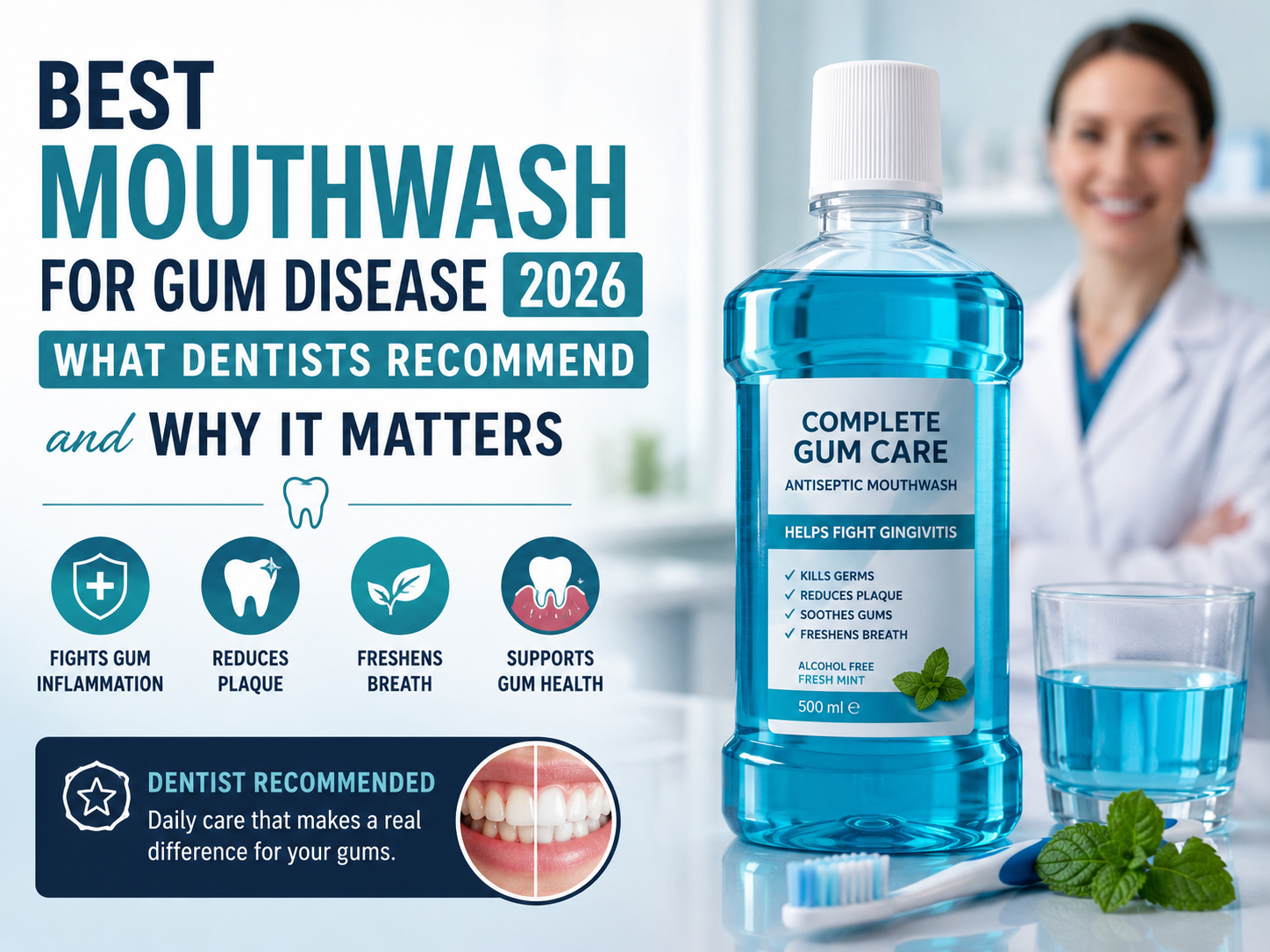
Gum disease affects nearly half of American adults over 30, making it one of the most prevalent chronic conditions in the country. For the 46% of adults with some form of periodontitis (per CDC estimates), mouthwash can be a meaningful part of an oral care routine — but only if the right type is used correctly alongside comprehensive brushing and flossing. This guide cuts through the marketing to explain which mouthwash ingredients actually work against gum disease, what the evidence says, and how to choose and use an antiseptic rinse effectively.
Understanding Gum Disease: Gingivitis vs. Periodontitis
Gum disease exists on a spectrum. Understanding where you are on that spectrum matters because mouthwash is more useful at some stages than others.
Gingivitis is the earliest and mildest stage: inflammation of the gingiva (gum tissue) caused by the accumulation of bacterial plaque at and just below the gumline. Classic signs include gums that bleed when you brush or floss, mild swelling or redness, and sometimes bad breath. Gingivitis is fully reversible with improved oral hygiene. At this stage, an antiseptic mouthwash used consistently as part of a complete oral care routine can have a meaningful impact.
Periodontitis is the progressive form of gum disease, in which inflammation extends below the gumline and the bacterial infection begins to destroy the bone and connective tissue supporting the teeth. Signs include deep periodontal pockets (measured during dental exams), gum recession exposing root surfaces, persistent bad breath, tooth sensitivity, loose teeth, and in advanced disease, tooth loss. Periodontitis cannot be reversed by mouthwash alone — it requires professional treatment (scaling and root planing, and in moderate-to-severe cases, surgical intervention). Mouthwash supports ongoing management after professional treatment but cannot substitute for it.
What Mouthwash Can and Cannot Do for Gum Disease
Therapeutic mouthwashes with proven antiseptic activity can: kill or inhibit the bacteria in the oral microbiome that drive gum disease; reduce plaque accumulation between brushings; reduce gingival inflammation (measured by bleeding on probing and gingival index scores in clinical trials); and reduce bacterial counts in periodontal pockets as a maintenance adjunct after professional treatment.
What mouthwash cannot do: remove existing plaque and calculus (tartar) — that requires mechanical disruption by brushing, flossing, and professional instruments; penetrate deep periodontal pockets at therapeutic concentrations (clinical data shows most rinses reach depths of 1–3 mm, while advanced pockets may be 6 mm or more); or replace professional scaling, root planing, or surgical treatment in established periodontitis.
The American Dental Association (ADA) is clear on this point: mouthwash is an adjunct to, not a substitute for, brushing and flossing. Studies consistently show that adding an antiseptic rinse to a routine that already includes twice-daily brushing and daily flossing reduces plaque and gingival inflammation more than brushing and flossing alone — but has little effect in people who are not brushing and flossing regularly.
Active Ingredients That Work: The Evidence
Chlorhexidine Gluconate (CHX)
Chlorhexidine gluconate at 0.12% concentration is the gold standard prescription antiseptic mouthwash for gum disease — the most extensively studied and most potent oral antiseptic available for home use. Chlorhexidine works by binding to bacterial cell membranes and disrupting their integrity, killing a broad spectrum of gram-positive and gram-negative oral bacteria. It also has substantivity — the ability to bind to oral tissues and continue releasing at active concentrations for 8–12 hours after rinsing, providing sustained antibacterial activity between uses.
Clinical data is robust: multiple meta-analyses confirm that 0.12% CHX rinse significantly reduces plaque and gingival inflammation versus placebo. It is prescribed by dentists and periodontists after scaling and root planing procedures, during active periodontal treatment, and in higher-risk patients (implant patients, immunocompromised individuals).
The tradeoffs of chlorhexidine are significant enough that it is not recommended for indefinite daily use. With regular use, CHX causes: tooth and tongue staining (brown/yellow discoloration of tooth surfaces — most pronounced on posterior teeth, removable prostheses, and the tongue dorsum); altered taste perception; increased calculus (tartar) formation; and rare oral mucosal sensitivity. For these reasons, chlorhexidine mouthwash is generally prescribed for short-term (2–4 week) intensive use or for specific post-surgical and periodontal maintenance protocols rather than as a daily indefinite rinse.
Availability: 0.12% chlorhexidine gluconate mouthwash (brand name Peridex, PerioGard, or generic) is prescription-only in the United States. Ask your dentist or periodontist if it is appropriate for your situation.
Essential Oil Antiseptic Rinses (Listerine-Type)
The original Listerine formulation — and its generic equivalents — contains a combination of four essential oil antiseptic agents: thymol (0.064%), eucalyptol (0.092%), menthol (0.042%), and methyl salicylate (0.060%), in an alcohol vehicle (typically 21–26% ethanol). These compounds have proven antiseptic activity against a broad spectrum of oral bacteria, disrupting bacterial cell walls and metabolism.
Essential oil mouthwashes are the most rigorously studied over-the-counter (OTC) antiseptic rinses for gum disease. A 2005 meta-analysis in the Journal of the American Dental Association (Charles et al.) reviewed multiple randomized controlled trials and found that Listerine-type rinses produced statistically significant reductions in plaque index (28.3%) and gingival index (20.6%) compared to placebo over 6 months. The ADA has granted its Seal of Acceptance to essential oil mouthwashes for reducing plaque and gingivitis.
The alcohol content raises two considerations: the burning sensation during use (more pronounced in people with dry mouth, mucositis, or oral sensitivity) and concerns about oral cancer risk from high-alcohol mouthwashes used chronically. The cancer risk question has been studied extensively — most expert bodies including the ADA have concluded that evidence linking alcohol-containing mouthwash to oral cancer, when used as directed, is insufficient. However, alcohol-free essential oil formulations are now available and may be preferred for: people with dry mouth (alcohol is desiccating); those who find the burning intolerable; people in recovery from alcohol dependence; and children.
Cetylpyridinium Chloride (CPC)
Cetylpyridinium chloride (CPC) is a quaternary ammonium compound with antiseptic activity against gram-positive bacteria and moderate activity against gram-negative bacteria. It is the active ingredient in many widely available OTC mouthwashes (Crest Pro-Health, Colgate Total, and others). CPC disrupts bacterial cell membranes and has some substantivity, though less than chlorhexidine.
Clinical evidence for CPC is positive but generally shows more modest effects on gingival inflammation and plaque than essential oil rinses or chlorhexidine. A systematic review by Haps et al. (2008) found that CPC rinses produced significant reductions in plaque and gingivitis compared to water controls, but the effect size was smaller than for essential oil or CHX preparations. CPC is alcohol-free, which is a practical advantage. Some CPC-containing mouthwashes also include fluoride for dual caries and gum disease benefit.
Povidone-Iodine (PVP-I)
Povidone-iodine at 0.5–1% concentration is a broad-spectrum antiseptic with strong activity against the entire range of periodontal pathogens. Some periodontists use PVP-I as a subgingival irrigant during professional scaling procedures — flushing it into periodontal pockets under the gumline. As a rinse, research shows significant short-term plaque and gingival inflammation reduction. However, PVP-I has not been widely adopted for daily home use due to its taste, potential staining, and concerns about thyroid interference with very frequent long-term use in people with thyroid conditions. It is more commonly used for professional in-office periodontal irrigation than as a daily home rinse.
Fluoride Mouthwash (Not Directly Antibacterial)
Fluoride-containing rinses (sodium fluoride 0.05% or 0.2%) are primarily anti-caries (cavity-prevention) products rather than anti-gum disease treatments. They work by remineralizing tooth enamel and inhibiting acid production by cariogenic bacteria — they do not have meaningful antiseptic activity against the subgingival periodontal pathogens that drive gum disease. However, for patients with both gum disease and high cavity risk (including those with root surface exposure from gum recession, which is softer and more susceptible to decay than enamel), a fluoride rinse may be a useful addition to the regimen — just not for the gum disease itself.
How to Use Mouthwash for Maximum Gum Disease Benefit
Timing: Use mouthwash after brushing and flossing — not before. Brushing and flossing mechanically remove plaque and debris; rinsing afterward allows the antiseptic to contact clean tooth surfaces and gum tissue directly, rather than being diluted or inactivated by organic matter in a plaque-laden mouth.
Do not rinse with water afterward. After using an antiseptic mouthwash, do not rinse with water — doing so dilutes and removes the active ingredient before it has fully acted on oral tissues. Spit, don't rinse.
Volume and technique: Use 20 ml (approximately 4 teaspoons) of mouthwash for 30 seconds (some products specify 60 seconds — follow product directions). Swish vigorously enough to force the solution between teeth and along the gumline. Gargling briefly at the end can address bacteria at the back of the mouth.
Frequency: Twice daily (morning and evening, after brushing) is standard for therapeutic antiseptic rinses. Using mouthwash once daily provides less benefit than twice daily. Do not use more frequently than directed.
For children: Most antiseptic mouthwashes are not recommended for children under 6 (due to swallowing risk) and should be used cautiously in children 6–12 under adult supervision. Fluoride-only rinses are appropriate for children at high cavity risk under dental guidance. Check product labeling and ask your child's dentist for age-specific recommendations.
Choosing the Right Mouthwash: A Summary
| Situation | Recommended Type | Notes |
|---|---|---|
| Gingivitis (mild to moderate) | Essential oil rinse (Listerine-type); CPC-based OTC rinse | Best evidence for OTC; use twice daily with regular brushing and flossing |
| After professional scaling/root planing | Chlorhexidine 0.12% (prescription) | Short-term use (2–4 weeks); significant staining risk with prolonged use |
| Dry mouth or oral sensitivity | Alcohol-free essential oil or CPC formulation | Avoid high-alcohol rinses which worsen dry mouth |
| High cavity + gum disease risk | Fluoride rinse for caries; antiseptic rinse for gums (use separately) | Use at different times of day if using both |
| Established periodontitis | Consult periodontist — rinse as adjunct to professional treatment | Mouthwash does not substitute for professional care in periodontitis |
Lifestyle Factors That Affect Gum Disease
Mouthwash is one component of a much larger picture. Several modifiable risk factors significantly influence gum disease severity and treatment outcomes: tobacco use (smoking is the single largest modifiable risk factor for periodontitis — smokers have 2–7x the risk of non-smokers and respond less well to treatment); uncontrolled diabetes (bidirectional relationship — diabetes worsens gum disease, and gum disease worsens glycemic control); stress and immune suppression; certain medications (calcium channel blockers, immunosuppressants, anti-epileptics can cause gingival overgrowth); vitamin C deficiency; and oral breathing (which dries oral tissues and promotes plaque growth). Addressing these factors alongside excellent mechanical oral hygiene and appropriate professional care has far more impact than mouthwash selection alone.
Shop Oral Care Products at AllCare Store
AllCare Store carries a range of oral care and personal care products to support your daily health routine. Browse our personal care collection for oral care essentials, or shop our full catalog at AllCare Store.
Free shipping on qualifying orders. Call our team at 1-888-889-6260, Monday–Friday, 7:00 AM–4:00 PM CST.
Frequently Asked Questions: Mouthwash for Gum Disease
What is the best mouthwash for gum disease?
For over-the-counter options, essential oil antiseptic mouthwashes (like Listerine and its alcohol-free equivalents) have the strongest clinical evidence for reducing plaque and gingivitis. Multiple randomized controlled trials and meta-analyses show they produce significant reductions in plaque index and gingival inflammation when used twice daily as part of a complete oral hygiene routine. CPC-based rinses (like Crest Pro-Health) are also effective with a gentler feel and no alcohol. For more advanced situations — after professional scaling and root planing, or for high-risk patients — dentists prescribe 0.12% chlorhexidine gluconate, which is the most potent antiseptic rinse available and is backed by the strongest clinical evidence, though it causes tooth staining with prolonged use and is intended for short-term therapeutic courses. Ask your dentist which is most appropriate for your specific situation.
Can mouthwash cure gum disease?
Mouthwash can help reverse gingivitis (early, mild gum disease) when used consistently as part of a thorough oral hygiene routine that includes twice-daily brushing and daily flossing. Gingivitis is fully reversible with improved oral hygiene, and antiseptic rinses contribute meaningfully to that improvement. However, mouthwash cannot cure periodontitis — the more advanced, progressive form of gum disease where infection has destroyed bone and connective tissue supporting the teeth. Periodontitis requires professional treatment (scaling and root planing, and in moderate-to-severe cases, surgical intervention). After professional treatment, mouthwash can support ongoing management and help maintain the improvements achieved through professional care. But if you have periodontitis, no amount of mouthwash use will substitute for professional dental intervention. See a dentist or periodontist for diagnosis and a treatment plan.
Should I use mouthwash before or after brushing?
Use mouthwash after brushing and flossing, not before. Brushing and flossing mechanically remove the plaque and debris that would otherwise dilute and inactivate the antiseptic when you rinse. Using the mouthwash last means the active ingredient (chlorhexidine, essential oils, CPC, etc.) contacts clean tooth surfaces and gum tissue directly, where it can exert its maximum antibacterial effect. After rinsing with mouthwash, do not rinse with water — that would wash away the active ingredient before it has fully acted. Just spit and leave the residual film in place. For fluoride mouthwash specifically, using it at a different time of day than brushing (for example, after lunch rather than after your evening brushing) can maximize fluoride contact time with tooth surfaces.
Is alcohol-free mouthwash as effective for gum disease?
Alcohol-free antiseptic mouthwashes can be equally effective for gum disease when they contain the same active antiseptic ingredients at comparable concentrations. The alcohol in traditional mouthwashes (such as original Listerine) serves as a solvent for the essential oil active ingredients and contributes some antiseptic activity of its own, but alcohol-free formulations of essential oil rinses (such as Listerine Zero) and CPC-based rinses have been shown in clinical studies to produce comparable plaque and gingivitis reduction. Alcohol-free formulations are preferable for people with dry mouth (xerostomia), those who find the burning sensation intolerable, people in recovery from alcohol dependence, children (under adult supervision), and people with oral sensitivity or mucositis. If you are choosing between an alcohol and alcohol-free version of the same brand, the alcohol-free version is equally effective for gum disease and better tolerated by most people.
How long does it take mouthwash to help gum disease?
With consistent twice-daily use as part of a complete oral hygiene routine (brushing twice daily, flossing once daily, plus mouthwash), measurable improvements in gingival inflammation and plaque levels are typically seen within 4–6 weeks. In clinical trials, studies of 6 months' duration show robust and sustained improvements with essential oil and CPC rinses versus placebo. Bleeding on brushing — a hallmark of gingivitis — often reduces noticeably within 2–4 weeks of improved oral hygiene and consistent antiseptic rinsing. However, if bleeding continues beyond 4–6 weeks of improved home care, or if you have other signs of more advanced disease (gum recession, persistent deep pain, loose teeth), schedule a dental appointment. Persistent bleeding despite good home care is a sign that professional intervention is needed.
For oral care products and personal care essentials, visit AllCare Store. Browse our personal care collection. Free shipping on qualifying orders. Call 1-888-889-6260, Monday–Friday 7 AM–4 PM CST.