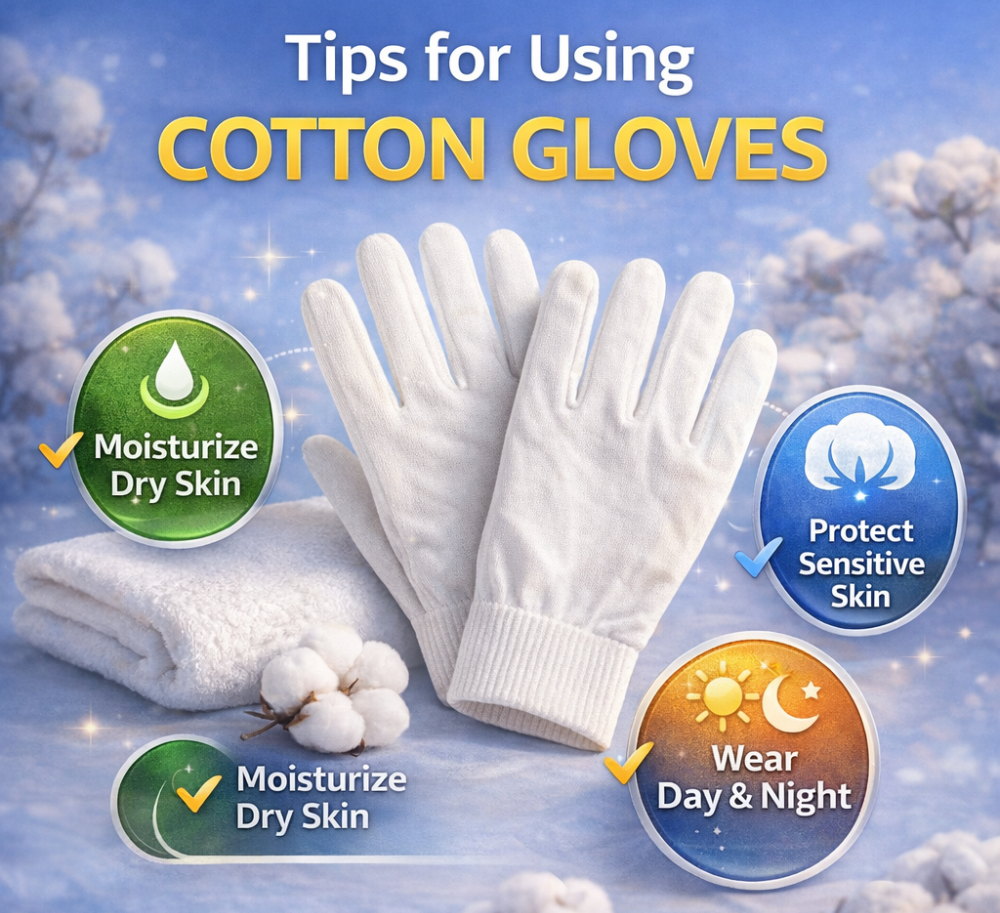
Plain cotton gloves are one of those unglamorous items that keep turning up in dermatology advice. They are not a treatment and they contain nothing active. What they do is protect the conditions a treatment needs in order to work — and for people managing hand dermatitis, eczema, or chronically sensitive skin, that turns out to matter a great deal.
This article is about that specific use: cotton gloves as a support for skin conditions and prescribed topicals, rather than as a general comfort item.
Why Cotton Gloves Turn Up Alongside Prescribed Ointments
If you have been given a medicated ointment for your hands, most of it never gets where it is meant to go. It comes off on door handles, sleeves, and paperwork within minutes of application. A cotton glove worn over the treated area addresses four problems at once:
- It keeps the product on the skin for the full dwell time rather than the first five minutes.
- It stops transfer to fabrics, food, surfaces, other people, and — importantly — to your own eyes and face.
- It creates a mild barrier that slows moisture loss while the ointment does its work.
- It interrupts scratching, which is often the main thing standing between an eczema flare and healing.
Two important caveats. First, always follow the specific instructions that came with a prescribed treatment — some topicals, particularly potent steroids, become significantly more potent under occlusion, and covering them without being told to is not a neutral act. Ask your clinician or pharmacist whether covering is appropriate for your product. Second, do not cover skin that is weeping, infected, or broken open unless you have been told to.
Contact Dermatitis and the Exposure Side
For irritant contact dermatitis, the treatment is only half the job. The other half is reducing what is causing it. Cotton gloves help on that side too, as a light barrier against:
- Dust, fibres, and dry particulates
- Paper, cardboard, and newsprint, which are drying to handle in volume
- Nickel and other metals in tools, keys, and handles
- Friction from repeated handling tasks
What cotton will not do is stop liquids. It is absorbent, so any detergent, solvent, or cleaning chemical that reaches it soaks through and is then held against the skin — worse than no glove at all. For wet or chemical work you need a waterproof glove, which leads to the layering question.
Layering: Cotton Underneath, Waterproof Over the Top
Occlusive gloves are the standard answer for wet work, but wearing them for long stretches makes hands sweat, and trapped sweat is itself an irritant for compromised skin. Wearing a thin cotton liner underneath solves it:
- The cotton absorbs sweat rather than letting it sit against the skin
- The waterproof outer keeps water and chemicals out entirely
- The liner removes direct contact with the outer glove material, which matters if you react to latex or to accelerators used in some gloves
- Change the cotton liner as soon as it feels damp rather than pushing on to the end of the task
This is worth doing for washing up, cleaning, gardening, hair colouring, and any job involving repeated wet-dry cycles, which are harder on the skin barrier than sustained wetness.
Night-Time Scratch Protection
Scratching during sleep is invisible and relentless, and it is a common reason flares refuse to settle. A cotton glove is a low-effort physical interruption: it blunts nails, so a night of unconscious scratching does far less damage. For children with eczema, gloves or mitts should only be used with a clinician's guidance and appropriate supervision.
If your reason for covering the hands at night is dryness rather than scratching, the occlusive emollient routine in our guide to overnight moisturizing gloves is the more detailed version of the same idea.
Choosing Gloves for Medicated Use
The requirements here are stricter than for general hand care, because anything the glove adds is something your skin has to cope with.
- 100% cotton, undyed and untreated. Avoid gloves with added fragrance, lotion linings, or finishing treatments if you are covering a prescribed product.
- Low lint. Fibre shedding into a cracked or treated area is unhelpful.
- Flat or external seams. Raised interior seams create pressure points on sore skin.
- Correct size. Tight cuffs mark and irritate the wrist; oversized gloves slide off overnight. You should be able to close your hand comfortably.
- Sold in multipacks. Anyone using gloves therapeutically will go through several pairs a week.
Products such as Carex Soft Hands Cotton Gloves are made for exactly this purpose — cotton gloves intended to aid cream absorption and cover the hands during skin care.
Laundering, and Why It Is Not Optional
Gloves used over ointments accumulate residue, skin cells, and whatever the hands have touched. Reusing a soiled pair works directly against the treatment.
- Wash after every one or two wears — sooner if visibly soiled or if they were worn over an infected area
- Use a fragrance-free, dye-free detergent
- Skip fabric softener and dryer sheets entirely; the residue they leave is a known irritant for sensitive skin
- Run an extra rinse cycle to clear detergent from the fibres
- Air dry rather than tumble drying on high heat
- Store somewhere clean and dry, not loose in a drawer or bathroom cabinet
- Replace gloves that have gone stiff, thin, or permanently discoloured
When Cotton Gloves Are Not the Answer
Speak to a doctor or dermatologist rather than persisting with self-care if you see signs of infection — increasing redness, warmth, swelling, pus, or fever — if a rash keeps returning in the same pattern, if the skin is cracking deeply enough to bleed, or if the problem appears to be linked to your work. Occupational hand dermatitis often needs the trigger identified and removed, and that is a clinical conversation, not a glove choice.
Related Reading and Categories
- Overnight moisturizing gloves for very dry, cracked hands
- Moisturizing gloves for on-the-go hand care
Browse Gloves, Barrier Creams, Skin Care & Beauty, and Aids to Daily Living.
This article is general skin care information and is not medical advice. Always follow the instructions supplied with a prescribed topical treatment, and check with your clinician or pharmacist before covering medicated skin.