If you spend eight or twelve hours a shift inside disposable gloves, your hands live in a different environment than the rest of your body. Nurses, medical assistants, home health aides, dental staff, lab techs, food handlers, housekeeping and janitorial crews, and tattoo artists all run the same cycle dozens of times a day: wash, dry (maybe), glove up, sweat, deglove, wash again.
That cycle — not weather, not aging — is what wrecks working hands. This guide covers what occlusion actually does to skin, where cotton glove liners help and where they do not, how to think about glove material when your skin is already reacting, donning habits that matter more than people expect, and when a rash needs a clinician instead of another tube of cream.
What Happens to Skin Inside a Glove
Sweat and maceration
Nitrile, latex, and vinyl are all essentially waterproof. That is the point — but it also means sweat cannot evaporate. Humidity inside the glove climbs within minutes, and the outer layer of skin (the stratum corneum) absorbs that trapped water and swells. That is maceration: skin that looks pale, soft, wrinkled, and "pruney" when the glove comes off.
A macerated barrier is a weak barrier. It is more permeable to detergents and chemicals, more prone to friction damage, and slower to recover. Once the water evaporates, the skin is often drier than before, which is why people are surprised that a wet-feeling glove leaves them with chapped hands.
Irritant contact dermatitis
Most work-related hand dermatitis is irritant, not allergic. The drivers stack up: repeated washing with detergent-based soap, prolonged occlusion, friction from donning and doffing, and residue from cleaning products. It typically shows up as dryness, redness, roughness, stinging, and fissures over the knuckles and in the finger webs.
One useful correction: alcohol-based hand rub is generally less damaging to the skin barrier than repeated soap-and-water washing, even though it stings on cracked skin. That sting is a sign the barrier is already broken, not evidence the sanitizer caused it.
Allergic contact dermatitis
Two very different problems get lumped together as "glove allergy."
- Natural rubber latex protein allergy is an immediate (Type I) reaction to proteins in natural rubber. It can cause itching, hives, runny nose, and wheezing within minutes, and in rare cases anaphylaxis. Risk dropped substantially in US healthcare after the FDA banned most powdered patient examination gloves in 2017, since glove powder aerosolized latex protein into the air.
- Rubber accelerator allergy is a delayed (Type IV) reaction to the chemicals used to vulcanize rubber — thiurams, carbamates (dithiocarbamates), and mercaptobenzothiazole. It appears roughly 12 to 48 hours after wearing, as an itchy eczematous rash that often has a visible cutoff line at the glove cuff. Critically, this affects nitrile gloves too, because nitrile is also accelerated rubber. Switching from latex to nitrile does nothing for accelerator allergy.
Accelerator allergy is confirmed by patch testing with a dermatologist; latex protein allergy is evaluated with blood or skin-prick testing. The pattern and timing of the rash are what separate them, so it is worth photographing a flare and noting when it started relative to your shift.
Cotton Glove Liners: What They Do and Don't Do
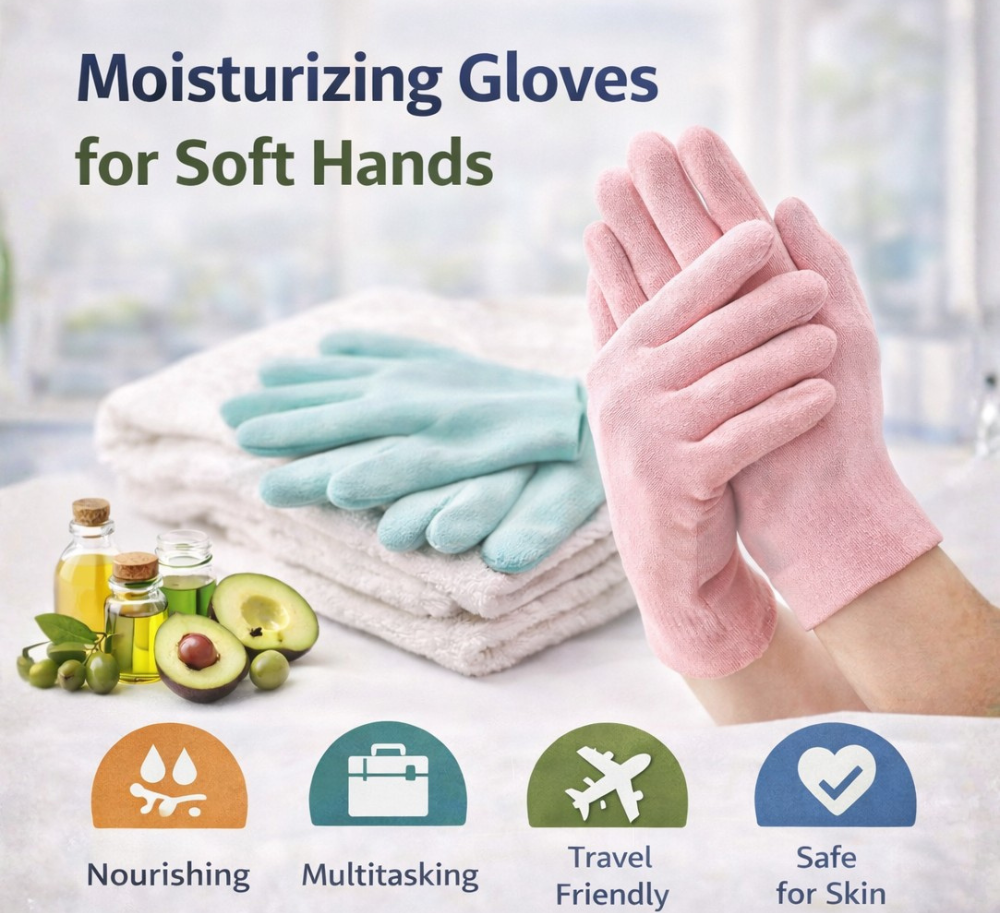
A thin cotton liner worn underneath a disposable glove does three useful things. It wicks and absorbs sweat so the film of moisture is not sitting directly on your skin. It cuts friction during donning and during repetitive hand work. And it puts a physical layer between your skin and the glove's rubber chemicals, which can take the edge off mild accelerator sensitivity.
What liners do not do matters just as much. A cotton liner is not a barrier device. It offers no protection against pathogens, blood, or chemicals, and it never replaces the disposable glove. It also does not make a single-use glove reusable, and for a confirmed accelerator allergy it is a comfort measure, not a fix — the answer there is an accelerator-free glove.
Using liners well
- Keep several pairs on hand so you can swap to a dry liner partway through a shift. A soaked liner is worse than none.
- Launder hot, and skip fabric softener and dryer sheets — those residues are themselves irritants.
- Size the outer glove up if needed. A liner adds bulk, and an outer glove that is too tight increases sweating and kills dexterity.
- Check your facility's policy before wearing liners under sterile gloves; many do not permit it.
- Replace liners when they thin out or stop feeling absorbent.
You can find cotton liners and exam gloves together in our gloves collection.
Choosing a Glove Material for Skin Tolerance
Match the material to the hazard first, then to your skin. Never downgrade barrier protection for comfort.
Nitrile
Synthetic, with no natural rubber latex proteins, so it removes Type I latex risk entirely. Strong puncture and chemical resistance. Standard nitrile still contains accelerators, so it can still trigger delayed reactions. Accelerator-free nitrile is widely available and is the usual choice for staff who patch-test positive.
Natural rubber latex
Still the benchmark for fit, stretch, and tactile feedback, and comfortable over long wear. It carries protein-allergy risk for both wearer and patient, and many US health systems are latex-free by policy regardless.
Vinyl (PVC)
No latex proteins and no rubber accelerators, which makes it the best-tolerated option for people with rubber allergies. The trade-off is real: looser fit, more failures at stress points, and a barrier that degrades with hand movement. Reasonable for short, low-risk tasks like food handling or light housekeeping; not a substitute for nitrile in clinical or chemical work.
Polyisoprene and neoprene
Synthetics that mimic latex feel without latex protein. They are typically still accelerated, so check the manufacturer's statement if accelerators are your issue.
Donning Technique Matters More Than People Expect
- Dry your hands completely. Gloving damp hands traps water against skin from the first minute and starts maceration immediately. Towel or air dry fully, including between fingers.
- Let alcohol rub evaporate. Gloving over wet sanitizer seals the alcohol against your skin.
- Do not apply heavy ointment right before gloving. Thick occlusives raise the temperature and humidity inside the glove and can degrade some materials. Moisturize when the gloves come off, not before they go on.
- Air out at natural breaks. Two minutes of ungloved, dry time between tasks lets the skin surface normalize.
- Do not double-glove for comfort. Two occlusive layers doubles the trapped humidity. Double-glove only when the procedure calls for it.
- Short nails, no rings. Both tear gloves and trap moisture and detergent against skin.
A Between-Shifts Hand Repair Routine
Barrier repair happens off the clock. Keep it simple and do it every day.
- Wash with lukewarm — never hot — water and a fragrance-free, non-soap cleanser.
- Pat dry rather than rubbing.
- Apply a fragrance-free ointment or thick cream within about three minutes of drying, while skin is still slightly damp. Tubs and tubes generally hold more effective formulas than thin pump lotions.
- Look for petrolatum, dimethicone, glycerin, and ceramides. Avoid fragrance, botanical extracts, and essential oils, which are frequent sensitizers on damaged skin.
- Carry a small tube and reapply after each wash during the shift where policy allows.
- Wear household gloves for dishes and cleaning at home so your day off does not undo the recovery.
- In winter, wear insulated gloves outdoors — cold, dry air pulls water straight out of skin.
When Hand Dermatitis Needs a Clinician
See occupational health, your primary care clinician, or a dermatologist if you have:
- Fissures that bleed, weep, or fail to close after about two weeks of consistent care
- Yellow crusting, spreading redness, warmth, swelling, or pus — signs of secondary infection
- A rash that clears on days off and returns at work, which is the classic occupational pattern
- Itching, hives, swelling, wheezing, or lightheadedness during or shortly after glove use — this needs prompt evaluation for latex protein allergy
- A rash spreading past the glove line onto the forearms
- Any hand dermatitis that is not improving; prescription topical treatment and patch testing are often what finally settles it
Report it through your employer's occupational health process rather than quietly managing it. Reported cases are frequently what prompt a unit-wide switch to accelerator-free gloves — which helps everyone on the schedule, not just you.
Related guides
- Overnight Moisturizing Gloves: An Occlusive Routine for Very Dry, Cracked Hands
- Cotton Gloves for Dermatitis, Sensitive Skin, and Protecting Medicated Ointments
This article is educational content and is not medical advice. Talk with a qualified healthcare professional about your individual situation.