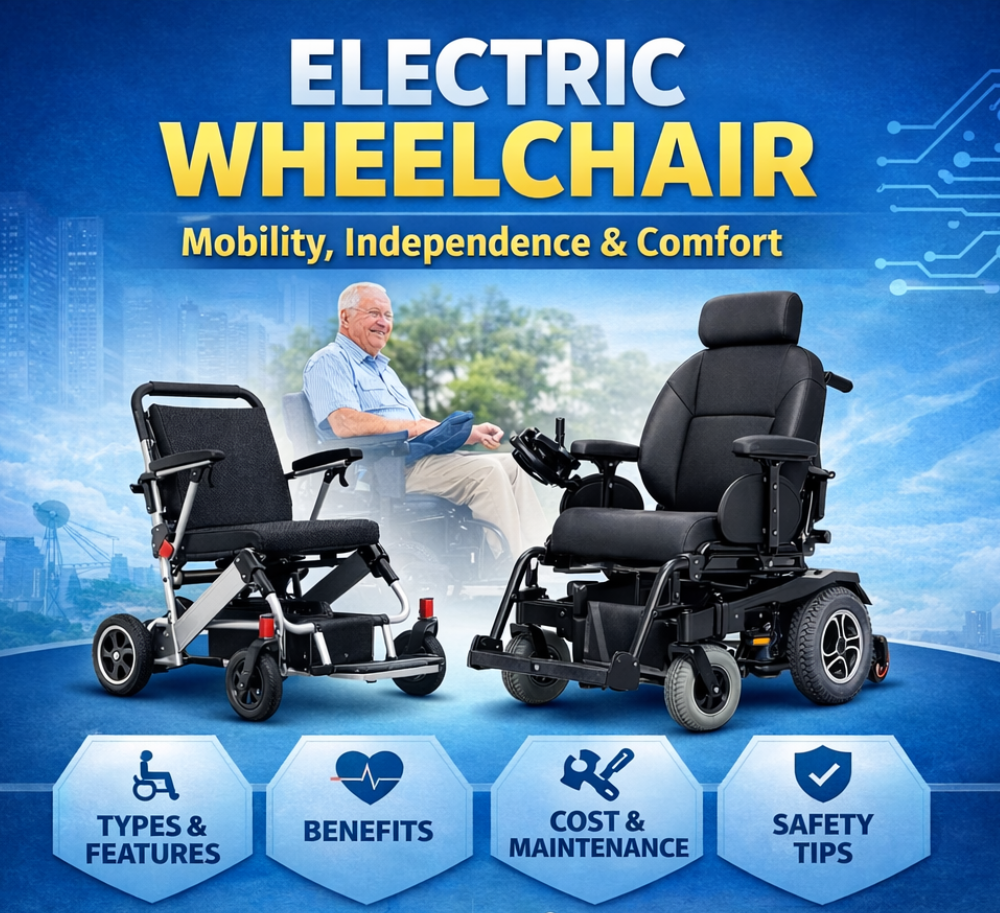
A power wheelchair is one of the more expensive pieces of durable medical equipment a person will ever be prescribed, and almost nobody pays the sticker price out of pocket. In the United States, most chairs are funded through Medicare, Medicaid, the VA, or private insurance — but only if the paperwork says the right things, in the right order, from the right people. This guide explains how that process actually works, what gets chairs denied, and what to do when it happens.
The short version
Medicare Part B covers power wheelchairs as durable medical equipment (DME), not as a convenience item. Coverage hinges on a single question: does a mobility limitation keep you from safely completing everyday tasks inside your home, and is a power wheelchair the least costly device that solves it? If the answer is yes and the documentation proves it, Medicare typically pays 80% of the approved amount after your annual Part B deductible. If the documentation is thin, the claim is denied — regardless of how obvious the need looks in person.
Medicare Part B: the coverage criteria
1. The face-to-face mobility examination
Before a supplier can bill Medicare, you need a face-to-face examination with a physician, nurse practitioner, physician assistant, or clinical nurse specialist that is specifically about your mobility. A regular checkup where the doctor writes “patient needs wheelchair” in the margin will not survive an audit.
The visit note needs to describe your functional status in detail: what you can and cannot do, how far you can walk before symptoms stop you, whether you have the upper-body strength to self-propel a manual chair, your balance, your vision, your cognition, and whether you can safely operate a joystick. After the exam, the supplier must receive a Standard Written Order (SWO) — your name, the date, a description of the item, the ordering practitioner’s name and NPI, and a signature. Medicare generally expects the order to reach the supplier within six months of that face-to-face visit.
2. The “in-home use” standard — the single biggest reason for denial
Medicare’s DME benefit covers equipment that is needed in the home. The technical phrase is mobility-related activities of daily living: toileting, feeding, dressing, grooming, and bathing within your residence. If your documentation says you get around the house fine but need a chair for the grocery store, church, or the county fair, expect a denial. That is not a loophole — it is the written standard.
This trips up a huge number of applicants, because most people do want the chair primarily for community access. The correct approach is not to fabricate anything, but to make sure the clinician documents the in-home limitations that genuinely exist: the fatigue crossing the kitchen, the near-falls in the hallway, the fact that you have stopped cooking because standing at the counter is no longer safe.
3. The mobility ladder
Medicare works through devices in order of cost. A cane or walker is considered first. If that is insufficient, a manual wheelchair. If you cannot self-propel a manual chair, a scooter (power-operated vehicle). Only if a scooter is also unworkable — usually because you cannot safely transfer onto it, cannot sit upright without support, or cannot maneuver a tiller in your home — does a power wheelchair become the covered option. The clinical note must explain why each cheaper rung on the ladder fails for you.
4. Your home has to accommodate the chair
Coverage also requires that the chair can actually be used where you live: adequate doorway widths, maneuvering space, and floor surfaces. Suppliers are expected to assess this. It is worth measuring before you get attached to a particular chair — our guide to whether an electric wheelchair will fit your home covers doorway clearances, turning radius, and ramp slope in detail.
HCPCS groups, translated
Every power wheelchair Medicare pays for is assigned a HCPCS code, and those codes cluster into groups. You will hear your supplier use these constantly.
- Group 1 — basic consumer-grade power chairs, limited weight capacity, no seating modifications. Rarely dispensed through Medicare.
- Group 2 — the workhorse category. Standard captain’s-seat power chairs for indoor and light outdoor use. Some Group 2 codes allow power options such as tilt or a power seat elevator.
- Group 3 — complex rehab technology. Stronger drive systems, programmable electronics, and full custom seating. Group 3 requires a qualifying diagnosis — typically a neurological condition, a myopathy, or a congenital skeletal deformity — plus a specialty evaluation.
- Groups 4 and 5 — Group 4 covers higher-performance chairs that Medicare generally does not consider medically necessary; Group 5 is pediatric.
The practical takeaway: if you have a progressive neurological condition, pushing for a Group 3 evaluation early matters, because Group 2 chairs cannot be upgraded later with the seating systems you may need.
The ATP and seating specialist evaluation
For Group 3 chairs and Group 2 chairs with power seating options, Medicare requires two extra people at the table. First, a specialty evaluation by a licensed clinician — usually a physical or occupational therapist with rehab technology experience — who has no financial relationship with the supplier. Second, a RESNA-certified Assistive Technology Professional (ATP) employed by the supplier who is directly involved in selecting the chair.
Treat this evaluation as the most important appointment in the process. It is where seat width, cushion selection, back support, and control type get decided, and those choices are far harder to change after delivery. Our companion article on power wheelchair seating, cushions and pressure-injury prevention explains what to ask for.
Prior authorization
Medicare requires prior authorization for many power mobility device codes — effectively all Group 3 chairs and a number of Group 2 codes. The supplier submits the full documentation packet before delivery and receives an affirmative or non-affirmative decision, usually within about ten business days, with an expedited pathway when delay would jeopardize health. A non-affirmed request can be resubmitted with better documentation as many times as needed, which is often faster than a formal appeal.
Capped rental versus purchase
Standard power wheelchairs fall into Medicare’s capped rental category. Medicare pays monthly rent for 13 months of continuous use, after which ownership transfers to you and Medicare covers reasonable repairs. Complex rehab power wheelchairs can generally be purchased outright at the start, because customized seating cannot be reissued to another user. Ask your supplier which path applies before you sign — it changes what happens if you move, change plans, or enter a facility mid-rental.
What you will actually pay
Under Original Medicare you are responsible for the annual Part B deductible plus 20% coinsurance on the Medicare-approved amount. On a mid-range Group 2 chair that commonly lands in the high hundreds to low thousands of dollars; on a complex Group 3 chair with power tilt it can be several thousand. Three things reduce it: a Medigap supplement (most plans cover the 20% entirely), Medicaid if you are dual-eligible, or a supplier who accepts assignment. Always confirm the supplier is Medicare-enrolled and accepts assignment — a non-participating supplier can bill you far more.
Medicaid, the VA, and private insurance
Medicaid rules are set state by state, so coverage varies widely. Medicaid is often more flexible than Medicare about community and school use, and in some states covers items Medicare will not, such as a second chair or a standing feature. If you are dual-eligible, Medicaid frequently picks up the Medicare coinsurance.
VA is usually the simplest route. Veterans enrolled in VA health care can receive a wheelchair through the Prosthetic and Sensory Aids Service on a VA clinician’s prescription, generally with no coinsurance, and VA also funds home and vehicle modification grants that Medicare does not touch. If you are eligible for both, compare before defaulting to Medicare.
Private insurance and Medicare Advantage plans set their own criteria, but most mirror Medicare’s medical-necessity language while adding network restrictions and their own prior authorization portals. With Medicare Advantage, confirm the supplier is in network before any evaluation happens; out-of-network DME denials are common and rarely worth appealing.
If you are denied
A denial is not the end of the process. Under Original Medicare there are five appeal levels: redetermination by the Medicare Administrative Contractor (file within 120 days of the Medicare Summary Notice), reconsideration by a Qualified Independent Contractor (180 days), a hearing before an Administrative Law Judge (60 days, subject to a minimum amount in controversy), review by the Medicare Appeals Council, and finally federal district court. Medicare Advantage plans use a parallel but faster internal process with automatic escalation to an independent review entity.
What actually wins appeals is documentation, not persistence. Ask the supplier for the exact denial reason code, then go back to the prescribing clinician for a letter of medical necessity that addresses that reason directly — specific in-home tasks you cannot complete, why a walker and a manual chair and a scooter each fail, and what changes clinically if the chair is denied. Generic letters lose. Dated, task-specific ones win.
When paying out of pocket makes sense
If your primary need is community and travel mobility, Medicare will likely never approve it, and many people simply buy directly. Retail chairs — particularly folding and travel models — are far less expensive than complex rehab equipment, and buying outright means no rental clock and no documentation cycle. If that is your situation, start with our guide to folding and travel power chairs and browse the current electric wheelchair collection to see what is available at each price point. Note that a self-purchased chair is not covered by Medicare’s repair benefit, so budget for battery replacement and service from day one.
Related guides
- Power Wheelchair Seating and Cushions: How to Measure, Position, and Prevent Pressure Injuries
- Will an Electric Wheelchair Fit Your Home? Doorways, Ramps, Charging and Transport
- Electric Wheelchair Maintenance and Troubleshooting: Batteries, Error Codes, and Repair vs Replace
- Electric Wheelchair Guide for Everyday Mobility Solutions
Coverage rules, deductibles, and appeal thresholds change annually — verify current figures with Medicare, your state Medicaid office, or your plan. This article is educational and is not a substitute for advice from your clinician, seating specialist, or benefits counselor.