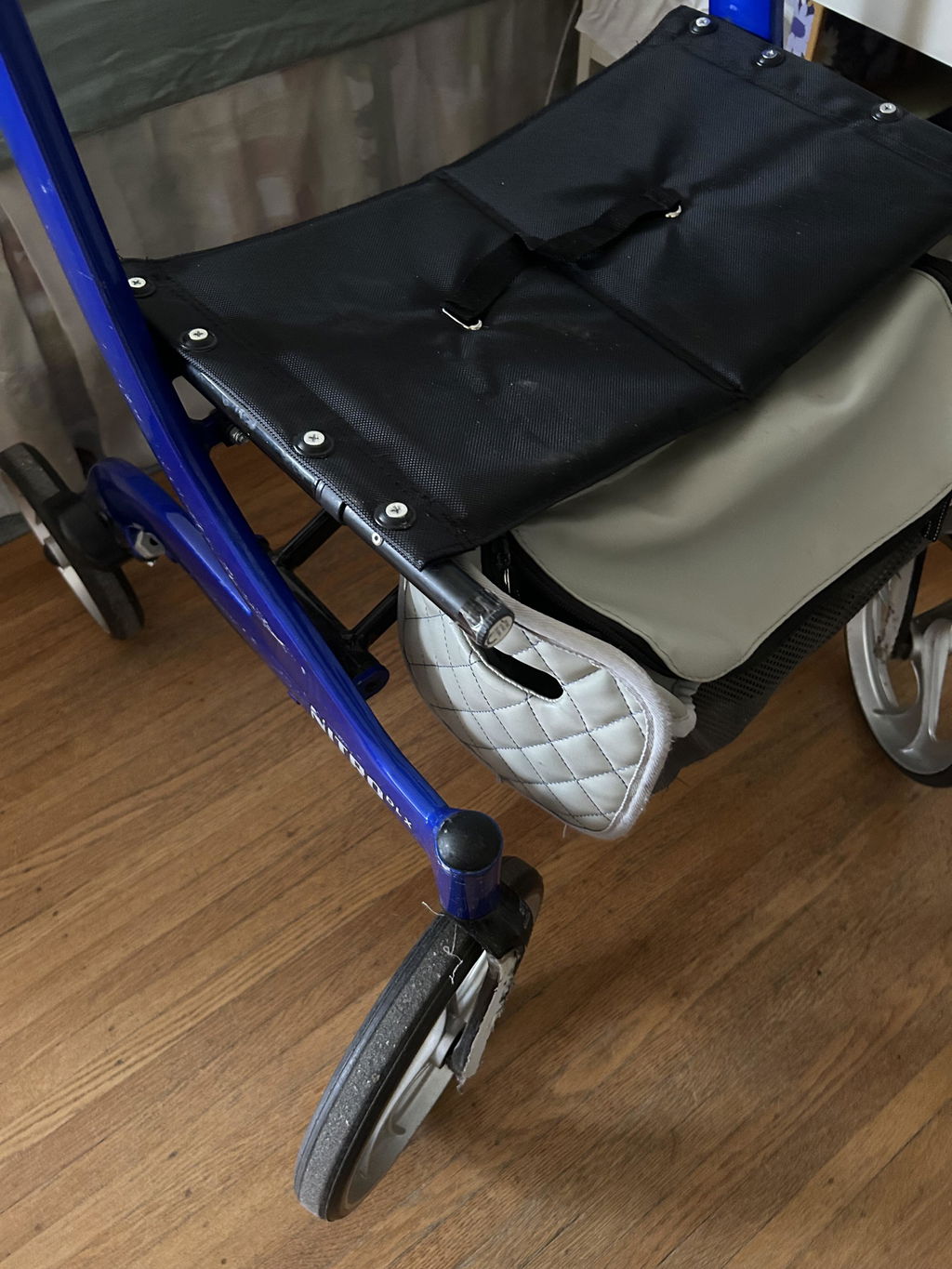
The most expensive mistake in power wheelchair shopping is not picking the wrong brand. It is buying a chair that cannot get through your bathroom door, cannot turn out of your hallway, or cannot be loaded into the only vehicle you own. All of that is knowable in advance with a tape measure and about forty minutes. Here is exactly what to measure and what the numbers need to be.
Start with the chair’s real width
Manufacturer specs list an overall width. Confirm that number includes the armrests and the joystick mount, because those are usually the widest points and they are what will scrape your door frames. Broadly:
- Compact and folding power chairs: roughly 21 to 24 inches overall.
- Standard captain’s-seat power chairs: roughly 24 to 27 inches.
- Heavy-duty and complex rehab chairs with power seating: 27 inches and up.
Write down the overall width, the overall length, the turning radius, and the total weight of the chair. Those four numbers answer almost every question below. You can compare them across models in the electric wheelchair collection.
Doorways: measure the clear width, not the door
A door labeled 30 inches is not a 30-inch opening. Open the door to 90 degrees and measure from the face of the door to the opposite door stop. That is the clear width, and it is typically about two inches less than the nominal door size. A 32-inch door usually gives about 30 inches clear. A 28-inch door gives about 26.
Accessibility standards treat 32 inches of clear width as the minimum for a wheelchair passage. Practically, you want the chair’s overall width plus at least two inches to get through comfortably going straight on, and more if you have to turn into the opening.
If a door is an inch or two short, you do not necessarily need construction. Swing-clear (offset) hinges let the door swing completely out of the opening and typically recover 1.5 to 2 inches of clear width for well under a hundred dollars. Removing the door stop molding can gain a bit more. Those two fixes solve a large share of residential doorway problems.
Hallways, turns, and turning radius
Straight-line hallway travel is rarely the issue. The 90-degree turn out of a hallway into a bedroom or bathroom is. As a working rule, a 36-inch hallway turning into a 32-inch clear doorway is tight but workable for a compact chair; anything narrower on either side and you will be doing multi-point turns every single day.
Turning radius depends heavily on drive configuration:
- Mid-wheel drive — drive wheels under the seat, tightest turning radius, often around 20 to 25 inches. The best choice for small homes and apartments. Can hang up on steep thresholds because of the extra caster sets.
- Front-wheel drive — good at climbing thresholds and obstacles, moderate turning radius, can feel loose at speed.
- Rear-wheel drive — most stable and fastest outdoors, largest turning radius, often 35 inches or more. Difficult in tight interiors.
The practical test: mark out a circle on your floor with painter’s tape at twice the chair’s stated turning radius and see whether that circle fits in your bathroom, at the foot of your bed, and in your kitchen work area. A 60-inch diameter clear circle is the standard benchmark for a full turn.
Thresholds and ramps
Interior thresholds under about half an inch, with a beveled edge, are generally rollable. Anything taller wants a threshold ramp — rubber or aluminum wedges sized for rises of roughly one to six inches. These are cheap and make an enormous difference at sliding-glass doors and between rooms.
For entry steps, the number to know is the 1:12 slope rule: one inch of vertical rise for every twelve inches of ramp run. A 24-inch rise — a typical three-step porch — needs 24 feet of ramp. That surprises almost everyone, and it is why so many home entries end up needing a switchback with a landing rather than a single straight run.
Other ramp specifics worth knowing:
- Maximum rise of 30 inches before a level landing is required; landings should be at least 60 inches long.
- Ramp running surface at least 36 inches wide, with edge protection so a caster cannot roll off.
- Handrails on both sides once the rise exceeds 6 inches.
- Portable ramps are often sold at steeper ratios like 1:8 or 1:6. Those are intended for assisted, occupant-off loading, not for driving a chair up unaided.
- Check the ramp’s weight rating against chair weight plus occupant weight, not chair weight alone. A 300 lb chair and a 200 lb rider is a 500 lb load.
Bathrooms: the usual failure point
Bathroom doors in older American homes are frequently 24 or 26 inches nominal — often the narrowest door in the house, and the one room you cannot skip. Measure it first, before anything else. Beyond the door, check whether there is clear floor space beside the toilet for a transfer, whether the vanity has knee clearance or a cabinet blocking it, and whether the tub wall makes bathing impossible from a seated position.
If the bathroom cannot accommodate the chair, the common solutions are a swing-clear hinge, a pocket door conversion, a transfer at the door to a smaller shower or commode chair, or a bathroom remodel. Knowing which of those you are signing up for should happen before the chair arrives, not after.
Floors: carpet costs you range
Low-pile carpet under about half an inch is fine. Plush and high-pile carpet is a genuine problem: rolling resistance increases sharply, front casters dig in, and battery range can drop noticeably compared to hard floors. Deep pile plus small casters is the classic recipe for getting stuck in a doorway.
Area rugs are worse than wall-to-wall because the edges bunch and the corners flip. If you are keeping rugs, tape them down or switch to low-profile ones with beveled edges. Hardwood, vinyl plank, tile, and sealed concrete all drive well — watch only for wet tile, which becomes slick under drive tires.
Charging: where, how, and what not to do
A power wheelchair charger is not a heavy electrical load. Most draw a few hundred watts at most and run fine on an ordinary 120V household circuit. The safety issues are placement and cabling, not capacity.
- Plug the charger directly into a grounded wall outlet. Avoid lightweight household extension cords and never daisy-chain power strips.
- Charge in a dry, ventilated space with clearance around the charger — they get warm and many have vents.
- Do not charge in a hallway, stairwell, or anywhere that blocks an exit path. In multi-unit buildings this is usually a fire code violation as well as a lease issue.
- Sealed lead-acid and AGM batteries typically need a long charge, often 8 to 12 hours, and their chargers are designed to shut off or float when full — overnight charging is normal for these.
- Lithium batteries charge faster and should be charged on a hard, non-flammable surface away from bedding and furniture, using only the manufacturer’s charger. Some cities have specific rules about charging lithium mobility batteries in apartment buildings — check locally.
- If you rent, ask about a reasonable accommodation for a dedicated charging spot or a widened door. Federal fair housing law generally requires landlords to allow reasonable modifications for disability access.
Charging habits are also the single biggest factor in how long your batteries last. Our maintenance and troubleshooting guide covers battery care, testing, and replacement in depth.
Getting the chair into a vehicle
There are four realistic options, and they differ enormously in cost.
Disassembly into a trunk
Folding and travel chairs break into pieces or fold flat. The question is not total weight but the weight of the single heaviest piece, which is often 30 to 60 pounds — and whether the person lifting it can do so repeatedly. Measure your trunk opening, not just the trunk volume.
Hitch-mounted exterior carriers
A platform on a Class II or Class III receiver hitch, sometimes with a powered lift arm. The cheapest way to move a full-size chair. Check the hitch tongue-weight rating against chair weight, plan for a weather cover, and confirm the carrier does not obscure your license plate or tail lights — some states require auxiliary lighting.
Interior lifts and hoists
A boom or platform lift installed in the cargo area of an SUV, minivan, or truck bed that hoists the chair inside. Typical capacities run from about 250 to 400 pounds. You need cargo height clearance and you lose most of the cargo space.
Ramp and conversion vans
A lowered-floor minivan with a side- or rear-entry ramp, letting you stay seated in the chair while traveling. The most expensive option by a wide margin, and the only one that works if transfers are unsafe. Side entry allows front-position seating; rear entry is cheaper and parks in standard spaces. If you go this route, verify the chair can be secured with a four-point tiedown or a docking system.
What “airline approved” really means
There is no government certification that makes a wheelchair “airline approved.” Under the Air Carrier Access Act, US airlines are required to transport passengers’ wheelchairs. What the phrase is really shorthand for is battery compliance.
- Sealed, non-spillable batteries — AGM and gel — are generally the least complicated and usually stay installed in the chair.
- Lithium-ion batteries usually must be removable and carried in the cabin, with common per-battery limits around 300 watt-hours, or a pair of smaller spares. Limits and rules vary by airline, so confirm with yours.
- Know your battery’s watt-hour rating and have it printed on the battery or in the manual. Gate agents ask.
- Give the airline advance notice — 48 hours is the usual recommendation — and bring the manual, including the freewheel and brake-release instructions for ground crews.
- Cargo hold door dimensions matter for large chairs on regional jets. Ask when booking.
If frequent flying is your priority, that requirement should drive the whole purchase. See our guide to folding and travel power chairs, and browse available electric wheelchairs with removable battery packs.
A 40-minute home survey checklist
- Clear width of every door you need: front, bedroom, bathroom, kitchen.
- Narrowest hallway width, and the width at each 90-degree turn.
- Height of every threshold and step, inside and out.
- Total rise from ground to entry door, then multiply by 12 for ramp length.
- Clear turning space in bathroom, bedroom, and kitchen — aim for a 60-inch circle.
- Flooring type and carpet pile depth in each room.
- Location of a grounded outlet with clear space for charging.
- Vehicle trunk opening, cargo height, and hitch class if you have one.
Related guides
- Does Insurance Cover a Power Wheelchair? Medicare, Medicaid and VA Rules Explained
- Power Wheelchair Seating and Cushions: How to Measure, Position, and Prevent Pressure Injuries
- Electric Wheelchair Maintenance and Troubleshooting: Batteries, Error Codes, and Repair vs Replace
- Electric Wheelchair Guide for Everyday Mobility Solutions
Dimensions and code requirements vary by jurisdiction and building; confirm ramp and electrical work with a licensed contractor. This article is educational and is not a substitute for advice from your clinician, occupational therapist, or seating specialist.