Most families budget for incontinence care by guessing. They buy a bag of pads, run out sooner than expected, buy another bag at a higher unit price, and never get a clear picture of what the routine actually costs per month. Doing the math once, properly, usually saves real money and eliminates the stress of running short at 2 a.m.
This guide walks through how to estimate usage, convert that into a monthly count, compare case versus bag pricing on a true cost-per-change basis, build a sensible buffer, and set a reorder cadence that survives seasonal changes and hospital stays.
Step 1: Count changes per day and per night
Everything downstream depends on one number: how many product changes happen in 24 hours. Track it honestly for three to five days before you buy anything in volume. Write down each change, the time, and whether the product was lightly wet, saturated, or leaking.
Typical patterns by absorbency level look roughly like this:
- Light protection (pads, liners, light underwear): often 4 to 6 changes across the day, sometimes more with high fluid intake or diuretics.
- Moderate protection: commonly 3 to 5 daytime changes.
- Heavy or maximum daytime protection: often 3 to 4 changes.
- Overnight products: the goal is 1 product for an 8-hour stretch, with a second on hand. If you are changing twice every night, the product is under-capacity for the need rather than the routine being wrong.
These are starting points, not prescriptions. Two people with the same diagnosis can differ by three changes a day based on fluid intake, medications, mobility, and skin sensitivity. Your own tracked number beats any average.
Step 2: Turn daily use into a monthly count
The arithmetic is simple, and it is where most budgets go wrong. Multiply daily changes by 30, then add night products separately if you use a different item overnight.
An example: 4 daytime products plus 1 overnight product equals 5 per day. Multiply by 30 and you need 150 pieces a month. If a bag holds 18 and a case holds 72, that is roughly 8.3 bags or 2.1 cases every month. Now you know what you are actually buying, and you can stop guessing.
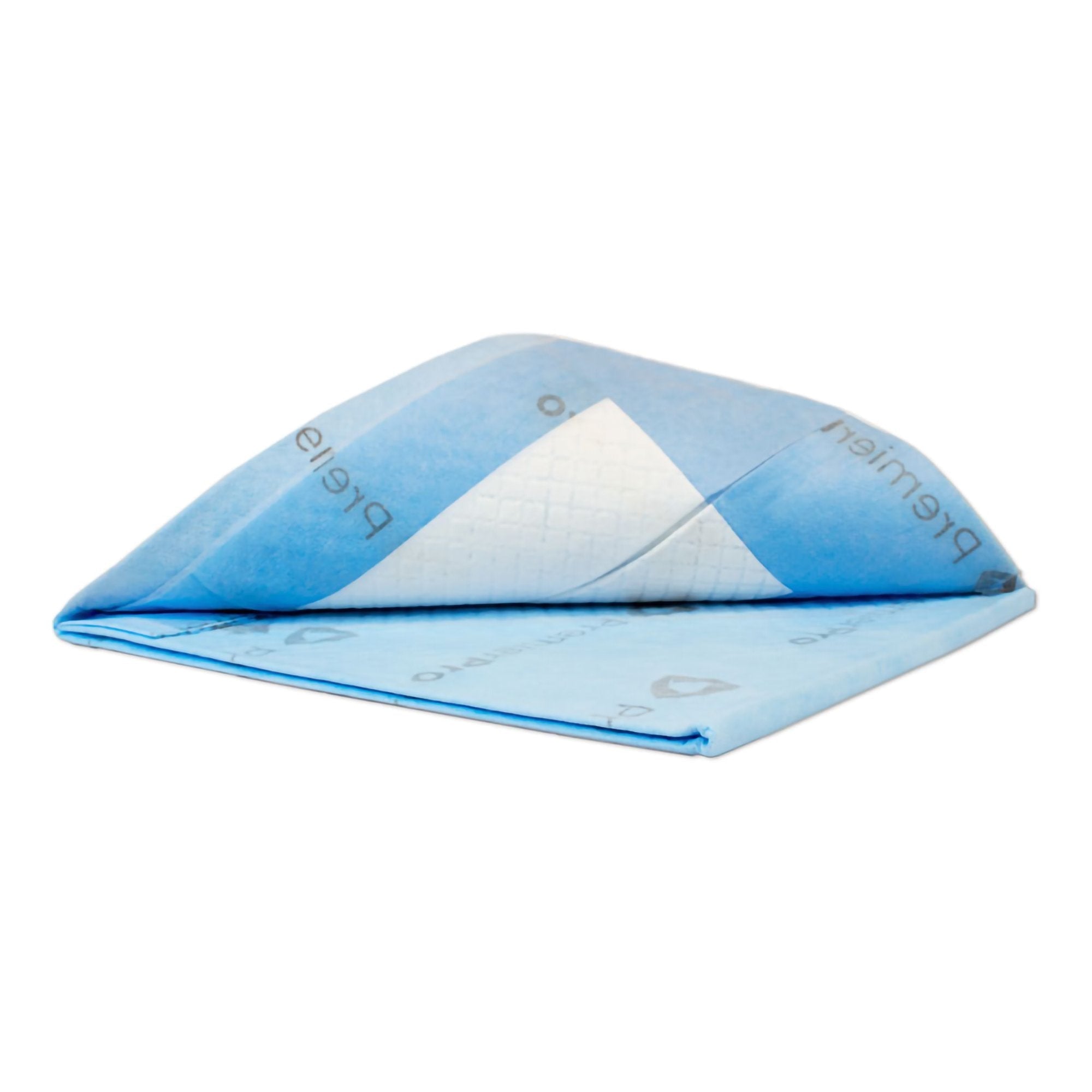
Do this same calculation for every consumable in the routine, not just the main product. Underpads, wipes, gloves, and skin barrier products all have their own burn rates. Underpads in particular get underestimated because people forget they are also protecting chairs and car seats, not just the mattress. Browse sizes and absorbencies in underpads and bedding protection and match the count to how many surfaces you are actually covering.
Step 3: Compare true cost per change, not sticker price
Divide the total price by the number of pieces in the package. That single number, cost per change, is the only fair way to compare a bag against a case, or one brand against another.
Case buying almost always wins on unit price. The trade-offs are cash outlay up front, storage space, and the risk of committing to a size or style that turns out to be wrong. A reasonable approach is to buy one bag of a new product first, confirm the fit and capacity over a week, and only then move that item to case purchasing.
Step 4: Why the cheapest pad is often the most expensive
A low-cost product that fails changes the math entirely. Watch for three hidden costs:
- Doubling up. When a product cannot hold a full night, people stack two together. That instantly doubles the cost per change and usually makes leaks worse, because the outer product's waterproof backing traps fluid against the inner one instead of absorbing it.
- Laundry. Every leak means sheets, mattress protector, pajamas, and sometimes a mattress. Water, detergent, energy, and time are real costs, and a failed overnight product can generate a full load per night.
- Skin. Prolonged moisture contact leads to irritation and skin breakdown, which is by far the most expensive outcome of all. Treating a preventable skin injury costs vastly more than a better product would have.
If a cheaper product means one extra change per day, it needs to be meaningfully cheaper per piece just to break even. Run the numbers before switching to save money.
If leaks are driving your consumption up, the fix is usually sizing or product style rather than buying more. Our companion guide on sizing and leak troubleshooting walks through how to diagnose what is actually failing.
Step 5: Build a 2-to-4 week buffer without over-ordering
A buffer protects you against shipping delays, back orders, and sudden increases in need. Two to four weeks of supply is the sweet spot for most households.
Using the 150-per-month example, a two-week buffer is 75 pieces and a four-week buffer is 150. That is your safety stock, held on top of what you are actively using.
Resist going deeper than four weeks unless you have a specific reason. Larger stockpiles tie up cash, consume closet space, and become dead inventory the moment needs change, which they frequently do after a health event or a weight change.
Step 6: Storage and rotation
Absorbent products are not indefinitely shelf-stable in practice. Heat and humidity degrade adhesives and elastics, and compressed packaging can affect performance.
- Store in a cool, dry interior closet. Avoid garages, attics, basements that flood, and anywhere near a water heater.
- Keep packages off concrete floors, which wick moisture.
- Rotate first in, first out. Write the delivery date on each case with a marker and pull from the oldest.
- Keep one open package at the point of use and the rest sealed in storage.
- Do not stack heavy items on top of packaged products.
Keeping a small caddy of personal cleansing wipes and skin care items at each change location saves time and reduces the temptation to skip steps during a rushed change.
Step 7: Reorder cadence and when to adjust
Set a reorder trigger based on quantity, not the calendar. When your on-hand count drops to your buffer level, order. With a monthly usage of 150 and a two-week buffer of 75, you place an order every time you hit 75 pieces remaining.
Recalculate your usage number when any of these happen:
- Seasonal shifts. Summer heat means more fluid intake and often more changes. Winter can mean less activity and different patterns.
- After a hospital stay. Needs frequently jump temporarily after surgery, illness, or a change in mobility. Order for the new reality, not the old one, and re-evaluate in three or four weeks.
- Medication changes. New diuretics can substantially increase output and change your absorbency level.
- Weight change. A change of 15 to 20 pounds often means a different size, which resets everything.
When needs shift upward, do not simply add more of the same product. Moving up an absorbency level often reduces total pieces used and can lower the monthly cost even at a higher unit price.
Coverage and payment: what to expect in the US
This is where many families are caught off guard. Medicare Part B generally does not cover absorbent incontinence products such as adult briefs, protective underwear, pads, or disposable underpads. They are classified as disposable supplies rather than durable medical equipment, so routine purchases typically come out of pocket.
There are other avenues worth checking:
- State Medicaid programs. Many states do provide some coverage for absorbent products, often with monthly quantity limits and a documentation or prior authorization requirement. Rules vary considerably by state, so check with your specific state program.
- Medicare Advantage plans. Some plans include supplemental over-the-counter or supply allowances that can be applied to these products. Check your plan's benefit details.
- HSA and FSA funds. Incontinence supplies are commonly eligible expenses. Keep your receipts, and be prepared to provide a letter of medical necessity if your administrator requests one.
- Veterans benefits and local agencies. VA benefits, Area Agencies on Aging, and some local charitable programs may assist.
Verify current rules with your plan directly before assuming coverage, since program details change.
Putting it together
Track for a week, calculate your monthly count, price the case against the bag on cost per change, hold two to four weeks of buffer, rotate your stock, and reorder on quantity rather than dates. Revisit the numbers after any health change. Explore options across incontinence and toileting supplies and adult diapers and protective underwear once you know what you actually need.
Related guides
- Sizing and Leak Troubleshooting: Why Your Incontinence Product Is Failing and How to Fix It
- How to Choose the Right Incontinence Products for Daily Care
- How to Choose the Right Adult Diaper Size: Complete Guide
This article is provided for educational purposes only and is not medical advice. Consult a healthcare professional about your individual care needs.