Grab Bars and Safety Rails for Seniors

DISCLAIMER: This article provides general guidance on grab bar selection and placement. For installation on tile, drywall, or other surfaces, ensure bars are anchored to structural studs or use appropriate wall anchors rated for the intended load. If you are unsure about proper installation, consult a licensed contractor or certified aging-in-place specialist (CAPS). Always consult your physician or occupational therapist for personalized fall prevention recommendations.

Grab Bars and Safety Rails for Seniors: The Complete 2026 Guide to Bathroom Fall Prevention

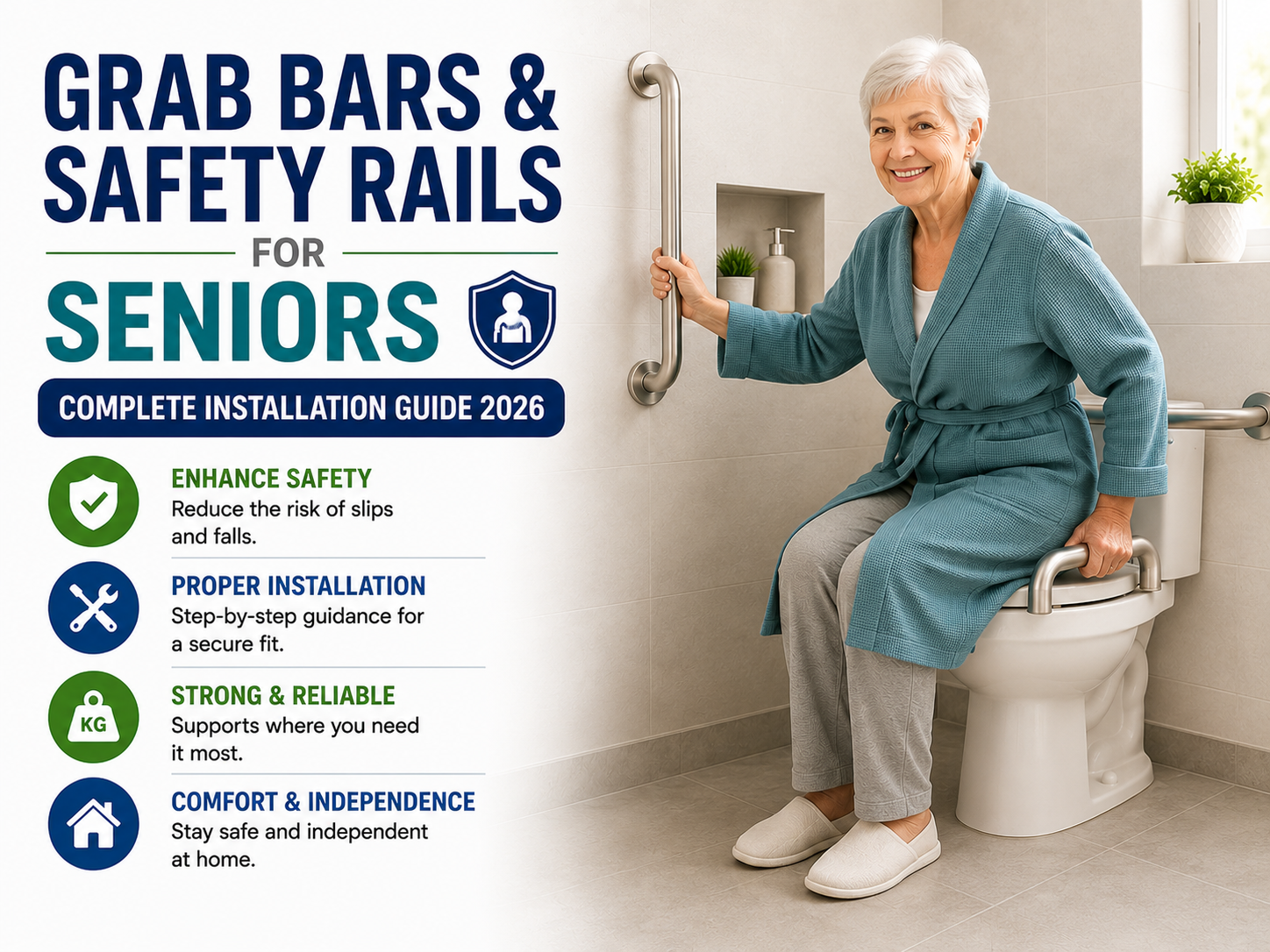
Senior-safe bathroom with grab bars installed — AllCare Store bathroom safety guide 2026

Margaret's Story: One Fall, One Decision That Changed Everything

Margaret was 81 and had lived in the same ranch-style home for 43 years. She knew every inch of it — where the floors creaked, where the afternoon light fell through the kitchen window, which drawer stuck in summer. She had never thought of her home as dangerous. It was home.

The morning she fell in the shower, she had just reached up to adjust the showerhead. Her foot slipped on the wet porcelain. She grabbed for the towel bar, which pulled right out of the wall. She went down hard, cracking a rib and badly bruising her hip. She lay on the floor for forty minutes before her neighbor heard her calling.

Margaret's son Thomas flew in from Portland the next day. He sat in the hospital room and made a list. There wasn't going to be a nursing home discussion — his mother had made her wishes clear. What there was going to be was a safer home. The first thing he did when Margaret was discharged was drive to a home health supply store and come back with five grab bars and a non-slip bath mat.

"I should have done this years ago," Margaret said, watching him drill the first bar into the shower wall.

She's right. Falls are the leading cause of injury-related death among Americans over 65, and the bathroom is the most dangerous room in the house. Grab bars are the single most cost-effective, evidence-based intervention to prevent bathroom falls — and yet millions of seniors' bathrooms still don't have them. This guide will help you understand what to buy, where to put it, and how to get it done.

Browse our full selection of grab bars and safety rails at AllCare Store.

The Bathroom Fall Facts Every Senior and Caregiver Should Know

The numbers are sobering. The CDC estimates that more than 235,000 people over age 15 are treated in emergency rooms annually for bathroom injuries. Seniors account for the vast majority of these. The three most dangerous bathroom activities are bathing/showering, getting on and off the toilet, and stepping in and out of the bathtub — all transitions that involve weight-shifting, wet surfaces, and limited handholds.

What makes this particularly important is that bathroom falls are largely preventable. A 2017 study published in Injury Prevention found that grab bars reduced bathroom fall risk by up to 50 percent in older adults. The same study found that less than 20 percent of seniors' bathrooms have adequate grab bars installed.

Types of Grab Bars: What's Available

Permanent Wall-Mounted Grab Bars

The gold standard for bathroom safety. These bars are screwed directly into wall studs or into anchors rated for the intended load. A properly installed wall-mounted grab bar can withstand 250 or more pounds of force — the kind of force generated when a person grabs a bar to stop a fall. These bars don't shift, rattle, or give way under stress.

Best for: Primary bathroom, shower stall, tub surround, beside toilet. Any high-use location where reliable support is critical.

What to look for: ADA-compliant bars are 1.25 to 1.5 inches in diameter — designed to be grippable for most hand sizes. Look for a knurled (textured) surface for grip when hands are wet. Stainless steel or chrome finishes resist moisture and corrosion.

Suction Cup Grab Bars

Suction cup bars attach to smooth, non-porous surfaces (tile, fiberglass, acrylic) without drilling. They are easy to install and remove — useful for travel or for renters who cannot drill into walls. However, suction bars are significantly less reliable than wall-mounted bars. They can fail under heavy load, when the suction cups age or are wet, or on textured surfaces where a seal cannot form properly.

Best for: Travel, temporary use, supplemental assistance in lower-risk areas. Not recommended as the primary grab bar for someone at high fall risk.

Important: Always check suction cups before each use by pushing down firmly and pulling to verify the seal. Replace suction cups immediately if they show any wear, cracking, or reduced adhesion. Never use suction bars on textured surfaces.

Clamp-On Tub Rails

Clamp-on rails attach to the rim of a bathtub and provide a sturdy, freestanding handhold for getting in and out of the tub. They don't require drilling and can be repositioned. Quality clamp-on tub rails grip the tub rim securely and many include a weight capacity of 250 to 300 lbs.

Best for: Standard bathtubs where wall-mounted bars are not yet installed; rentals; temporary post-surgery use.

Toilet Safety Rails and Frames

Freestanding toilet safety frames surround the toilet and provide bilateral handholds for lowering and rising. These don't require wall mounting and can be adjusted for height. They are ideal for seniors who need support on both sides when using the toilet, particularly post-hip or knee surgery.

Alternatively, wall-mounted grab bars beside the toilet provide a one-sided handhold for support when space or preference doesn't accommodate a freestanding frame.

Best for: Post-surgery recovery, weakness in both legs, difficulty with toilet transfers.

Fold-Down (Flip-Up) Grab Bars

Wall-mounted fold-down bars hinge at one end and can be folded up against the wall when not in use, making them ideal for shared bathrooms where not every user needs the bar. When in use, they fold down to provide a sturdy horizontal or angled support. These are commonly seen in ADA-compliant public restrooms and are increasingly popular for home installation.

Best for: Shared bathrooms, beside the toilet on the open side, shower stalls where a horizontal bar is needed but full-time placement would be inconvenient.

Grab Bar Placement: Where Every Bar Should Go

Effective grab bar placement is not guesswork — there are well-established guidelines based on biomechanical research and ADA standards. Here's where bars should go in each bathroom area:

Walk-In Shower

Horizontal bar on the entry wall: Mount one horizontal bar approximately 33 to 36 inches from the floor on the wall beside the shower entry. This bar assists with stepping into and out of the shower — the highest-risk transition.

Angled bar on the back wall: An angled (diagonal) bar on the back wall of the shower, running from approximately 33 inches at the low end to 48 inches at the high end, provides support for standing, turning, and washing.

Horizontal bar near the showerhead: A horizontal bar at approximately 48 inches on the wall beside or below the showerhead supports reaching and adjusting the spray without losing balance.

Bathtub

Horizontal bar on the long wall: Mount a 24-inch horizontal bar approximately 33 to 36 inches from the tub floor on the long wall of the tub surround. This assists with lowering into and rising from the tub.

Vertical bar on the entry end: A vertical bar (12 to 18 inches long) on the wall at the tub entry, approximately 9 to 18 inches from the tub rim, assists with the step-over motion when entering and exiting.

Horizontal bar above the tub end: An additional horizontal bar at 48 to 54 inches assists with the seated-to-standing transition after bathing.

Toilet

Side wall bar: Mount a 42-inch bar on the wall beside the toilet (whichever side has wall access) at approximately 33 to 36 inches from the floor. This bar provides support for the seated-to-standing and standing-to-seated transitions — the most common toilet fall scenarios.

ADA positioning: For standard ADA compliance, the bar should be positioned so its front end is 24 inches in front of the back wall, and its back end no more than 12 inches from the back wall.

Grab Bar Size and Weight Capacity Guide

Location Recommended Length Orientation Height from Floor
Shower entry 18–24" Horizontal or vertical 33–36"
Shower back wall 24–36" Angled or horizontal 33–48"
Bathtub long wall 24–32" Horizontal 33–36"
Bathtub entry end 12–18" Vertical 9–18" above rim
Toilet side wall 36–42" Horizontal 33–36"
Toilet rear wall 36" Horizontal 33–36"

Installation: The Most Important Part

A grab bar is only as strong as its installation. The most common reason grab bars fail is improper anchoring — specifically, screwing into drywall rather than studs or failing to use anchors rated for the load.

Finding Studs

Use an electronic stud finder to locate wall studs before drilling. In most homes, studs are 16 inches apart. The ideal scenario is to anchor both ends of a bar directly into studs — this provides the strongest, most reliable installation. If studs aren't positioned conveniently for your planned bar location, use toggle bolts or specialty anchors rated for at least 250 lbs.

Tiled Surfaces

Drilling through tile requires a carbide-tipped or diamond-tipped drill bit and moderate speed (tile cracks under high-speed drilling). Use painter's tape over the drill location to prevent the bit from slipping. Drill through the tile and into the underlying wall. Never use anchor bolts designed for drywall alone on tiled walls — the grout line is not a substitute for structural anchoring.

Fiberglass and Acrylic Surrounds

These surfaces require reinforcing backing plates behind the panel to prevent the grab bar from pulling through the material. Specialty grab bar kits designed for acrylic and fiberglass surrounds include backing plates or mount-through systems. If you're remodeling, installing solid backer boards (like cement board or specially designed blocking) behind tub surround panels makes future bar installation much more straightforward.

Professional Installation Option

If you're not comfortable with power tools or drilling into tile, hiring a handyman for grab bar installation is typically affordable ($50 to $150 per bar including hardware) and provides peace of mind. A Certified Aging in Place Specialist (CAPS) can also conduct a full home safety assessment and recommend the optimal grab bar placement for the specific user's needs. Ask your local Area Agency on Aging — some areas offer subsidized home modification programs for low-income seniors.

ADA vs. Non-ADA Grab Bars: Do I Need ADA-Compliant?

ADA (Americans with Disabilities Act) standards for grab bars specify a diameter of 1.25 to 1.5 inches, a minimum clearance of 1.5 inches between the bar and the wall, a smooth, non-slip gripping surface, and specific weight ratings (250 lbs minimum). For home use, ADA-compliant bars are strongly recommended — they're designed based on ergonomic research on what hands can grip securely under stress. Non-ADA bars may be larger, smaller, or differently shaped in ways that compromise grip reliability.

For commercial ADA compliance (businesses, rental properties, etc.), bars must meet specific technical standards. For home use, the same standards apply as best practices even though they're not legally required.

Style and Finish Options

Modern grab bars are available in finishes that coordinate with standard bathroom fixtures — chrome, brushed nickel, oil-rubbed bronze, matte black, and white. There's no longer a reason for grab bars to look institutional or medical. Designers and occupational therapists increasingly recommend choosing bars that blend with bathroom aesthetics to encourage their actual use — seniors are more likely to use and appreciate grab bars that look intentional rather than added as an afterthought.

Other Fall Prevention Measures to Combine with Grab Bars

Grab bars are most effective as part of a broader bathroom safety strategy. Consider combining them with:

  • Non-slip bath mats: Both inside the tub/shower and on the bathroom floor
  • Shower chair or transfer bench: Allows bathing while seated, dramatically reducing the risk of slipping while standing — see our shower chairs and benches collection
  • Raised toilet seat: Reduces the distance to sit and rise, requiring less strength and balance
  • Handheld showerhead: Allows bathing while seated without needing to reach overhead
  • Night light: Many bathroom falls happen during nighttime trips — adequate lighting is essential
  • Medical alert device: Provides emergency call capability if a fall does occur — explore our fall prevention collection

Shop Grab Bars at AllCare Store

At AllCare Store, we carry a comprehensive selection of grab bars and bathroom safety products — from ADA-compliant wall-mounted bars in a range of sizes and finishes to clamp-on tub rails and freestanding toilet safety frames. Our knowledgeable team can help you select the right products for your bathroom layout.

  • Free shipping on qualifying orders
  • 30-day returns
  • Expert guidance available at 1-888-889-6260

Frequently Asked Questions About Grab Bars

Can I install a grab bar on drywall without studs?

Yes, but only with toggle bolts or specialty anchors specifically rated for the intended load (minimum 250 lbs for safety purposes). Standard drywall anchors are insufficient for grab bars. Toggle bolts (also called Molly bolts or butterfly anchors) expand behind the drywall to distribute load. Look for anchors rated for 200–300 lbs per anchor. For the safest installation, always anchor into studs when possible. If in doubt, consult a licensed contractor.

How high should grab bars be installed?

The standard recommendation for horizontal grab bars is 33 to 36 inches from the floor for most adults. This height allows a natural arm position when standing. For toilet grab bars, 33–36 inches from the floor aligns with the height needed to push up from a seated position. Taller individuals may need bars positioned slightly higher. An occupational therapist can measure the specific user's needs for optimal placement.

Are suction cup grab bars safe?

Suction cup grab bars are significantly less safe than wall-mounted bars and should not be relied upon as a primary fall prevention measure for seniors at high fall risk. Suction cups can fail due to aging, wet surfaces, temperature changes, or improper application. They should only be used as temporary or supplemental aids on smooth, non-porous surfaces (tile, fiberglass, acrylic), and should be checked before every use. For anyone at meaningful risk of a bathroom fall, permanently installed wall-mounted bars are strongly preferred.

Does Medicare cover grab bars?

Traditional Medicare (Parts A and B) does not cover grab bars as durable medical equipment. However, some Medicare Advantage plans, Medicaid programs, and state-funded home modification programs do provide assistance for grab bar installation. Veterans may be eligible through VA home modification programs. Contact your local Area Agency on Aging (Eldercare Locator: 1-800-677-1116) to ask about home modification assistance programs in your area.

How long should a grab bar be?

Bar length depends on location. For shower entry, 18–24 inches is typically sufficient. For the toilet side wall, 36–42 inches allows better leverage when standing. For the bathtub long wall, 24–32 inches is standard. Longer bars give users more flexibility in where they grip, which is beneficial. When in doubt, choose a longer bar within the appropriate range for the location.

Don't Wait for a Fall to Act

Margaret's story doesn't have to be yours or your loved one's. The cost of five grab bars and a professional installation is a fraction of the cost — financially and emotionally — of a single emergency room visit, let alone a hospitalization. The bathroom can be made dramatically safer with a few hundred dollars and an afternoon.

If there's one home modification that aging-in-place specialists, occupational therapists, and geriatricians agree on, it's this: install grab bars in the bathroom before they're needed.

Browse AllCare Store's grab bars collection today, or call 1-888-889-6260 for personalized guidance. Your safety is worth it.

Newsletter

A short sentence describing what someone will receive by subscribing