DISCLAIMER: This article is for general informational purposes only and does not constitute medical advice. Hot flashes and other menopause symptoms can sometimes be caused by conditions other than menopause. Always consult a physician before starting any new supplement, herbal product, or treatment — especially if you have a history of hormone-sensitive cancers, cardiovascular disease, blood clotting disorders, or are taking prescription medications.
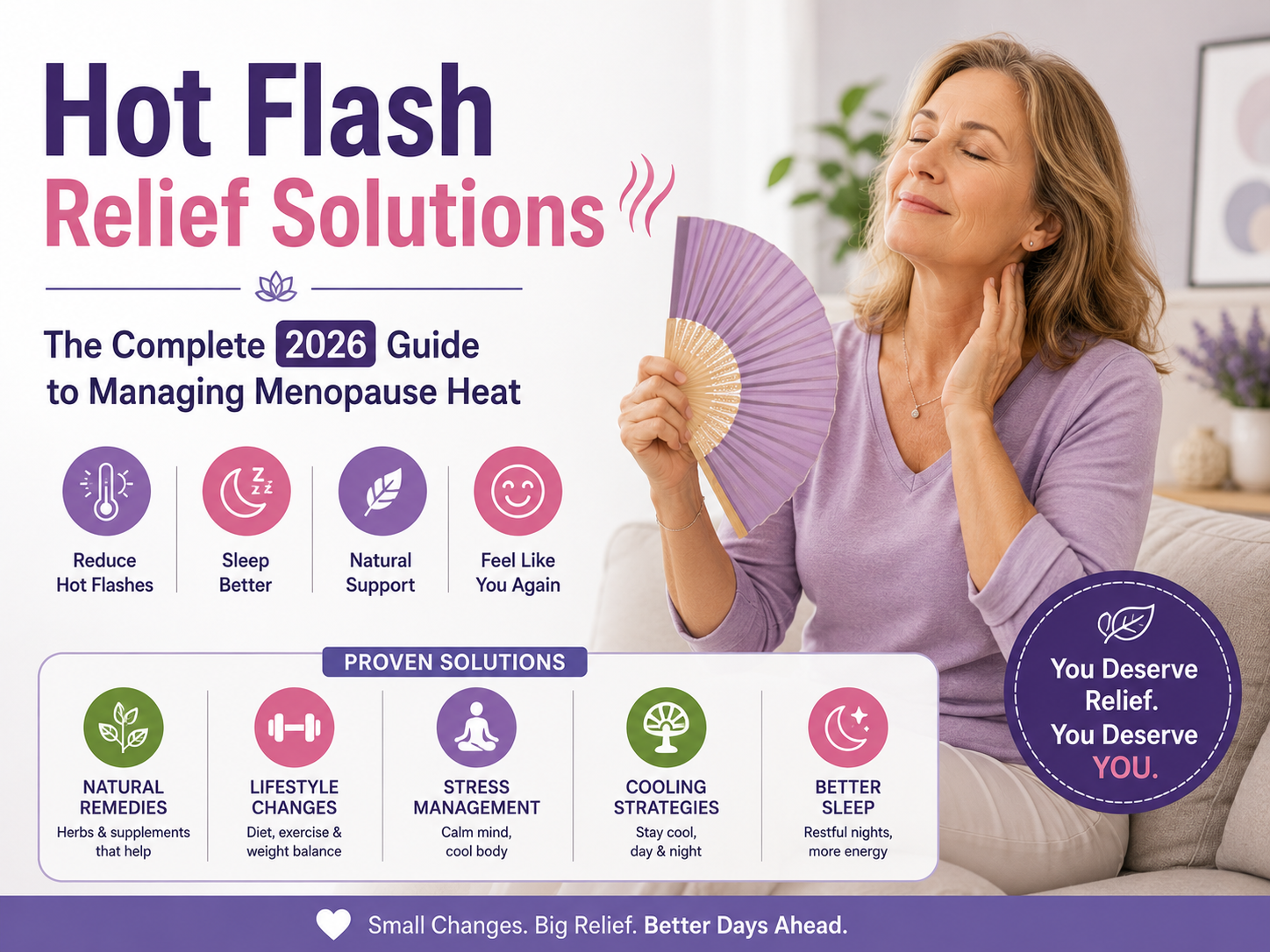
Hot flashes are the most common symptom of menopause — sudden waves of heat, often accompanied by sweating, flushing, and a rapid heartbeat, that can strike at any time of day or night. Up to 80% of women experience them during perimenopause and menopause, and for many women they last far longer than expected: the average duration is 7 to 10 years, and some women experience hot flashes well into their 60s and 70s. If hot flashes are disrupting your sleep, your work, your social life, or your sense of wellbeing, you are not alone — and there are real, evidence-based solutions available. This 2026 guide covers everything from immediate cooling strategies and lifestyle adjustments to over-the-counter remedies and prescription options.
What Is a Hot Flash? Understanding the Mechanism
A hot flash is a sudden episode of intense body heat — typically felt most strongly in the face, neck, and chest — that occurs when the hypothalamus (the brain's temperature-regulating center) reacts to falling estrogen levels by incorrectly signaling that the body is overheating. The result is a cascade: blood vessels near the skin surface dilate (vasodilation) to release heat, causing flushing and visible redness; sweat glands activate to cool the body further; heart rate increases. The whole episode typically lasts two to four minutes, though some women experience them for ten minutes or longer. As the episode resolves, some women feel chilled — the after-drop from the rapid heat loss.
Night sweats are essentially hot flashes that occur during sleep — severe enough to soak nightwear and bedding, disrupting sleep quality significantly. Chronic sleep disruption from night sweats contributes to fatigue, mood changes, and cognitive symptoms that compound the direct effects of hormonal change.
Perimenopause (the transitional period leading up to the final menstrual period, lasting typically 4–8 years) and menopause (defined as 12 consecutive months without a menstrual period) are the most common triggers, but hot flashes can also be caused or worsened by certain medications (tamoxifen, some antidepressants, opioids), thyroid disorders, carcinoid syndrome, and other conditions — which is why a physician evaluation is important when symptoms are severe or occur in an unexpected context.
Immediate Cooling Strategies
For in-the-moment relief, these strategies can reduce the intensity or duration of a hot flash and help you manage in social or work settings.
Cooling Towels and Instant-Cool Packs
Cooling towels (made from hyper-evaporative fabric) absorb body heat through evaporative cooling. Wet the towel, wring it out, snap it in the air to activate, and drape it on the back of the neck or forehead during a hot flash. They can provide noticeable relief within seconds. Instant cold packs — activated by squeezing to mix internal chemicals — are portable options for on-the-go use. Both are inexpensive and discreet enough to carry in a purse or desk drawer.
Personal Fans and Handheld Fans
Moving air accelerates evaporative cooling from the skin surface, which is exactly what the body is trying to do during a hot flash. A small rechargeable handheld fan is one of the most practical hot flash tools — quiet, portable, and effective in the moment. USB-rechargeable models are available with long battery life and multiple speed settings. For bedside use, a bedside fan or a bed cooling fan directed at the face and neck can help manage night sweats without disturbing a partner.
Cooling Mist Sprays
Face mist sprays — either plain water or formulations containing ingredients like aloe or peppermint oil — provide immediate cooling via evaporation when sprayed on the face and neck. The cooling sensation from peppermint (due to menthol activating cold-sensing TRPM8 receptors in the skin) can be particularly satisfying during a hot flash. These are small enough to keep in a bag or pocket for use anywhere.
Cooling Neck Wraps and Wearables
Phase-change cooling neck wraps contain materials that absorb heat at a fixed temperature (typically around 58–65°F), providing consistent cooling as they "melt" from solid to liquid state. They can be recharged in the refrigerator or ice water. Cooling wristbands and wrist cuffs exploit the same principle — blood vessels near the surface of the wrist allow rapid heat exchange, so cooling the wrists can have a whole-body cooling effect.
Lifestyle Changes With the Strongest Evidence
Several lifestyle factors are well-established triggers for hot flashes or factors that increase their frequency and severity. Addressing these can significantly reduce hot flash burden.
1. Identify and Avoid Personal Triggers
Common hot flash triggers include: alcohol (especially wine and spirits); caffeine; spicy food; hot beverages; hot weather and overheated rooms; smoking; tight or non-breathable clothing; stress and anxiety; and sudden temperature changes. Not every woman is affected by all triggers — keeping a simple log (noting time, what you ate or drank, activity, stress level, and hot flash severity) for two to three weeks helps identify your personal triggers and prioritize changes that will have the most impact.
2. Dress in Moisture-Wicking, Layered Clothing
Breathable, moisture-wicking fabrics (bamboo, merino wool, technical moisture-wicking synthetics) help manage the sweating component of hot flashes more effectively than cotton, which absorbs moisture and stays damp. Layering — wearing lighter pieces that can be easily removed — makes it easier to regulate your temperature throughout the day without either overheating or getting chilled after the episode passes.
3. Keep Your Environment Cool
A cooler bedroom temperature — typically 65–68°F — is associated with fewer and less severe night sweats. Cooling mattress pads (with circulating water or air) and moisture-wicking bedding are effective investments for women significantly affected by night sweats. Some women keep a glass of ice water on the nightstand to sip during nighttime episodes.
4. Regular Aerobic Exercise
The evidence on exercise and hot flash frequency has been mixed in clinical trials, but aerobic exercise is strongly associated with better overall menopause symptom management — including better sleep, improved mood, reduced anxiety, and better thermoregulatory fitness. Regular moderate-intensity aerobic exercise (150 minutes per week) is recommended for overall menopausal health. Some women find that exercising in the morning or evening (rather than midday heat) reduces exercise-triggered hot flashes.
5. Maintain a Healthy Weight
Higher body weight is associated with more frequent and more severe hot flashes. Adipose (fat) tissue contributes to core body temperature and reduces the temperature gradient needed to trigger a hot flash. While weight loss is not a simple fix, women who lose weight during perimenopause and menopause consistently report reductions in hot flash severity in clinical studies.
6. Stress Reduction and Mind-Body Practices
Stress and anxiety can trigger or worsen hot flashes — and hot flashes themselves cause anxiety, creating a feedback loop. Cognitive behavioral therapy (CBT) has the strongest evidence of any non-hormonal intervention for reducing hot flash bother and impact, according to multiple randomized controlled trials. Mindfulness-based stress reduction (MBSR), hypnotherapy, and paced respiration (slow, deep breathing during a hot flash — typically 6–8 breaths per minute) have also shown benefit in reducing hot flash severity and distress in clinical research.
Over-the-Counter Remedies
A number of non-prescription products are marketed for hot flash relief. The evidence base varies considerably — some have reasonable clinical data, others primarily have traditional or anecdotal support.
Phytoestrogens (Soy Isoflavones)
Soy isoflavones (genistein, daidzein) are plant compounds that bind weakly to estrogen receptors. Multiple meta-analyses have found that soy isoflavone supplementation produces a modest but statistically significant reduction in hot flash frequency — roughly a 20–25% reduction compared to placebo. They appear most effective in women who are high "equol producers" (a subgroup whose gut microbiome converts soy daidzein into the more active metabolite equol). Dietary soy (tofu, edamame, tempeh, soy milk) at levels typical of traditional East Asian diets may provide similar benefit. Isoflavone supplements are widely available at doses of 40–80 mg/day. Women with a history of hormone-sensitive breast cancer should consult their oncologist before using phytoestrogen supplements.
Black Cohosh
Black cohosh (Actaea racemosa) is one of the most widely studied herbal remedies for menopause symptoms. Clinical trial results are mixed — some studies show significant benefit for hot flash frequency and severity, others show no significant difference from placebo. The evidence is most consistent for mild to moderate hot flashes. Standardized extracts (isopropanolic or ethanolic) at 20–40 mg twice daily are the forms best studied. Black cohosh is generally well tolerated but has been associated with rare cases of liver injury; women with liver conditions should avoid it. It should not be used during pregnancy or breastfeeding.
Red Clover Isoflavones
Red clover (Trifolium pratense) is rich in isoflavones including formononetin and biochanin A, which are converted to active phytoestrogens in the body. Some clinical trials support modest reductions in hot flash frequency. Evidence is generally comparable to soy isoflavones. Standardized extracts at 40–160 mg/day have been studied. Similar cautions apply regarding hormone-sensitive conditions.
Magnesium
Magnesium deficiency is common in midlife women, and some small clinical studies have found that magnesium supplementation (particularly magnesium glycinate or oxide) can reduce hot flash frequency and severity. Magnesium also supports sleep quality — a particularly valuable secondary benefit given the sleep disruption caused by night sweats. Evidence is preliminary but the safety profile is favorable at standard doses (310–420 mg/day). Magnesium can cause loose stools at higher doses; magnesium glycinate or threonate are typically better tolerated than oxide.
Melatonin
Melatonin does not directly address hot flashes, but low-dose melatonin (0.5–3 mg at bedtime) can improve sleep quality and reduce time to sleep onset in women with menopause-related insomnia — including those awakened by night sweats. Addressing the sleep disruption from night sweats, even when the night sweats themselves persist, meaningfully reduces daytime fatigue and mood effects.
Prescription Options: When to Talk to Your Doctor
For moderate to severe hot flashes that significantly affect quality of life, prescription treatments are considerably more effective than lifestyle changes and OTC remedies alone. These conversations are worth having with a healthcare provider.
Hormone therapy (HT) — estrogen alone (for women who have had a hysterectomy) or estrogen combined with progestogen (for women with a uterus) — remains the most effective treatment for vasomotor symptoms of menopause. It reduces hot flash frequency by 75–90% in most women. Hormone therapy has been the subject of significant public confusion following the Women's Health Initiative studies published in 2002, but the current medical consensus (reflected in guidelines from the Menopause Society, formerly NAMS, and other major bodies) is that for healthy women under 60 who are within ten years of menopause onset, the benefits of hormone therapy for quality of life generally outweigh the risks. Individual risk factors — including history of breast cancer, cardiovascular disease, blood clots, and other conditions — must be evaluated by a physician.
Fezolinetant (Veoza), approved by the FDA in 2023, is the first non-hormonal prescription medication specifically approved for vasomotor symptoms of menopause. It is a neurokinin 3 (NK3) receptor antagonist that targets the thermoregulatory pathway directly, reducing hot flash frequency and severity without hormonal activity. It is an option for women who prefer to avoid hormones or for whom hormone therapy is contraindicated.
Low-dose antidepressants — particularly paroxetine (the only FDA-approved non-hormonal option prior to fezolinetant), venlafaxine, and escitalopram — reduce hot flash frequency by approximately 50–60% in clinical trials. They are commonly used in women who cannot take hormone therapy (e.g., breast cancer survivors).
Gabapentin and pregabalin can reduce hot flash frequency and are particularly useful when hot flashes cause significant sleep disruption, as they have sedating properties.
Managing Night Sweats Specifically
Night sweats — hot flashes during sleep — are often more disruptive than daytime hot flashes because of their impact on sleep quality and quantity. In addition to the strategies above, these targeted approaches help:
A cooling mattress pad or mattress topper with active temperature regulation (water-circulating systems like ChiliPad/OOLER or air-based systems like BedJet) can maintain a consistent cool sleeping surface throughout the night, dramatically reducing night sweat disruption for many women. These represent a significant investment ($300–$800+) but are highly rated by women with severe night sweats.
Moisture-wicking sleep apparel made from bamboo fabric or technical moisture-wicking materials dry significantly faster than cotton, reducing the discomfort of damp nightwear during and after a night sweat episode. Sleeping in lighter layers allows rapid temperature adjustment.
Moisture-wicking sheets and pillowcases in similar fabrics keep the sleep surface drier. Some women also use a cooling gel pillow insert or a buckwheat pillow (which does not retain heat the way memory foam does).
Hot Flash Products at AllCare Store
AllCare Store carries a selection of products to help manage hot flashes and menopause symptoms more comfortably. Browse our personal care collection for cooling products and women's health items. For vitamins and supplements including magnesium and melatonin, visit our vitamins and supplements collection.
Our team is available at 1-888-889-6260, Monday–Friday 7:00 AM–4:00 PM CST. Free shipping on qualifying orders at AllCare Store.
Frequently Asked Questions: Hot Flash Relief
How long do hot flashes last during menopause?
Hot flashes last longer than most women expect. Research shows that the average duration of significant hot flashes is 7 to 10 years — not the 2 to 3 years that was previously believed. The Penn Ovarian Aging Study found that frequent hot flashes lasted a median of 11.57 years in women who began having them before their final menstrual period. Women who begin having hot flashes earlier in perimenopause tend to experience them for longer. About 10–15% of women continue to have hot flashes into their 70s. The frequency and severity often peak in the first two to three years after the final menstrual period and then gradually decrease, though this pattern varies considerably.
What is the most effective non-hormonal treatment for hot flashes?
Among non-hormonal options, prescription medications are more effective than lifestyle changes or supplements alone. Fezolinetant (Veoza), approved by the FDA in 2023, is the first non-hormonal prescription medication specifically approved for hot flashes — it works by blocking the neurokinin 3 pathway involved in thermoregulation. Low-dose antidepressants (especially paroxetine, venlafaxine, and escitalopram) also reduce hot flash frequency by 50–60% on average. Among non-prescription approaches, cognitive behavioral therapy (CBT) has the strongest evidence base for reducing hot flash impact and bother. Soy isoflavone supplements and black cohosh have modest evidence for mild to moderate symptom relief. Lifestyle changes — reducing alcohol and caffeine, dressing in layers, keeping cool, reducing stress — provide meaningful but modest benefit for most women.
Are hot flashes dangerous?
Hot flashes themselves are not dangerous, but there is growing research linking frequent and severe vasomotor symptoms of menopause with long-term cardiovascular health. The SWAN (Study of Women's Health Across the Nation) study found that women with early onset of hot flashes (in perimenopause before the final menstrual period) had higher rates of cardiovascular events in later life. The relationship is complex — hot flashes may be a marker of underlying cardiovascular risk rather than a direct cause. Severe hot flashes also cause chronic sleep disruption, which carries its own health risks including impaired immune function, mood disorders, metabolic effects, and cognitive impact. For these reasons, significant hot flash symptoms are worth discussing with a physician rather than simply enduring.
Does drinking more water help with hot flashes?
Staying well-hydrated does not prevent hot flashes, but it is beneficial for managing their effects. Hot flashes cause sweating and fluid loss; adequate hydration replaces this and supports overall thermoregulation. During a hot flash, drinking a glass of cool water can help cool the body and reduce the duration of the episode. Dehydration can also worsen many other menopause symptoms including fatigue, headaches, and dry skin. Aim for 8–10 cups of fluid per day, primarily from water and non-caffeinated beverages (caffeine is a common hot flash trigger). Cool or cold water is more helpful during a hot flash than warm or hot beverages.
Can diet changes reduce hot flashes?
Diet can influence hot flash frequency and severity in several ways. Reducing or eliminating alcohol — particularly wine and spirits — is one of the most impactful dietary changes, as alcohol reliably triggers hot flashes in many women. Reducing caffeine (coffee, tea, energy drinks) helps some women, though not all. Avoiding spicy food and hot beverages before sleep can reduce nighttime hot flash events. Including soy-containing foods (tofu, edamame, miso, soy milk) may provide modest relief through phytoestrogen activity, particularly for women who are equol producers. A 2023 study (the WAVS trial) found that a low-fat plant-based diet with daily soybeans significantly reduced hot flash frequency in postmenopausal women. Maintaining a healthy weight through balanced diet is also associated with fewer and less severe hot flashes.
For women's health products, cooling solutions, supplements, and personal care essentials, visit AllCare Store. Browse our personal care collection and vitamins and supplements. Free shipping on qualifying orders. Call 1-888-889-6260, Monday–Friday 7 AM–4 PM CST.