When most people think of electrolyte drinks, they picture athletes on a sideline. But for older adults and the people who care for them, the moments that matter most have nothing to do with sport. They happen during a stomach bug, a summer heat wave, a fever, or a stretch of days when appetite disappears and fluid intake quietly drops. This guide looks at electrolyte drinks and nutrition shakes through that lens: keeping a vulnerable body safely hydrated and nourished when normal eating and drinking break down.
Why seniors dehydrate faster — and notice it later
Aging changes the body's fluid balance in ways that stack the deck. The sensation of thirst blunts with age, so an older adult can be meaningfully dehydrated before ever feeling thirsty. Total body water is lower to begin with, the kidneys hold onto water less efficiently, and common medications — diuretics, laxatives, and some blood pressure drugs — increase fluid loss. Add a reluctance to drink because of bathroom trips or swallowing difficulty, and dehydration can develop over a single afternoon.
The warning signs are easy to miss: dark urine, dry mouth, headache, dizziness on standing, muscle cramps, and — importantly — new confusion or unusual drowsiness. In older adults, sudden confusion is often the first visible clue that fluids and electrolytes have fallen too low.
The situations where electrolyte drinks earn their place
Plain water rehydrates, but when the body is also losing sodium, potassium, and other minerals, water alone can dilute what's left. These are the everyday situations where an oral rehydration or electrolyte drink helps a caregiver most:
- Diarrhea and vomiting. A stomach illness flushes out both fluid and electrolytes quickly. Small, frequent sips of an electrolyte drink are usually tolerated better than large glasses of water.
- Fever. Every degree of fever increases fluid loss through sweat and faster breathing. Replacing fluids steadily helps recovery and comfort.
- Hot weather. Seniors sweat less efficiently and overheat faster. A cool electrolyte drink supports hydration during heat waves or in homes without strong air conditioning.
- Poor appetite and low intake. When someone is eating and drinking very little, a flavored electrolyte drink is often more appealing than water and gives you an easy way to track how much they've actually taken in.
Electrolyte drinks vs. nutrition shakes: matching the tool to the problem
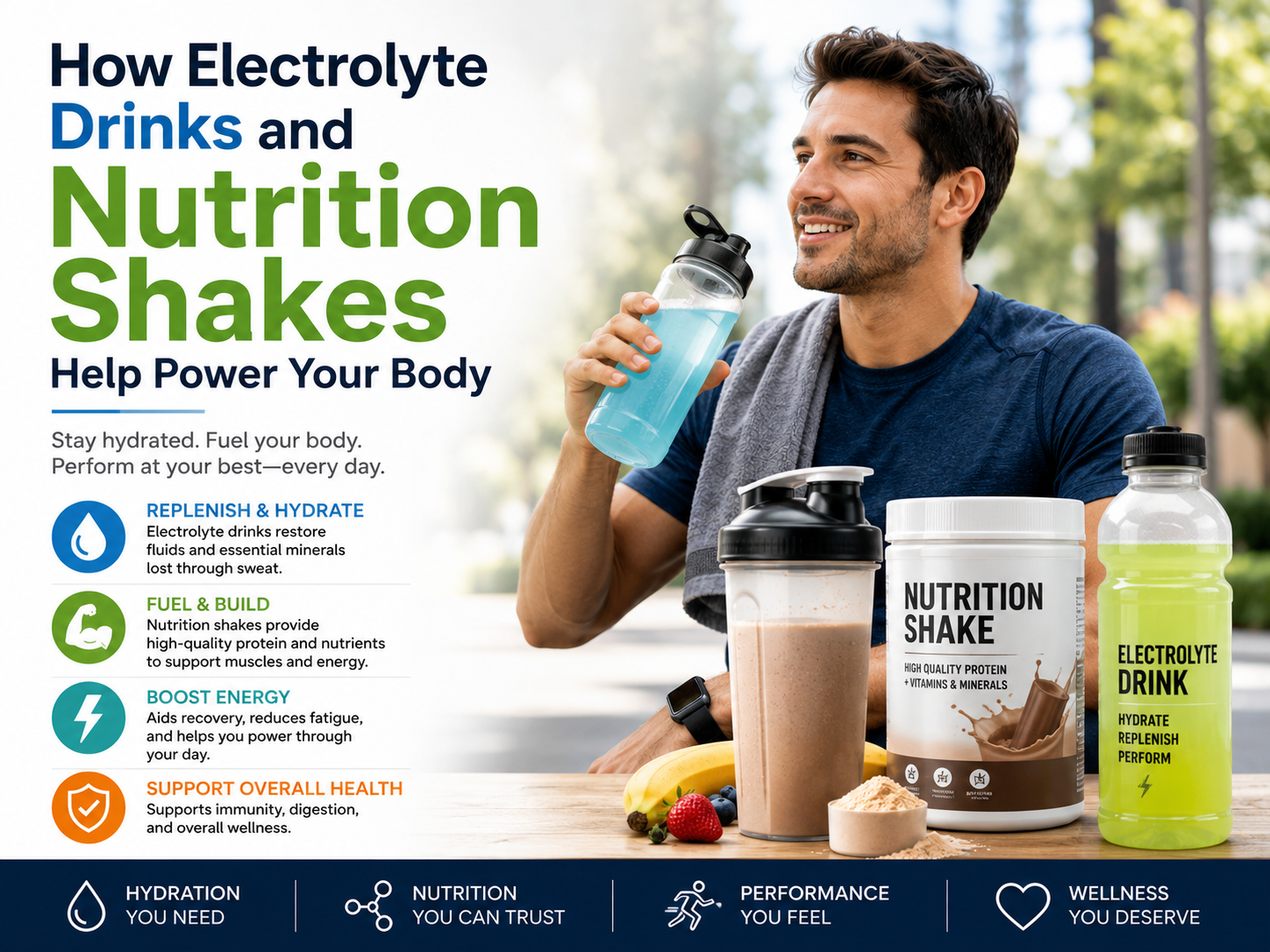
These two products solve different problems, and it helps to be clear about which you reach for. An electrolyte drink is about fluids and minerals — it rehydrates but carries little in the way of calories or protein. A nutrition shake is about calories, protein, vitamins, and minerals in a form that's easy to swallow when solid food is too much work.
During an acute illness with fluid loss, hydration comes first, so electrolytes lead. Over the days that follow — when appetite is still poor but the crisis has passed — a nutrition shake helps rebuild the calories and protein that were lost. Many caregivers end up using both across a single recovery: electrolytes while the body is losing fluid, shakes while it's rebuilding. For a broader primer on how these two categories work together day to day, see our companion overview, Electrolyte Drinks and Nutrition Shakes for Daily Health.
Reading the label before you buy
Not every drink marketed for hydration suits an older adult. A few things worth checking:
- Sugar content. Many sports drinks are high in sugar. For someone managing diabetes, look for low-sugar oral rehydration options — and see our guide to diabetic-friendly nutritional drinks for shakes that won't spike blood sugar.
- Sodium and potassium. Purpose-made oral rehydration solutions are formulated with a balance closer to what the body loses in illness than a typical sports drink.
- Caffeine. Avoid anything labeled as an energy drink for hydration purposes — caffeine is a diuretic and works against the goal.
- Format. Powders and single-serve packets store easily and let a caregiver keep a supply on hand for the next unexpected illness.
A caregiver's swallowing caution
For anyone with dysphagia (difficulty swallowing), thin liquids — including most electrolyte drinks — can be a choking or aspiration risk. If the person you care for has been advised to thicken their fluids, an electrolyte drink still needs to be thickened to the recommended consistency. Our explainer on thick water and thickened fluids covers how this works and why it matters.
When hydration at home isn't enough
Electrolyte drinks handle mild to moderate fluid loss. They are not a substitute for medical care. Seek help promptly if you see signs of severe dehydration: no urine for eight or more hours, a rapid or weak pulse, sunken eyes, marked confusion or difficulty waking, or an inability to keep any fluids down. In frail or very elderly people, it's always reasonable to call a doctor sooner rather than later.
Keeping a hydration kit ready
The caregivers who handle these episodes best don't scramble at 2 a.m. — they keep a small kit stocked: a few electrolyte packets or bottles, a couple of nutrition shakes, and a thickener if it's needed. Having the right supplies within reach turns a stressful night into a manageable one. You can browse electrolyte drinks, powders, and nutrition shakes in our Drinks & Shakes collection.
This article is for general information and is not medical advice. Talk to a doctor or pharmacist about the right hydration and nutrition approach for a specific person, especially one managing chronic conditions or taking medications that affect fluid balance.